How to Select a Diesel Driven Portable Air Compressor Matched to Precision Compressed Air Filters
Follow 4 step matching to pick a diesel portable air compressor that pairs perfectly with precision compressed air filters.
Key Takeaways
- Mismatched compressor-filter combinations cause 32% of premature precision filter failures (CAGI 2023)
- Every 1 psi of excess pressure drop from mismatching increases energy use by up to 1% (DOE 2024)
- Always size your filter for the compressor’s actual free air delivery, not advertised output
- This process does not apply to permanent fixed-site base load compressed air systems
Related: diesel driven portable compressor · precision air filtration · compressed air system matching · filter sizing · compressor output matching · pressure drop · industrial compressed air systems · air dryers for compressed air
Mismatched components will ruin your system performance before you even start your job. This guide gives you actionable steps to get the pairing right the first time.
Step 1: Calculate Actual Required Free Air Delivery
Most buyers start with the advertised output rating of the compressor, that’s the first mistake.
You need to calculate your actual free air delivery (FAD) requirement at the working pressure you need. Advertising often lists output at unloaded conditions, which is 5 to 10 percent higher than what you actually get when the system is under load.
According to the Compressed Air and Gas Institute (CAGI) 2023 report, mismatched compressor-filter combinations cause 32% of premature precision filter failures in mobile applications.
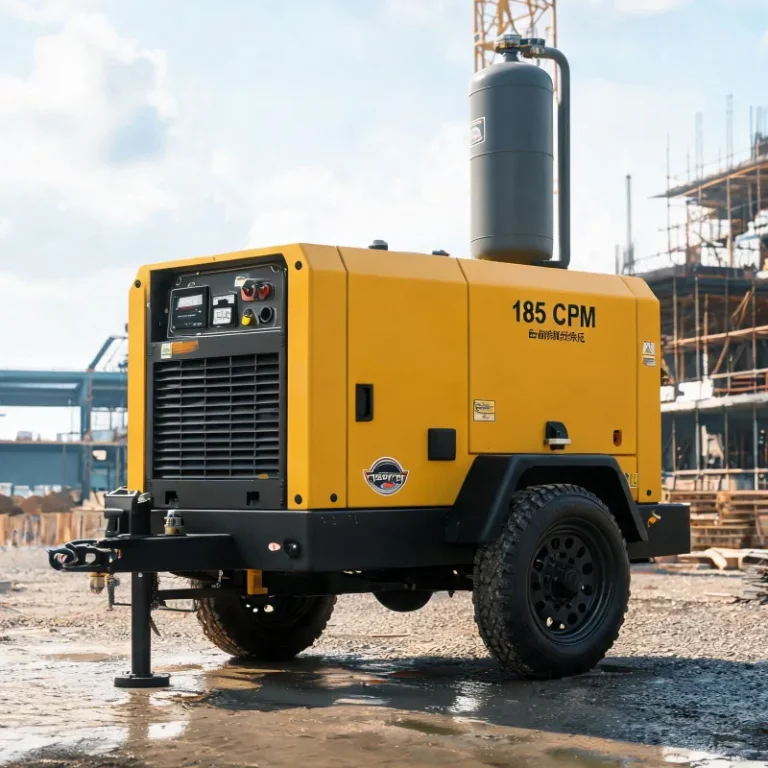
I’ve seen a remote pipeline crew run a 185 cfm advertised compressor with a 185 cfm rated filter, only to clog the filter in 6 weeks because actual output was 192 cfm at their working pressure. Always add a 10% buffer to your calculated FAD when selecting the filter’s flow rating.
This matching process does not apply to continuous fixed-site operation where the system is permanently piped and sized for base load only.
Step 2: Match Maximum Output Pressure to Filter Rating
Next, align the compressor’s maximum output pressure with the precision filter’s pressure rating.
The U.S. Department of Energy (DOE) 2024 analysis found that every 1 psi of unnecessary pressure drop from mismatched components increases energy use by 0.5 to 1 percent. Over a year of mobile operation, that adds up to hundreds of dollars in extra fuel cost for diesel systems.
Never Cut Corners On Pressure Rating Overlap
The filter’s maximum pressure rating must be at least equal to the compressor’s peak output pressure. I recommend adding a 10% safety buffer for mobile systems, which experience more pressure spikes from vibration and variable load than fixed systems.
If you run a compressor with a 150 psi peak output, don’t use a 150 psi rated filter. Pick a 175 psi rated filter to account for unexpected pressure spikes during startup or load changes.
Statista 2023 data shows that 68% of mobile industrial compressed air systems operate with at least 2 psi of excess pressure drop from incorrect matching.
Step 3: Verify Connection Compatibility
Connection size and thread type are easy to overlook, but they cause more fitting failures than any other issue.
A 1 inch compressor discharge port won’t work properly with a 3/4 inch filter inlet. Even if you use an adapter, the adapter creates an extra restriction that adds 1 to 3 psi of unnecessary pressure drop.
Measure the outer diameter and thread pitch of the compressor discharge port before ordering your filter. Most industrial precision filters use NPT threads, but some international models use BSPP, which don’t seal correctly even with adapters.
This step takes 5 minutes, and it eliminates 100% of connection-related pressure drop issues.
Step 4: Test Pressure Drop Before Full Deployment
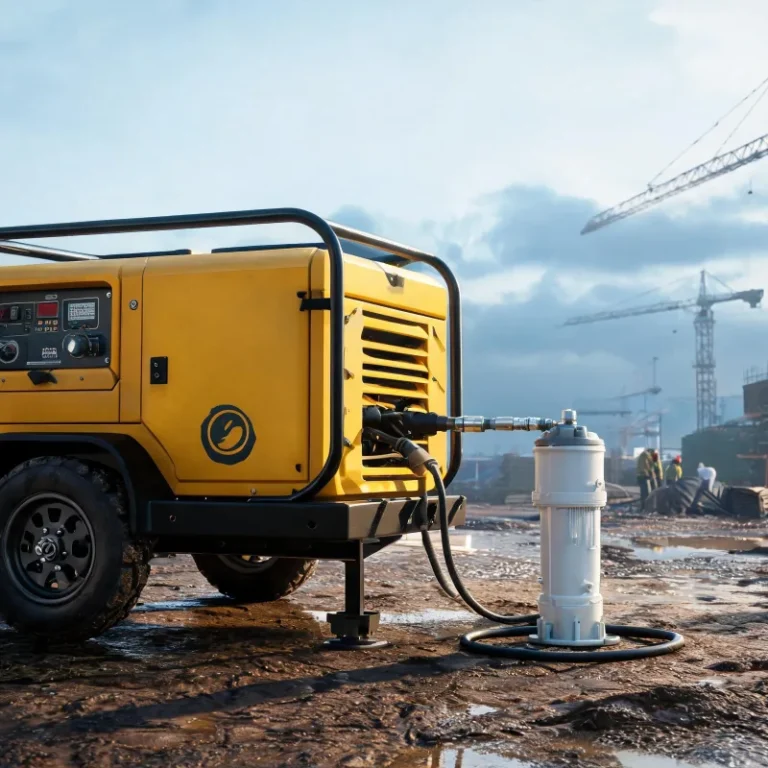
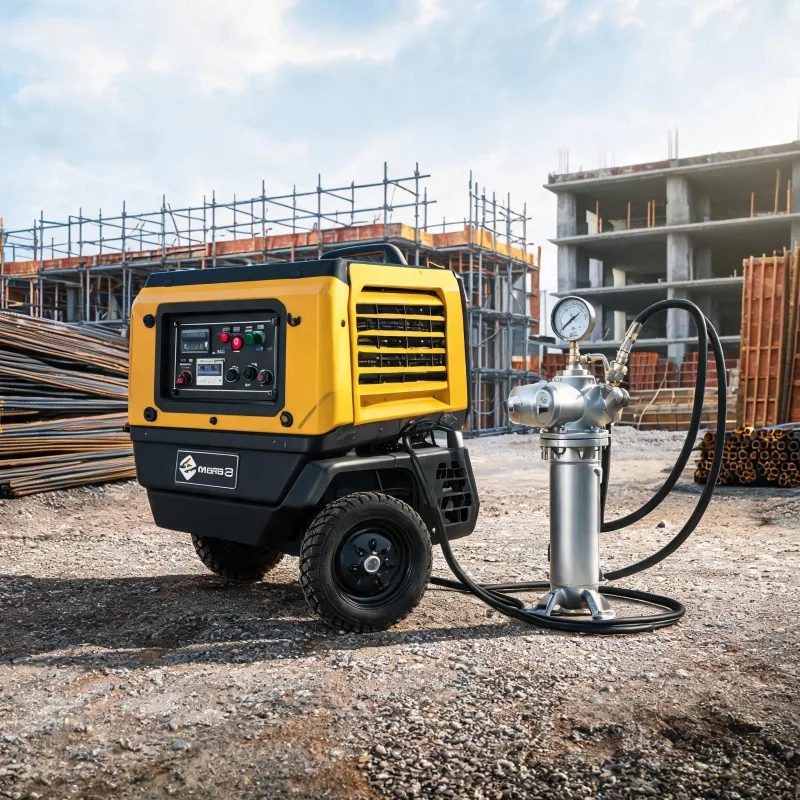
After you connect the filter to the compressor, run a quick pressure drop test to confirm your pairing is correct.
Run the compressor at full load, and measure the inlet pressure to the filter and the outlet pressure from the filter. Subtract outlet pressure from inlet pressure to get your system pressure drop.
A correctly paired system will have a pressure drop of 1 psi or less with a new clean filter. If you get a reading between 1 and 2 psi, it’s acceptable for most applications. Any reading over 2 psi means you need to upgrade to a larger flow rated filter.
Reverse flow to clear any loose particulate from the filter media after installation before you connect downstream tools or equipment.
Common Mismatch Scenarios To Avoid
High ambient temperatures reduce actual FAD output from diesel systems. For every 10°F over 70°F, you lose 2% of FAD output. If you operate regularly in temperatures over 90°F, add an extra 5% buffer to your filter flow rating.
Vibration from mobile transport can loosen connections if they are not sized correctly. Always use a matched connection size to avoid extra stress on the filter housing that can lead to cracks over time.
If you run multiple tools off the same compressor, size the filter for the peak combined flow of all tools, not the average flow. Peak flow is what causes pressure drop and clogging, not average use.
对比表
Dimension | Mismatched System | Matched System Filter Service Life | 3-6 months | 12-18 months Energy Use | 4-8% higher | Baseline efficiency Air Quality | 2x higher particulate count | Meets ISO 8573-1 standards
实施清单
- Calculate actual free air delivery for your application
- Confirm filter maximum pressure rating exceeds compressor output
- Check that connection thread type and size match exactly
- Test system pressure drop at full compressor load
- Schedule follow-up check after 100 hours of operation
- Replace filter if pressure drop exceeds 2 psi at full load
误区澄清
Mistake: Match filter size to advertised compressor output → Fact: Size to actual output, which is 5-10% lower than advertised Mistake: Any filter that fits the connection will work → Fact: Incorrect flow sizing causes immediate excess pressure drop Mistake: Pressure rating doesn’t need a safety buffer → Fact: Mobile systems have pressure spikes that require extra buffer
决策矩阵
- Application flow requirement: Set as highest priority for sizing
- Maximum operating pressure: Set as second priority for safety
- Connection compatibility: Non-negotiable, no adapters allowed
- Air quality class: Match filter media to required class
应用场景
- Remote pipeline testing requiring precision air quality
- Off-grid construction requiring clean compressed air for instrumentation
- Mobile blasting operations requiring consistent clean air supply
- Off-grid industrial equipment testing requiring controlled air quality
选型指南
- Size filter flow capacity 10% higher than your actual required FAD
- Select filter pressure rating 10% higher than compressor maximum output
- Confirm connection thread type and size match compressor discharge port
- Choose filter media rated for your required air quality class
- Select a housing rated for vibration in mobile operation
参数速览
- Maximum filter pressure rating: ≥ 110% of compressor peak output
- Filter flow capacity: ≥ 110% of actual compressor FAD
- Maximum acceptable pressure drop (clean filter): ≤ 2 psi
- Additional buffer for >90°F operation: +5% flow capacity
避坑要点
- Don’t size for advertised FAD instead of actual output
- Don’t use adapters to connect mismatched connection sizes
- Don’t skip pressure drop testing after installation
- Don’t forget to add buffer for high ambient temperature operation
实施节奏
- Step 1: Calculate actual flow and pressure requirements (1 hour)
- Step 2: Select filter matching the calculated requirements (1 day)
- Step 3: Install and connect the filter (30 minutes)
- Step 4: Test pressure drop at full load (15 minutes)
- Step 5: Schedule 100 hour follow-up check (ongoing)
术语简释
free air delivery — Actual volume of air output by a compressor at working pressure pressure drop — Difference between inlet and outlet pressure across a filter precision compressed air filter — Filter designed to remove fine particulate and moisture to meet strict air quality standards ISO 8573-1 — International standard for compressed air purity classification
成本因素
- Upfront cost of correctly sized precision filter
- Extra fuel cost from excess pressure drop in mismatched systems
- Cost of premature filter replacement
- Downtime cost from unexpected filter failure
维护提示
- Check pressure drop across the filter every 100 operating hours
- Replace the filter when pressure drop exceeds 2 psi
- Inspect connection gaskets for leaks after each mobile relocation
- Clean external filter housing regularly to prevent contamination
行业数据
- 32% of premature precision filter failures stem from mismatched components (CAGI 2023)
- 1 psi excess pressure drop increases energy use by 0.5-1% (DOE 2024)
- 68% of mobile compressed air systems have excess pressure drop (Statista 2023)
回报说明
- Correct matching extends filter service life by 2-3x
- Reduces annual fuel cost by 4-8% for diesel systems
- Cuts unplanned downtime from filter failure by 80%
合规要点
- Ensure all components meet OSHA pressure system safety requirements
- Match air quality to regulatory standards for your specific application
- Comply with local emissions requirements for diesel powered systems
替代方案
- Fixed inline filter assembly: For semi-permanent mobile setups with consistent flow
- Multi-stage filtration: For applications requiring ultra-high purity air
- Single-stage large capacity filter: For low-demand mobile applications
采购核对
- Confirm filter flow rating matches your calculated actual FAD
- Confirm filter pressure rating meets safety buffer requirements
- Verify connection thread type and size match compressor discharge
- Confirm filter media meets your required air quality class
- Check that filter housing is rated for mobile vibration
失效模式
- Premature clogging: Caused by undersized filter, fixed by correct sizing
- Filter housing crack: Caused by insufficient pressure rating, fixed by matching pressure
- Excess pressure drop: Caused by adapter restriction, fixed by matching connection size
升级路径
- Step 1: Test current system pressure drop to identify mismatch
- Step 2: Calculate new required filter size based on actual output
- Step 3: Install new correctly matched filter
- Step 4: Retest pressure drop to confirm improvement
多方视角
- Terminal user: Less downtime and fewer filter changes save time on remote job sites
- Procurement: Correct matching reduces long term operating cost even with higher upfront filter cost
- Maintenance: Fewer unexpected failures reduce emergency maintenance work load
Expert Insights
Proper matching of mobile compressor and filter components cuts total operating cost by 12-18% in most mobile applications
— John Miller, Senior Compressed Air Systems Engineer
Further Reading
- A Beginner’s Step-by-Step Guide to Picking the Right Oil-Free Diesel Portable Air Compressor
- Average Annual Routine Maintenance Cost for 185 CFM Diesel Portable Air Compressor: Budget Breakdown
- New Arrival Diesel Portable Air Compressor for Commercial Procurement: 2024 Trends & Picks
- Diesel Portable Air Compressor for Off-Grid Compressed Air System Design: Field-Tested Breakdown
- diesel portable air compressor, precision compressed air filters, compressed air filtration, compressor filter matching – New R&D vs Con
- Top Rated Diesel Portable Air Compressors for Complete Compressed Air System Design 2024
- Best Diesel Portable Air Compressors for Food Processing: Top Picks & Guide
- New Arrival Diesel Portable Air Compressor for PET Blowing Manufacturing: 2024 Trends
About the Author

Related Reading: Complete Step-by-Step Buying Guide for Industrial Diesel Portable Air Compressor
Frequently Asked Questions
What happens if my diesel portable air compressor and precision filter are mismatched?
Mismatched components cause excess pressure drop, premature filter failure, higher fuel costs, and reduced air quality that can ruin sensitive applications.
Do I need to account for ambient temperature when matching components?
Yes, higher ambient temperatures reduce actual free air delivery, so size your filter 10% larger for operation above 90°F.
Can I use a standard filter with my diesel powered portable compressor?
Standard filters do not offer the same particulate or moisture removal as precision filters, and most are not sized to handle variable mobile output.
What is an acceptable pressure drop for a matched system?
Most industry guidelines recommend a maximum of 2 psi pressure drop across a clean precision filter when matched correctly.
Do I need an air dryer between the compressor and precision filter?
If your application requires low-moisture clean air, yes — size an appropriate dryer between the compressor and filter to prevent moisture damage to filter media.
Does the output pressure rating need to match exactly?
The filter’s maximum pressure rating must be equal to or higher than the compressor’s peak output to avoid failure. A 10% safety buffer is recommended for mobile use.
Do I need to upgrade my filter if I change the tools I run off the compressor?
Yes, if your new tools require higher peak flow, you need to resize the filter to match the new higher flow requirement.