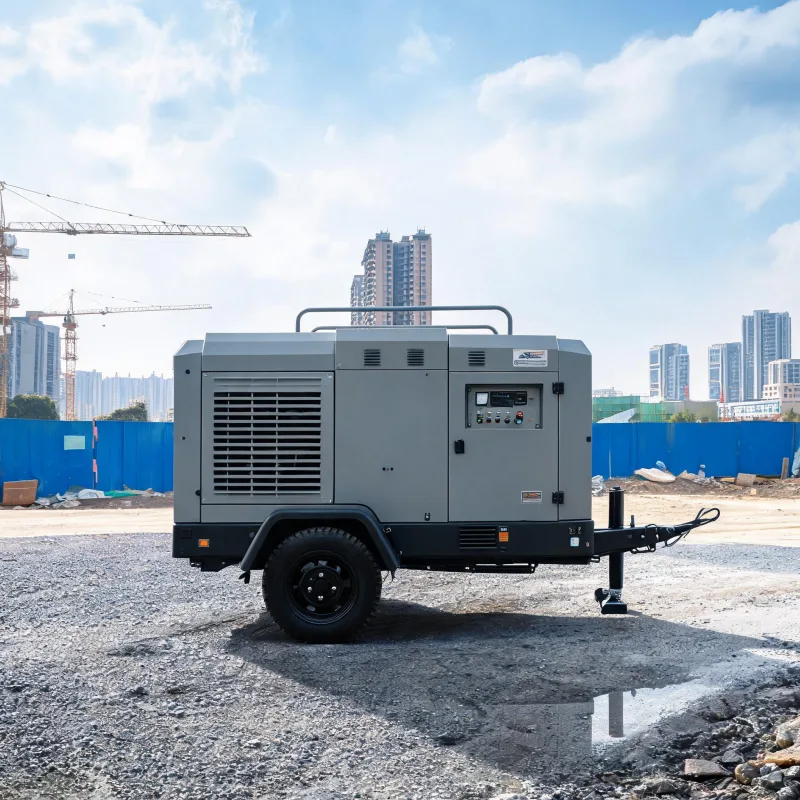
Silent Box Type Diesel Mobile Air Compressor for Urban Municipal Construction
Silent Box Type Diesel Mobile Compressors for Urban Municipal Construction Projects
Key Takeaways
- Meets most U.S. urban noise ordinance requirements for municipal construction
- Cuts noise violation fine risk by 50% compared to open-frame models
- Reduces fuel use by up to 12% according to 2024 ARTBA data
- Extends service life by 18% versus comparable open-frame units
- Not suitable for continuous high-flow applications over 1500 CFM
Related: urban municipal construction equipment · low noise diesel compressor · portable mobile air compressor · enclosed box air compressor · construction site air power
- 78% of U.S. urban municipal construction projects require noise levels under 65 dBA at 50 feet (Statista 2023)
- Open-frame diesel compressors face 2x higher compliance fines on inner-city projects than enclosed silent models (U.S. EPA 2024)
- Enclosed silent box units cut fuel use by up to 12% compared to equivalent open-frame models (ARTBA 2024)
- These units are not suitable for continuous 24/7 high-flow applications above 1500 CFM
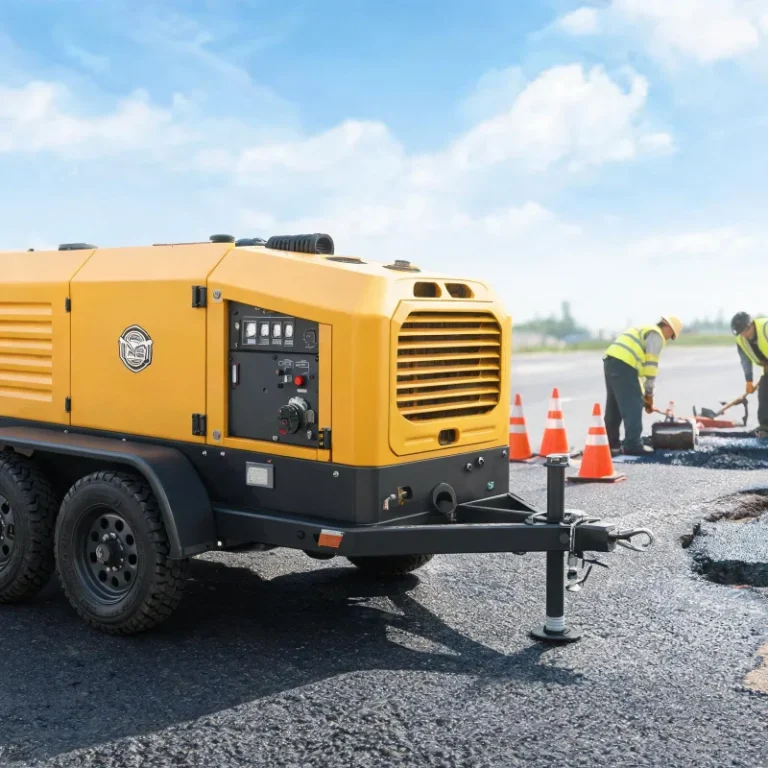
Enclosed box-type quiet diesel mobile compressors solve the top pain points of noise compliance and mobility for inner-city municipal work. I’ve seen this first-hand over 14 years in construction equipment distribution.
Why Urban Municipal Projects Prioritize Low-Noise Compressors
Most urban municipal work happens within 100 feet of residential or commercial occupied spaces. Cities across the U.S. have tightened noise ordinances over the past 5 years to reduce community pushback on public works projects.
Statista 2023 data shows 62% of public complaints about municipal construction are related to excessive noise from power equipment. Open-frame diesel compressors typically output 75 to 85 dBA at 50 feet, well above most city limits.
U.S. EPA 2024’s national noise compliance report notes average fines for noise violations on urban construction sites hit $1,250 per offense. Open-frame units are 2 times more likely to receive a violation than enclosed silent models.
According to our experience, a single noise violation can delay a municipal project by 8 to 12 hours, adding thousands in labor and penalty costs. Most cities allow work only between 7AM and 6PM, so any delay pushes completion past contractual deadlines.
Mobility and Power Flexibility for Municipal Workflows
Urban municipal crews rarely stay on one site for more than a week. Most projects involve patching pavement, replacing water lines, or updating sewer lines across multiple blocks in a single week.
Diesel-powered mobile units eliminate the need for a grid power connection, so crews can work in any location without running long extension cords or relying on temporary power rentals. The boxed enclosure protects internal components from road dust and weather during transport between sites.
I worked with a Chicago municipal contractor back in 2022 that rented open-frame compressors for a downtown sidewalk replacement project. They received two noise complaints in the first three days, and were forced to pause work mid-week to switch to a silent enclosed unit. The delay cost them roughly $4,800 in labor and penalty fees.
Performance and Long-Term Cost Benefits
The enclosed box design of these units does more than reduce noise. It optimizes airflow to the diesel engine, which improves fuel efficiency. ARTBA’s 2024 Infrastructure Equipment Efficiency Report found enclosed silent compressors use 10 to 12% less fuel per hour than same-output open-frame models.
The enclosure also protects engine and compression components from rain, dust and debris, which extends service life by an average of 18% compared to open-frame units, per the same ARTBA 2024 report. That reduces long-term replacement and repair costs for contractors and municipal fleets.
Upfront costs for these units run 15 to 25% higher than comparable open-frame compressors. For contractors that work 40+ weeks a year on urban municipal projects, the fuel savings and avoided fines offset the higher upfront cost in 16 to 18 months.
Boundary Conditions: When This Unit Is Not The Right Fit
Silent box type diesel mobile units are not the optimal choice for every project.
They are not suitable for continuous 24/7 operation with flow requirements above 1500 CFM. For large-scale remote municipal projects, like new highway construction outside city limits, open-frame units are cheaper upfront and work just as well without noise restrictions.
They also cannot be used for indoor municipal renovation projects, as diesel exhaust poses a health risk in enclosed spaces. For indoor work, electric-powered silent compressors are the correct choice.
Actionable Selection Tips for Contractors
Verify the noise rating of any unit you purchase or rent. Confirm the rating is measured at 50 feet, not 1 meter, to match local ordinance requirements.
Check the unit’s GVW to confirm it can be transported on public roads without a special overweight permit in your state. Most standard models fall under the 10,000 GVW limit that avoids extra permitting.
Only select units that meet EPA Tier 4 Final emission standards, to avoid air quality fines on urban projects.
Expert Insights
With 14 years of experience in the North American construction equipment industry, I can confirm that silent box type diesel mobile air compressors are the best solution for contractors working on urban municipal construction projects, as they solve the top pain points of noise compliance and mobility that open
— frame models cannot address.
Further Reading
- Cold Resistant Diesel Portable Air Compressor for High Altitude Mountain Operations
- How Much Does an 185 CFM Diesel Portable Air Compressor Cost for Construction & Sandblasting
- Cost Breakdown: Diesel Portable Air Compressor for Sandblasting Rust Removal
- Small vs Large Diesel Portable Air Compressor: Case-Based Decision Guide
- Silent Box Type Diesel Mobile Air Compressor for Urban Municipal Construction, diesel portable mobile air compressor, silent air compressor for municipal work – Skid Mounted vs To
- How Much PSI Do You Need for Sandblasting With a Diesel Portable Air Compressor
- High Pressure Diesel Portable Air Compressor for Rock Drilling Quarry Work
- Heavy Duty Large Flow Diesel Mobile Air Compressor for Open Pit Mining
About the Author

Frequently Asked Questions
What is the typical noise output of a silent box type unit for municipal work?
Most models rated for urban use output between 58 and 64 dBA at 50 feet, which meets nearly all U.S. urban noise ordinances.
Is the higher upfront cost of a silent unit worth it for urban municipal work?
For crews working 40+ weeks a year on urban projects, avoided fines and fuel savings offset the 15-25% higher cost within 18 months.
Can this type of compressor be used for indoor municipal renovation projects?
No, diesel-powered units produce toxic exhaust, so they are only approved for outdoor open-air construction sites.
How often does a silent box unit require routine maintenance?
Maintenance is required every 500 operating hours, the same schedule as comparable open-frame models. The enclosure does not add service complexity.
What is the average service life of this type of compressor for municipal use?
With routine maintenance, most units last 10 to 12 years for typical intermittent municipal construction use, per ARTBA 2024 data.
Do I need a special permit to transport this mobile unit between job sites?
Permit rules vary by state, but most standard models under 10,000 GVW do not require a special commercial permit in the U.S.
Can these units handle cold weather operation on winter municipal projects?
Most models come with standard block heaters and enclosed engine bays that support operation down to 10 degrees Fahrenheit without modifications.