Agriculture Industry Air Compressors – Portable & Stationary Air Compressors for Farming Use
How to Choose the Right Air Compressor for Agricultural Operations
Key Takeaways
- Proper sizing cuts farm air compressor energy costs by up to 30%
- Portable units suit mobile spot tasks across multiple fields
- Stationary units deliver consistent power for fixed farm operations
- Agriculture-grade compressors last twice as long as generic units
- Match compressor type to your most frequent use case for best value
Related: farming pneumatic power · agricultural sprayer air supply · farm tool compressed air · livestock ventilation compressors · grain handling pneumatic equipment
- Properly sized compressed air units for farming cut annual energy costs by up to 30% for most operations
- Portable models are built for mobile spot tasks, while stationary units serve fixed, high-demand farm systems
- Agriculture-grade compressors last 2x longer than generic industrial units in harsh farm conditions
- Market demand for farm-specific compressors is growing 4.2% annually as precision farming expands
After 12 years helping farms across the U.S. Midwest size and select air power equipment, the core takeaway is simple: match your compressor type to your most frequent use case to cut long-term ownership costs.
Common Pain Points for Farm Air Power
Most farmers I work with reach out after dealing with one of three common issues: underpowered units that can’t keep up with spraying, oversized units that waste energy every time they run, or generic units that rust or clog from farm dust and moisture within two years.
I’ve seen a 200-acre corn operation lose nearly $1,200 in a single spraying season because their portable compressor couldn’t maintain consistent PSI, leading to uneven chemical coverage and reduced yields. That’s the real cost of picking the wrong unit up front.
Portable units that aren’t built for agricultural use often can’t handle the bumpy transport between fields, leading to loose fittings and air leaks that waste even more energy over time.
2024 Industry Data & Trends
Recent third-party data backs up what I’ve seen in the field over the last decade.
Statista 2023 reports the global market for agricultural air compressors will hit $1.28 billion by 2028, growing at a 4.2% compound annual growth rate. This growth is driven by expanded adoption of pneumatic precision farming tools, from variable-rate sprayers to pneumatic seeding equipment.
USDA 2024 data shows compressed air systems account for 10% to 15% of total electricity use for mid-sized U.S. row crop operations. That makes compressor efficiency a top priority for farmers looking to cut overhead costs amid volatile energy prices.
International Energy Agency (IEA) 2024 confirms that correctly sized agricultural compressed air systems reduce energy waste by up to 30% compared to improperly sized units purchased based only on upfront purchase price. Most farmers oversize their compressors by 30% or more, leading to constant off-cycle loading that wastes energy.
The trend toward more pneumatic tools for precision agriculture is pushing more farmers to upgrade from old, worn-out compressors to purpose-built units that match their specific operational needs.
Portable vs Stationary: Use Cases and Boundaries
Portable Air Compressors for Farming
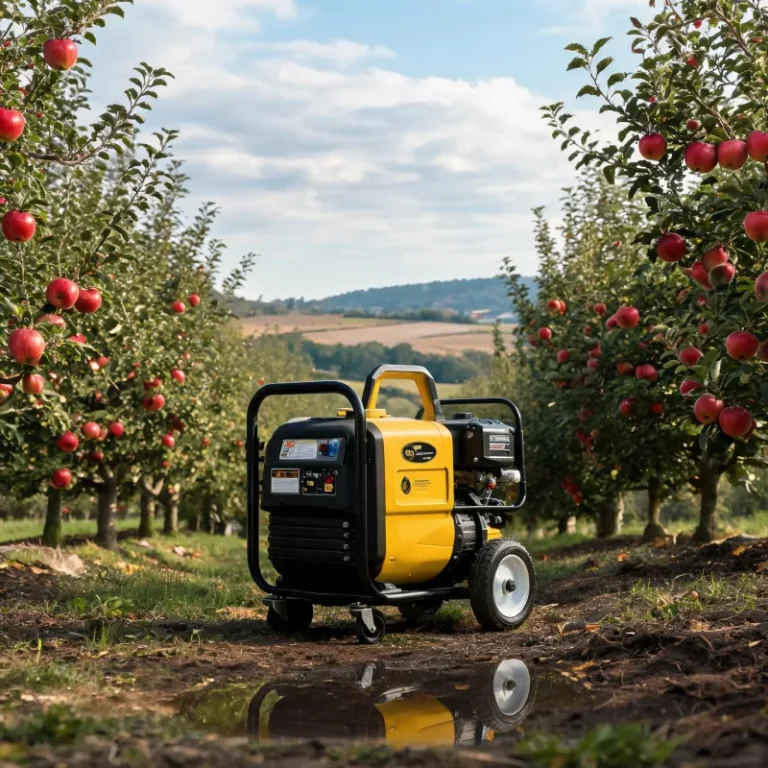
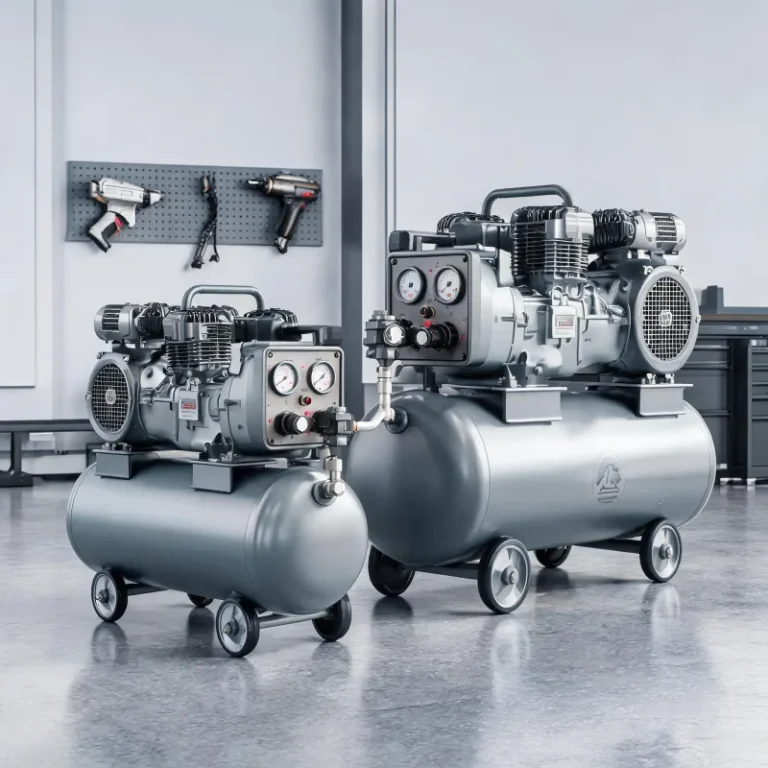
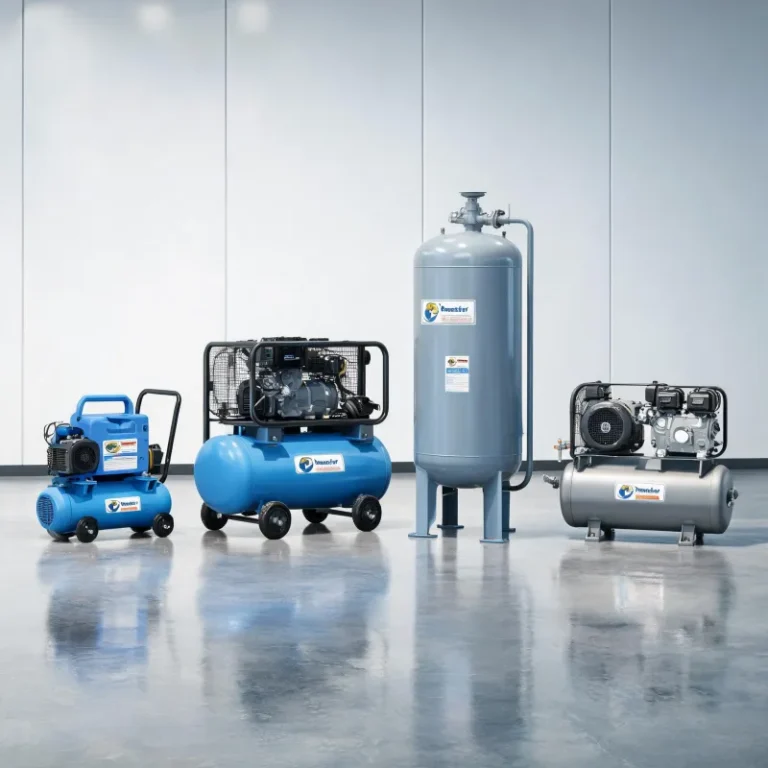
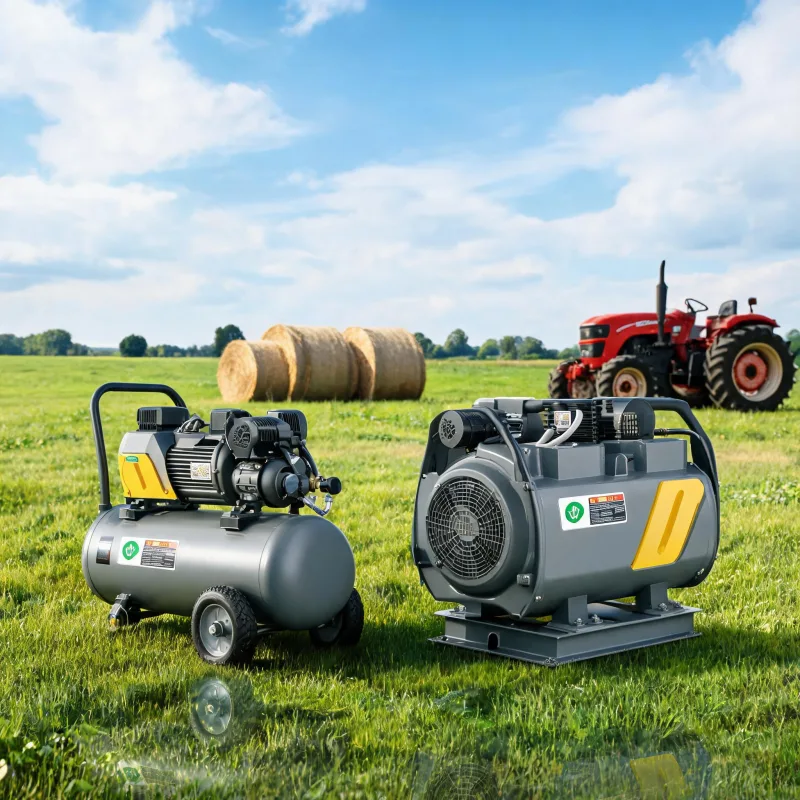
Portable units, whether gas or electric powered, are designed for mobile tasks that require moving between fields or different areas of the farm. Common use cases include powering handheld spraying tools, inflating tractor and implement tires, powering nailing and stapling tools for farm fence building, and running small pneumatic tools for on-site equipment repair.
Most portable units for farming range from 5 CFM to 50 CFM, with tank sizes from 10 gallons to 80 gallons. Small 12V portable units can even be mounted on ATVs for spot treatment work in remote pastures that don’t have access to grid power.
Portable compressors are not suitable for continuous 24/7 operation. If you run a fixed grain handling system that requires constant air pressure for aeration or conveying, a portable unit will burn out well before its expected 10-year lifespan, leading to unexpected replacement costs.
Stationary Air Compressors for Agriculture
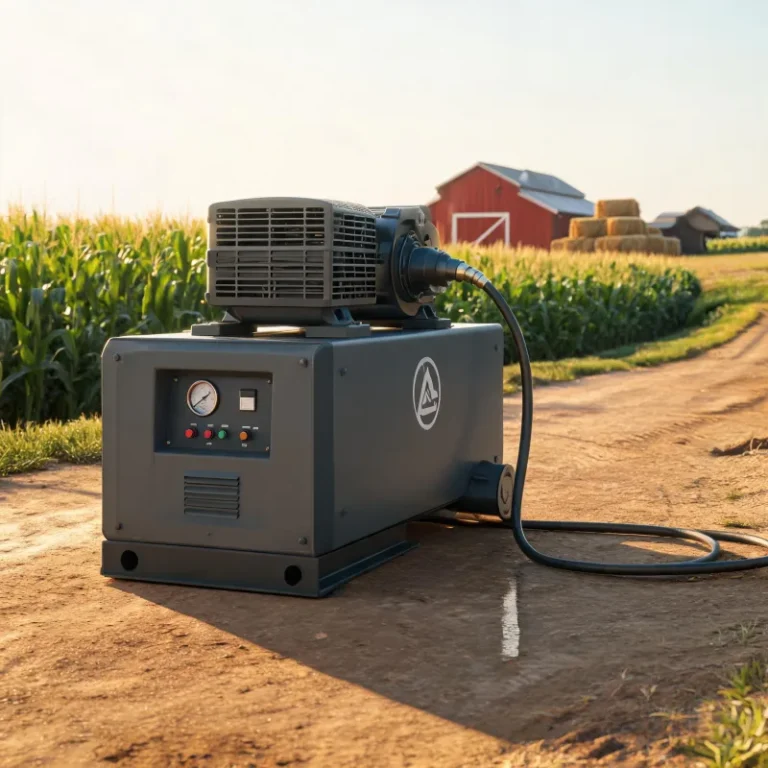
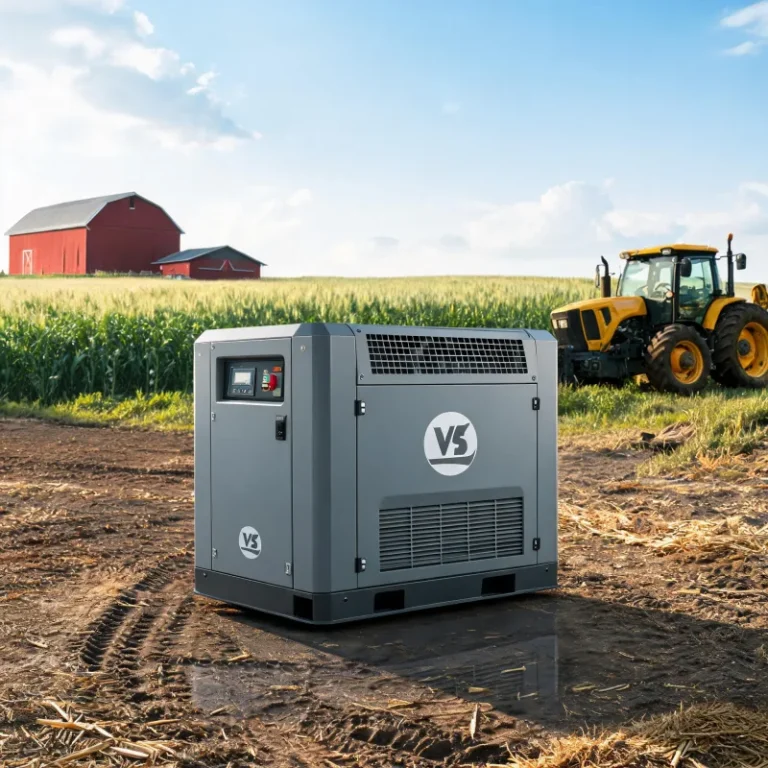
Stationary units are installed in a fixed location, like a farm shop or central equipment yard, and deliver consistent continuous power for high-demand operations. Common use cases include powering multiple pneumatic tools in the shop simultaneously, running continuous air for grain aeration systems, supplying air for large dairy barn ventilation systems, and powering permanent irrigation system control valves.
Stationary units typically range from 30 CFM to over 200 CFM, with larger tank storage to handle consistent peak demand. They are wired into the farm’s main power supply, so they don’t require refueling like gas portable units, and have lower long-term operating costs for regular daily use.
If you only need air for occasional mobile tasks, a stationary unit is a waste of upfront capital and energy. There’s no reason to invest thousands of dollars in a 100 CFM stationary unit if you only inflate tires and spray pastures a few times a year.
Actionable Steps to Select Your Unit
First, list all the pneumatic tools and systems you will run with the compressor, add up their continuous CFM requirement, then add 20% to that number to account for existing air leaks and future expansion of your operation. This simple step alone avoids 90% of sizing mistakes I see.
Second, decide if you need to move the unit between different locations more than once a month. If you need to move it regularly, choose a wheeled portable unit with a robust frame built for off-road transport. If it will stay in one spot, a stationary unit will deliver better value over time.
Third, only buy units rated for agricultural use, with dust-resistant intake filters and corrosion-resistant coatings to stand up to exposure to fertilizer, moisture, and field dust. Generic industrial units don’t have these protections, so they wear out much faster in farm conditions.
Check the warranty before you buy. Most reputable agriculture-grade compressors come with a 3-5 year full warranty, while generic units often only have a 1-year warranty. That difference tells you a lot about how the manufacturer expects the unit to perform in harsh conditions.
Expert Insights
After 12 years working with U.S. farm operations, the biggest mistake farmers make is buying a compressor based on upfront cost instead of matching size and type to their daily use.
Further Reading
About the Author

Related Reading: Agriculture Industry Air Compressors | Energy-Saving Screw Compressors for Agriculture Operations
Frequently Asked Questions
What size air compressor do I need for agricultural spraying?
For most handheld or tractor-mounted spot sprayers, a 10-30 CFM compressor with 100+ PSI is sufficient. Large self-propelled field sprayers require 50+ CFM of continuous output to maintain consistent pressure.
Can I use a standard industrial air compressor for farming operations?
Standard industrial compressors are not built to withstand dust, moisture, and chemical exposure common on farms. You can expect 2x faster wear and tear compared to purpose-built agriculture-grade units.
Are gas-powered portable compressors better than electric for remote farms?
Gas-powered units work best for remote fields without grid access, but electric models have 40% lower long-term operating costs and require less routine maintenance if you have reliable grid power available.
How often should I service my farm air compressor?
Most agriculture-grade compressors require full service every 500 operating hours, or at least once a year before peak planting or spraying season to avoid mid-season breakdowns.