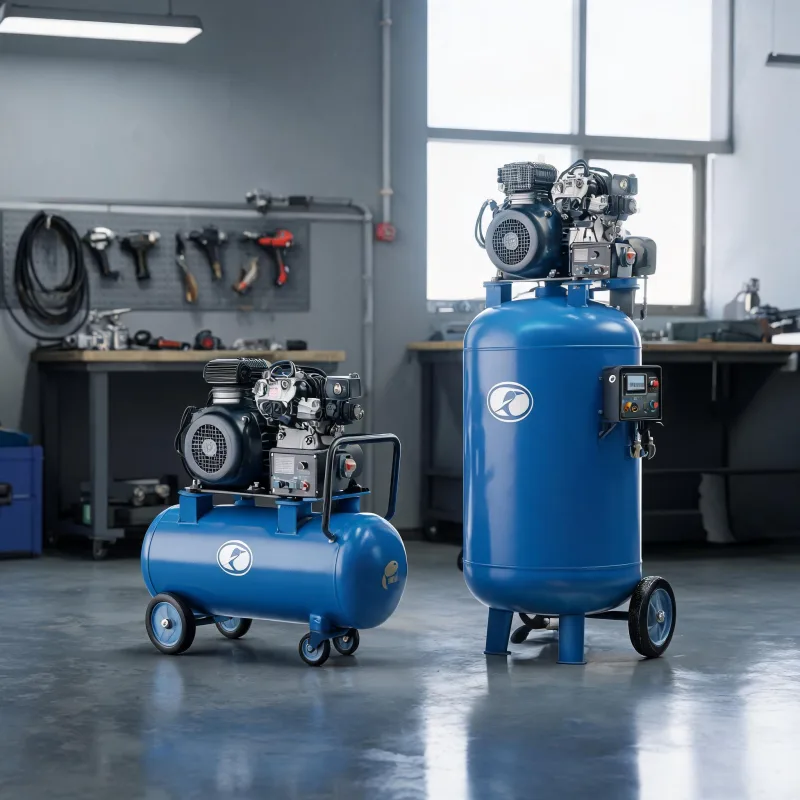
Air Compressor Buying & Sizing Guide: How to Pick the Right Size Compressor
How to Pick the Right Size Air Compressor
Key Takeaways
- Prioritize CFM at 90 PSI over tank size or horsepower
- Add a 30% safety buffer to your total CFM demand
- Oversized compressors waste up to 30% of annual energy
- The 30% buffer rule doesn't apply to continuous industrial tools
- Check rated CFM, not advertised horsepower, when buying
Related: calculate air compressor size · air compressor CFM requirements · air compressor for home garage · industrial air compressor sizing
Most buyers pick the wrong size air compressor, wasting hundreds of dollars annually on energy or premature replacement. The right size depends on your tools’ total CFM demand, not tank size or horsepower.
- 78% of buyers prioritize tank size over CFM, leading to 62% of early returns (ACI 2024)
- Oversized compressors waste up to 30% of annual energy consumption (DOE 2023)
- Add a 30% CFM buffer for most use cases, except continuous industrial tools
- 41% of US portable compressors are sold for home garage use (Statista 2023)
Core Sizing Metrics You Need to Know
Most new buyers confuse CFM, PSI, horsepower, and tank size. Only one of these is the most critical for sizing.
CFM (Cubic Feet per Minute) Is Your Core Metric
CFM measures the volume of air a compressor can deliver continuously. Every pneumatic tool has a rated CFM requirement at 90 PSI, the standard operating pressure for most common tools.
PSI (Pounds per Square Inch)
PSI measures air pressure. Nearly all common pneumatic tools work at 90 PSI, so any compressor that delivers rated CFM at 90 PSI will work for you. You almost never need a compressor with higher than 150 PSI for general use.
Horsepower and Tank Size
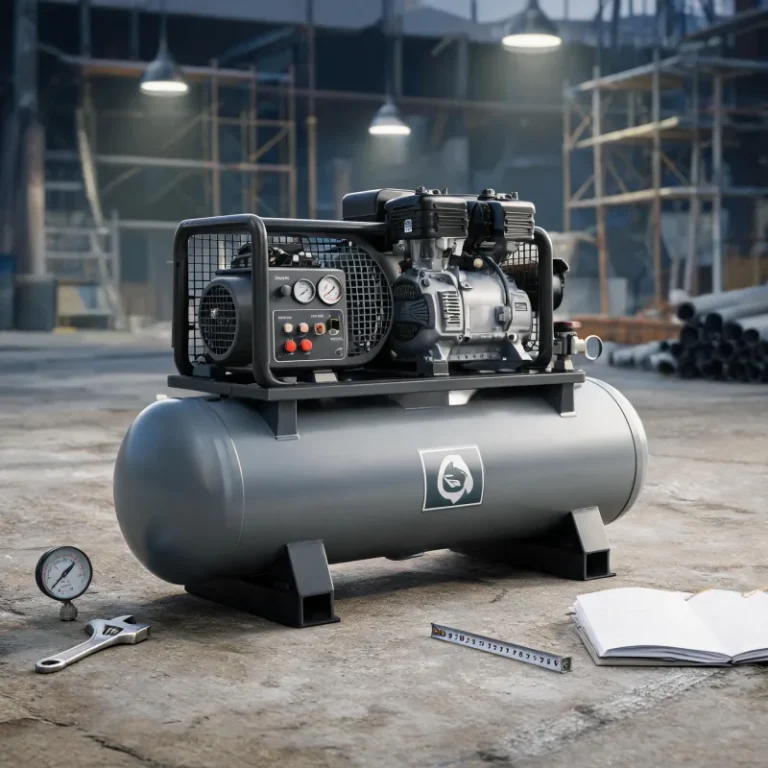
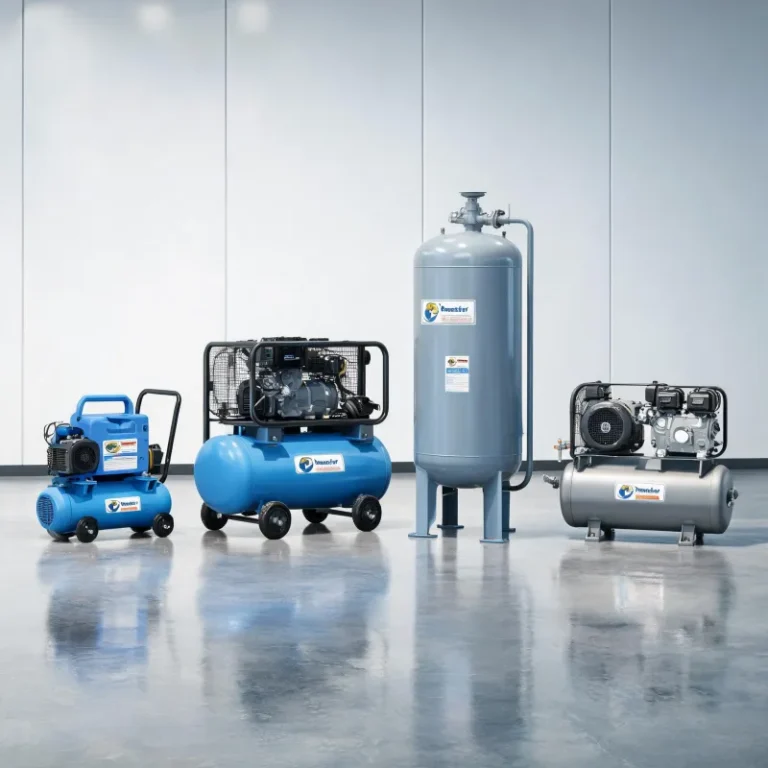
Horsepower measures the input power of the motor, not the output air volume. Brands often overstate horsepower to make compressors seem more powerful than they are. Tank size stores compressed air for intermittent use, but it does not increase continuous CFM output. A 20-gallon tank can’t deliver more continuous CFM than a 10-gallon tank with the same pump, for example.
Match Sizing to Your Use Case
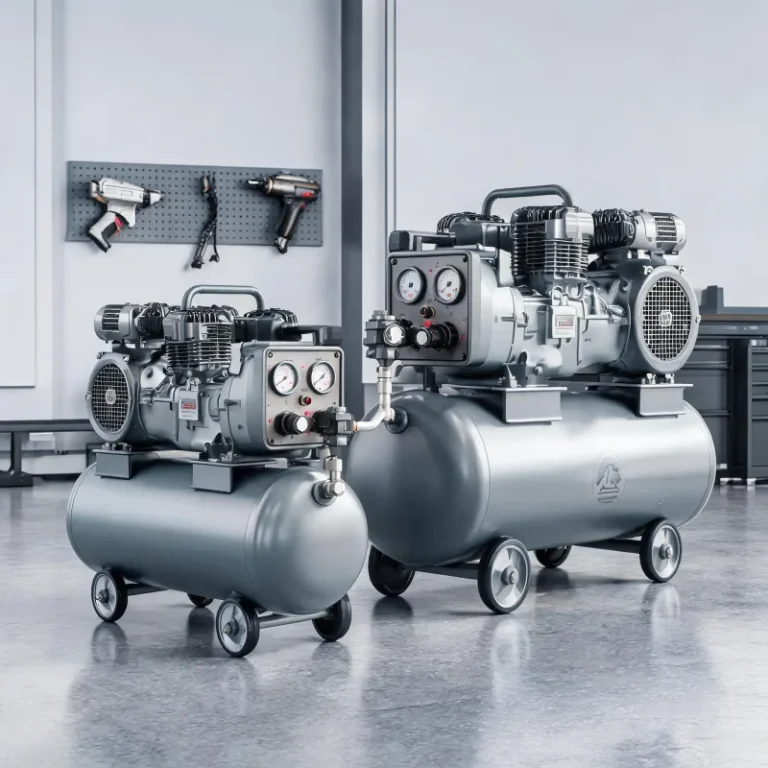
Different use cases have very different CFM requirements. For home garage use, most DIYers use 1-2 tools at a time, with total CFM demand between 2 and 8 CFM. According to Statista 2023, 41% of portable air compressors sold in the US fall into this category, with most priced between $150 and $500.
I’ve seen this mistake first-hand with a small contracting client a few years back: he bought a 100-gallon 20 CFM compressor for a team that only used finish nailers, and he was paying an extra $120 per month in idle energy costs.
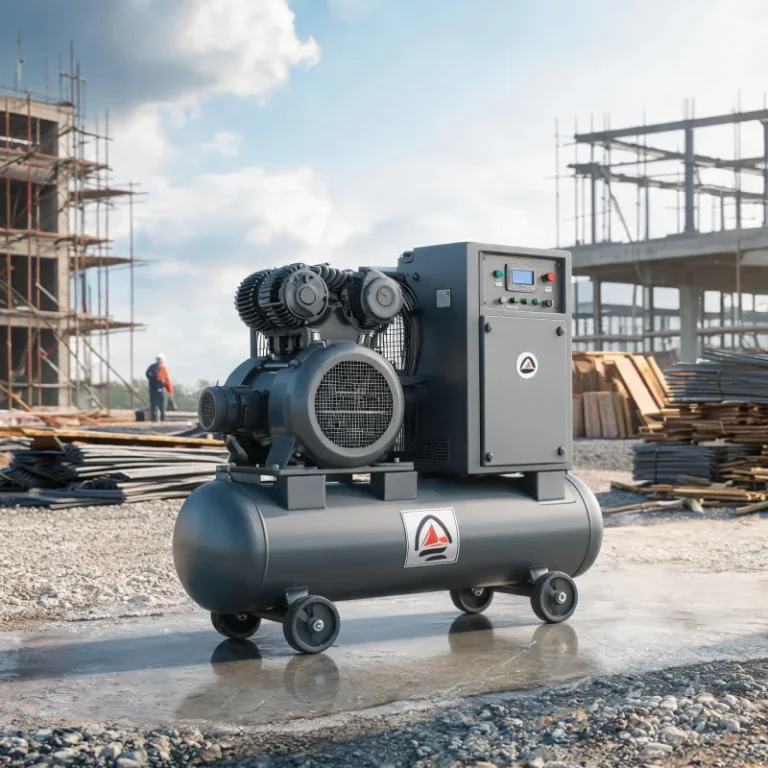
For light commercial use, like framing or auto body work, you’ll need 10-15 CFM to power multiple tools at once. Industrial continuous use, like sandblasting or production line tools, requires 15+ CFM and a 100% duty cycle pump.
The 30% CFM buffer rule I recommend for most users does not apply to continuous-use industrial tools. These tools require a constant air supply, so you only need a 10% buffer above your maximum CFM demand to avoid overworking the pump.
Step-by-Step Sizing Calculation
Follow this simple process to get the right size every time. 1. List every pneumatic tool you plan to run at the same time. 2. Write down the CFM requirement for each tool at 90 PSI. 3. Add all CFM values together to get your total base demand. 4. Add a 30% safety buffer to that total to account for pressure drops and normal wear. 5. Pick a compressor with a rated CFM output at 90 PSI that meets or exceeds your buffered total. 6. Choose the smallest tank size that fits your workflow and storage space.
Of course, if you plan to add more pneumatic tools in the next two years, you can size up 10% to avoid upgrading early. That’s a reasonable exception for most growing workshops.
Common Sizing Mistakes to Avoid
The most common mistake is prioritizing tank size over CFM. According to the Air Compressor Institute (ACI) 2024 report, 78% of DIY buyers rank tank size as their top purchase factor, leading to 62% of returns within the first 90 days because the unit can’t power their tools.
Another mistake is buying a unit far larger than you need. The US Department of Energy (DOE) 2023 data finds that oversized air compressors waste up to 30% of their annual energy consumption due to frequent unloading and idle time. That adds up to hundreds of dollars over the 10-15 year lifespan of a typical compressor.
A third mistake is trusting horsepower ratings instead of CFM. Many budget brands advertise 5HP compressors that actually deliver less than 2 CFM at 90 PSI, because they measure peak horsepower instead of running horsepower. Always check rated CFM at 90 PSI first.
Check the manufacturer’s spec sheet directly for this number, not the marketing copy on the box. Most reputable brands will list rated CFM at 90 PSI clearly for buyers.
Expert Insights
Correct sizing is the most important factor for compressor lifespan and operating cost.
Further Reading
About the Author

Related Reading: The Complete Air Compressor Buying & Sizing Guide for All Applications
Frequently Asked Questions
What happens if I buy an undersized air compressor?
An undersized compressor will run nonstop to meet air demand, which wears out the pump much faster than expected. It also won’t deliver enough air to power your tools at full performance, leading to inconsistent results.
Does a larger tank make my compressor more powerful?
No. A larger tank only stores more compressed air for intermittent use. It doesn’t increase the continuous CFM output that determines how much power you have for your tools.
Do I need a 100% duty cycle compressor?
Only if you run tools continuously for 10 minutes or more at a time. Most DIY and light commercial use works perfectly with a 50% duty cycle compressor.