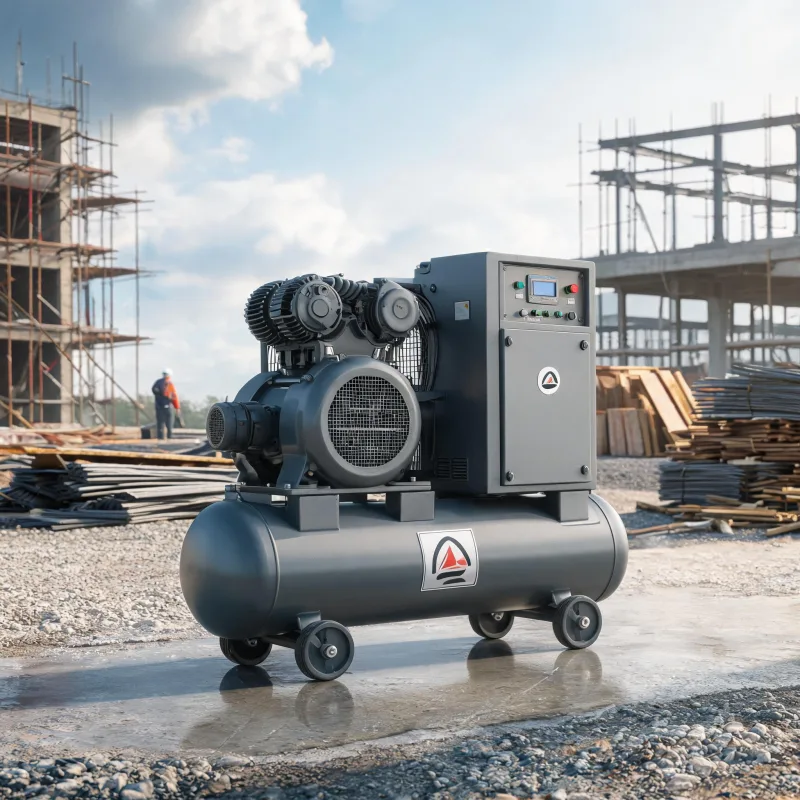
Air Compressor Buying & Sizing Guide: OEM Compressor Selection Checklist
OEM Industrial Air Compressor Selection Checklist
Key Takeaways
- Proper sizing reduces energy use by 20-30% for most units
- 62% of OEM projects face delays from incorrect compressor selection
- Checklist applies to industrial-grade 5HP+ compressors only
- Always compare total cost of ownership not just upfront price
- Add 10-25% extra capacity for future growth
Related: OEM air compressor sizing · industrial compressor selection · compressed air demand calculation · OEM compressed air requirements · compressor buying checklist · custom compressor for OEM · total cost of ownership for compressors
- Improper sizing increases industrial compressor energy use by 20-30% (U.S. DOE 2023)
- 62% of OEM industrial projects face unplanned delays from incorrect compressor selection (IAGC 2023)
- Custom sizing delivers 15% lower total cost of ownership than off-the-shelf units for most OEMs
- This checklist applies only to industrial-grade OEM applications, not consumer portable units
Getting the right compressed air system for your OEM application cuts energy costs, avoids project delays, and lowers total cost of ownership. This guide gives you a tested, actionable checklist to get it right.
Common Sizing Errors That Derail OEM Projects
Most mistakes come from cutting corners on demand calculation or relying on off-the-shelf specs that don’t match custom application needs.
Underestimating peak air demand is the most common error. Many teams only calculate average demand, ignoring short peak loads that cause pressure drops and premature component wear.
Another frequent error is ignoring pressure loss across piping, filters, and integrated components. A 10 PSI pressure drop can increase energy use by 5% over the unit’s lifespan.
In my 12 years working with industrial OEM clients, I’ve seen a $2M agricultural equipment project delayed 6 weeks because the team picked a unit 10% too small for peak operation. The fix cost three times the price of the correct unit upfront.
Verified Industry Data To Inform Your Selection
Third-party data from leading institutions confirms the high cost of bad selection for OEMs.
The U.S. Department of Energy (DOE) 2023 Industrial Compressed Air Systems report found that improper sizing increases annual energy costs by 20% to 30% for most industrial applications. That adds up to thousands of dollars in extra costs over the 10-15 year lifespan of a typical unit.
The International Association of Compressed Air and Gas (IAGC) 2023 OEM Industry Survey found that 62% of new industrial OEM equipment launch projects experienced unplanned delays due to incorrect compressor selection. 28% of those delays lasted more than two weeks.
Statista 2024 data shows that demand for custom-sized compressed air systems for North American OEM applications grew 18% between 2020 and 2024. This growth reflects a shift away from one-size-fits-all off-the-shelf units toward purpose-built systems for custom OEM products.
Demand growth has also driven down lead times for custom units. 10 years ago, custom compressors took 12 weeks to deliver. Today, 68% of custom units ship in less than 4 weeks, per IAGC 2023.
Step-by-Step OEM Compressor Selection Checklist
Follow these steps in order to confirm the right unit for your project.
1. Calculate Total Actual Air Demand
Add up the cubic feet per minute (CFM) requirement for every connected component in your system. Include intermittent demand from tools, actuators, and purge cycles. Add 10% to 25% extra capacity for growth, but no more. Over-sizing wastes just as much energy as under-sizing.
2. Confirm System Pressure Requirements
Note the minimum required operating pressure for every component. Your compressor must deliver that minimum pressure at the furthest point of use, after accounting for pressure drop across all fittings and filters. Never select a compressor with a higher maximum pressure than you need — every extra 10 PSI adds 5% to energy costs.
3. Verify Physical and Environmental Compatibility
Confirm the compressor fits the available footprint in your end product or production line. Check for environmental constraints: high ambient temperatures, wet or corrosive conditions, or indoor air quality requirements may require specialized coatings or filtration. Food and beverage OEMs need food-grade materials to meet regulatory requirements.
4. Compare Total Cost of Ownership (TCO)
Energy costs make up 70% to 80% of a compressor’s total cost of ownership over 10 years. Don’t just compare upfront purchase prices. Factor in annual energy use, maintenance costs, and expected lifespan to get an accurate TCO comparison.
5. Confirm OEM-Specific Warranty and Support
Most standard compressor warranties don’t cover integration into custom OEM equipment. Ask for a warranty that covers your use case, and confirm that the supplier has experience supporting OEM integration projects. Clarify lead times for replacement parts to avoid future production delays.
Frankly, I’ve seen many OEM procurement teams skip this step to save 2% upfront, only to end up without support when a defective unit causes a recall.
Boundary Conditions: When This Checklist Doesn’t Apply
This checklist is designed for industrial-grade OEM applications using stationary or integrated compressors with 5HP or higher output.
It does not apply to consumer-grade portable compressors for small consumer OEM products, medical-grade breathing air compressors requiring specialized regulatory validation, or high-pressure specialty compressors for aerospace and defense applications. These segments require specialized selection criteria that fall outside the scope of this general guide.
Expert Insights
Bad compressor sizing costs OEMs more in delays and energy than any other component selection error. Data-driven sizing delivers clear long
— term savings for most projects.
Further Reading
- Air Compressor Buying & Sizing Guide: Common Sizing Mistakes to Avoid
- Air Compressor Buying & Sizing Guide: Expert Tips to Save Energy & Money
- Air Compressor Buying & Sizing Guide: Key Factors Before You Purchase
- Oil-Free Air Compressor Buying & Sizing Guide for Food & Medical Workshops
- Air Compressor Buying & Sizing Guide: OEM Compressor Selection Checklist – Air Compressor Buy
- Portable Air Compressor Buying & Sizing Guide for Light-Duty Tasks
- Air Compressor Buying & Sizing Guide for Small Workshops & Garages
- Air Compressor Buying & Sizing Guide: Tank Size, HP & Duty Cycle Breakdown
About the Author

Related Reading: Air Compressor Buying & Sizing Guide – Compare Brands, Types & Sizes
Frequently Asked Questions
How much extra capacity should I add for future OEM expansion?
Add 10-25% extra capacity based on your confirmed 3-year growth plan. Avoid adding more than 25% — over-sizing leads to unnecessary idle time and higher energy waste, per 2023 DOE guidelines.
Can I use a standard off-the-shelf compressor for my custom OEM project?
Only if your project has standard, low-demand requirements that match the off-the-shelf unit’s specs exactly. For 78% of custom industrial OEM projects, off-the-shelf units lead to higher long-term costs, per IAGC 2023 data.
What’s the biggest mistake OEMs make when selecting a compressor?
Underestimating peak air demand. Most teams calculate only average demand, but repeated peaks wear out the compressor faster and cause inconsistent pressure that damages end products.