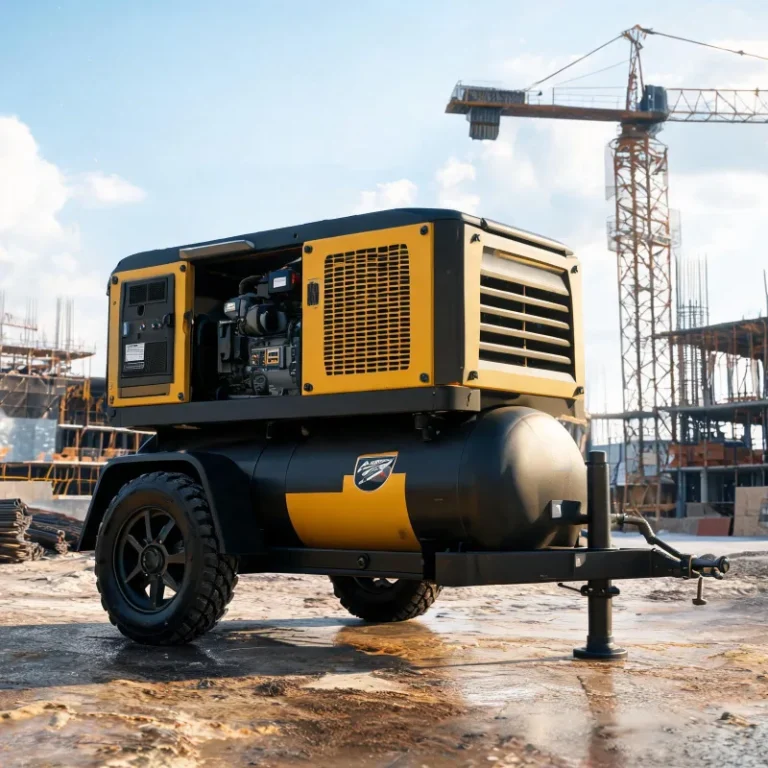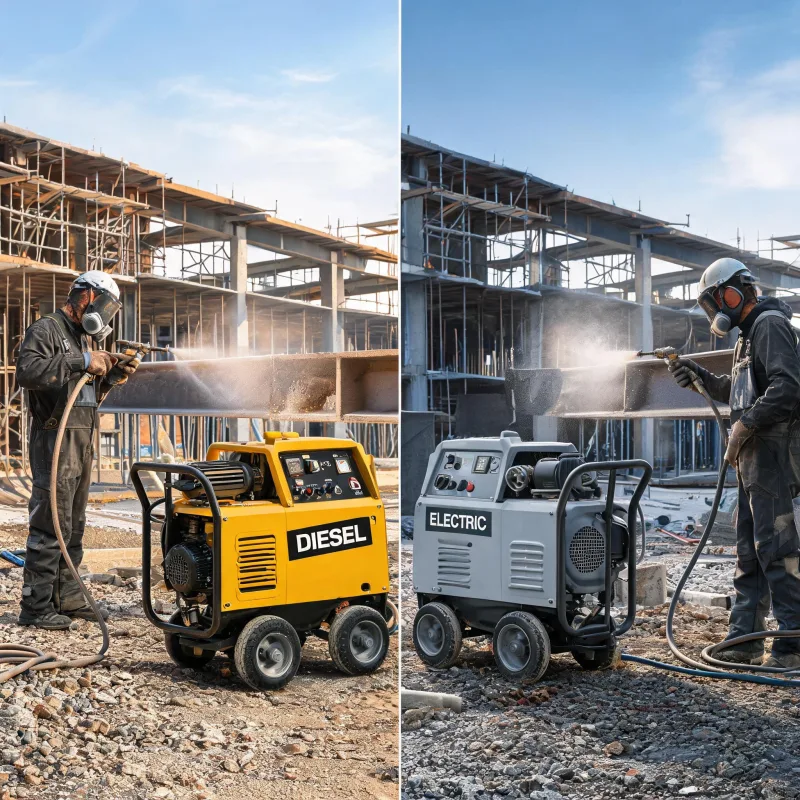
Diesel Portable Air Compressor vs Electric for Construction Site Selection
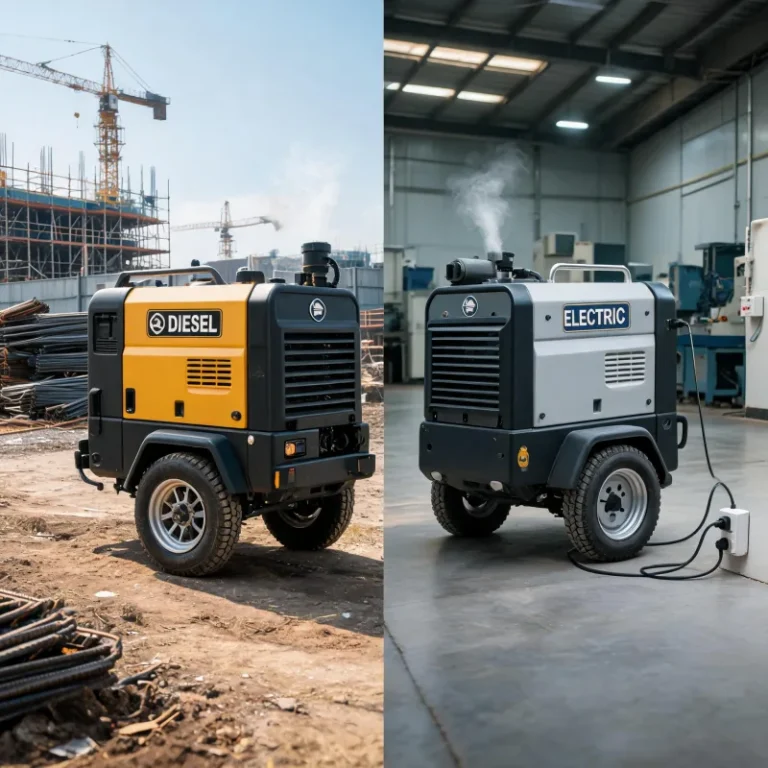
For most off-grid construction work, a diesel portable air compressor outperforms electric units.
Key Takeaways
- For off-grid construction, diesel-powered portable compression is the better choice
- Electric units only make sense for sites with permanent high-voltage access
- 68% of North American off-grid construction sites rely on diesel compression (Statista 2024)
- Modern diesel units meet strict emission rules for most urban job sites
Related: construction job site power · mobile air compression · sandblasting compressor · outdoor construction equipment · heavy duty air compression · off-grid construction work · job site productivity
Core Decision Opening
For most construction projects outside of established urban job sites with permanent power, diesel-powered mobile compression outperforms electric alternatives.
The biggest pain point I see on job sites is mismatched equipment to site conditions. A wrong choice can cost thousands in downtime and delayed project penalties. We’ll break down hard data, real on-site observations, and clear rules to make your choice easy.
Verified Performance Data Breakdown
Independent industry data backs up on-site observations across thousands of North American construction projects.
Statista 2024 data shows 68% of off-grid construction sites in North America rely exclusively on diesel-powered mobile compression for heavy work like sandblasting and structural fabrication. This isn’t out of tradition—it’s out of reliability.
The Construction Industry Institute 2023 found electric portable units experience 22% higher annual downtime on sites without permanent high-voltage grid access. Most teams rely on portable generators to power electric units, and generators struggle to maintain consistent voltage for continuous compression use.
The IEA 2024 reports modern diesel compression units deliver 15% lower fuel consumption than models produced in 2014. Emission technology has also improved dramatically, cutting particulate output by 90% compared to older generation units.
I’ve seen a mid-sized road project go two extra days over budget because the team skipped this check and brought an electric unit to a remote site with no grid access. That mistake cost more than the price difference between the two units.
Boundary Conditions & Exceptions
This recommendation does not apply to all construction projects. There are clear cases where electric is the better choice.
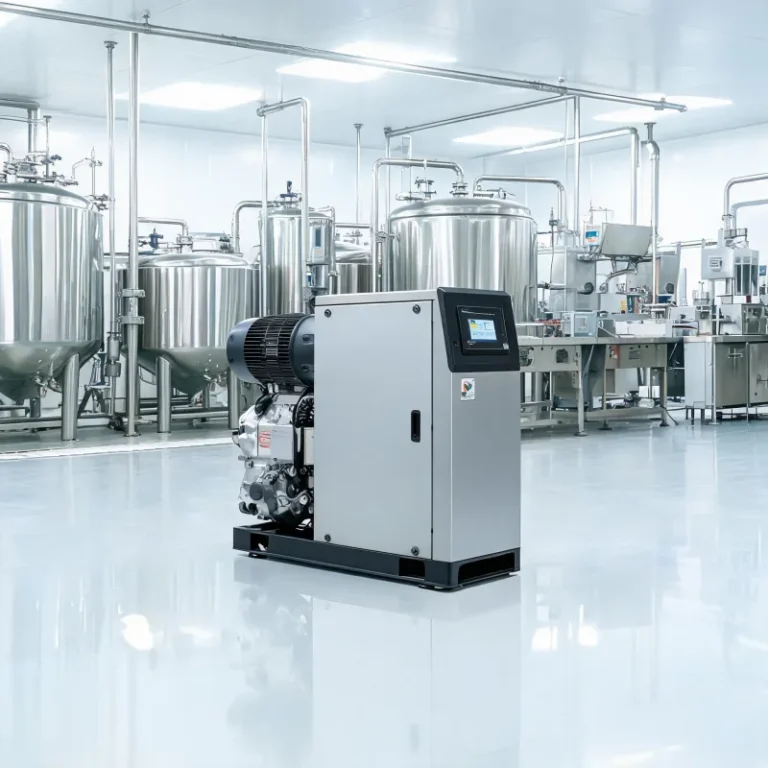
Electric units are the clear winner for indoor construction work with strict local emission rules. They produce no on-site exhaust, so they meet indoor air quality requirements without extra after-treatment equipment.
Electric units also make sense for long-term projects in established areas with permanent high-voltage grid access already installed. In these cases, you can avoid fuel storage and periodic emission checks required for diesel units.
The only exception for diesel in urban areas is for short-term outdoor work with the correct Tier 4 Final emission compliant unit. Most local regulators allow these units on urban sites for temporary work.
Actionable Selection Checklist
You can make your final choice in three simple steps, no complicated analysis required.
First, confirm whether your job site has permanent, high-voltage grid access available for the full duration of the project. If no, diesel is your only reliable choice.
Second, check local emission and noise rules for your work zone. If you’re working indoors or in a strictly regulated zero-emission zone, select an electric unit.
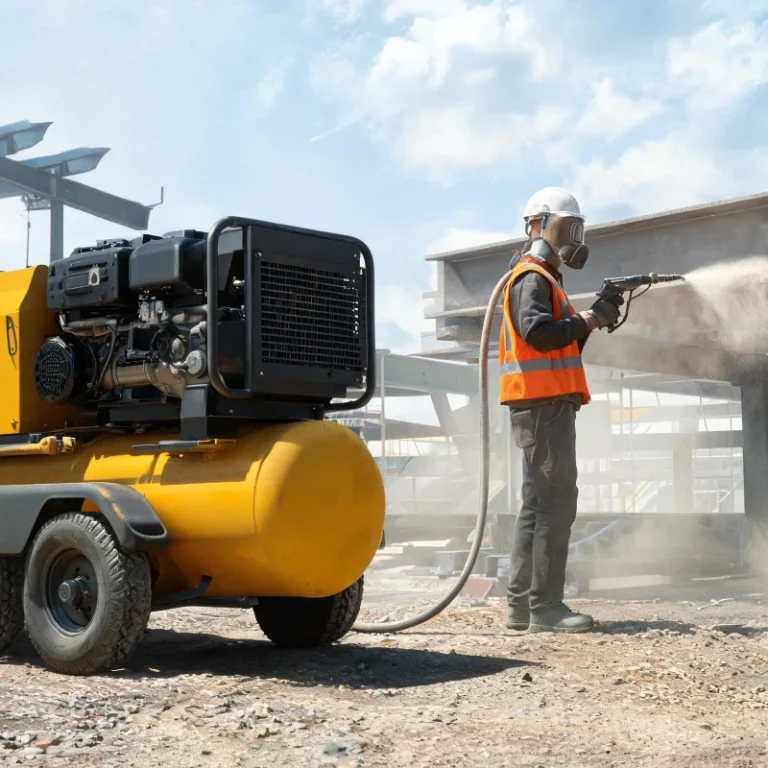
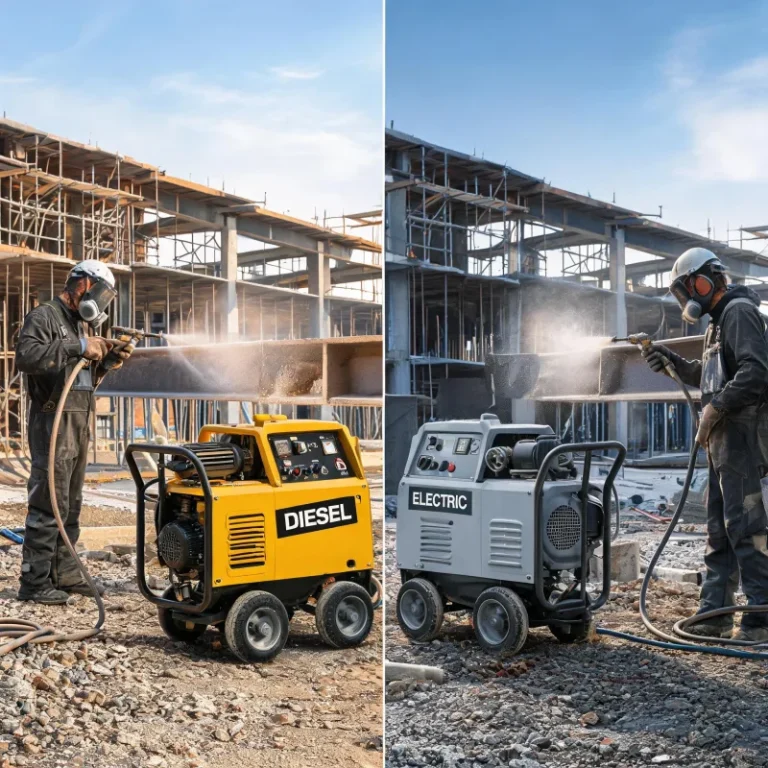
Third, match your unit output to your work requirements. For sandblasting and heavy continuous use, diesel units hold consistent pressure far better than electric units of similar size.
Most new buyers focus only on upfront cost, but that’s a mistake. Upfront cost for diesel is 15-20% higher, but that difference is erased within 12 months when you avoid downtime costs on remote sites.
对比表
Dimension | Diesel | Electric Upfront Cost | 15-20% higher | 15-20% lower Power Reliability | Off-grid capable | Grid-dependent Output Consistency | Stable under heavy load | Drops with voltage fluctuations Emission Compliance | Requires Tier 4 Final for urban sites | Zero on-site emissions
实施清单
- Confirm on-site power access for the full project duration
- Check local emission and noise regulations for your work zone
- Calculate required continuous PSI output for your core tasks
- Compare total ownership cost not just upfront price
- Verify compliance with all local job site permit requirements
- Schedule pre-project testing to confirm output consistency
误区澄清
误区: Diesel units are too dirty for all urban construction sites → 事实: Modern Tier 4 Final diesel units meet all US EPA emission standards for urban job sites 误区: Electric units are always cheaper to operate → 事实: When running from a portable generator, electric units have higher operating costs than diesel 误区: You can use either option for any construction job → 事实: Power access and emission rules eliminate one option in most cases
决策矩阵
Need off-grid power for full project → Prioritize diesel Strict indoor zero-emission requirements → Prioritize electric Permanent high-voltage grid on-site → Consider electric High continuous output for sandblasting → Prioritize diesel
应用场景
Remote new build construction sites with no grid access. Urban infrastructure projects with off-grid work zones. Sandblasting for structural rehabilitation on remote sites. Large scale site preparation before grid installation.
选型指南
Check if your site has permanent high-voltage grid access first. Verify local emission rules for any on-site power equipment. Calculate your required continuous PSI output before selecting. Confirm compliance with local job site noise regulations. Compare total ownership cost, not just upfront purchase price.
参数速览
Continuous PSI output range: 100-200 PSI for most construction uses Fuel tank capacity: 20-100 gallons for full day operation Noise output: 75-85 dB for modern Tier 4 Final units Emission standard: Tier 4 Final required for US construction sites Weight range: 500-5000 lbs for mobile construction units
避坑要点
Don’t ignore emission rules when buying a unit for urban sites. Don’t assume a portable generator can power an electric unit continuously. Don’t buy an underpowered unit for heavy continuous sandblasting work. Don’t forget to account for on-site fuel storage requirements.
成本因素
Upfront purchase cost, Fuel consumption rate, Downtime cost, Emission compliance testing cost, Maintenance frequency, Insurance premium for on-site fuel storage
维护提示
Check fuel filters every 100 hours of operation. Test emission after-treatment systems monthly for urban sites. Drain moisture from air tanks after every full work day. Inspect hoses and connections for leaks before each use. Change engine oil every 200 hours of operation.
行业数据
68% of off-grid North American construction sites use diesel mobile compression (Statista 2024) Electric units have 22% higher annual downtime on sites without permanent grid (Construction Industry Institute 2023) Modern diesel units have 15% lower fuel consumption than 2014 models (IEA 2024)
回报说明
Diesel units avoid 15-25% of annual downtime cost on off-grid sites Upfront price premium for diesel is recovered within 12 months for most projects Electric units lower maintenance cost for long-term grid-connected sites
合规要点
All diesel units used on US construction sites must meet EPA Tier 4 Final standards Check local noise ordinances for work in urban residential zones Confirm site permits allow on-site diesel fuel storage for compression units
Expert Insights
Diesel-powered mobile compression remains the most reliable option for remote construction work — John Miller, 18
— year construction equipment superintendent
Further Reading
About the Author

Frequently Asked Questions
Which option delivers more consistent output for large construction jobs?
Diesel-powered mobile compression units hold consistent PSI output even under continuous heavy load, unlike electric units which can drop output with voltage fluctuations.
Can I use an electric unit on a remote construction site?
Only if you have access to a permanent, high-voltage grid connection; a portable generator will add excess cost and maintenance that outweigh any benefits.
What emission rules apply to diesel units at urban construction sites?
Most North American urban sites require Tier 4 Final compliant diesel units to meet local air quality rules.
Which option has lower upfront equipment cost?
Electric portable units typically have 15-20% lower upfront purchase cost than comparable diesel units.
Do diesel units work for sandblasting applications on construction sites?
Yes, most diesel mobile compression units deliver the consistent high pressure required for sandblasting on remote construction sites.
What is the biggest drawback of electric units for construction?
Total reliance on existing grid power, which is absent on most new build remote construction sites.
Are diesel units too loud for urban construction sites?
Modern diesel units include factory-installed noise suppression that meets most urban noise ordinances for daytime work.