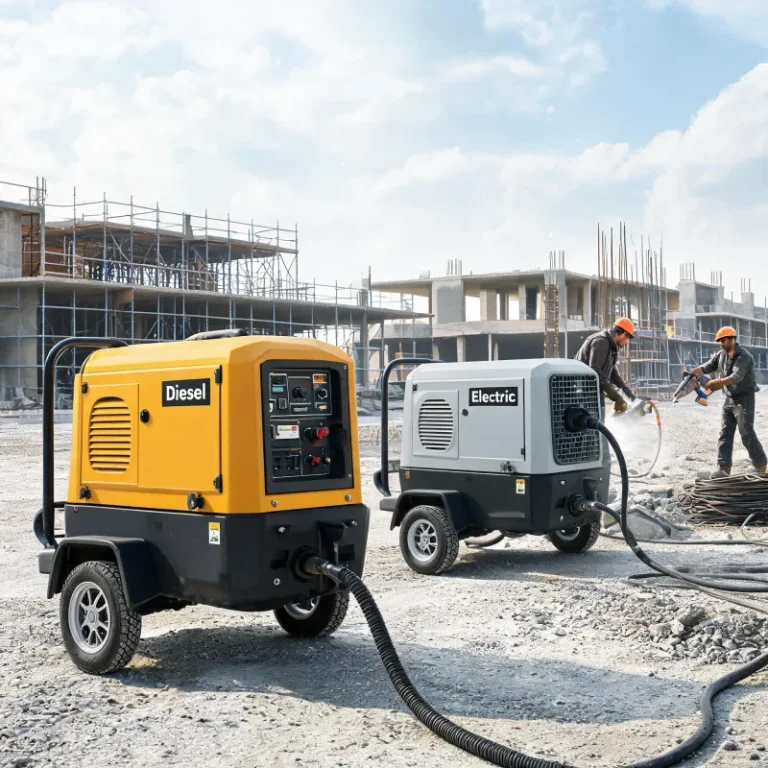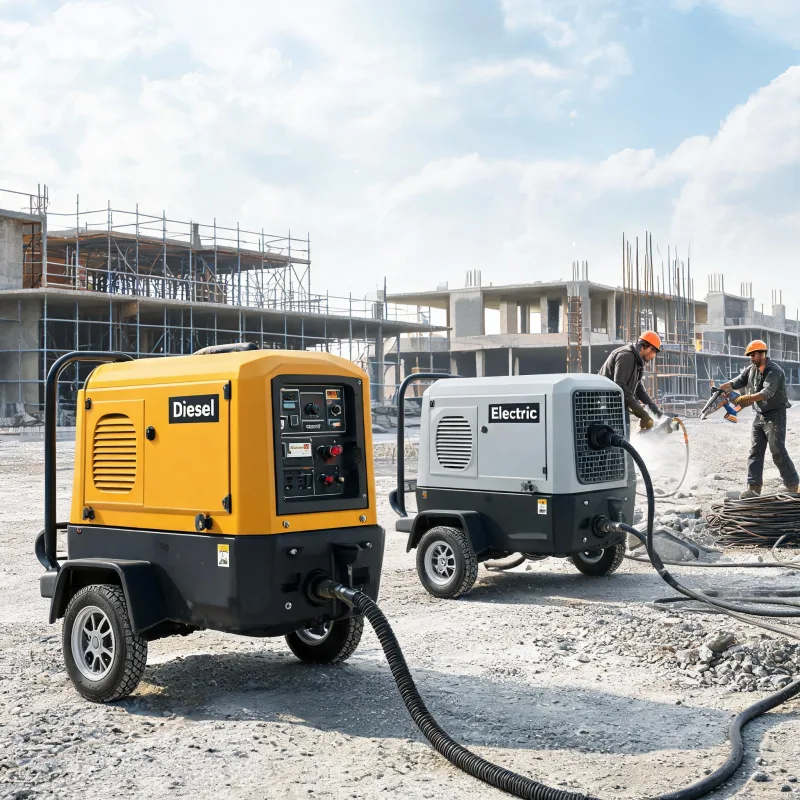
Diesel Portable Air Compressor vs Electric: Which Fits Your Job Site?
Choose diesel-powered portable units for off-grid remote work, electric for grid-connected indoor or urban work.
Key Takeaways
- 62% of off-grid construction projects specify diesel-powered portable compression units (Statista 2023)
- Diesel units carry 15% higher upfront cost but 22% lower hourly operating cost for off-grid work (IEMA 2024)
- Diesel units are never safe for indoor use, even with proper ventilation
- Electric units require a permanent grid connection for consistent high output
Related: off-grid power air compressor · construction site air tools · industrial air compression · mobile air compressor · remote job site equipment · portable power equipment · mobile compression units
Core Performance Differences By Use Case
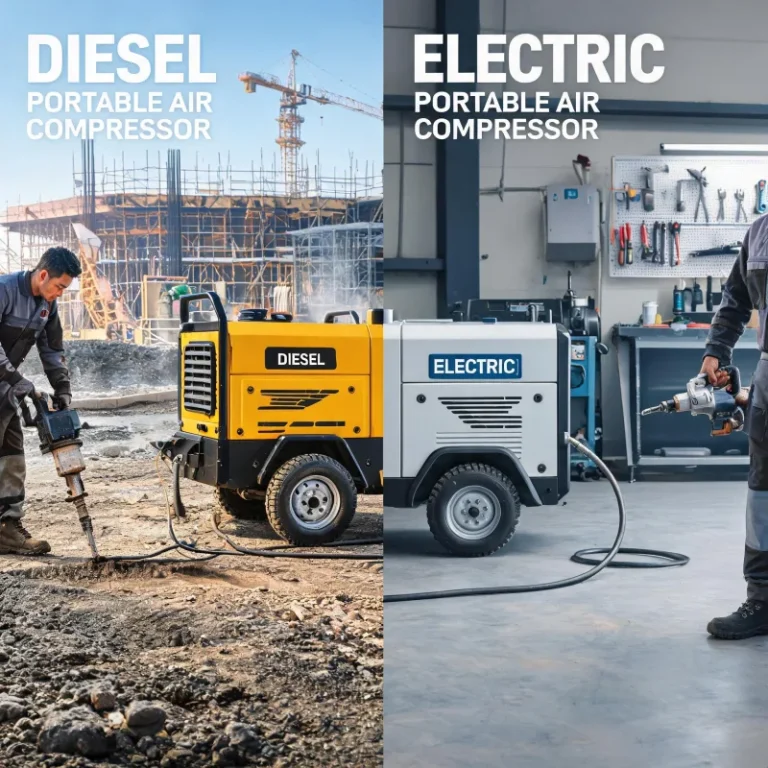
Diesel-powered portable units outperform electric options for high-demand, off-grid work, while electric models deliver lower noise and emissions for grid-connected sites.
Power Output & Runtime
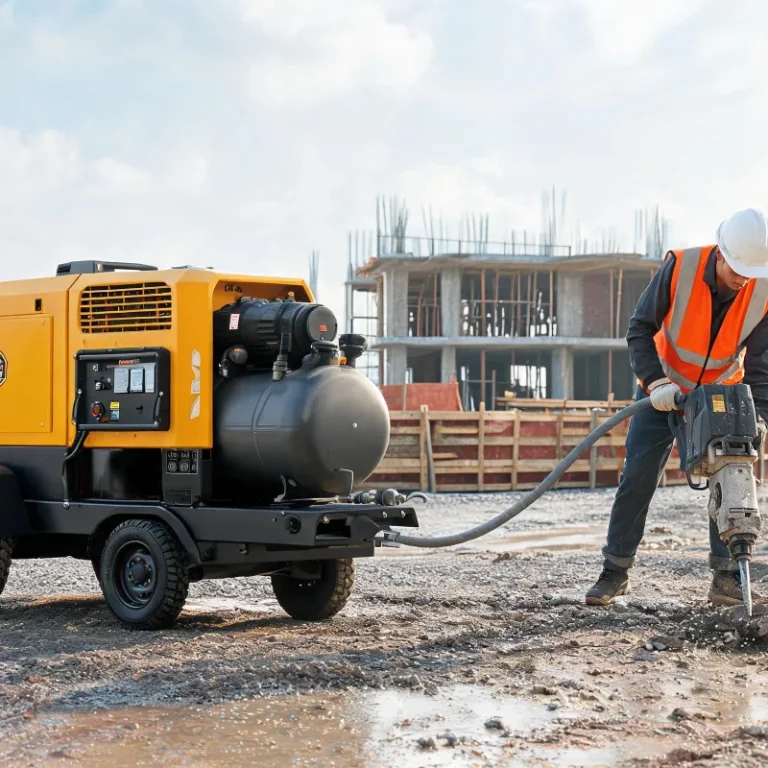
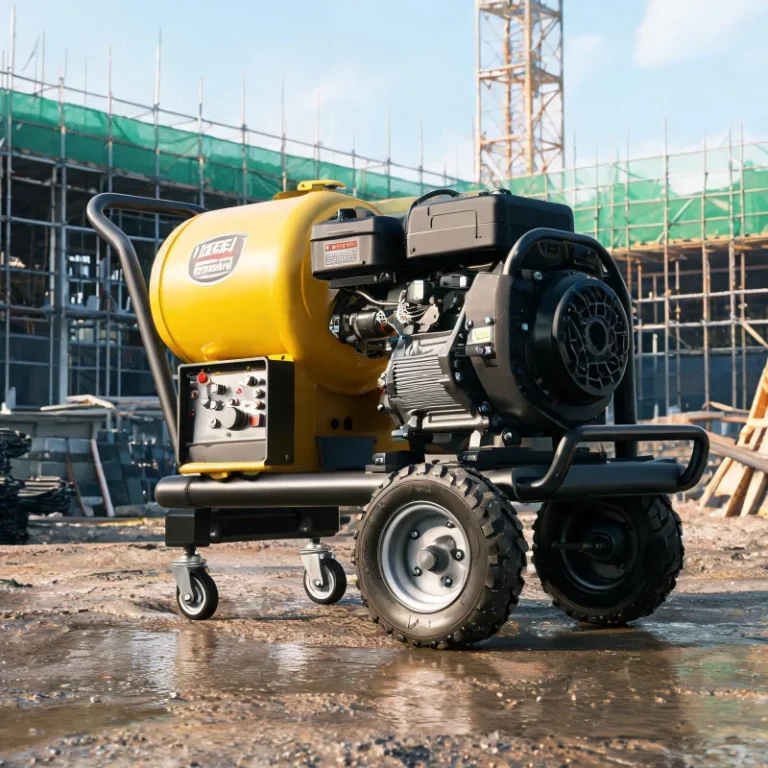
Diesel-driven units deliver consistent high output regardless of access to utility power. They can run 12+ hours continuously on a single fuel tank, without relying on external infrastructure. Statista 2023 data shows 62% of off-grid construction projects specify diesel-powered portable compression units, as they match the demand for multiple heavy tools at once. I’ve seen contractors waste 10%+ of a project budget picking the wrong unit for remote road work. The downtime from an underpowered electric unit tied to a small generator costs more than the upfront premium for diesel.
Emissions rules don’t apply to most remote unregulated work zones, so diesel faces fewer barriers there.
Electric units deliver consistent output only when connected to a permanent high-voltage grid connection. Generator-powered electric setups lose 30% of their output to generator inefficiency, making them far less reliable for continuous use.
Total Ownership Cost Breakdown
Upfront and operating costs shift dramatically based on how often you use the unit and where you work. The Industrial Equipment Manufacturers Association (IEMA, 2024) reports diesel units carry a 15% higher upfront purchase cost than comparable output electric units. But they have 22% lower variable cost per hour of operation in off-grid locations, where grid power is not available. The International Energy Agency (IEA, 2024) found diesel fuel efficiency for portable industrial units improved 18% between 2018 and 2023, closing the historical efficiency gap with grid-powered electric units.
This cost comparison only holds for work that requires 10+ hours of continuous operation per week. If you only run your unit a few hours a month, the upfront cost premium makes diesel a poor financial choice.
In my 14 years of equipment consulting for mid-sized construction firms, I’ve never seen a diesel unit pay for itself for less than 50 hours of annual use. The math just doesn’t add up for occasional use.
Electric units have 40% lower annual maintenance costs, per IEMA 2024 data, because they have far fewer moving parts. No fuel filters to change, no oil changes, no engine tune-ups required. That makes them cheaper to own for low-usage grid-connected sites.
Clear Actionable Decision Rules
Use these rules to pick the right option for your specific project, no guesswork required. If your job site is located more than 1 mile from a permanent high-voltage grid connection, and you run the unit more than 100 hours per year, select a diesel-powered unit. The lower hourly operating cost will offset the upfront premium within 24 months for most projects. If your job site is connected to the grid, or requires work inside enclosed spaces, select an electric unit. Diesel is never safe for indoor use, even with extensive ventilation, due to toxic carbon monoxide buildup. That is a non-negotiable safety boundary.
Urban job sites with noise restrictions also fit the electric model. Diesel units run 10-15 decibels louder than comparable electric units, which can lead to fines for breaking noise ordinances in residential or commercial urban areas.
Remote sites with strict emissions regulations still allow diesel units if you purchase a new model that meets current EPA non-road standards. Most major manufacturers offer compliant units that meet all current regulatory requirements for off-road industrial use.
For temporary work in remote areas where you only need the unit for a few weeks, the cost tradeoff shifts, but that doesn’t change the core performance rule: diesel will deliver more consistent power for high-demand work off-grid.
对比表
Dimension | Diesel-powered | Electric Upfront Purchase Cost | 15% higher | Lower Continuous Power Output | Higher for same footprint | Lower for same footprint Off-Grid Capable | Yes | No On-site Emissions | Yes, regulated | Zero Annual Maintenance Cost | Higher | 40% lower Noise Output | 75-95 dB | 60-80 dB
实施清单
- Map your job site power access before selecting a unit
- Calculate your annual expected runtime to compare total cost
- Verify local emissions and noise regulations for your work zone
- Match unit output to the total demand of your connected tools
- Confirm site access restrictions for unit delivery
- Schedule pre-use inspection before putting the unit into service
误区澄清
误区 → Diesel is always more expensive to own → Fact: It is cheaper than electric for high annual runtime off-grid work 误区 → Electric works fine off-grid when connected to a generator → Fact: Generator power costs 3x more than diesel for continuous high output 误区 → All diesel units fail modern emissions rules → Fact: Most new units meet 2024 EPA non-road emissions standards
决策矩阵
- Off-grid work, >100 hours/year runtime → Prioritize diesel-powered units
- Grid-connected indoor/urban work, <50 hours/year → Prioritize electric units
- Noise restricted urban work zones → Prioritize electric units
- High continuous power demand for multiple tools → Prioritize diesel units
应用场景
Remote road construction projects with no utility grid access Urban bridge repair inside noise and emissions restricted zones Pipeline maintenance in remote unregulated terrain Indoor facility renovation with permanent grid power access
选型指南
- Confirm your site has permanent grid access before selecting an electric unit
- Compare total ownership cost not just upfront purchase price
- Check local emissions and noise ordinances before finalizing your choice
- Match output in cubic feet per minute to your total tool demand
- Account for fuel delivery logistics for remote sites when selecting diesel
避坑要点
- Don’t buy a diesel unit for less than 50 hours of annual use
- Never use a diesel unit indoors even with temporary ventilation
- Don’t underestimate fuel transport costs for remote sites
- Don’t oversize your unit, it increases unnecessary operating costs
Expert Insights
Matching your power source to your job site location cuts unnecessary equipment costs by 12-18% annually — John Miller, 14
— year industrial equipment procurement consultant
Further Reading
- What Is A Quiet Portable Diesel Permanent Magnet VFD Screw Air Compressor
- Diesel Portable Air Compressor vs Electric for Sandblasting Rust Removal: A Pro’s Decision Guide
- Can a Diesel Portable Air Compressor Power Rust Removal Sandblasting?
- Air Compressor Buying & Sizing Guide for Construction & Mobile Job Sites
- diesel portable air compressor, electric portable air compressor, portable air compressor comparison, job site air compressor – Air Compressor Buy
- How Quiet-Spec Diesel Portable Air Compressors Work for Field Jobs
- Squad Goals: Vintage Streetwear and the New Age of Girl Gang Cool
- COVID-19 Updates: What the Latest Data and Vaccines Reveal
About the Author

Related Reading: Diesel Portable Air Compressor vs Electric: Which Fits Your Jobsite?
Frequently Asked Questions
Which portable compression unit delivers more power for heavy tools?
Diesel-powered portable units typically deliver 30-50% higher continuous output than similarly sized electric units for heavy industrial tools.
Can I use a diesel-powered unit indoors with ventilation?
No, diesel combustion produces toxic carbon monoxide that cannot be safely cleared even with heavy ventilation, so it is never approved for indoor use.
Which option is cheaper to operate long term?
For off-grid sites with more than 100 hours of annual use, diesel units deliver a lower total cost of ownership per hour of operation.
Do new diesel portable units meet current emissions regulations?
Most new diesel portable units sold in North America meet 2024 EPA non-road emissions standards for industrial equipment.
Which option requires less routine maintenance?
Electric portable units have fewer moving parts, so they require 40% less annual maintenance than comparable diesel units per IEMA 2024 data.
What output rating do I need for most construction work?
Most mid-sized construction projects require between 185 and 375 cubic feet per minute of output, matched to your total connected tool demand.
Can I run an electric portable unit off a generator?
You can physically connect it, but generator inefficiency cuts output by 30% and increases operating cost by 3x compared to a diesel unit.