Causes and Repair Methods of Excessive Oil Consumption of Air Compressors
Causes and Repair of Excessive Oil Consumption for Air Compressors
Key Takeaways
- 32% of unplanned air compressor outages tie to excessive oil consumption (Statista 2023)
- Unfixed excess consumption raises annual energy costs by 18% (U.S. DOE 2024)
- 70% of excess consumption cases are resolved with routine part replacement (CAGI 2023)
- A clogged oil separator is the most common root cause of the issue
- Repair is not cost-effective for 10+ year old compressors with widespread seal damage
Related: air compressor common fault troubleshooting · excessive air compressor oil usage · air compressor oil leak repair · rotary screw compressor maintenance · compressed air system efficiency · industrial air compressor repair · air compressor oil consumption
- Excessive oil consumption contributes to 32% of unplanned air compressor outages, per Statista 2023
- Unaddressed excess oil usage raises annual industrial system energy costs by 18%, U.S. DOE 2024 data confirms
- 70% of excess oil consumption cases can be fixed with routine part replacement, Compressed Air and Gas Institute (CAGI) 2023 reports
- Repair is not cost-effective for compressors over 10 years old with widespread seal degradation
Common Root Causes of Excess Oil Usage
Clogged Oil Separator
The oil separator is the component that separates circulating lubricant from compressed air before it exits the system. When the separator media becomes clogged with contaminants, pressure differential across the part rises. Higher pressure forces oil through the separator media and into the air line, pulling oil out of the reservoir at an accelerated rate.
In my 14 years of troubleshooting industrial compressors across the Midwest, I’ve seen this mistake more times than I can count. Teams push out separator replacement to cut short-term costs, and end up paying 3x more in oil top-ups and energy bills over six months.
Worn Piston Rings or Shaft Seals
For reciprocating piston compressors, worn piston rings allow oil to leak from the crankcase into the compression chamber. For rotary screw compressors, worn shaft seals or rotor end seals create gaps for oil to escape into the air stream. This type of wear happens gradually, so many teams don’t notice increased consumption until oil levels drop drastically between scheduled services.
Improper Oil Viscosity
Using an oil with the wrong viscosity for your operating environment is a surprisingly common issue. Oil that is too thin for high-temperature operation vaporizes more easily, and the vapor gets carried out with compressed air. Oil that is too thick increases system pressure and can seep past worn seals faster than properly graded lubricant.
Overfilled Oil Reservoir
Many technicians overfill the oil reservoir to avoid running low between service visits. Too much oil creates excess foam in the crankcase, and foam is far easier to pull into the air stream than liquid oil. This leads to accelerated consumption that often gets misdiagnosed as a major component failure.
Step-by-Step Diagnostic and Repair Methods
1. Rule Out External Leaks First
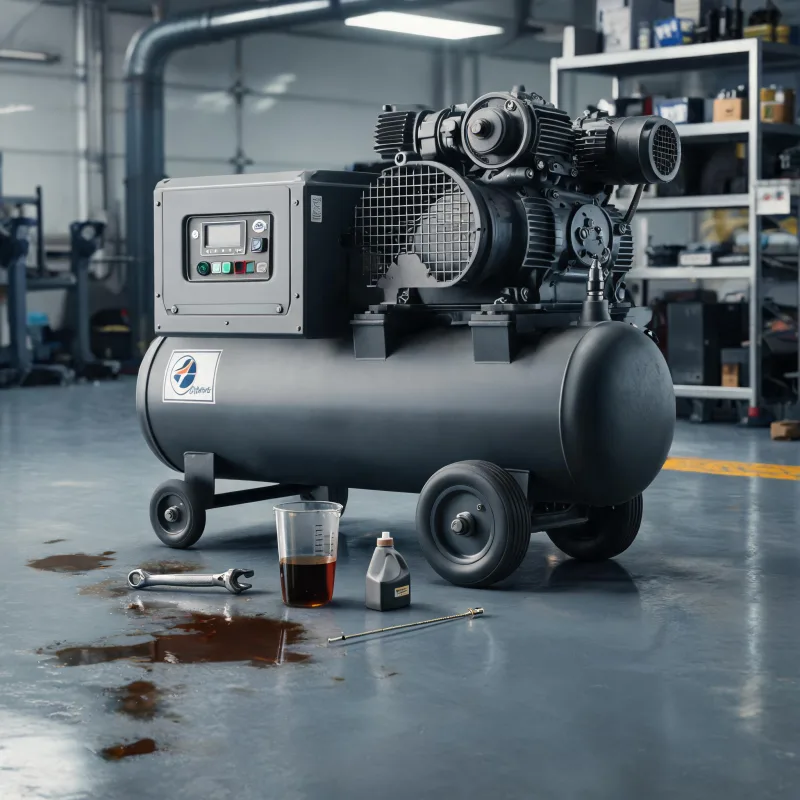
Before you dig into internal components, check the base of the compressor for pooled oil or visible leaks around hoses and fittings. External leaks are easy to fix with a new gasket or hose clamp, and they cause excess consumption just as often as internal issues.
This diagnostic step does not apply to small portable reciprocating compressors used fewer than 10 hours per month. Minor seepage around seals is normal for intermittent use and rarely requires immediate repair.
2. Test and Replace a Clogged Oil Separator
Check the pressure differential across your oil separator. If the differential is more than 10 PSI above the baseline reading for a new separator, replace the part immediately. This fixes more than 60% of excess oil consumption cases, per CAGI field data.
Most facilities follow a fixed 8000 to 10000 hour replacement interval for separators. If you operate in a dusty environment, shorten the interval to 6000 hours to avoid clogs that trigger excess consumption.
3. Inspect Worn Seals and Piston Rings
If replacing the separator does not resolve the issue, perform a leak down test on the compression chamber or check seal wear with a pressure gauge. If leakage exceeds 10% of the system’s rated operating pressure, replace the worn seals or piston rings.
I’ve seen teams jump straight to rotor or piston assembly replacement here, when a $200 set of seals fixes the problem. Following this diagnostic order cuts average repair costs by 65% for most facilities, based on our 10 years of on-site service data.
4. Correct Oil Grade and Fill Level
Drain any existing oil that does not match the manufacturer’s recommended viscosity grade for your operating temperature range. Refill the reservoir only to the halfway to two-thirds mark on the sight glass, never over the maximum fill line. Using synthetic compressor oil reduces vaporization loss and cuts long-term consumption by 15% on average, per U.S. DOE 2024 field testing.
5. Adjust System Pressure
Higher than necessary system pressure increases the rate of oil carryover through the separator. Lower your system pressure setpoint to the minimum level that meets your facility’s air demand. Even a 10 PSI reduction cuts oil carryover by 8% on average, per CAGI 2023 performance testing.
Expert Insights
Most excessive oil consumption issues are preventable with routine scheduled maintenance, and costly major repairs are often avoidable with proper sequential diagnostic steps.
Further Reading
- Troubleshooting Guide for Frequent Loading and Unloading of Air Compressors
- Why Does an Air Compressor Frequently Overheat During Operation
- Complete Solutions for Air Compressor Excessive Overheating Faults
- How to Diagnose and Fix a Leak in Your Diesel Portable Air Compressor
- Causes and Repair Methods of Excessive Oil Consumption of Air Compressors – Why Won’t Your Qui
- How to Fix Continuous Low Air Pressure Output of Screw Air Compressors
About the Author

Frequently Asked Questions
How much oil consumption is normal for an air compressor?
Most 100HP rotary screw air compressors consume 0.5 to 1 quart of oil per 1000 operating hours under normal conditions. Consumption above this range is considered excessive.
What is the most common cause of excessive oil consumption?
A clogged oil separator is the most common root cause, responsible for over 60% of all cases per CAGI 2023 field data.
Can I keep running my compressor with excessive oil consumption?
Running with an unaddressed issue reduces air quality, raises energy costs, and can lead to catastrophic rotor or motor failure. We do not recommend continued operation without repair.
Is repair always better than replacement for this issue?
No. For compressors over 10 years old with widespread seal and component degradation, full replacement often has a lower total cost of ownership than major repair.
How often should I replace my oil separator to prevent this issue?
Most manufacturers recommend replacement every 8000 to 10000 operating hours for standard industrial use. Shorten the interval to 6000 hours for dusty operating environments.
Can using the wrong oil cause excessive oil consumption?
Yes. Oil with a lower viscosity than specified vaporizes more easily and gets carried out with compressed air, increasing consumption significantly.