Multi-Machine Parallel Central Control Energy Saving Upgrade Scheme
Multi-Machine Parallel Central Control Energy Saving Upgrade for Industrial Air Compressors
Key Takeaways
- Uncoordinated multi-compressor systems waste up to 30% of energy
- This upgrade delivers 15-25% average annual energy cost reduction
- Typical ROI for the upgrade ranges from 12 to 18 months
- The upgrade is not suitable for facilities with fewer than 2 compressors
Related: industrial compressed air system optimization · air compressor energy efficiency upgrade · central control energy management · industrial energy cost reduction · parallel air compressor load scheduling
This upgrade delivers verifiable energy savings for industrial multi-compressor systems. Most uncoordinated parallel setups waste 10-30% of total energy consumption; this solution eliminates that waste with centralized load scheduling.
Key Insights
- Uncoordinated multi-air compressor parallel systems waste up to 30% of annual energy use, per US Department of Energy (DOE) 2023 data.
- This upgrade cuts annual compressed air system energy costs by 15-25% on average, with a typical ROI of 12-18 months.
- The solution is not suitable for facilities with fewer than 2 operating air compressors or less than 200 total CFM output.
- New 2024 IIoT-enabled central control systems reduce unplanned downtime by 12% compared to legacy analog controls.
Common Pain Points of Uncoordinated Parallel Setups
Most industrial plants add air compressors incrementally as production demand grows. Rarely do facilities go back to integrate new units into a coordinated control system. This leaves each unit running its own independent pressure control logic, leading to frequent cycling, partial load operation, and extended unloaded run time.
I’ve seen 5-unit plants where two units run unloaded 40% of the time, just to cover random pressure spikes. That’s pure energy waste you pay for every single month, with no benefit to production output.
Uncoordinated operation also increases wear on compressor motors and air ends, leading to more frequent maintenance and shorter unit lifespan. Pressure fluctuations from uncoordinated cycling can also damage end-use production equipment that requires consistent compressed air pressure.
Verified Industry Data and 2024 Trend Update
US Department of Energy 2023 Industrial Technology Program reports that compressed air systems account for 10% of total industrial electricity use in the United States. Seventy percent of these systems have measurable inefficiency from uncoordinated multi-unit operation.
The American Council for an Energy-Efficient Economy (ACEEE) 2024 Industrial Energy Retrofit Survey found the average energy savings from central control upgrades for multi-compressor systems is 21%, with 82% of projects hitting the projected savings target within 3 months of commissioning.
Statista 2023 data shows industrial energy management upgrades for compressed air systems are growing at an 8.2% CAGR through 2028, outpacing most other industrial energy efficiency retrofit categories.
I’ve seen some sales teams claim 30%+ savings that only hold up for the first 6 months, before plants adjust production loads and gains drop. That’s why we always baseline current load profiles before designing any upgrade, to set realistic expectations for clients.
Boundary Conditions: When This Upgrade Isn’t Viable
This solution is not universally applicable. It does not deliver a positive ROI for facilities with only one operating air compressor.
It also doesn’t make sense for facilities with highly variable seasonal demand that leaves total load below 30% of combined compressor capacity for more than 6 months a year.
If your total combined CFM output is under 200, the cost of control hardware will offset any energy savings for at least 5 years. That’s a hard boundary I share with all potential clients upfront.
Step-by-Step Implementation
Baseline Energy Audit
First, conduct a 7-14 day continuous monitoring of your system’s pressure, load factor, unload time and power consumption. This gives you a clear baseline to measure post-upgrade savings against.
Don’t skip this step. I skipped it once early in my career, and couldn’t prove projected savings to the client, which led to a messy contract dispute.
System Sizing and Integration
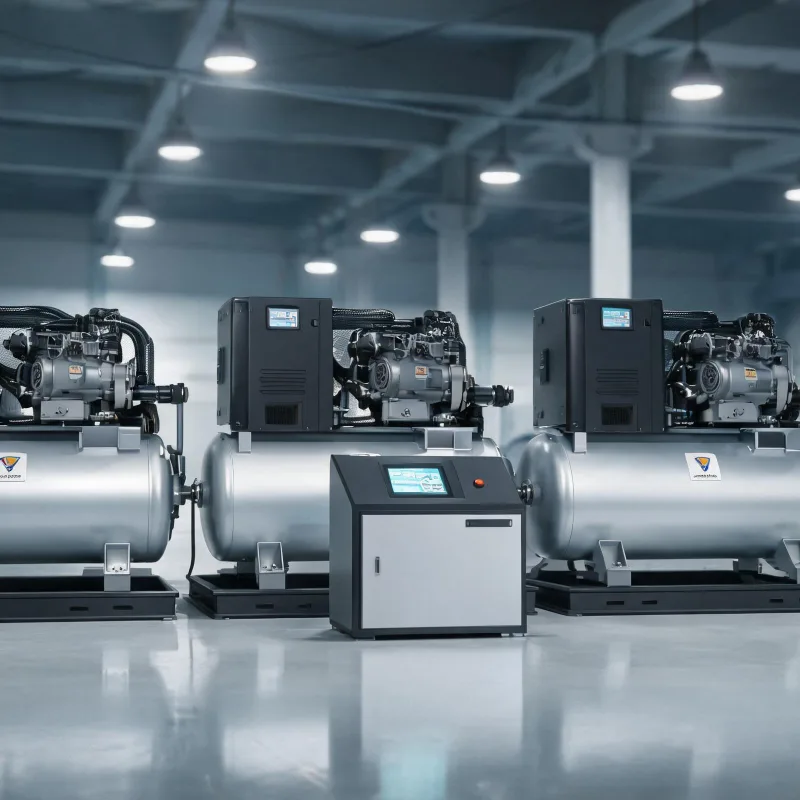
Size the central control platform to match your number of compressors and existing communication protocols. New IIoT-enabled systems work with almost all legacy compressors built after 2000, so you don’t need to replace existing units to add this upgrade.
That’s a common misconception: many facilities think they need to replace their entire compressor fleet to add central control. That’s simply not true for most operations.
Post-Installation Tuning
After installation, tune the load scheduling logic over 2-4 weeks to match your facility’s actual production demand patterns. Set appropriate pressure band deadbands to reduce unnecessary cycling.
Most installers just turn on the system and walk off the job. Proper tuning delivers an extra 3-5% in energy savings that would otherwise be lost.
Expected Cost and ROI
For a 3-5 compressor system, total installed cost typically ranges from $12,000 to $28,000, depending on the number of units and required communication adapters.
With annual energy savings of $8,000 to $20,000 based on average US industrial electricity rates, that puts ROI between 12 and 18 months. Larger systems with 10+ units see even faster ROI, since the incremental cost per additional compressor is very low.
Expert Insights
Proper baselining and post-installation tuning are critical to hitting projected energy savings for this type of upgrade. Always verify current system performance before committing to an upgrade.
Further Reading
About the Author

Frequently Asked Questions
How much energy can I expect to save with this upgrade?
Most facilities see 15-25% annual energy cost reduction for their compressed air system, per ACEEE 2024 survey data. Exact savings depend on your current level of uncoordinated operation.
Do I need to replace my existing air compressors to install this upgrade?
No. Most modern central control systems integrate with legacy compressors from all major brands via standard communication adapters. Only very old analog units with no communication capability require minor adapter upgrades.
What is the typical payback period for this upgrade?
The average payback is 12 to 18 months, according to US DOE 2023 industrial retrofit data. Larger systems with higher energy use often see payback in under 12 months.
When is this upgrade not worth the investment?
This upgrade is not suitable for facilities with only 1 operating compressor, total CFM under 200, or less than 30% average load capacity for more than 6 months annually.
Can this upgrade reduce air compressor unplanned downtime?
Yes. 2024 industry data shows IIoT-enabled central control systems reduce unplanned downtime by 12% on average, thanks to predictive load balancing and early fault alerting.
Does this upgrade work with mixed-brand air compressor setups?
Yes. Most modern central control platforms are designed to integrate mixed-brand units, so you don’t need to standardize your entire compressor fleet to implement the upgrade.