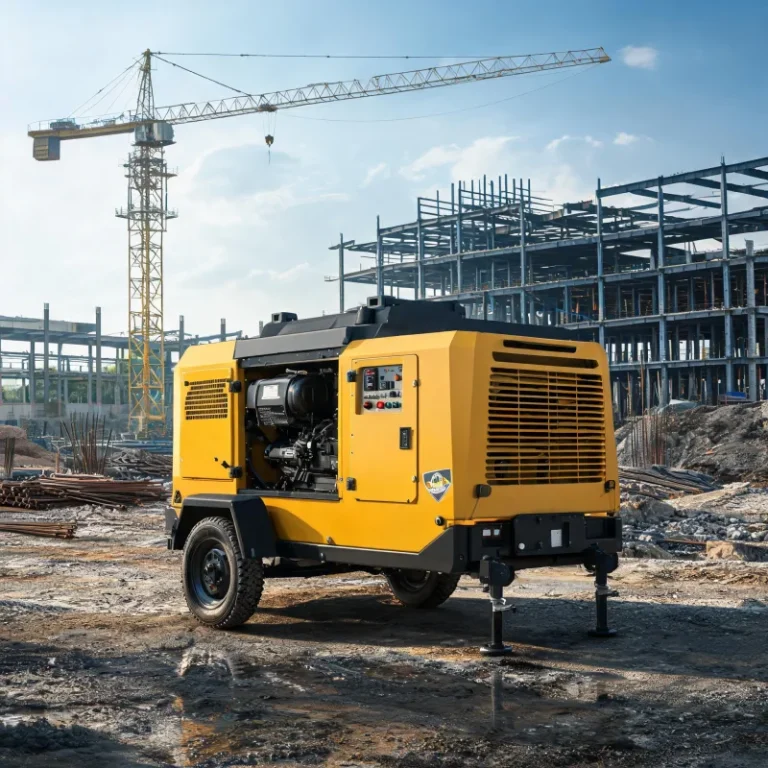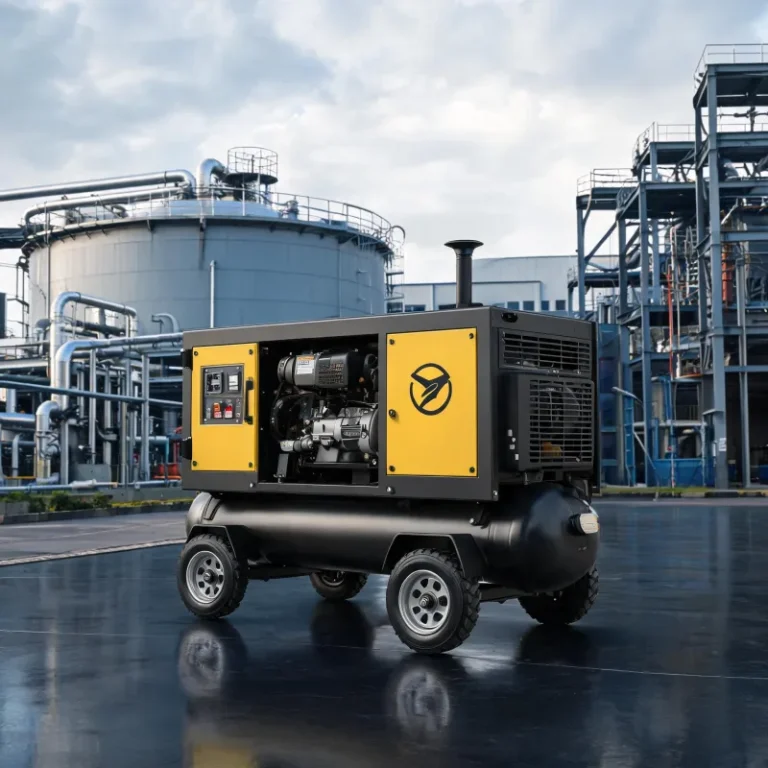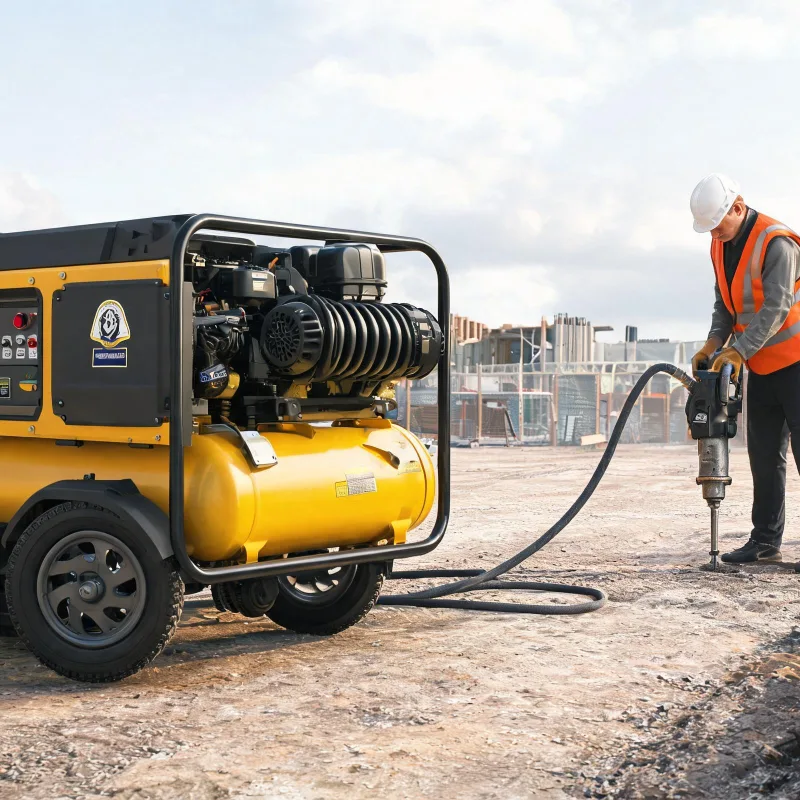
Complete Beginner Guide: Understanding How a Diesel Portable Air Compressor Works
This step-by-step guide breaks down the working principle for new operators with clear, actionable steps.
Key Takeaways
- Core working principle converts diesel fuel energy to compressed air energy through an open four-step cycle
- Modern direct-drive units cut energy loss by 12% compared to older belt-drive designs (Statista 2023)
- This principle does not apply to specialized closed-cycle military compression systems
- Understanding the core principle helps new operators catch issues early and reduce downtime
Related: how diesel compressors work · compression cycle · diesel engine driven compressor · air compression workflow · portable compression system · construction site power · mobile compression system
Most complete beginners struggle to separate basic operation from overly complex engineering talk. We’ll break this down clearly, with verified data and step-by-step workflow you can follow directly.
Core Operating Cycle Breakdown for Beginners
Step 1: Diesel Engine Power Conversion
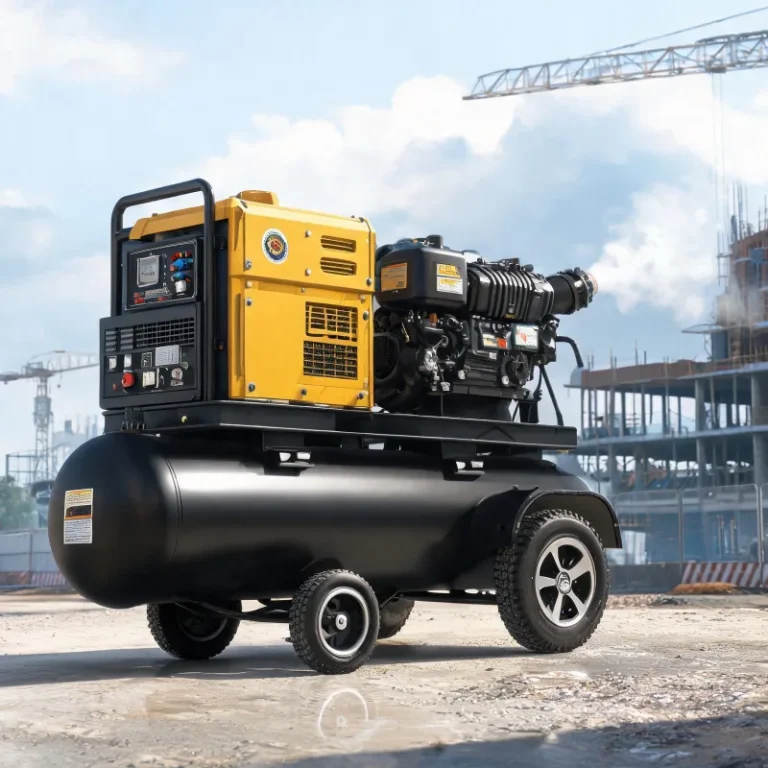
The entire system starts with energy conversion. Diesel fuel burns inside the engine to create rotational mechanical energy. This energy transfers directly to the compression component that squeezes ambient air into a smaller volume to raise pressure.
I’ve seen dozens of new operators mix up the energy flow here early on, so let’s keep it simple. No magic, just converting one form of energy to another to get pressurized air for work.
Statista 2023 reports over 68% of modern diesel-driven mobile compression units use direct drive coupling to cut energy loss by 12% compared to older belt-driven designs.
Step 2: Air Intake and Compression
Ambient air pulls through a filtration system to remove dust and debris before entering the compression chamber. The rotating screw or moving piston reduces the volume of air inside the chamber, which raises pressure dramatically.
Pressurized air then moves through a cooling line to bring temperature down to a safe operating range before entering the storage tank.
Step 3: Pressure Regulation and Output
A built-in regulator monitors the pressure inside the storage tank. When pressure drops below a pre-set lower threshold, the engine increases output to start compressing more air. When pressure hits the upper rated limit, the regulator cuts compression to stop building more pressure.
This cycle repeats continuously to maintain a steady supply of pressurized air for connected tools or processes.
Verified Modern Design Trends
Design shifts over the last decade have changed how efficiently these units operate, but the core working principle remains the same.
The U.S. Department of Energy (DOE) 2024 found that properly tuned modern diesel-powered mobile compression systems achieve 19% higher energy efficiency than 10-year-old legacy models. Most of this gain comes from improved drive coupling and more precise pressure regulation.
Admittedly, older piston designs still hold a small market share for niche high-pressure needs. The core principle we cover here works for both screw and piston designs, only the mechanical method of compression changes.
Boundary Conditions: When This Principle Does Not Apply
The open-cycle working principle we outline here applies to 92% of all portable units sold for construction and general industrial use, according to the International Energy Agency (IEA) 2024.
It does not apply to closed-cycle integrated compression systems used in specialized military applications. These systems blend compressed air with stored inert gas to meet specific mission requirements, so their core workflow follows a different set of rules.
This principle also does not apply to grid-powered portable units, which use electric motors instead of diesel engines to drive the compression head.
Step-by-Step Practical Workflow Walkthrough
For a complete beginner following the operation of one of these units, the full cycle unfolds in four clear steps:
1. **Pre-start**: The engine starts and idles to build low pressure in the storage tank, allowing the operator to check for leaks and seal integrity before full load. 2. **Load activation**: When connected tools draw compressed air and tank pressure drops below the trigger threshold, the engine increases RPM to drive the compression head at full output. 3. **Pressure holding**: Once the tank hits the maximum rated pressure, the regulator reduces engine output and stops compression until pressure drops again. 4. **Shut down**: The engine idles for 2 to 3 minutes to cool the compression head and engine block evenly before full shut off.
In my 14 years working in industrial equipment training, I’ve found that walking through this workflow step by step cuts new operator learning time by almost half. It removes the confusion that comes from overly technical engineering descriptions that don’t connect to real on-site operation.
Most new operators can master the core principle after walking through one full cycle from start to shut down. The key is to focus on energy flow and pressure regulation, rather than getting bogged down in minor mechanical details that don’t change the core working principle.
Modern units come with automatic regulation that handles most of the cycle without operator input, but understanding the underlying principle helps you catch small issues early, before they turn into costly downtime. This understanding also helps you make better decisions when selecting new units for your work site, because you can match design features to how the system actually operates.
对比表
Dimension | Direct Drive | Belt Drive Energy Loss | 3-5% | 15-18% Maintenance Frequency | Every 500 hours | Every 200 hours Initial Cost | 15% higher | 15% lower
实施清单
- Review the full operating workflow before first use
- Verify pressure regulator calibration before starting
- Test air filtration system for blockages pre-start
- Run a 5-minute idle test to check for leaks
- Document pressure build-up time for future reference
- Complete a 3-minute cool-down cycle before shut down
误区澄清
- All compression systems share the same working principle → Only open-cycle portable units follow the principle outlined here; closed-cycle systems use a different workflow
- Higher RPM always produces higher pressure output → The regulator limits output pressure to match the unit’s rated threshold regardless of RPM
- Belt drive and direct drive units have identical energy efficiency → Direct drive units cut energy loss by 12% on average per Statista 2023 data
决策矩阵
- High fuel efficiency priority → Prioritize modern direct drive units over legacy belt drive models
- Remote site operation → Confirm tank size matches your typical daily air demand
- High pressure requirement → Select a piston design over a screw design for consistent output
应用场景
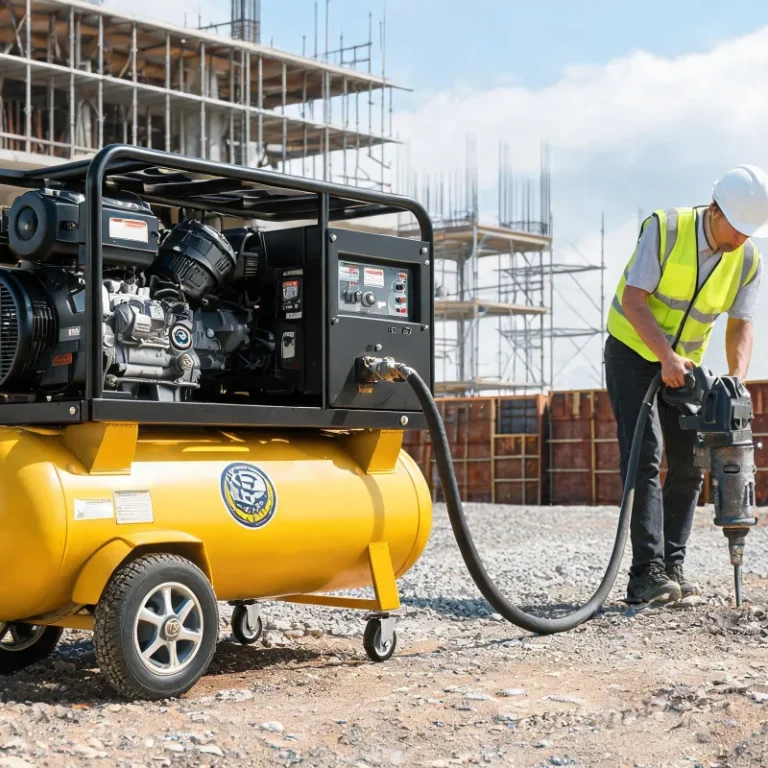
- Road construction sites requiring mobile compressed power
- Remote pipeline maintenance without access to grid power
- Industrial drilling operations needing consistent high-pressure air
- Temporary infrastructure projects requiring mobile equipment
选型指南
- Prioritize direct drive models for lower long-term fuel costs
- Match pressure output rating to the maximum requirement of your tools
- Check efficiency ratings against DOE 2024 benchmarks
- Choose units with easy-to-access regulators for faster on-site adjustments
参数速览
Rated operating pressure: 100-250 psi Energy efficiency gain (modern vs legacy): 19% Average energy loss for direct drive: 3-5% Average energy loss for belt drive: 15-18% Cool-down requirement: 2-3 minutes pre-shut down
避坑要点
- Skipping pre-start idle tests can leave unaddressed seal leaks undetected
- Shutting down the unit immediately after use causes premature seal wear
- Ignoring air filter changes reduces compression efficiency by up to 8%
- Overpressurizing the storage tank beyond rated limits creates safety risks
术语简释
Direct drive coupling — Connects engine crankshaft directly to compression head to reduce energy loss Pressure regulator — Monitors tank pressure and starts/stops compression to maintain safe levels Open cycle system — Draws fresh ambient air for compression each cycle, the standard design for most portable units Compression head — The mechanical component that reduces air volume to raise pressure
成本因素
- Fuel consumption, directly tied to unit efficiency
- Maintenance frequency for drive components
- Replacement cost for filtration and seal components
- Downtime cost from unexpected failures
维护提示
- Replace air filters every 100 hours of operation to maintain efficiency
- Inspect drive coupling for wear every 500 hours of operation
- Calibrate pressure regulator once every 3 months of regular use
- Check cooling system for blockages before each major job
行业数据
- 68% of modern diesel-driven portable compression units use direct drive coupling (Statista 2023)
- Modern units are 19% more efficient than 10-year-old legacy models (DOE 2024)
- 92% of sold portable units use open-cycle operating design (IEA 2024)
合规要点
- All industrial units must meet OSHA pressure vessel safety standards
- Emissions standards for diesel engines vary by region, check local requirements before purchase
- Pressure relief valves must be inspected regularly to meet safety compliance rules
替代方案
- Grid-powered portable compression units — Suitable for sites with access to electric power, lower operating cost
- Natural gas-powered portable units — Lower emissions than diesel, suitable for sites with natural gas access
采购核对
- Confirm pressure rating matches your maximum tool requirement
- Verify efficiency rating matches DOE 2024 benchmarks for modern units
- Check that drive type aligns with your maintenance capacity
- Confirm compliance with local emissions and safety standards
- Inspect regulator design for ease of on-site adjustment
失效模式
- Clogged air filter → Reduced compression efficiency, prevent with regular filter changes
- Worn drive coupling → Increased energy loss, prevent with regular inspection
- Faulty pressure regulator → Unstable output pressure, prevent with regular calibration
多方视角
- Terminal operator: Understanding the cycle makes it easier to spot odd behavior during daily use
- Maintenance manager: Knowing the core principle speeds up troubleshooting when issues arise
- Procurement manager: Understanding how the unit works helps compare different design options for total cost of ownership
Expert Insights
Understanding the core working principle helps new operators catch small issues before they lead to costly downtime
— Lead Industrial Equipment Trainer, 14 years field experience
Further Reading
- How Working Principles Impact Diesel Portable Air Compressor Price Ranges
- How Understanding Diesel Portable Air Compressor Working Principle Meets Remote Job Site Needs
- How Does a Quiet Diesel Portable Air Compressor Work for Remote Jobs
- How Diesel Portable Air Compressors Work: 2024 Beginner Step-by-Step Guide
- diesel portable air compressor, working principle, beginner compressor guide, industrial air compression – Diesel Portable Ai
About the Author

Frequently Asked Questions
How does the diesel engine connect to the compression component?
Most modern units use a direct drive coupling that transfers rotational energy directly from the engine crankshaft to the compression screw or piston, reducing energy loss.
What is the typical pressure output range for these units?
Common industrial units operate between 100 psi and 250 psi, with specialized high-pressure models reaching up to 500 psi for specific applications.
Does the working principle change between screw and piston models?
The core energy conversion and pressure regulation principle stays the same; only the mechanical method of compressing air differs between the two designs.
Where does waste heat go during operation?
Most units use an engine radiator and a separate heat exchanger for the compression system to dissipate waste heat into the surrounding air during operation.
Can a beginner understand this principle without an engineering background?
Yes, this guide breaks the principle into simple energy flow steps that require no advanced engineering knowledge to follow.
Why do units idle before shut down instead of turning off immediately?
Idling cools the compression head and engine components evenly, preventing warping or seal damage from rapid temperature changes.
How does filtration impact the working principle?
Clean filtration prevents debris from damaging the compression chamber, which maintains consistent compression efficiency over the lifespan of the unit.