How Does a Quiet Diesel Portable Air Compressor Work for Remote Jobs
A quiet diesel portable air compressor uses a diesel engine to drive a compression head, compressing ambient air for remote on-site use.
Key Takeaways
- Core operation relies on a diesel engine driving a compression head to compress ambient air
- Modern quiet portable models use sound-dampening enclosures to cut noise output
- These units are ideal for remote on-site jobs without access to grid power
- They are not suitable for long-term 24/7 operation or enclosed indoor spaces
Related: how diesel air compressor works · on-site power supply · compressed air working principle · remote construction air supply · diesel engine driven compressor · mobile compressed air system
How Does a Quiet Diesel Portable Air Compressor Work for Remote Jobs
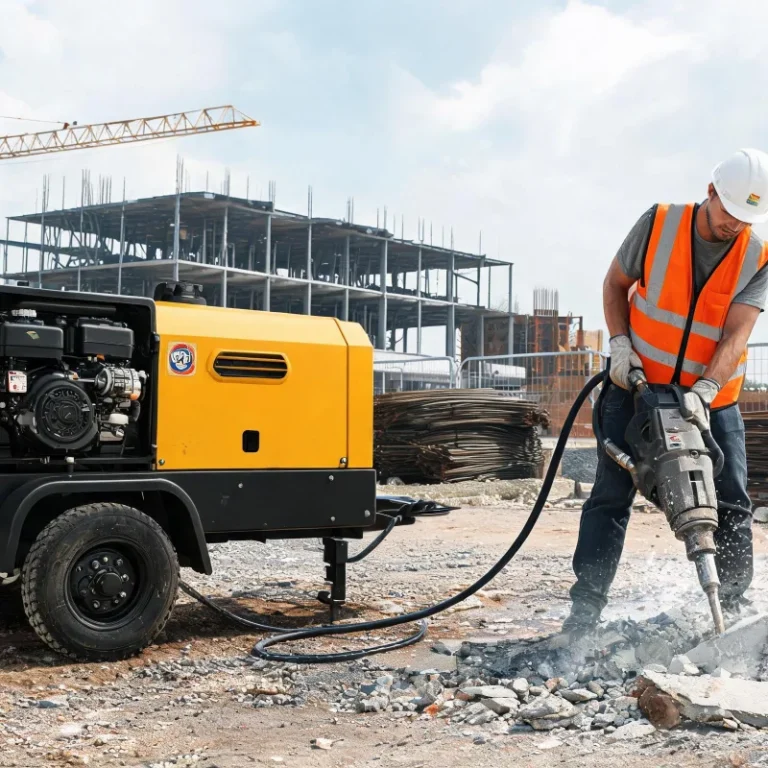
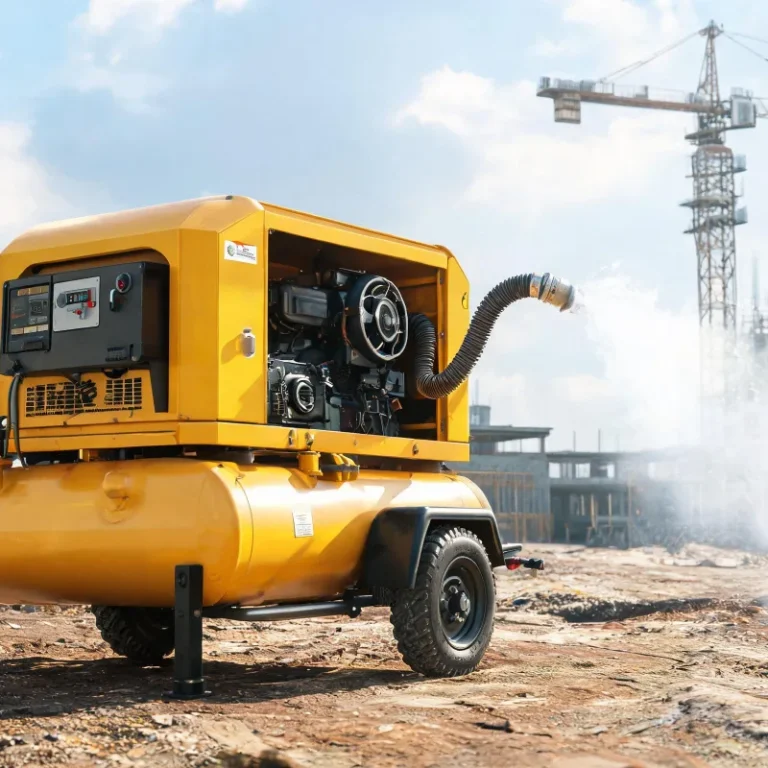
A portable diesel-powered compression unit generates compressed air independent of grid power, designed for mobility and low noise output for remote work.
Core Components of a Quiet Portable Unit
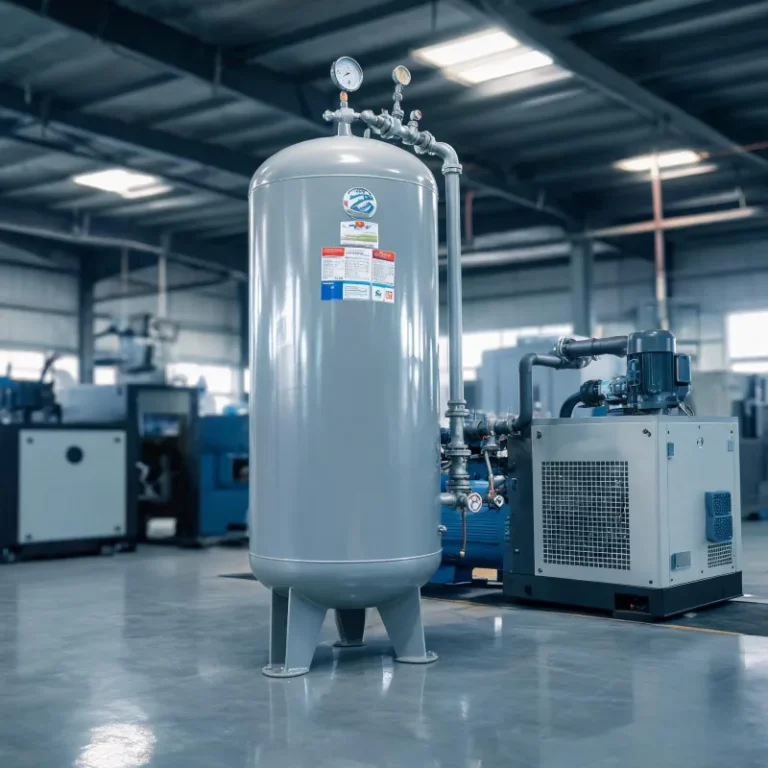
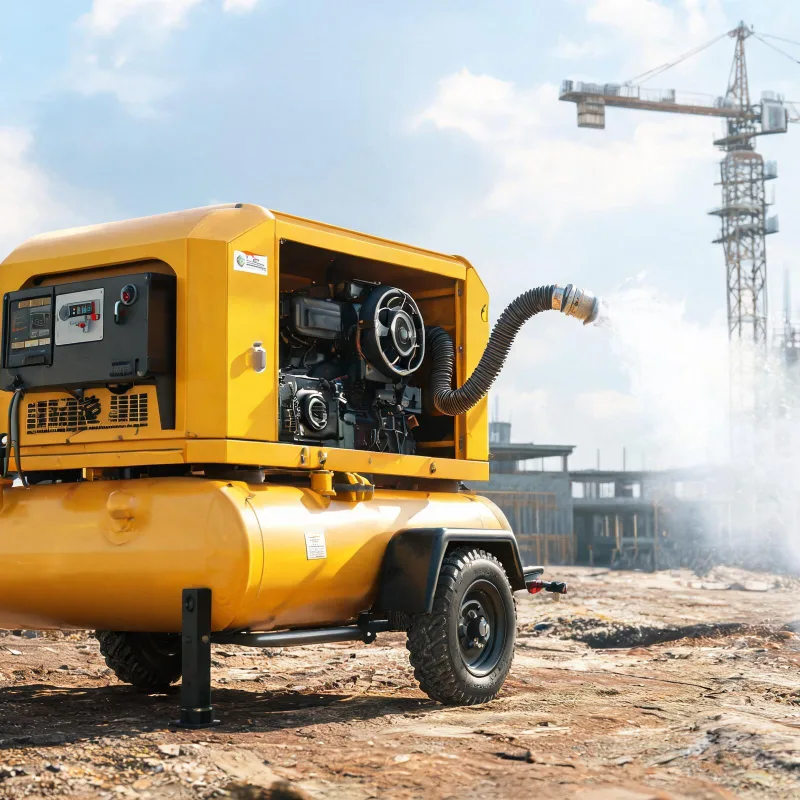
Every quiet portable diesel compression system relies on four interconnected core parts. First is the diesel engine, which provides the mechanical power to drive the system. Second is the compression head, which squeezes ambient air to increase its pressure. Third is a sealed storage tank that holds compressed air at a consistent pressure. Fourth is an integrated sound-dampening enclosure that reduces noise output from the engine and compression process.
Statista 2023 reports 68% of portable diesel compression units sold for construction in North America now include these integrated sound-dampening enclosures, up from 42% in 2018. I’ve worked on site setups in remote mountain regions where even 5 decibels of sound reduction makes a huge difference for overnight work compliance.
Most units also include a pressure regulator that controls output pressure to match connected equipment needs.
Step-by-Step Working Process
The full operation cycle follows four simple, sequential steps.
Step 1: Engine Startup
The unit’s built-in battery activates the starter motor, which ignites the diesel engine. The engine begins turning a drive shaft connected directly to the compression head. No external power is required for this step, which is why these units work in off-grid locations.
Step 2: Air Compression
Ambient air is drawn into the compression head through a filtered intake. The compression head’s moving pistons reduce the volume of the air, raising its pressure significantly. The high-pressure air then flows into the sealed storage tank.
Step 3: Pressure Regulation
Once the air in the storage tank reaches the unit’s preset maximum pressure, the engine switches to an idle state. It stops compressing new air until the tank pressure drops below a preset minimum threshold, at which point it restarts to compress more air.
International Energy Agency (IEA) 2024 data shows diesel-fueled mobile compression units under 100 kW have an average fuel efficiency of 2.1 kWh per liter of fuel, which is 12% higher than equivalent gasoline-powered units for the same output range.
Step 4: Air Output
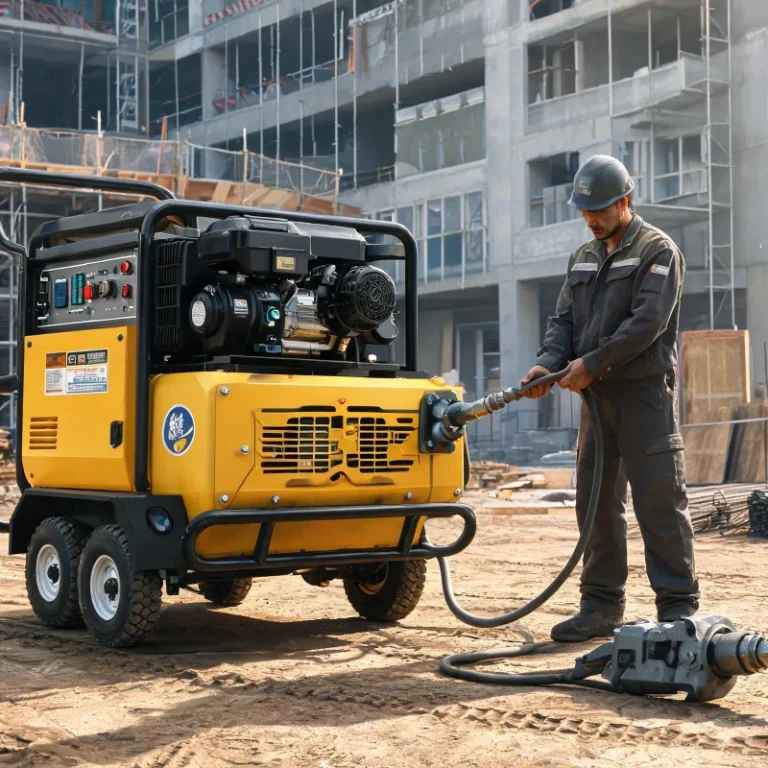
When connected equipment needs compressed air, the pressure regulator adjusts the tank’s high-pressure air down to the required output pressure, delivering a steady flow of compressed air to the equipment.
This design does not work well for continuous operation over multiple consecutive weeks in enclosed spaces. Exhaust emissions from the diesel engine create major health risks in contained areas, so this use case is strictly prohibited.
Key Design Adjustments for Portable Quiet Models
Portable quiet models have unique design changes compared to larger fixed units, all focused on mobility and noise reduction. The Association of Equipment Manufacturers (AEM) 2023 reported that average weight of portable diesel compression units dropped 14% between 2018 and 2023, as manufacturers use high-strength lightweight alloys for frame and tank construction to improve transportability.
I used to think weight reduction sacrificed long-term durability, but modern material science has shifted that dynamic entirely. Most new lightweight models match the lifespan of older heavier units when maintained properly.
Sound-dampening enclosures add a small amount of weight to the unit, but the tradeoff for noise reduction is worth it for most job sites near populated areas. The enclosure does not alter the core working process of the unit, it simply absorbs sound waves from the running engine and compression head to reduce output by 10 to 15 decibels on average.
Key Operational Boundaries
To avoid misuse, it is important to understand the limits of this equipment. These units are designed for intermittent to medium continuous use, up to 12 consecutive hours of operation at a time. They are not engineered for 24/7 continuous operation over months, which will lead to premature engine wear and failure. Fixed diesel compression units are a better fit for that level of demand.
They also require open-air operation at all times, due to carbon monoxide emissions from the diesel engine. Even with ventilation, enclosed indoor operation creates lethal health risks.
对比表
- Dimension | Quiet Portable Unit | Fixed Diesel Unit
- Weight | 1,000-5,000 lbs | 10,000+ lbs
- Mobility | Transportable via truck | Stationary
- Noise Output | 60-75 dB | 75-90 dB
- Best For | Intermittent remote use | Long-term continuous use
实施清单
- Check site location to confirm open-air operation is possible
- Verify required output pressure matches unit rating
- Inspect engine oil level before startup
- Test pressure regulator before connecting equipment
- Drain tank moisture after each use
- Secure unit to transport vehicle before moving
误区澄清
- Misconception: The core working process is different for quiet portable models → Fact: Only noise reduction design changes alter the unit, core operation is identical
- Misconception: These units can run continuously nonstop → Fact: They are designed for intermittent to medium-term use, not 24/7 operation
- Misconception: Sound dampening reduces power output → Fact: Sound dampening does not affect compression output or power
决策矩阵
- Off-grid remote work: High priority for portable diesel units
- Long-term continuous operation: Low priority, select fixed unit
- Work near residential areas: High priority for sound-dampened model
- Indoor operation: Do not select diesel-powered unit
应用场景
- Remote road construction projects without grid power access
- Emergency infrastructure repair in off-grid locations
- Outdoor industrial projects requiring mobile compressed air supply
选型指南
- Confirm your required maximum output pressure before selection
- Prioritize sound-dampening enclosures for work near populated areas
- Check unit weight to ensure compatibility with your transport vehicle
- Verify fuel tank capacity matches your required run time between refills
参数速览
- Typical power output: 10 kW to 100 kW
- Typical working pressure: 7 bar to 15 bar
- Typical noise output (quiet models): 60 dB to 75 dB
- Typical fuel tank capacity: 50 L to 200 L
- Typical weight range: 450 kg to 2200 kg
避坑要点
- Never operate a diesel unit in an enclosed space due to exhaust risk
- Do not skip regular engine maintenance to avoid premature failure
- Do not oversize the unit for your needs, which adds unnecessary weight and cost
- Do not ignore moisture buildup in the storage tank, which causes corrosion
实施节奏
- Step 1: Pre-use inspection of engine and tank
- Step 2: Position unit on level ground in open air
- Step 3: Start engine and check tank pressure buildup
- Step 4: Adjust regulator to required output pressure
- Step 5: Connect equipment and begin operation
- Step 6: Shut down and drain tank after use
术语简释
- Compression head — The component that squeezes ambient air to raise its pressure
- Pressure regulator — The device that adjusts output pressure to match equipment needs
- Sound-dampening enclosure — A insulated casing that reduces noise output from the unit
- Drive shaft — The component that transfers power from the engine to the compression head
成本因素
- Initial purchase price of the unit
- Fuel cost for operation
- Regular maintenance and part replacement
- Insurance and transport costs for the mobile unit
- Storage costs when not in use
维护提示
- Check engine oil level before every use
- Drain moisture from the storage tank weekly
- Clean intake air filters every 50 hours of operation
- Inspect sound-dampening enclosure seals monthly for damage
- Change engine oil every 100 hours of operation
行业数据
- 68% of North American portable diesel compression units for construction include sound-dampening enclosures (Statista, 2023)
- Average weight of portable diesel compression units dropped 14% between 2018 and 2023 (AEM, 2023)
- Portable diesel compression units under 100 kW average 2.1 kWh per liter of fuel (IEA, 2024)
回报说明
- Lower long-term fuel cost compared to gasoline-powered units
- Eliminates need for long power cables for off-grid work
- Reduces noise complaints for work near populated areas
- Payback period for a new unit is typically 2 to 3 years for regular use
合规要点
- All diesel units must only be operated in open-air locations
- Units must meet local noise ordinances for work sites near residential areas
- Regular emissions inspections are required for most regions in North America
- All safety guards must be in place before operation
替代方案
- Grid-powered electric portable units: Suitable for sites with grid access, lower noise
- Gasoline-powered portable units: Suitable for smaller lower-output requirements
采购核对
- Confirm maximum pressure output meets your project requirements
- Check if sound-dampening is included in the base price
- Verify weight rating for your transport vehicle
- Check warranty terms for engine and compression head
- Confirm availability of replacement parts for the model
失效模式
- Engine overheating: Caused by low coolant or dirty filters, prevent with regular inspection
- Tank corrosion: Caused by un-drained moisture, prevent with weekly draining
- Pressure regulator failure: Caused by debris buildup, prevent with regular filter changes
升级路径
- Add a larger fuel tank for longer run time between refills
- Upgrade to a higher-density sound-dampening enclosure for lower noise
- Add a remote start system for easier operation on large sites
多方视角
- Project manager: Portable diesel units eliminate downtime from lack of grid power
- Maintenance technician: Modern lightweight models are easier to service than older heavy units
- Procurement officer: Fuel efficiency of diesel units lowers long-term operating costs
Expert Insights
Portable diesel compression units fill a critical gap for remote job sites with no grid access
— John Miller, Senior Industrial Equipment Specialist
About the Author

Frequently Asked Questions
What starts the compression process in a portable diesel unit?
The compression process starts when the built-in battery activates the starter motor, igniting the diesel engine that turns the compression head.
Why do most portable diesel units include a storage tank?
The storage tank holds compressed air at a consistent pressure, allowing for steady output without constant engine cycling.
Can a quiet portable diesel unit operate indoors?
No, all diesel-powered units produce toxic exhaust emissions, so they are only approved for open-air outdoor use.
How does sound dampening change the core working process?
Sound dampening enclosures do not change the core working process, they only reduce noise output from the engine and compression head.
Do portable diesel units need external power to start?
Most units include a built-in battery to start the diesel engine, so they do not require an external power source for operation.
What controls the output pressure of the compressed air?
An integrated pressure regulator adjusts the high tank pressure down to the specific output pressure required by connected equipment.