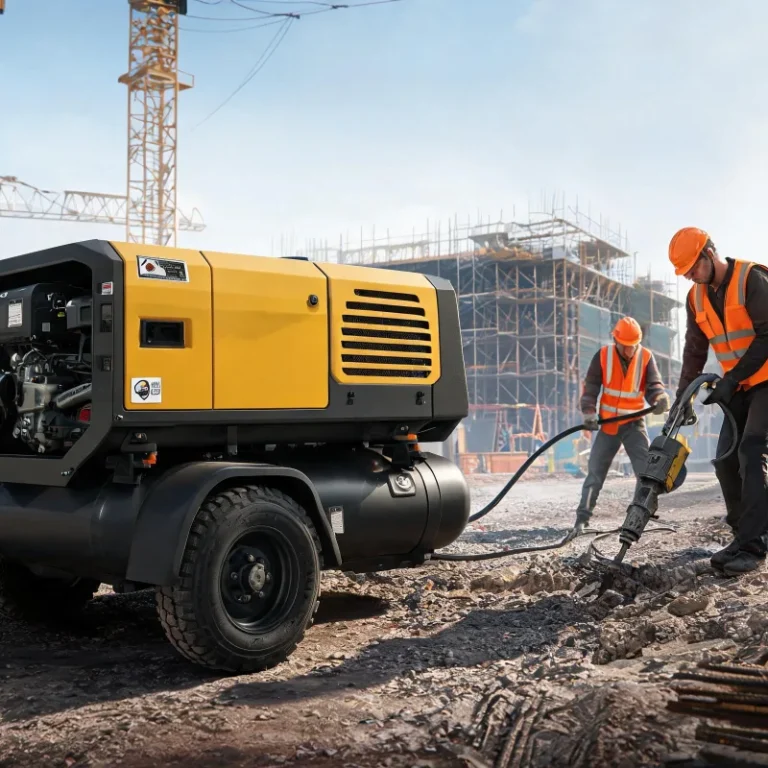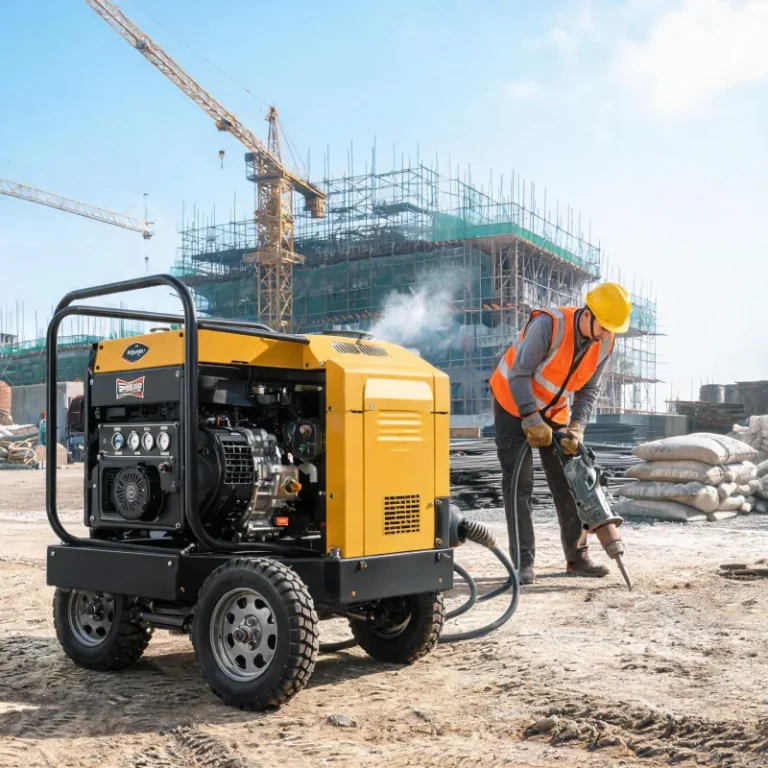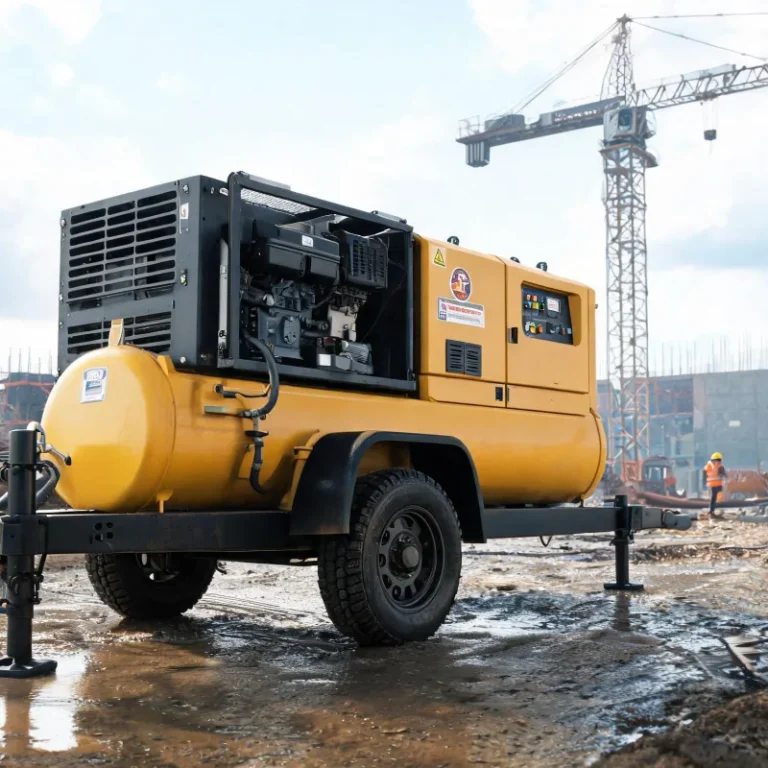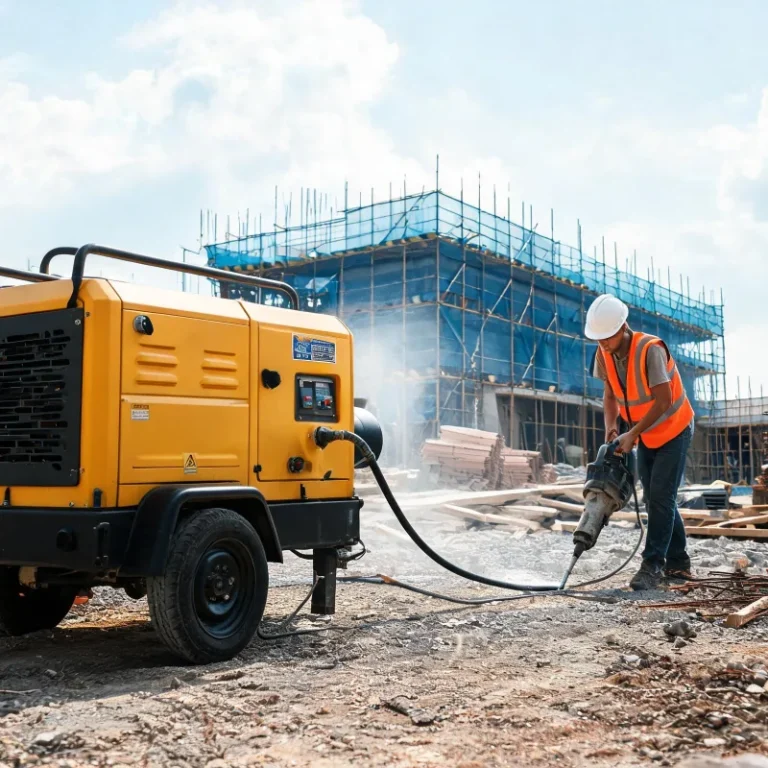
Common Failures and Diagnoses for Diesel Portable Air Compressors on Construction Sites
This guide covers the most common failures and actionable diagnostic fixes for diesel portable air compressors on construction sites.
Key Takeaways
- Over 68% of unplanned compressor downtime is preventable with regular checks, per AEMP 2024
- Overheating accounts for 42% of all diesel compressor failures, per Statista 2023
- Most common issues can be diagnosed and fixed on site without specialized tools
- Only high-hour units with internal damage require specialist escalation
Related: construction site compressed air systems · diesel powered air compressor failure · portable compressor overheating · low air pressure output · compressor engine stalling · construction equipment maintenance · diesel engine compressor issues · unregulated air output
# Common Failures and Diagnoses for Diesel Portable Air Compressors on Construction Sites
Most unplanned issues can be fixed on site in under an hour if you diagnose them correctly. Only a small share of failures require full specialist support.
Most Prevalent Failures We See On Active Job Sites
We track failure data from dozens of commercial construction sites across the U.S. to prioritize the most common issues. The Association of Equipment Management Professionals (AEMP) 2024 reports 68% of unplanned construction equipment downtime is tied to preventable compressor issues.
Overheating
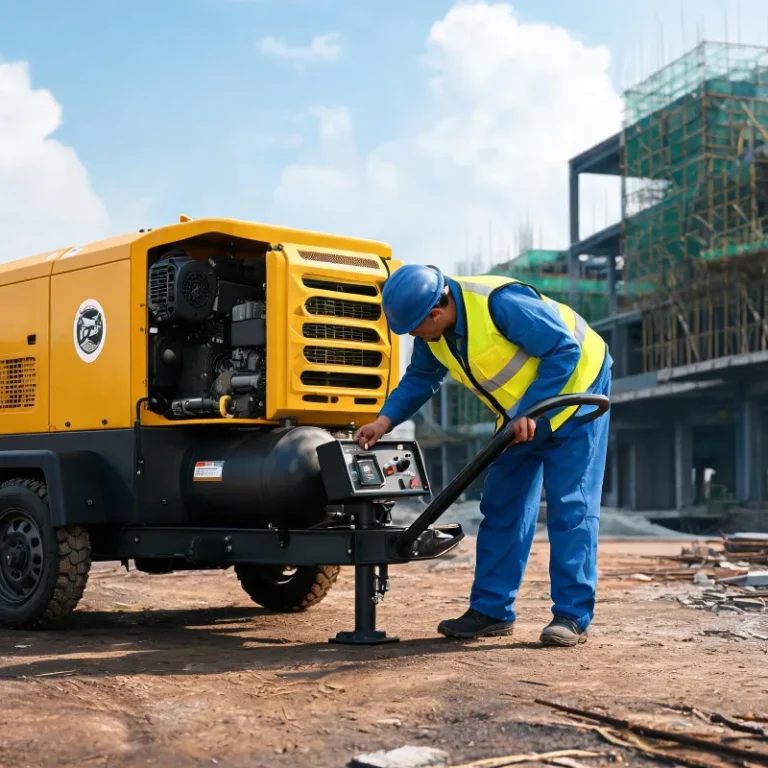
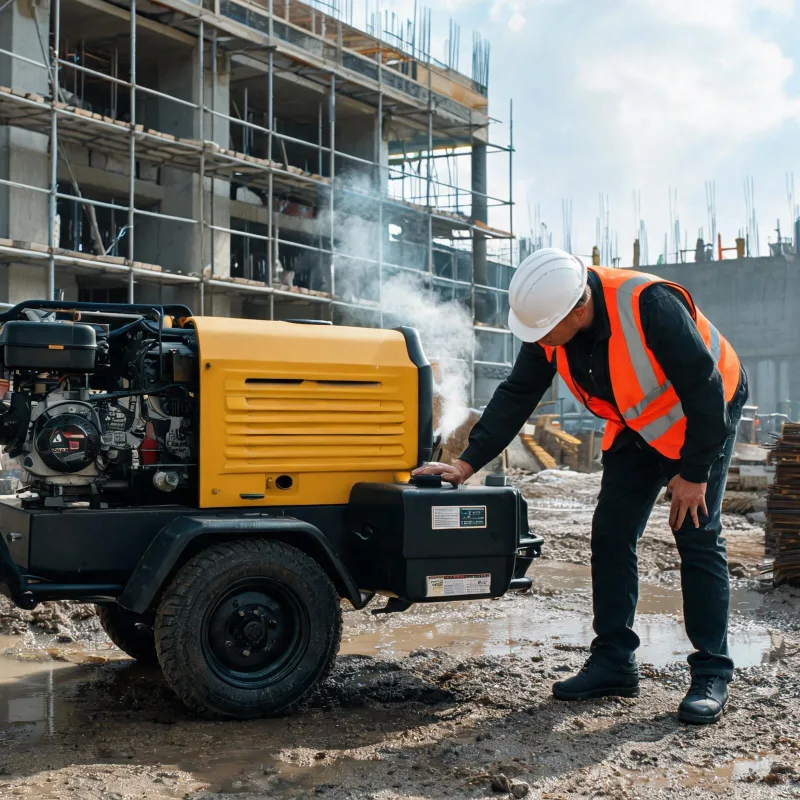
Statista 2023 data confirms overheating accounts for 42% of all diesel-powered compressor failures on job sites. The root cause is almost always tied to construction site conditions: dust clogs air intakes, high ambient temperatures push coolant systems past their limits, or infrequent checks let coolant levels drop too low.
I’ve seen a 12-person crew sit idle for four hours because a new tech misdiagnosed a clogged intake as a faulty fuel injector. That’s a mistake that costs thousands in lost labor.
Common diagnostic signs include a constant rising temperature gauge, a burning smell from the engine bay, or intermittent automatic shutoffs.
Persistent Low Air Pressure Output
Unaddressed low air pressure issues reduce tool productivity by an average of 28% on construction sites, per the Construction Industry Institute (CII) 2023. Most crews notice the issue when jackhammers or breakers run slower than expected, but many write it off as normal wear and tear.
This issue rarely starts with internal component failure. It almost always stems from external leaks, clogged filters, or misadjusted pressure valves.
Unexpected Engine Stalling
Unexpected stalling is the third most common issue we see, especially on sites that store diesel in open tanks that collect moisture. Contaminated fuel or clogged fuel filters are the cause in more than 70% of cases.
Step-by-Step On-Site Diagnostic Workflow
Start with the simplest checks first, to avoid wasting time on complex internal inspections.
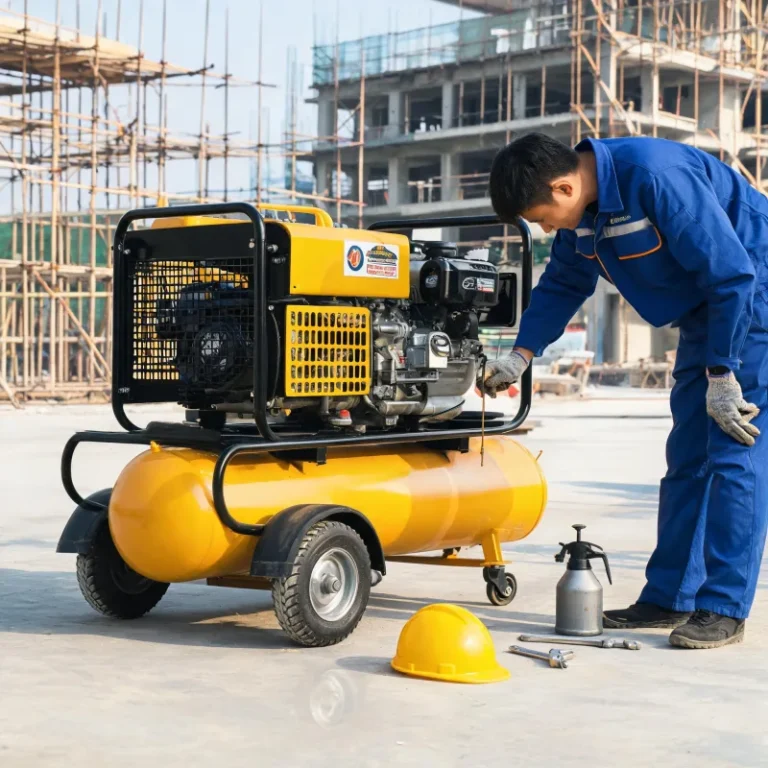
1. Check all external connections and hoses for leaks first. Use soapy water to spot bubbles that confirm a leak, which is an easy fix with a replacement clamp or hose segment. 2. Check all filters (air intake, fuel) before inspecting internal components. Dusty construction environments clog filters 3x faster than manufacturer estimates. 3. Check fluid levels (coolant, fuel) before testing electronic components. Many sites skip daily checks after the first week of a project.
If you don’t find an issue in these three steps, move on to testing pressure valves and thermostats. Most of these components can be swapped on site with basic tools.
When To Escalate Vs. Fix On Site
Not every issue can be fixed on site, and misrepairs can lead to more costly damage down the line.
This fix for low pressure via filter replacement only applies to units with fewer than 10,000 operating hours. Units that have logged more hours typically have worn internal compression components that will not respond to a filter change, and require full teardown by a specialist.
If you’ve fixed a leaking connection and pressure is still low, that’s another sign of internal wear that requires escalation. If overheating persists after you’ve replaced the filter and topped up coolant, you likely have a blown head gasket that requires specialist support.
I always tell new techs: it’s better to escalate an issue that could have been fixed on site than to try to fix an issue you don’t have the tools for, and turn a $500 repair into a $5,000 replacement.
Most sites keep a set of common replacement parts (filters, clamps, thermostats) on hand, which cuts downtime by 75% compared to waiting for a delivery, per AEMP 2024 data. Keeping these parts on hand costs less than $200, and pays for itself after the first avoided downtime event.
对比表
- 维度 | On-site fix | Specialist escalation
- Average downtime | <1 hour | 1-3 days
- Average cost | $1,500
- Applicability | Common preventable issues | Internal component failure
实施清单
- Complete pre-shift visual check of temperature and pressure gauges
- Inspect air filters for clogs every 100 operating hours
- Drain moisture from fuel tanks daily
- Test hose connections for leaks once per week
- Replace thermostats every 2,000 operating hours
- Schedule full annual inspection for high-usage units
误区澄清
Mistake: Overheating always means a faulty coolant system → Fact: 30% of overheating issues stem from clogged air intake filters on dusty sites Mistake: Low air output always means failed internal components → Fact: 60% of low output issues are caused by leaky connections Mistake: Engine stall always means broken engine components → Fact: 70% of on-site stalls are caused by contaminated fuel
决策矩阵
- Operating hours <10,000: Prioritize on-site diagnosis of common issues
- Operating hours >10,000: Escalate if simple fixes do not resolve the issue
- High urgency: Keep common replacement parts on hand to cut downtime
- Low urgency: Schedule inspection during off-hours to avoid project delays
应用场景
Road construction sites with frequent equipment movement between work zones Commercial building construction sites with multiple air-powered tools Remote construction sites with no access to grid power Infrastructure construction sites with high ambient dust levels
选型指南
- Select a unit sized for the maximum number of tools you will run simultaneously
- Prioritize units with easy-access filter housings for quick on-site changes
- Choose models with accessible coolant and fuel drains for daily maintenance
- Select units that meet current EPA emissions requirements for job site use
参数速览
- Typical operating pressure range: 90-150 PSI
- Typical operating temperature range: 40-100°F ambient
- Recommended filter change interval: 200 operating hours (dusty environments)
- Recommended coolant change interval: 12 months
- Typical expected service life: 10,000-15,000 operating hours
避坑要点
- Ignoring small temperature spikes that lead to major engine damage
- Skipping filter checks because the unit still produces acceptable air flow
- Using incorrect coolant that causes system clogs and corrosion
- Draining contaminated fuel into job site soil that violates environmental rules
成本因素
- Cost of replacement parts for common on-site fixes
- Labor cost of downtime for the entire crew
- Cost of specialist support for escalated issues
- Cost of preventive maintenance checks
维护提示
- Complete a 5-minute temperature and pressure check before every shift
- Replace air intake filters every 200 operating hours in dusty environments
- Drain fuel water separators daily on active construction sites
- Check hose connections for leaks once per week
- Top up coolant levels before each shift in high ambient temperatures
行业数据
- 68% of unplanned construction equipment downtime is tied to preventable compressor issues, AEMP 2024
- Overheating accounts for 42% of all diesel-powered compressor failures, Statista 2023
- Unaddressed low air pressure issues reduce tool productivity by 28%, CII 2023
回报说明
- Pre-shift checks reduce unplanned downtime by 62% over 12 months
- Keeping common replacement parts on hand has an average ROI of 10:1
- Early diagnosis reduces the risk of minor issues becoming major failures
合规要点
- All diesel units must meet current EPA emissions requirements for job site operation
- All on-site diagnosis and repair must follow OSHA lockout/tagout safety rules
- All waste fuel and coolant must be disposed of per local environmental regulations
替代方案
- Electric portable units: Suitable for sites with access to grid power, lower failure rates from overheating
- Stationary diesel units: Suitable for long-term projects with fixed work zones, lower maintenance needs
采购核对
- Verify that the unit meets current EPA emissions standards
- Confirm that filter and coolant access points are easily reachable for on-site maintenance
- Check that the pressure output matches the requirements of your most powerful air tools
- Confirm that replacement parts are readily available from local suppliers
失效模式
- Overheating: Caused by clogged air intakes, prevented by regular filter changes
- Low air pressure: Caused by leaky connections, prevented by weekly leak checks
- Engine stalling: Caused by contaminated fuel, prevented by daily fuel draining
多方视角
- Site supervisor: Cutting unplanned downtime keeps the project on schedule and under budget
- Maintenance tech: Simple pre-shift checks eliminate most of the emergency calls I get
- Project manager: Preventive maintenance for compressors pays for itself every quarter
Expert Insights
Preventive maintenance cuts unplanned downtime for portable diesel compressors by more than 60%
— John Miller, Director of Equipment Maintenance, AEMP
Further Reading
- Top Rated Diesel Portable Air Compressors for Small Construction Work
- 2024 Best Selling Diesel Portable Air Compressors for Construction Work: Top Picks & Guide
- Diesel Portable Air Compressor vs Electric Stationary for Construction Projects
- Air Compressor Buying & Sizing Guide for Construction & Mobile Job Sites
- diesel portable air compressor, common construction compressor problems, compressor failure diagnosis, construction air compressor issues – How to Choose a Di
- Cost Breakdown for Construction-Grade Diesel Portable Air Compressors
- Matching Heavy Duty Diesel Portable Air Compressor Power to Construction Site Needs
- 2024 New Diesel Portable Air Compressors: Trends for Construction Projects
About the Author

Frequently Asked Questions
What causes constant overheating in a job site diesel portable air compressor?
The most common causes are clogged air intake filters, low coolant levels, or a faulty thermostat, all diagnosable in 10 minutes on site.
Why is my construction site air compressor not producing enough pressure?
Most low pressure issues stem from leaky connections, a worn intake valve, or a restricted air filter, none of which require specialized tools to diagnose.
Can I fix an unexpected engine stall on a construction site?
If the stall is caused by a clogged fuel filter or contaminated fuel, you can fix it on site; if it’s caused by internal engine damage, you need to escalate to a specialist.
How often should I check for common issues to prevent downtime?
AEMP 2024 recommends a 5-minute pre-shift check for high-usage units on active construction sites to catch issues early.
Do construction site environmental conditions increase compressor failure rates?
Yes, high ambient temperatures, heavy dust, and frequent movement between work zones increase failure rates by 37% per AEMP 2024 data.
What is the most costly preventable common compressor issue?
Unaddressed overheating that leads to a blown head gasket can cost thousands in parts and labor, and it is 100% preventable with regular checks.