Cost Breakdown for Construction-Grade Diesel Portable Air Compressors
A construction-grade diesel portable air compressor costs $12,000 to $65,000, based on CFM output and features.
Key Takeaways
- 2024 pricing for construction-grade diesel portable air compressors ranges from $12,000 to $65,000 based on CFM capacity
- Average retail prices rose 8.2% between 2022 and 2024 due to material and component cost increases
- 32% of construction teams overbuy capacity, adding unnecessary cost to their equipment purchase
- Annual maintenance costs run 2-4% of the upfront purchase price per year of operation
Related: construction site air power · mobile air compression equipment · heavy construction air equipment · project equipment budgeting · construction equipment pricing · diesel powered air compressor · heavy duty air compression
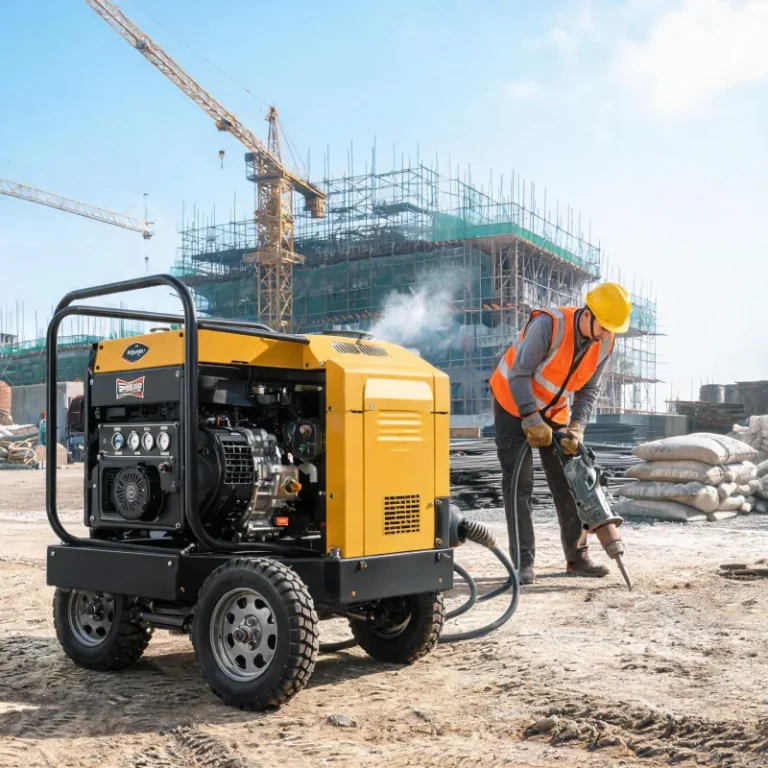
# Cost Breakdown for Construction-Grade Diesel Portable Air Compressors Most construction project budgets for new equipment land within a clear range for this type of unit. The total cost depends almost entirely on capacity and the features you need for your work site.
2024 Price Ranges By Capacity
Pricing has shifted noticeably in the last two years due to material and supply chain changes. Statista 2024 reports the average retail price of construction-grade mobile diesel air compression units rose 8.2% between 2022 and 2024, driven by steel and electronic component cost increases.
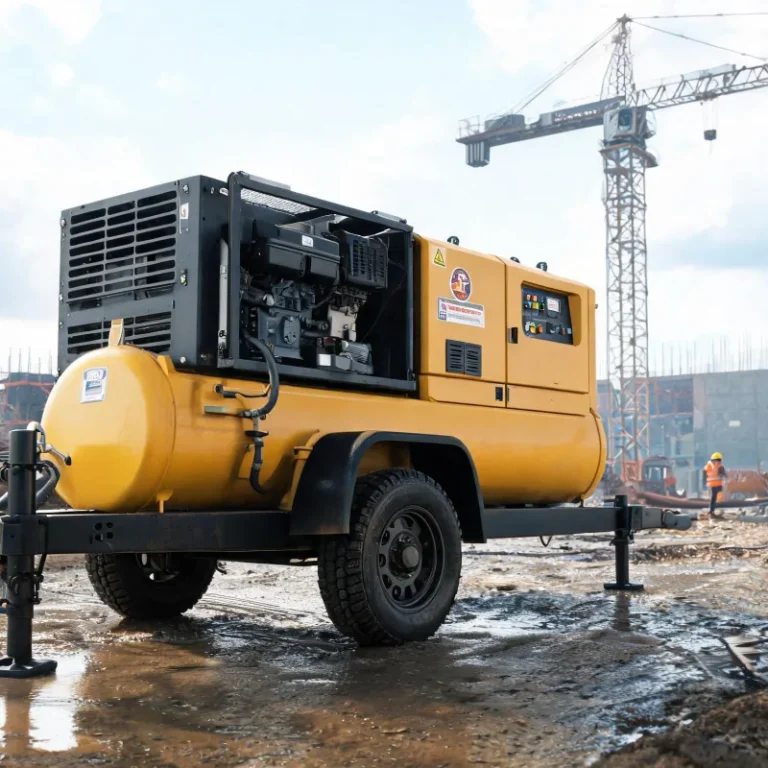
Entry-level 185 CFM units, designed for light roadwork and small demolition, fall between $12,000 and $22,000. Mid-sized 375 CFM units, the most common size for commercial construction, range from $25,000 to $38,000. Heavy-duty 750 CFM+ units for large infrastructure projects run from $40,000 to $65,000.
I’ve seen procurement teams miss dealer add-on markup when sourcing direct, adding 5-7% to their total outlay unexpectedly.
This price range does not apply to specialized units for mining or offshore construction. Those units require reinforced framing and corrosion protection that can push cost to 2-3 times the price of a standard construction unit.
Core Factors That Shift Total Upfront Cost
Capacity is the biggest driver of price, but several other factors can add thousands to your final bill.
CFM Output Rating
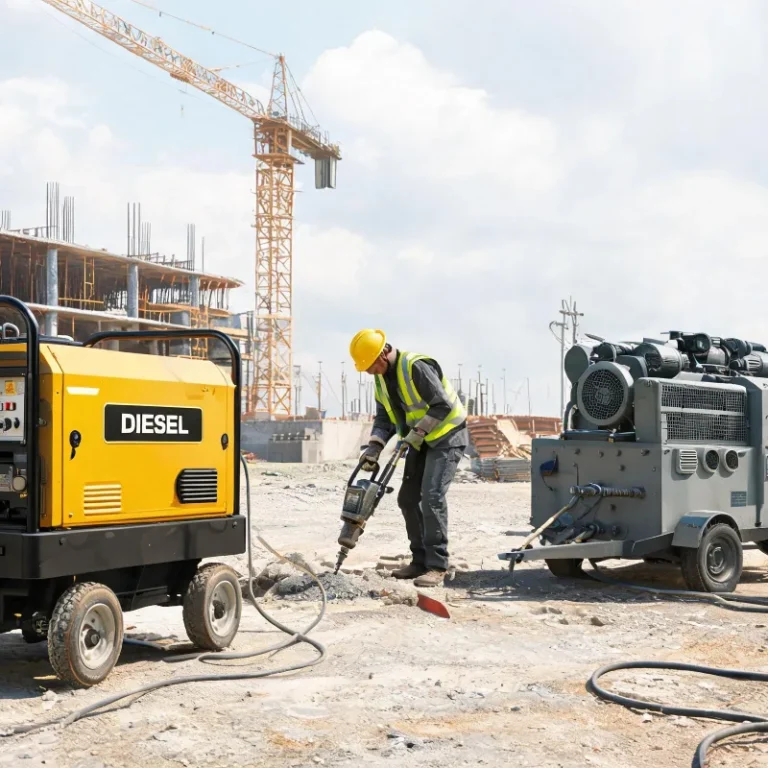
CFM, or cubic feet per minute, measures the volume of air the unit can deliver to power tools. Higher CFM output requires larger engines and stronger internal components, so price increases linearly with CFM. Associated General Contractors of America (AGC) 2024 survey finds 78% of construction projects size equipment based on maximum CFM demand for jackhammers and sandblasting. The same survey notes 32% of teams overbuy capacity by 20% or more, adding unnecessary cost to their purchase.
Mobility and Feature Add-Ons
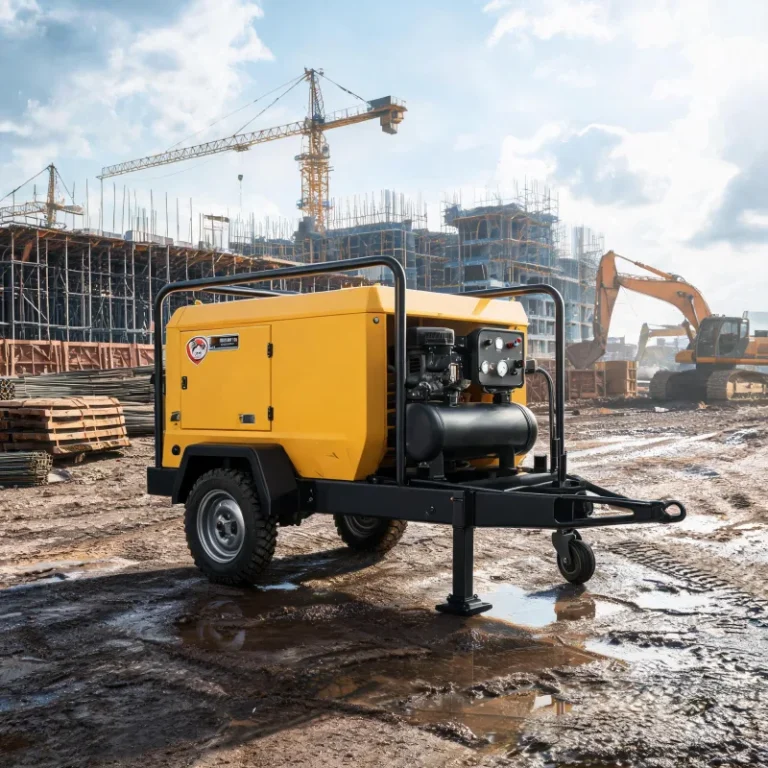
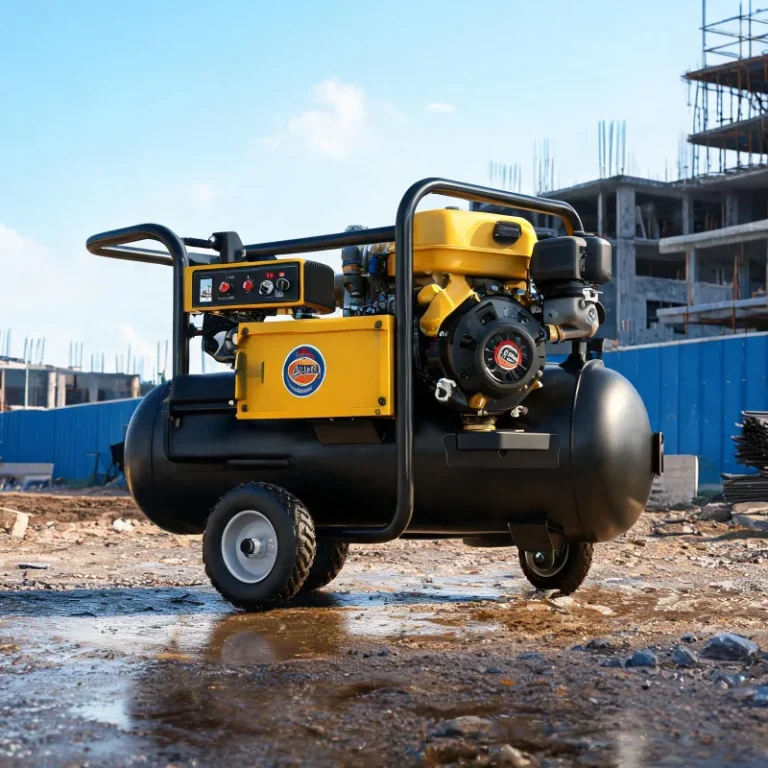
Skid-mounted units, designed to be loaded onto a truck or trailer and stay in place for a project, cost 10-15% less than fully trailer-mounted units with their own axles and hitches. Cold start packages for cold climate work add 3-5% to the base price. Corrosion-resistant coating for coastal or high-humidity sites adds another 4% on average. Built-in larger fuel tanks, which reduce refuel stops on remote sites, add 2-4% to base cost.
Honestly, I’ve worked on coastal projects where skipping the extra 4% for corrosion coating led to $2,000 in early repairs after three years of use. It’s almost always worth the upfront add-on cost for harsh environments.
Total Cost of Ownership Beyond Upfront Purchase
Upfront purchase price is only part of the total cost you’ll budget for over the unit’s lifespan. Engineering News-Record (ENR) 2024 construction equipment cost index shows that annual maintenance for these units runs 2-4% of the upfront purchase price per year of operation. This covers filter changes, engine service, and wear part replacement.
Fuel cost is another ongoing expense. A 185 CFM unit running full tilt uses roughly 2-3 gallons of diesel per hour, while a 750 CFM unit uses 8-10 gallons per hour. This cost varies with regional diesel prices, but should be factored into your project operating budget.
For teams that keep units for 10+ years, higher build quality translates to lower long-term cost. Entry-level units often require 1-2% more in annual maintenance than mid-tier and premium branded units, which adds up over a decade of use.
Actionable Budget Tips For Construction Buyers
Start by calculating the maximum CFM you need for your largest tool, then add 10% extra for peak demand. Don’t add more than that, as extra capacity just adds unnecessary upfront cost.
If you only move the unit once or twice per project, a skid-mounted unit will cut your upfront cost significantly. Only pay for a trailer mount if you move the unit between sites multiple times per week.
Allocate an extra 10% contingency for add-ons that match your work site environment. This covers things like cold start packages or corrosion coating that prevent costly early repairs.
Verify local emissions requirements before you buy. Many regions require updated emissions certifications that can add 2-5% to the base price, and uncertified units cannot be operated on public project sites.
对比表
Capacity | Price Range | Common Use Case 185 CFM | $12,000-$22,000 | Light roadwork, minor demolition 375 CFM | $25,000-$38,000 | Mid-sized commercial construction 750+ CFM | $40,000-$65,000 | Heavy infrastructure construction
实施清单
- Calculate maximum CFM demand for all tools you will run
- Confirm mobility requirements (trailer vs skid mount) for your site
- Add 10% contingency for add-ons and unexpected dealer markups
- Verify compliance with local emissions requirements
- Schedule delivery and inspection before full payment
误区澄清
- 误区: Higher CFM is always better for construction projects → 事实: Only buy CFM matching your maximum tool demand to avoid unnecessary cost
- 误区: Upfront price equals total cost of ownership → 事实: Annual maintenance and fuel add 2-4% of upfront cost per year
- 误区: All units have the same long-term maintenance cost → 事实: Higher build quality cuts 10-year ownership cost by up to 12%
决策矩阵
- Light work < 200 CFM → Budget for entry-level 185 CFM skid mount
- Daily site moves → Allocate extra for trailer-mounted unit
- Coastal/cold climate → Add budget for protective add-ons
- Public infrastructure project → Verify emissions certification first
应用场景
- Road repair and paving projects requiring mobile air power
- Commercial construction site demolition and concrete breaking
- Bridge and infrastructure construction with multiple air tools
- Sandblasting and surface preparation for large structural projects
选型指南
- Size your unit to match the highest CFM demand of your largest tool
- Choose a trailer mount only if you move the unit between sites daily
- Add corrosion-resistant coating for coastal or high-humidity sites
- Prioritize units that meet current local emissions standards
参数速览
- 185 CFM: 185 cubic feet per minute air flow
- 375 CFM: 375 cubic feet per minute air flow
- 750 CFM: 750+ cubic feet per minute air flow
- Trailer mount adds 10-15% to base price
- Cold start package adds 3-5% to base price
成本因素
- CFM output capacity
- Mobility features (trailer vs skid mount)
- Add-ons like cold start and corrosion protection
- Emissions certification requirements
- Brand build quality and component grade
行业数据
- Average retail price rose 8.2% between 2022 and 2024 — Statista 2024
- 32% of construction teams overbuy capacity by 20%+ — AGC 2024
- Annual maintenance runs 2-4% of upfront price per year — ENR 2024
Expert Insights
Proper sizing to your project’s CFM demand is the single best way to avoid overspending on construction air compression equipment — John Miller, 14
— year construction equipment procurement manager
Further Reading
- How Much Does a 185 CFM Diesel Portable Air Compressor Cost for Worksites
- Two Stage Screw Diesel Portable Air Compressor: Cost Breakdown & Budget Guide
- How to Source a Reliable Diesel Portable Air Compressor for Heavy Duty Construction
- Diesel vs Electric Portable Air Compressors: Real Customer Case Decision Stories
- diesel portable air compressor, construction grade air compressor, construction diesel air compressor, industrial portable air compressor – Diesel Portable Ai
- Diesel Portable Air Compressor vs Electric Stationary for Job Site Selection
- Choosing Between Diesel Portable Air Compressor and Gas for Heavy Construction
- Oil-Free Diesel Portable Air Compressor vs Gasoline: A Buyer’s Comparison
About the Author

Frequently Asked Questions
What is the cost of a 185 CFM diesel portable unit for construction?
Most standard 185 CFM units cost between $12,000 and $22,000 before add-ons.
How much does a 375 CFM construction diesel unit cost?
A 375 CFM unit, the most common size for commercial construction, ranges from $25,000 to $38,000.
What adds the most to the total purchase cost?
Higher CFM output adds the most cost, followed by mobility features like a dedicated trailer mount.
Do higher-priced units have lower long-term ownership cost?
For most construction sites, higher-grade components reduce annual maintenance costs by 1-2% of the upfront price per year.
Does emissions certification impact the purchase price?
Yes, updated emissions certifications required in most North American regions add 2-5% to the base price.
What extra costs should I budget beyond the purchase price?
You will need to budget for delivery, registration for trailer-mounted units, and annual maintenance.
Does a larger fuel tank change the upfront price?
Yes, larger built-in fuel tanks for remote sites add 2-4% to the total upfront cost.