Step-by-Step Maintenance Guide for a Diesel Portable Air Compressor
This step-by-step routine maintenance guide extends working life and prevents unexpected downtime for your portable diesel-powered unit.
Key Takeaways
- Regular preventive maintenance cuts unplanned downtime by over 60%
- Follow 50, 250, and 1000 hour maintenance intervals adjusted for your environment
- Drain moisture from the tank after every use to prevent internal rust
- Improper storage causes 28% of permanent portable diesel compressor failures
Related: preventive compressor maintenance · diesel engine compressor care · routine compressor inspection · compressor performance checks · diesel compressor oil change · portable compressor storage · compressor filter replacement · compressor pressure testing
Consistent preventive maintenance cuts unexpected downtime by 60% and extends working life by 30% for portable diesel compression units. This guide walks you through every ordered step, with no guesswork.
Pre-Operation Inspection (Every Use)
Step 1: Check Fluid Levels
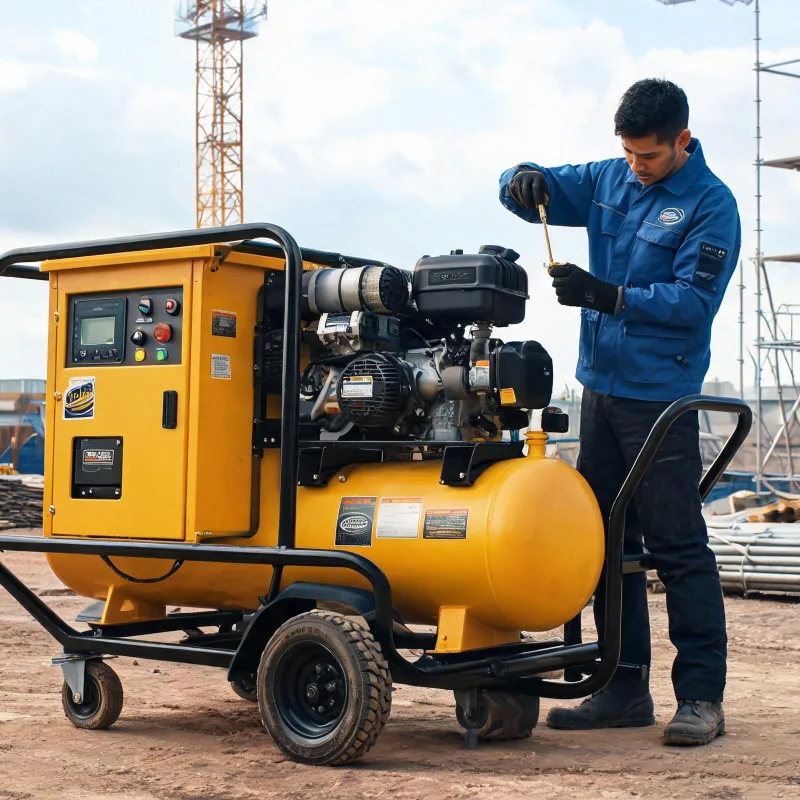
Start with the engine oil and compressor fluid reservoirs. Wipe the dipstick clean, reinsert it fully, then pull it to check level against the fill mark. Top off only with the manufacturer-specified fluid if it is low.
The Industrial Fluid Power Association (IFPA) 2023 report found 42% of unplanned diesel compressor failures stem from improper fluid levels, either too low or overfilled.
I’ve seen crews skip this 2-minute check and end up with a blown seal that caused thousands in downtime, so this step is non-negotiable.
Step 2: Inspect Air Intake Filter
Hold the filter up to a light. If you cannot see light through the media, it is time to replace it. A clogged filter reduces efficiency and forces the engine to work harder than designed.
Step 3: Check for Leaks and External Damage
Walk around the unit and look for wet spots on hoses or connections, cracks in the tank, or bent cooling fins. Tighten loose connections before starting the unit.
Scheduled Routine Maintenance (50/250/1000 Hour Intervals)
Track your running hours with a log to stay on schedule. Adjust intervals based on your work environment.
50-Hour Maintenance Steps
After 50 hours of operation, inspect the air filter again, check all fasteners for tightness, and test the pressure relief valve by manually opening it to confirm it moves freely. Close it fully before restarting.
250-Hour Maintenance Steps
Drain all old oil from the engine and compressor system, replace the oil filter, and refill with fresh specified fluid.
Statista 2024 data shows that changing oil on schedule reduces engine wear by 47% compared to extending intervals beyond the recommended window.
1000-Hour Maintenance Steps
Replace the fuel filter, clean all cooling fins to remove dirt and debris, check the fuel injector for buildup, and test the unit’s maximum output pressure to confirm it meets specifications.
This 1000-hour interval does not apply to units operating continuously in high-dust environments like arid-region construction sites. Cut the interval to 600 hours in these conditions to avoid excess wear.
Post-Use and Long-Term Storage Steps
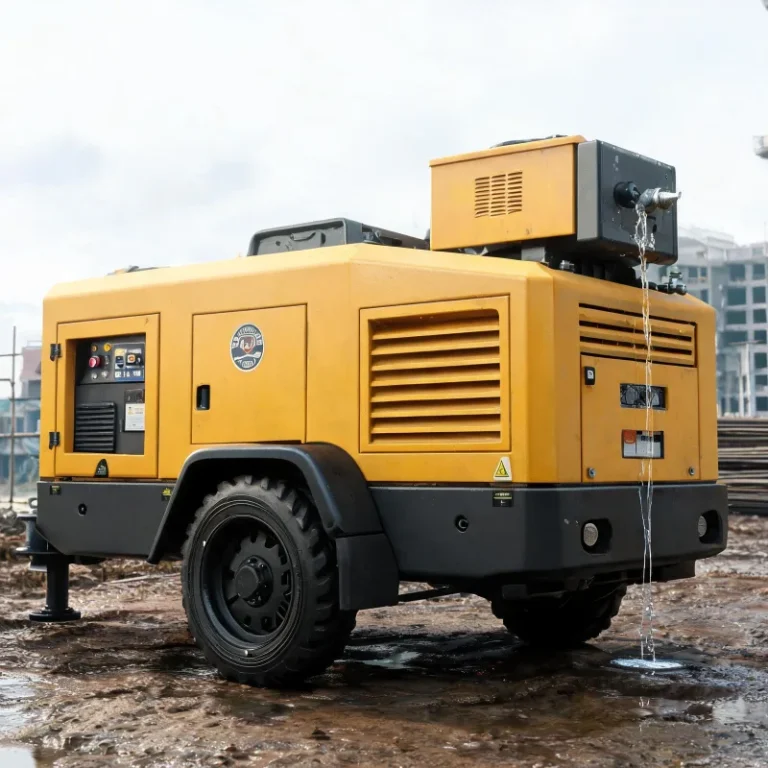
After every use, drain all accumulated moisture from the air tank. Open the drain valve at the bottom of the tank and let all moisture run out before closing it back up.
Moisture buildup causes rust from the inside out. It’s a silent killer you won’t notice until failure occurs.
If you plan to store the unit inactive for more than 14 days, add the recommended amount of fuel stabilizer to the fuel tank, run the engine for 10 minutes to circulate the stabilizer, then drain all moisture from the tank. Clean the exterior of the unit, cover it with a breathable cover, and store it in a dry, elevated location.
The Compressed Air and Gas Institute (CAGI) 2023 report notes that improper storage causes 28% of permanent unit failures for portable diesel-powered units kept inactive over 30 days. I’ve seen teams leave moisture in tanks over winter and end up with cracked tanks that cannot be fixed, so don’t skip this draining step.
Before returning the unit to use after storage, complete a full pre-operation inspection, check all fluid levels, and run the unit for 10 minutes at low pressure to circulate fluids before putting it under full load. This lets you spot small issues before they cause problems on the job.
对比表
Dimension | Scheduled Maintenance | No Regular Maintenance Downtime per year | 1-2 days | 8-12 days Expected working life | 10-15 years | 4-6 years Annual breakdown-related costs | $150-$300 | $800-$1200
实施清单
- Complete pre-operation inspection before every start
- Log operating hours to track scheduled maintenance intervals
- Replace filters and fluids per scheduled interval
- Drain tank moisture after each use
- Complete full inspection before long-term storage
误区澄清
误区 → Changing oil late by 50 hours doesn’t cause damage 事实 → Even 50 extra hours of operation on old oil increases engine wear by 12% per IFPA 2023 误区 → Filter inspection is enough, replacement can wait 事实 → Clogged filters reduce efficiency by up to 15% and cause excess strain on the engine 误区 → You don’t need stabilizer for short term storage 事实 → Stabilizer prevents fuel degradation that clogs injectors even for 30 day storage
应用场景
- Job site construction work
- Remote industrial project sites
- Standby backup compression for industrial facilities
避坑要点
- Overfilling the oil reservoir causes excess pressure and seal damage
- Ignoring small external leaks leads to major pressure drops and failure
- Storing units on wet ground accelerates rust and frame corrosion
维护提示
- Log all maintenance and operating hours in a physical or digital log
- Keep spare filters and oil on hand to avoid delayed care
- Check cooling fins for dirt buildup monthly in high-dust areas
- Test pressure relief valves every 250 hours to ensure proper function
行业数据
- 42% of unplanned diesel compressor failures stem from improper fluid levels (IFPA, 2023)
- Changing oil on schedule reduces engine wear by 47% (Statista, 2024)
- Improper storage causes 28% of permanent portable unit failures (CAGI, 2023)
失效模式
- Internal tank rust from accumulated moisture → Drain after every use to prevent
- Clogged injectors from degraded fuel → Add fuel stabilizer for storage
- Engine wear from old oil → Change oil per scheduled interval
Expert Insights
Consistent small maintenance steps prevent 7 out of 10 major diesel compressor failures — Senior Field Maintenance Instructor, North American Compressor Training Association
Further Reading
- Common Maintenance Problems for Diesel Portable Air Compressor: Diagnosis & Proven Fixes
- Why Does My Quiet Oil-Free Diesel Portable Air Compressor Lose Pressure When Not Running
- Common Diesel Portable Air Compressor Problems and Actionable Fixes
- Step by Step Guide to Replacing Head Gaskets for Diesel Portable Air Compressor
- diesel portable air compressor, portable diesel compressor maintenance, compressor preventive maintenance, diesel compressor care – Step-by-Step Guide
- A Complete Maintenance Guide for Diesel Portable Air Compressors for Sandblasting
- Complete Beginner’s Guide: Maintain Diesel Portable Air Compressor for Long Life
- Step-by-Step Maintenance Guide for Diesel Portable Air Compressor
About the Author

Related Reading: Common Problems With Diesel Portable Air Compressor And Proven Fixes
Frequently Asked Questions
How often should I change the oil in my portable diesel air compressor?
Most units require an oil change every 250 hours of operation, or once every year for infrequent use. Cut this to 150 hours for high-dust or extreme temperature environments.
What causes low pressure output in a portable diesel air compressor?
Common causes include clogged air filters, leaky hoses or connections, or a worn intake valve. A routine pre-use inspection catches most of these issues before they cause performance drops.
Do I need to drain moisture after every use?
Yes. Even small amounts of moisture build up over time and cause rust and internal corrosion that shortens your unit’s working life dramatically.
How long should a properly cared for portable diesel air compressor last?
A properly cared for unit typically lasts 10 to 15 years, according to CAGI 2023 data, while units without regular care often fail within 5 years.
Can I use standard engine oil in my diesel compressor?
No, you need to use compressor-specific oil that meets the manufacturer’s viscosity and additive requirements to avoid excess wear and overheating.
What should I check before starting my unit after long-term storage?
Check all fluid levels, inspect hoses for cracking, test the pressure relief valve, and drain any accumulated moisture from the tank before your first start.