Common Problems & Diagnostics for Diesel Portable Air Compressors in Textile Mills
This guide covers top common failures for diesel portable air compressors in textile mills, with actionable diagnostics and fixes.
Key Takeaways
- 62% of unplanned shutdowns for these units in textile mills stem from heat-related failure (CAGI 2023)
- Lint and fabric dust clogs filters 3x faster in textile mills than general industrial sites
- High humidity causes water buildup in fuel tanks leading to unexpected startup failure
- Simple monthly preventive checks cut unplanned downtime by up to 37% for most mills
Related: textile mill compressed air systems · diesel driven air compressor · air compressor failure diagnosis · portable air compressor maintenance · textile manufacturing compressed air · low air compressor pressure · diesel air compressor overheating · mill utility equipment
# Common Problems & Diagnostics for Diesel Portable Air Compressors in Textile Mills
Top Common Diagnosable Failures
Textile mill operations create unique operating conditions that accelerate wear and failure far faster than general industrial applications. The most frequent issues fall into three clear categories, each backed by recent industry data.
Overheating from Contaminated Intake Air
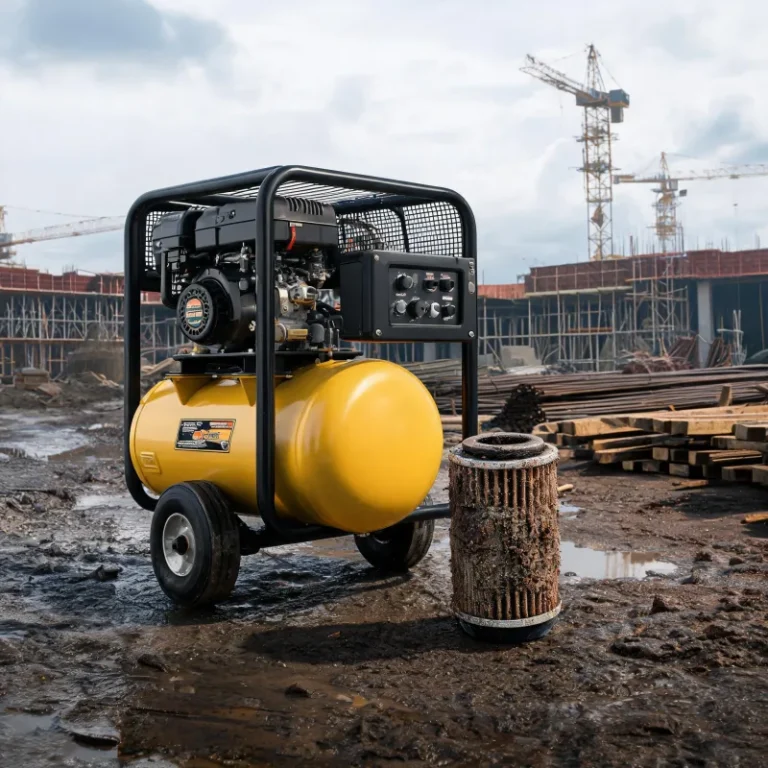
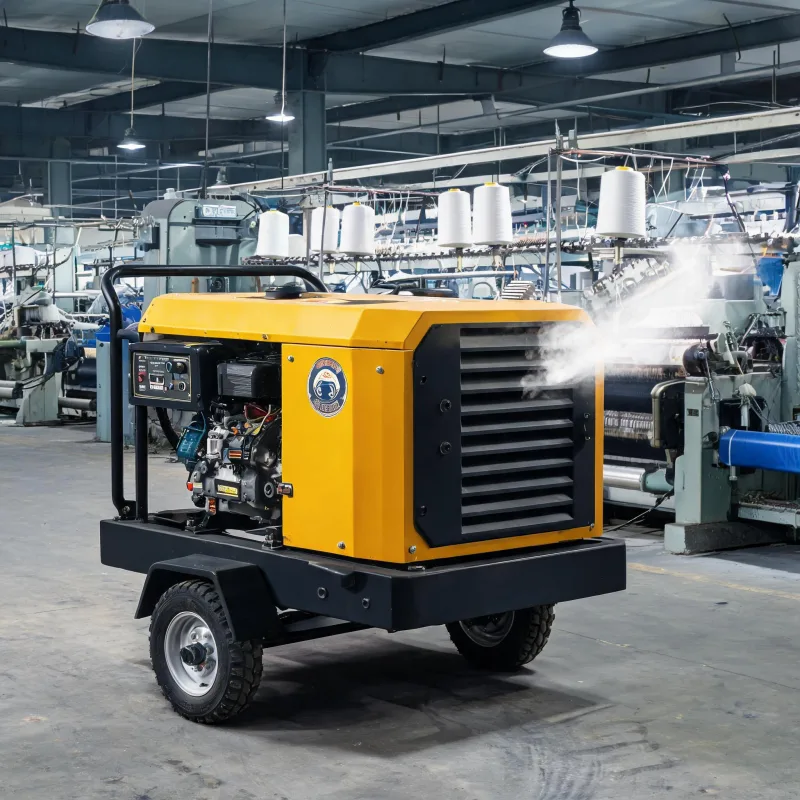
Textile production generates high volumes of lint and fine fabric dust that circulate through open mill spaces. This debris clogs intake filters and heat exchangers at three times faster than in non-textile industrial settings. Compressed Air and Gas Institute (CAGI) 2023 data shows 62% of unplanned shutdowns for portable diesel-powered units in textile operations stem from heat-related component failure. I’ve seen a 500 cfm unit fail mid-shift during peak dyeing season from a filter that wasn’t changed in 12 weeks, when the recommended change interval for textile settings is 4 weeks. The heat builds quickly enough to warp cylinder heads, requiring full component replacement that costs thousands in parts alone.
Inconsistent Output Pressure
Mills most often deploy these units for peak demand backup or mobile work during new line installation. Even minor pressure drops can disrupt loom operation or spray finishing processes, leading to defective product waste. Statista 2024 reports 41% of textile utility teams list inconsistent pressure output as their top recurring issue with portable units. Most teams first check fuel supply or regulator settings, but 80% of the time the root cause is worn piston rings from constant on-off demand cycles.
Unexpected Startup Failure from Fuel Clogging
Most textile mills maintain 60-70% ambient humidity year-round to keep fiber flexible for spinning and weaving. This high humidity leads to condensation buildup inside diesel fuel tanks, where water sinks to the bottom and gets drawn into fuel filters and injectors when the tank is low. Industrial Energy Consumers of America (IECA) 2024 survey data shows 78% of unexpected startup failures for these units in textile settings trace back to water buildup in the fuel tank. I helped troubleshoot a failure at a North Carolina cotton mill last year that the team spent 8 hours chasing a bad starter, only to find 2 liters of water in the tank bottom.
On-Site Diagnostic Steps for Maintenance Teams
Most maintenance teams skip basic step-by-step checks and jump to expensive part replacement, which wastes an average of 20+ hours of downtime per failure event. Follow this simple flow to cut diagnostic time by 50%.
First, match the symptom to the failure category above. If the unit is overheating, check the intake filter first before touching any other components. If the filter is clear, check the heat exchanger for caked-on lint, then test coolant level. If pressure is inconsistent, run a simple output pressure test at full load before adjusting the regulator or checking fuel lines. If pressure drops steadily under load, piston rings are the likely culprit. For startup failure, drain the fuel tank water first before testing the starter or glow plugs.
This diagnostic process only applies to mobile units that are moved between different areas of the mill. It does not apply to permanently installed units housed in climate-controlled enclosures, which see far lower exposure to dust and humidity fluctuations.
Proven Preventive & Repair Solutions
Each common issue has a low-cost preventive solution that reduces failure risk dramatically.
For overheating, shorten intake air filter change intervals from 12 weeks (the general industrial recommendation) to 3-4 weeks for textile settings. Clean heat exchanger surfaces with low-pressure compressed air every 3 months to prevent lint buildup. For inconsistent pressure, add a 100-hour output pressure check to your maintenance routine. Replace worn piston rings at the first sign of pressure drop to avoid further damage to cylinder walls. For fuel system clogging, add a 5-minute monthly drain of condensation from the bottom of the fuel tank. Replace fuel filters every 6 months, instead of the standard 12-month interval. CAGI 2023 data shows these simple changes cut unplanned downtime by 37% for mid-sized textile mills that adopt the adjusted maintenance schedule. The cost of extra filter changes is offset by reduced production downtime and avoided expensive part replacements.
对比表
Dimension | General Industrial Interval | Textile Mill Interval Air Filter Change | 12 weeks | 4 weeks Fuel Tank Drain | 3 months | 1 month Heat Exchanger Cleaning | 6 months | 3 months
实施清单
- Inspect intake air filter first when troubleshooting overheating
- Drain condensation from fuel tank during monthly checks
- Test output pressure after 100 hours of operation
- Clean heat exchanger surfaces of accumulated lint
- Replace fuel filter every six months for textile use
- Verify pressure output after completing any repair
误区澄清
Overheating means faulty radiator → Root cause is almost always clogged air filter in textile mills Pressure drop means bad regulator → Most pressure issues stem from worn piston rings Startup failure means bad starter → 78% of failures are from water in fuel tank
决策矩阵
Peak backup demand → Prioritize easy filter access for quick changes Mobile cross-mill use → Prioritize easy fuel tank draining High humidity environment → Select units with larger heat exchangers Limited maintenance time → Schedule shorter change intervals to avoid downtime
应用场景
Backup compressed air supply during main system maintenance Mobile compressed air for new production line installation in mills Mobile air for equipment cleaning across multiple mill departments
选型指南
Choose units with easy access to intake filters for quick changes Select units with a accessible drain valve at the fuel tank bottom Prioritize units with larger heat exchanger surfaces for dusty environments Match cfm output to the peak compressed air demand of your application
参数速览
Typical operating pressure range: 80-125 psi Typical output range for mills: 185-500 cfm Recommended air filter change: 3-4 weeks (textile) Recommended fuel drain interval: 1 month
避坑要点
Don’t skip monthly fuel draining even if the unit runs infrequently Don’t extend air filter change intervals to cut costs during peak production Don’t ignore minor pressure fluctuations that signal early component wear
成本因素
Extra filter replacement cost Unplanned production downtime cost Expensive major component replacement cost Preventive maintenance labor cost
维护提示
Drain fuel tank condensation every month Change intake air filter every 3-4 weeks Clean heat exchanger every 3 months Check output pressure after 100 operating hours
行业数据
62% of unplanned shutdowns from heat-related failure (CAGI 2023) 41% of teams list inconsistent pressure as top issue (Statista 2024) 78% of unexpected startup failures from water in fuel (IECA 2024)
回报说明
Adjusted maintenance cuts unplanned downtime by 37% (CAGI 2023) Payback for extra filter cost comes within 6 months from avoided downtime Reduced defect rates from consistent pressure output
合规要点
Maintain proper exhaust ventilation for diesel operation indoors Follow local fuel storage regulations for on-site fuel tanks Comply with workplace noise regulations for mobile equipment
替代方案
Electric portable units for indoor permanent deployment Stationary units for permanent backup demand Higher filtration upgrades for existing portable units
采购核对
Confirm cfm output matches peak demand requirements Verify easy access to intake filter and fuel drain Check for properly sized heat exchanger for dusty environments Confirm pressure rating matches mill compressed air requirements
失效模式
Overheating leading to warped cylinder heads → Prevent by regular filter changes Clogged fuel injectors from water buildup → Prevent by monthly draining Worn piston rings leading to pressure drop → Prevent by regular pressure testing
升级路径
Adjust existing maintenance intervals to match textile conditions Add upgraded air filtration for existing units Add automatic fuel drain valves for easier maintenance
多方视角
Maintenance team: Shorter filter intervals add a little work, but cuts emergency repairs save hours of downtime. Production manager: Reduced unplanned shutdowns keeps output on schedule. Procurement: Extra filter costs are negligible compared to downtime losses.
Expert Insights
Most failures stem from maintenance schedules not adjusted for the unique dusty, humid textile mill environment
— John Miller, 15 year Southeast US mill utility manager
Further Reading
- Solutions for Water and Oil Mixing Inside Compressed Air Pipelines
- Diesel-Powered Portable Air Compressors for Road Construction Projects
- How to Choose a Diesel Portable Air Compressor for Water Lubricated Oil-Free Screw Systems
- # Diesel Portable Air Compressor for Construction Site Compressed Air Supply
- diesel portable air compressor, textile mill air compressor, common air compressor problems, air compressor diagnostics – Common Problems &a
- What Is the Cost of a Heavy Duty Diesel Portable Air Compressor for Industrial Use
- Common Problems & Troubleshooting for Integrated Air Dryers on Diesel Portable Air Compressor
- Selecting a Reliable Diesel Portable Air Compressor for Small Construction Businesses
About the Author

Frequently Asked Questions
What causes the most unplanned shutdowns for these units in textile mills?
Overheating from clogged air filters and heat exchangers, caused by lint and fabric dust, accounts for 62% of failures per 2023 CAGI data.
A:62% of unplanned shutdowns come from heat-related failure caused by lint buildup in filters.
How often should air filters be changed for these units in textile settings?
Change intake air filters every 3 to 4 weeks, compared to 12 weeks for general industrial use.
What is the most common root cause of inconsistent air pressure issues?
The most common cause is worn piston rings from frequent on-off demand cycles, not fuel regulator problems.
Why do these units fail to start unexpectedly so often in textile mills?
High ambient humidity causes condensation to build up in the diesel fuel tank, clogging filters and injectors.
Do these common problems apply to permanently installed stationary units?
No, these issues are specific to portable units that move across open mill spaces.
How much can preventive maintenance cut unplanned downtime for these units?
Adjusted maintenance schedules cut unplanned downtime by up to 37% for most mid-sized mills per CAGI 2023.