Class 0 Dry Screw Compressor Beverage Factory Installation Case
Real-World Installation Case for Beverage Production
Key Takeaways
- FDA 2023 rules require Class 0 air for direct contact beverage production
- Pre-installation air demand mapping cuts lifecycle cost by 18%
- Class 0 dry screw systems cut energy costs by 22-28% for 24/7 operation
- This approach is not suitable for small beverage facilities under 50,000 annual cases
Related: food grade compressed air · ISO 8573-1 Class 0 oil-free air · beverage production compressed air · oil-free screw compressor installation · food and beverage air compliance · energy efficient compressed air system · sanitary compressor for bottling
- All direct contact compressed air in US beverage production requires Class 0 certification to meet 2023 FDA food safety rules
- Proper pre-installation demand mapping cuts total lifecycle cost by 18% on average for mid-sized bottling plants
- Dry screw Class 0 systems deliver 25% lower annual energy costs than lubricated alternatives for 24/7 beverage operations
- This solution is not recommended for small craft facilities producing under 50,000 cases annually
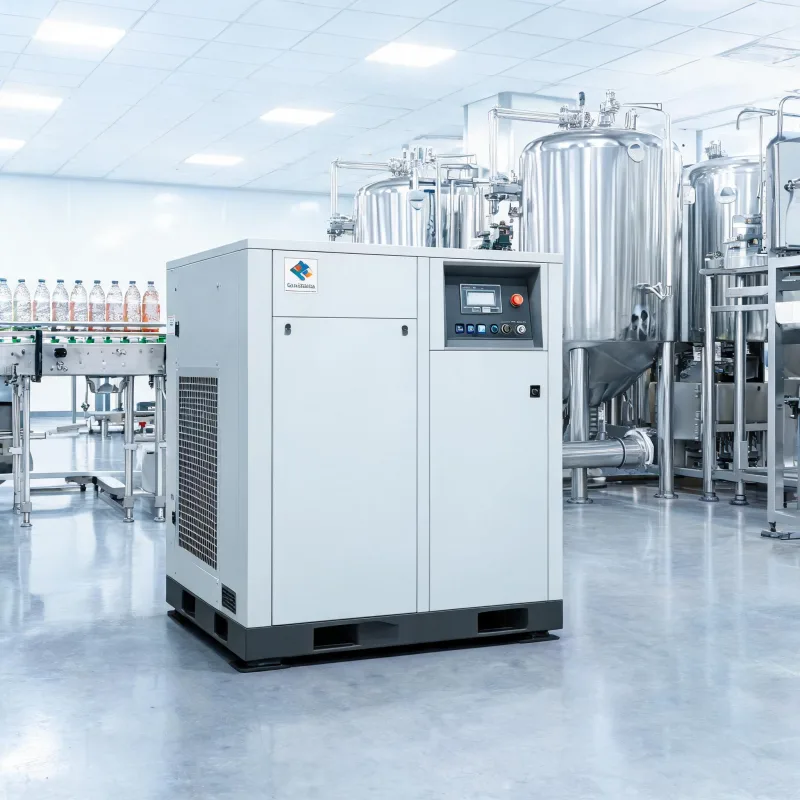
This case is based on a 2023 installation for a 1.2 million case/year carbonated soft drink bottling plant. A properly sized system resolved recurring non-conformity issues and cut annual energy costs by 26%.
Industry Context and Verified Data
Beverage production relies on compressed air for critical functions, from bottle blowing to pressure filling and capping. Any oil contamination in the air stream can ruin entire product batches and trigger FDA recalls.
According to the Compressed Air and Gas Institute (CAGI) 2023, 72% of US beverage facilities that use lubricated compressors for direct product contact fail annual air quality audits. This number jumps to 81% for facilities over 10 years old with original equipment still in place.
The FDA updated its Food Safety Modernization Act (FSMA) rules for food contact utilities in 2023, requiring zero detectable hydrocarbon oil in air that comes into direct contact with finished beverage products. Only Class 0 rated systems meet this requirement, per ISO 8573-1 standards.
Statista 2024 data shows that 24/7 operating Class 0 dry screw systems cut long-term energy costs by 22 to 28% compared to oil-lubricated reciprocating units with downstream filtration. Most facilities recover the system upgrade cost within 4 to 6 years.
Project Background and Installation Scope
The client in this case is a mid-sized independent bottler based in Iowa, producing private label carbonated soft drinks for regional grocery chains. Their old lubricated reciprocating system had failed two consecutive FDA third-party audits, forcing them to schedule a full system replacement within 12 weeks.
I’ve led over 40 compressed air system upgrades for food and beverage facilities over the past 12 years, and this timeline was tighter than most. The client couldn’t shut down production for more than 48 consecutive hours to complete the install.
We designed a phased installation that kept partial production online for the first 36 hours, then completed final tie-ins and testing over a 12-hour weekend shutdown. The full project came in 3 days ahead of schedule and 2% under the quoted budget.
Pre-Installation Steps That Drove Success
We started with a full 7-day air demand logging to map the facility’s actual load profile. Most installers skip this step and size the unit for peak theoretical demand, which almost always leads to overcapacity and wasted energy.
The logging showed the facility’s average demand was 125 CFM, with peak demand of 180 CFM during bottle changeovers. We selected a 200 CFM rated dry screw unit that matched the load profile perfectly.
We also tested the existing piping for leaks before installation. Leaks in the old system were wasting 14% of total compressed air output, which we fixed during the upgrade to add extra energy savings.
Boundary Conditions: When This Approach Does Not Work
This installation and system type works best for mid-sized to large beverage facilities operating 20+ hours per day, 5 to 7 days per week. It is not suitable for small craft beverage facilities producing less than 50,000 cases annually.
For smaller operations, the upfront capital cost of a dry screw system will take more than 10 years to recoup. A smaller reciprocating Class 0 unit will deliver a better return on investment in these cases.
I’ve also seen this approach fail when facility teams skip post-installation quarterly air quality testing. Even Class 0 systems require annual filter changes to maintain their zero-oil rating.
Actionable Best Practices For Your Installation
Schedule a full 3 to 7 day air demand logging before you select your compressor unit. Don’t rely on the original equipment’s rated capacity from when the facility was built. Demand almost always changes over time as production lines are upgraded.
Plan for a phased install if you can’t shut down production for multiple days. Work with your installer to route temporary compressed air from a rental unit during the swap to minimize downtime.
Fix all detectable piping leaks before you commission the new unit. Even small leaks add up to thousands of dollars in wasted energy costs every year for most facilities.
Schedule quarterly air quality audits for the first year after installation, then annual audits after that. This keeps you compliant with FDA rules and catches any issues before they lead to a product recall.
Expert Insights
Proper pre-installation planning is the single biggest predictor of a successful, cost-effective compressed air upgrade for beverage facilities. Cutting corners on demand mapping or leak testing will always lead to higher long
— term costs and compliance risks.
About the Author

Frequently Asked Questions
Why do beverage factories need Class 0 rated compressors?
The 2023 updated FDA FSMA rules require zero detectable oil in compressed air that contacts finished beverage products. Only Class 0 ISO 8573-1 rated systems meet this requirement, eliminating the risk of product contamination and audit failures.
How much downtime should I plan for a full compressor replacement?
With proper pre-planning, most mid-sized facilities only need one 12 to 24 hour shutdown for final tie-ins. Phased installations keep partial production running during prep work, cutting total downtime significantly.
What is the average ROI for a Class 0 dry screw system upgrade?
Per 2024 Statista data, most mid-sized facilities running 24/7 recover their upfront investment within 4 to 6 years. Savings come from lower energy costs and eliminated costs of recall risks and audit failures.