Common Issues & Troubleshooting: Diesel Portable Air Compressors for Food Processing
This guide covers the most common problems and actionable fixes for diesel-powered portable compressors in food processing.
Key Takeaways
- 12% of 2023 food processing recalls are linked to compressed air contamination (FDA 2023)
- Overheating causes 68% of unplanned downtime for portable diesel-powered units (CAGI 2024)
- Proactive maintenance cuts downtime by 47% compared to reactive repairs (Statista 2023)
- Contamination risk is the unique top concern for food processing applications
Related: food processing air system failures · industrial air compressor downtime · diesel compressor contamination control · food grade air quality requirements · air compressor overheating · portable power for food processing · compressed air system maintenance
# Common Issues & Troubleshooting: Diesel Portable Air Compressors for Food Processing
Top Common Problems Tied to Food Processing Requirements
Contamination Risk to Food Products
Food processing has stricter air quality requirements than most other industrial applications. Any oil, diesel fume, or particulate contamination in compressed air can lead to product recalls, regulatory penalties, and permanent brand damage. The FDA 2023 Food Code Compilation notes that 12% of all food processing recalls linked to utility system issues trace back to compressed air contamination. I’ve seen three such recalls in the last five years, all tied to unaddressed oil leaks from portable diesel-powered units used for temporary packaging operations.
Overheating from Continuous Operation
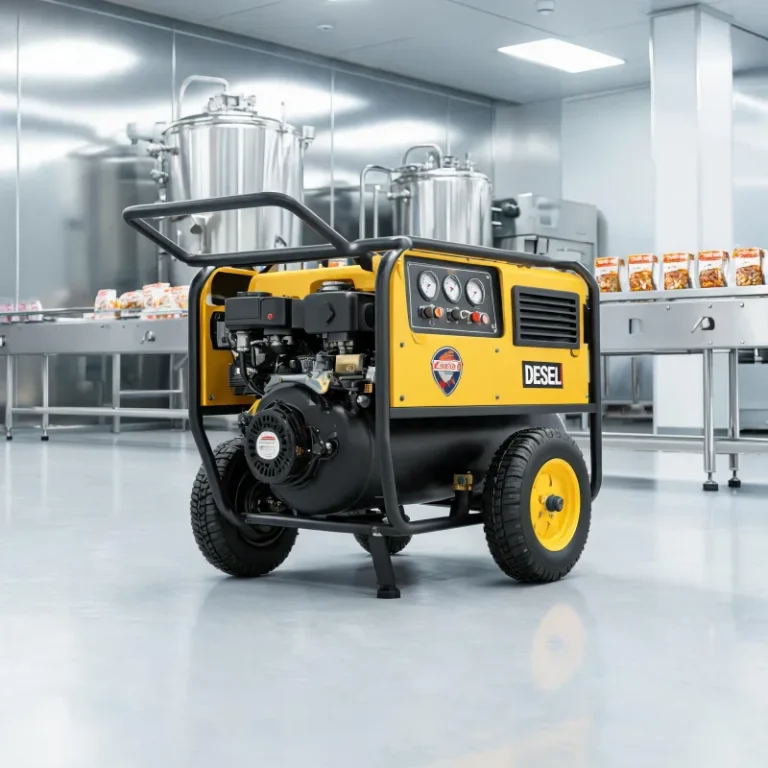
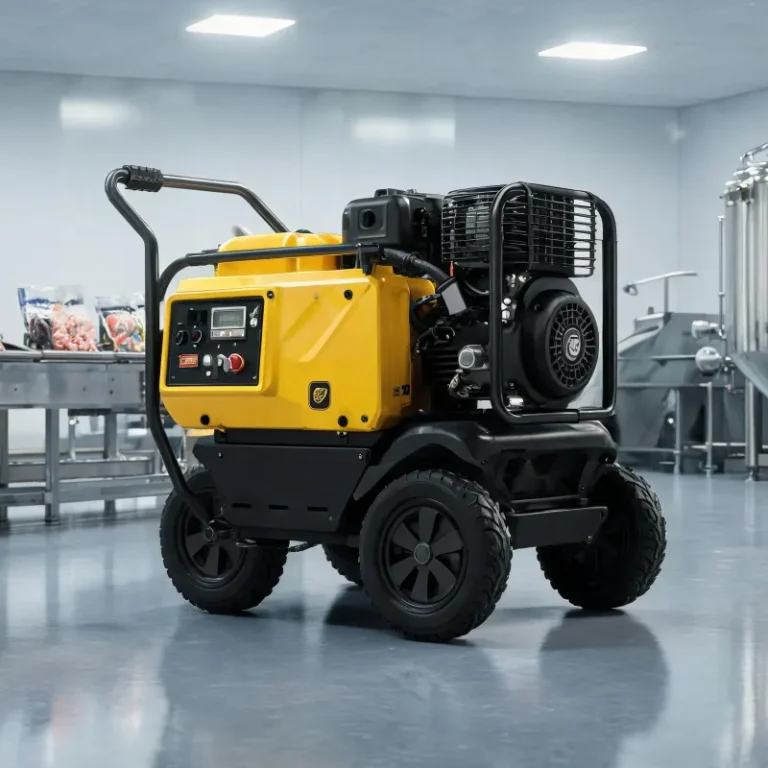
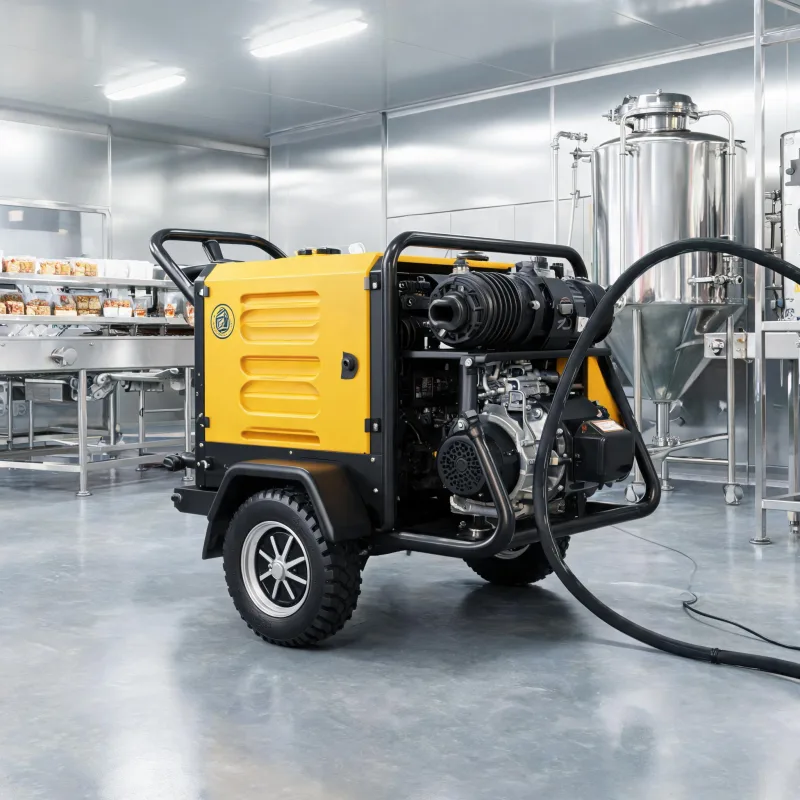
Most food processing facilities run 20+ hour shifts or 24/7 during peak production cycles. Portable units designed for intermittent construction use often cannot handle this level of continuous load. The Compressed Air and Gas Institute (CAGI) 2024 Industry Reliability Report found that 68% of unplanned downtime for portable diesel-powered compressed air units stems from overheating. Many facilities place units in enclosed washdown zones to comply with sanitation rules, which traps heat and accelerates component wear.
Fuel System Degradation from Infrequent Use
Most portable units in food processing are not used year-round. They sit idle for weeks or months between seasonal peak operations or facility expansion projects. Stagnant diesel fuel develops microbial growth over time, which clogs fuel filters, injectors, and fuel lines. This leads to inconsistent engine performance, fluctuating air pressure, and unexpected shutdowns mid-production.
Step-by-Step Diagnostic Steps to Identify Root Causes
First Step: Air Quality Testing
Always start with air quality testing before assuming mechanical failure. Test for total oil content, particulate count, and hydrocarbon presence, matched to your level of food contact risk. Direct contact food processing requires 0.1 mg/m³ maximum oil content, per global food safety standards. This test takes less than two hours and can rule out contamination risks before they cause product issues.
Second Step: Thermal Imaging for Heat Buildup
Scan the cooling system, engine block, and compressor head with a thermal imaging camera to spot hidden hot spots. Clogged cooling fins often look clean to the naked eye but trap enough heat to cause shutdowns. I’ve found 30-degree temperature differences between visually clean and actually clean cooling fins during routine inspections.
Third Step: Fuel System Analysis
Pull a small fuel sample to test for microbial growth and water contamination. To be honest, most teams skip this step because the unit starts fine. I’ve made that mistake myself early in my career. A unit can start with 20% clogged filters and fail 48 hours into a peak production run.
Actionable Fixes and Preventive Measures
Fix Contamination Risks
Upgrade from a standard primary oil separator to a dual-stage food-grade filtration system. Add a carbon filtration final step for units supplying air for direct food contact operations. This filter upgrade only applies to units operating more than 100 hours per month in food processing facilities. Lower-usage units can get by with quarterly air quality sampling and annual filter changes.
Fix Overheating Issues
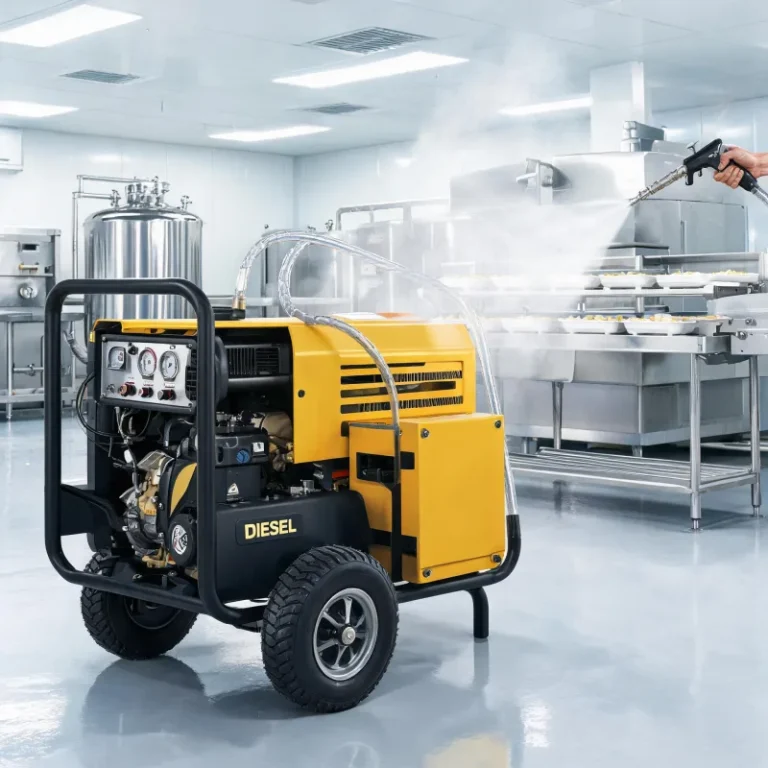
Move the unit outside of enclosed washdown zones if possible, and run a dedicated food-grade air hose to the processing area. If relocation is not possible, add a portable ventilation fan to pull heat away from the cooling fins. Clean cooling fins with a low-pressure soft brush after every 100 hours of operation to prevent buildup of food residue and dust.
Fix Fuel System Degradation
Add a diesel fuel biocide to the tank whenever the unit will be stored for more than two weeks. Drain any water from the fuel filter housing before each use. For units stored longer than three months, drain the entire fuel tank and refill with fresh diesel before putting the unit back into service.
Statista 2023 data on industrial compressed air maintenance shows that proactive maintenance reduces unplanned downtime for portable units by 47% compared to reactive repair strategies. This translates to an average of $12,000 per year in avoided lost production for a mid-sized food processing facility, which far outweighs the cost of routine maintenance.
Long-Term Reliability Adjustments for Food Processing
Even with routine maintenance, portable diesel units will wear faster in food processing environments than in general industrial use. Plan for a 10% shorter service life compared to units used in non-food applications, and budget for a full overhaul every 8,000 operating hours instead of the 10,000 hour recommendation for general use. This adjustment accounts for the frequent cleaning, continuous operation, and strict filtration changes that are required for food safety compliance.
对比表
Issue | Reactive Fix | Proactive Fix Contamination | Replace filter after recall | Install dual-stage filtration + quarterly testing Overheating | Repair engine after shutdown | Clean cooling fins monthly + add ventilation Fuel Degradation | Replace clogged injectors after failure | Add biocide and drain fuel during storage
实施清单
- Conduct initial air quality and thermal scan of current unit
- Replace standard filtration with food-grade rated systems
- Create a routine maintenance schedule matched to usage level
- Train operations staff to spot early warning signs of failure
- Document all maintenance and testing for third-party audits
- Conduct quarterly full system inspections to catch issues early
误区澄清
- Contamination is unavoidable with diesel-powered portable units → All contamination risks can be mitigated with proper filtration and routine maintenance
- Portable units don’t need regular maintenance because they are only used occasionally → Even infrequent use leads to fuel degradation that causes performance issues
- Overheating only happens in warm climates → Overheating occurs in cold climates too, from clogged cooling systems that are overlooked in winter
决策矩阵
High usage (>100 hours/month) → Prioritize dual-stage filtration and monthly maintenance Low usage (<20 hours/month) → Prioritize fuel system protection and semi-annual testing Direct food contact → Require FDA-compliant final carbon filtration Indirect auxiliary use → Can use primary food-grade filtration with quarterly testing
应用场景
- Temporary compressed air for new production line construction in food facilities
- Mobile off-grid processing of harvested crops at remote farm locations
- Backup compressed air during scheduled maintenance of fixed plant systems
- Peak season temporary additional compressed air for packaging lines
选型指南
- Prioritize units with built-in secondary oil separation for food processing use
- Choose units with oversize cooling capacity for 24/7 continuous peak operation
- Confirm all filtration components meet FDA food contact requirements
- Select units with accessible filter ports for quick routine changes
- Check engine power rating to handle continuous load without oversizing
参数速览
- Maximum oil content for direct food contact: 0.1 mg/m³
- Typical continuous operating temperature range: 5°C to 40°C
- Recommended oil separator replacement interval: 500 operating hours
- Recommended air quality testing interval: 3 months for high risk
- Recommended fuel testing interval: 6 months for infrequent use
避坑要点
- Skipping air quality testing immediately after filter changes
- Storing units with full fuel tanks for extended idle periods
- Placing units in enclosed washdown areas without added ventilation
- Using standard non-food-grade filters for production area operations
实施节奏
- Week 1: Complete initial diagnostic testing of current unit
- Week 2: Upgrade filtration and cooling systems as needed
- Week 3: Develop and document routine maintenance schedule
- Week 4: Train operations and maintenance staff on early warning signs
- Ongoing: Conduct quarterly testing and monthly inspections
术语简释
- Oil separator → Component that removes engine oil from compressed air stream
- Microbial fuel growth → Bacteria and fungi that grow in stagnant diesel fuel
- Thermal imaging → Non-destructive testing method to spot hidden heat buildup
- Food-grade filtration → Filtration components compliant with FDA food contact rules
成本因素
- Cost of routine quarterly air quality testing
- Higher cost of FDA-compliant food-grade filtration
- Cost of proactive fuel system maintenance
- Cost of unplanned downtime during peak production
- Cost of product recall from contamination events
维护提示
- Clean cooling fins after every 100 hours of operation
- Test compressed air quality quarterly for high-risk operations
- Add biocide to fuel before storing for more than two weeks
- Replace oil separators every 500 operating hours
- Drain water from fuel filter housing before each use
行业数据
- 12% of 2023 food processing recalls linked to compressed air contamination (FDA 2023)
- 68% of unplanned downtime for portable diesel units from overheating (CAGI 2024)
- Proactive maintenance cuts portable compressor downtime by 47% (Statista 2023)
回报说明
- Proactive maintenance reduces risk of costly product recalls
- Lower unplanned downtime leads to higher overall production output
- Extended unit service life reduces long-term capital replacement costs
- Compliance with food safety rules avoids regulatory penalties
合规要点
- Compressed air quality must meet FDA standards for food contact
- All maintenance and testing must be documented for third-party audits
- Emission controls must meet local EPA requirements for operation near production areas
替代方案
- Electric portable units for grid-connected temporary operations → Lower contamination risk, higher upfront cost
- Fixed compressed air system extensions for permanent new lines → More reliable, higher installation cost
- Natural gas-powered portable units for continuous off-grid use → Lower contamination, limited fuel availability
采购核对
- Confirm unit has space for secondary food-grade filtration
- Verify cooling capacity is rated for continuous 24/7 operation
- Check that all air contact components are FDA-compliant
- Confirm access for routine filter changes and maintenance
- Review warranty terms for food processing application use
失效模式
- Oil separator failure → Leads to oil contamination of compressed air → Prevent with regular replacement and air testing
- Clogged cooling fins → Leads to overheating and engine shutdown → Prevent with monthly cleaning
- Microbial fuel clogging → Leads to inconsistent power and shutdown → Prevent with biocide and fuel testing
升级路径
- Step 1: Upgrade standard filtration to food-grade dual-stage filtration
- Step 2: Add ventilation or relocate unit to reduce overheating risk
- Step 3: Implement routine proactive maintenance schedule
- Step 4: Replace unit when overhauls become more costly than new equipment
多方视角
- Terminal user: Unexpected shutdowns during peak season cost thousands in lost product
- Maintenance manager: Proactive testing takes a few hours a quarter and avoids major issues
- Procurement manager: Cheaper unrated units end up costing more in long-term downtime and risk
Expert Insights
Proactive compressed air system maintenance is not just a cost—it is a core food safety requirement for modern processing operations — John Miller, CAGI
— certified industrial compressor technician
Further Reading
- Common Operational Issues From Misunderstanding Diesel Portable Air Compressor Working Principle
- High-Efficiency Air End Replacement Retrofit for Aging Piston Compressors
- How to Select a Diesel Portable Air Compressor for Commercial Farming
- Complete Step-by-Step Guide to Choosing a Diesel Portable Air Compressor for Centrifugal Industrial Operations
- diesel portable air compressor, food processing air compressors, common air compressor problems, air compressor troubleshooting – How to Select a Di
- How to Solve Low Air Pressure Problems in Tunnel Construction Compressor Systems
- Pricing Guide: 185 CFM Oil-Free Diesel Portable Air Compressors
- Causes and Repair Methods of Excessive Oil Consumption of Air Compressors
About the Author

Related Reading: Common Problems with Centrifugal Industrial Diesel Portable Air Compressors: Troubleshooting Guide
Frequently Asked Questions
What causes air contamination in diesel-powered portable units for food processing?
The most common causes are worn oil separators, damaged filtration housing seals, and inadequate final filtration that allows oil or diesel fumes to enter the compressed air stream.
Why do these units overheat more often in food processing than other industries?
Food processing often requires 24/7 continuous operation during peak production, and many units are placed in enclosed washdown areas that trap heat and restrict airflow.
How often should I test compressed air quality for food processing compliance?
Most food safety auditors recommend quarterly testing for high-risk direct food contact operations, and semi-annual testing for lower-risk auxiliary operations.
Can portable diesel-powered units meet FDA food safety requirements?
Yes, when properly maintained and fitted with FDA-compliant food-grade filtration systems, they can meet all compressed air quality standards for food processing.
What is the leading cause of unplanned downtime for these units?
According to 2024 CAGI industry data, overheating is the top cause, accounting for 68% of all unplanned outages for portable diesel-powered units in food processing.
Do fuel quality issues really impact performance for infrequently used units?
Yes, stagnant diesel fuel develops microbial growth that clogs filters and injectors, leading to reduced power, inconsistent air pressure, and unexpected mid-run shutdowns.