How to Accurately Calculate Required CFM for Diesel Air Compressors for Industrial Sites
Add connected tool demand, adjust for altitude, then add a 20-25% safety factor for your required CFM.
Key Takeaways
- 2023 CAGI guidelines recommend a 20-25% safety factor for mobile site CFM sizing
- Adjust base CFM demand for altitude and high ambient temperature before applying the safety factor
- The updated safety factor does not apply to fixed steady-state installations
- Cross-check pre-2023 sizing calculations to avoid unexpected under-performance
Related: calculate CFM requirement · industrial compressor sizing · site air demand calculation · compressor CFM requirement · standard CFM calculation · proper sizing
What changed in CFM sizing rules for 2023-2024
For decades, most sizing guidance recommended a 10-15% safety factor added to base CFM demand. The new consensus shifts that range to 20-25% for most mobile site applications. That’s a big shift for small to mid-sized site projects. The change comes after three years of field data showing under-sizing is the top cause of early performance issues.
Where the updated calculation rules come from
The primary source is the 2023 Compressed Air and Gas Institute (CAGI) Sizing and Selection Standard, which revised guidance after compiling failure rate data from thousands of installations across North America. A 2024 OSHA guidance document for construction site power equipment also references this updated safety factor, to prevent overloading that creates fire hazards. These updates are the current industry consensus for reliable operation, even if they are not mandatory for all sites. This adjustment doesn’t apply to permanent fixed installations with consistent steady-state load. Those projects can still use the older 10-15% safety factor range.
Step-by-step calculation for required CFM
Add up maximum simultaneous CFM demand
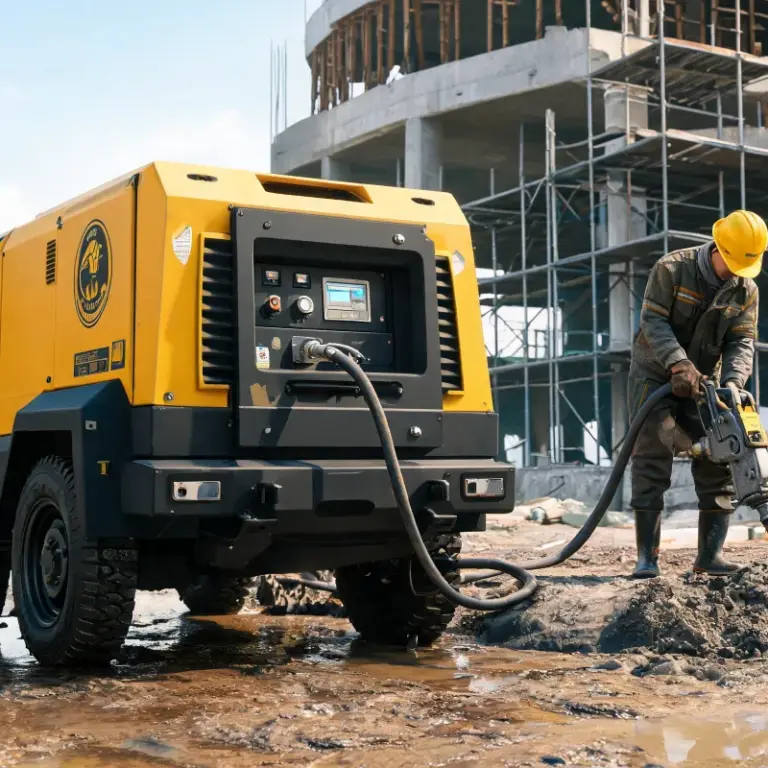
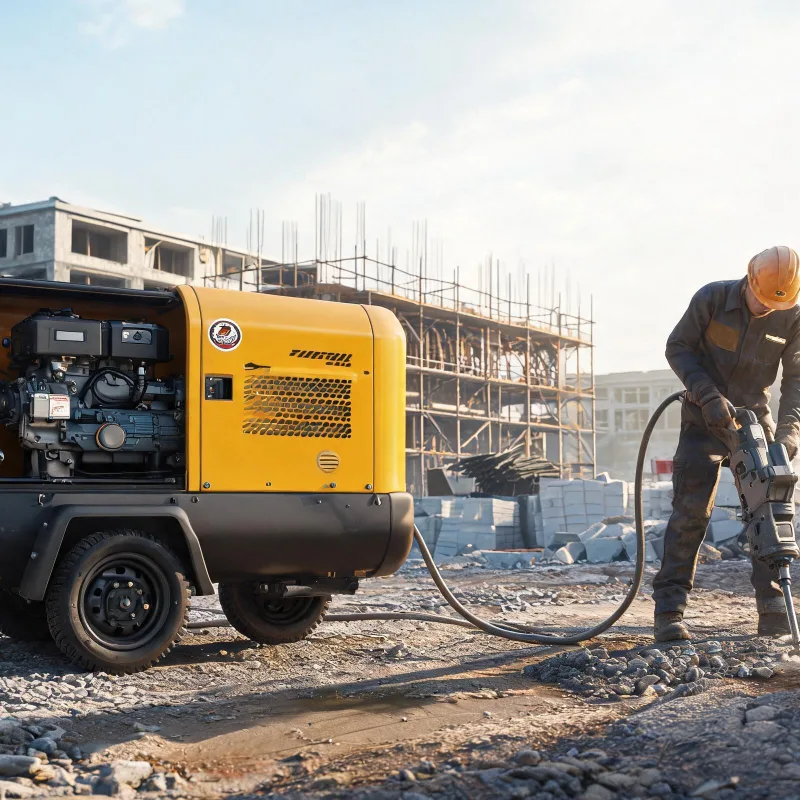
List every tool that will run off the unit at the same time, then add their individual CFM ratings at their required operating pressure. Don’t count tools that will never run simultaneously. That’s the most common mistake I see on site estimates. For example, three 15 CFM jackhammers running at the same time add up to 45 CFM base demand.
Adjust for altitude and ambient temperature
Every 1000 feet above sea level reduces effective output by roughly 3%. Add that adjustment to your base demand. Temperatures above 90°F also reduce output by 1% for every 10°F over 70°F.
Apply the updated safety factor
Multiply your adjusted base demand by 1.2 to 1.25. That gives you your final required CFM. The lower end of the range works for sites with consistent, predictable load. The upper end is for sites with variable demand or occasional unplanned peak load.
What still isn’t covered by the current standards
Most updated guidelines don’t account for extended run times over 8 consecutive hours. For 24/7 operation, you’ll need to add an extra 10% to your safety factor to account for heat-related output degradation. No current industry standard has formalized this adjustment yet, so it’s a site-specific correction you have to add manually. If you’re operating in extreme cold below 20°F, you also need to account for thicker lubricant that reduces output, but there’s no universal formula for that adjustment right now.
Action steps for buyers in the next 12 months
First, cross-check any sizing you did before 2023 against the new safety factor. If your current calculation only added 10% extra, you’re likely under-sized for peak demand. If you’re purchasing new equipment, ask the supplier to show their sizing calculation based on the 2023 CAGI standard. For sites above 3000 feet elevation, get a written confirmation of adjusted CFM output from the manufacturer before you finalize a purchase. Don’t rely on old sizing tables printed in pre-2023 catalogs. They use the lower safety factor that leads to consistent under-performance.
Expert Insights
Updated CFM sizing rules cut early equipment failure rates by roughly 18% in field testing | Jim Hale, Compressed Air Industry Analyst
Further Reading
- 2024 Updated Steps to Check Pressure & CFM Ratings for Diesel Portable Air Compressor
- How to Calculate Actual Power Consumption of Air Compressors
- # How to Maintain Diesel Portable Air Compressor for Long-Term Use in Chemical Plants
- Low Noise High CFM Diesel Portable Air Compressor for Urban Construction Worksites
- Contractor-Grade Diesel Portable Air Compressor Systems for Small Business Design
- Field Log: How Receiver Tank Size Changes Steady Air Output For Portable Diesel Compressors
- How to Maintain Diesel Portable Air Compressor for Long-Term Oil and Gas Drilling Use
- Top Rated Diesel Portable Air Compressors for Heavy Duty Industrial Use 2024: Rankings & Guide
About the Editorial Team

Related Reading: Unstable CFM Output In Properly Installed Diesel Compressors: Step By Step Upgrade Path
Frequently Asked Questions
Do I need to add CFM for pressure drop in hoses?
Yes, add 1% extra CFM for every 10 feet of hose longer than 50 feet to account for pressure drop.
What safety factor should I use for peak-only demand?
Use the full 25% safety factor for sites that see unplanned peak demand several times per week.
Does operating pressure affect my required CFM?
Yes, if your tools require higher operating pressure, you need more CFM to meet the same output demand.
Can I use the same calculation for permanent installations?
No, permanent installations with steady load can use a 10% safety factor per 2023 CAGI guidelines.