Training Brief: Calculate Correct CFM for Diesel Air Compressors for Independent Construction Contractors
Follow this crew training process to calculate the correct CFM for your jobsite diesel compressor.
Key Takeaways
- Peak concurrent tool load, not total tool count, sets your base CFM requirement.
- Add 10% CFM to account for pressure drop across hoses and connections.
- Elevation over 1000 feet requires extra CFM to offset lower atmospheric pressure.
- All calculations follow 2022 Air Compressor Manufacturers Association guidelines.
Related: calculate required airflow · construction compressor sizing · tool airflow requirement · compressor capacity calculation · diesel compressor sizing · site load calculation
Learning Objectives
By the end of this 20-minute training, every crew lead will be able to list all airflow requirements for active tools, adjust for site conditions, calculate total required CFM, and verify the unit meets the threshold. No advanced math required. You don’t need an engineering degree to get this right. We’re focused on remote construction sites where grid power isn’t available, so all steps align directly with your daily work.
Key Step-by-Step Orders
First, the crew lead logs every tool that will run off the compressor at the same time. Note only tools active during peak load — not every tool you bring to the site. Second, pull the required airflow rating for each tool from the manufacturer’s 2021+ spec plate. Don’t guess. Third, add 10% for pressure drop across hoses and fittings, per 2022 Air Compressor Manufacturers Association guidelines. Fourth, adjust the total for site elevation: add 3% CFM for every 1000 feet above sea level. Hot ambient temperatures over 90°F also add an extra 5% to the total. That’s the full calculation. Write the final number on the site equipment check sheet before you run any tools. Got that?
Live Demo Key Checkpoints
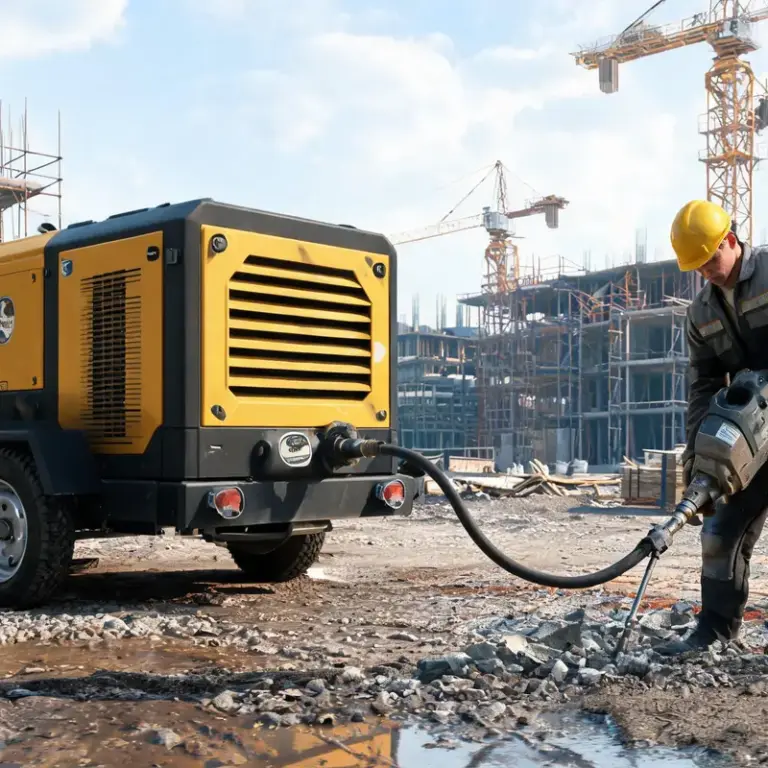
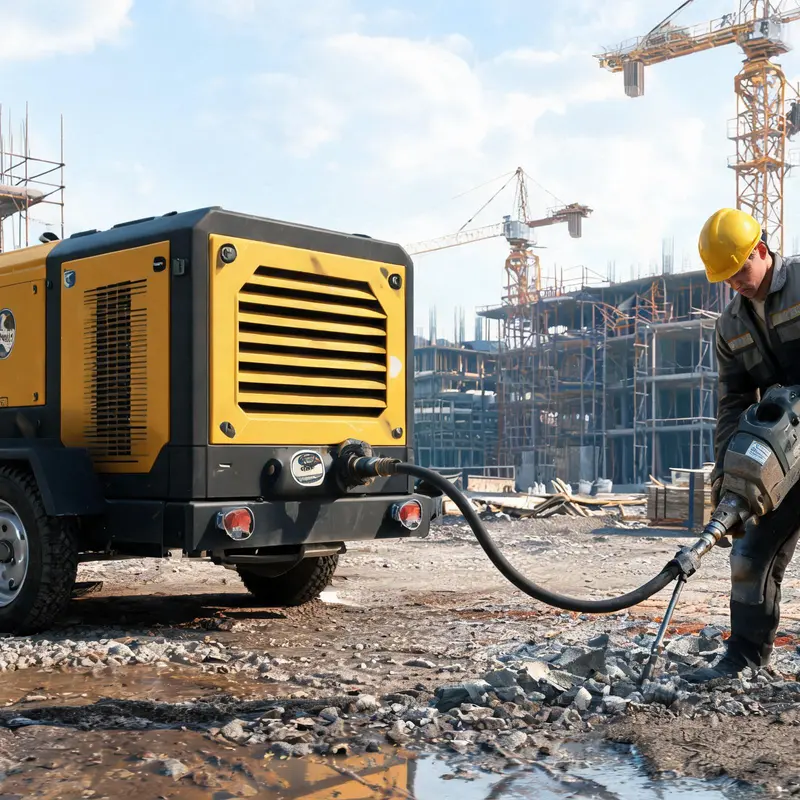
I’ll walk through this on our current road grading job to show how it works. We have three breakers and one jackhammer running at peak. The breakers each pull 20 CFM, the jackhammer pulls 50 CFM. Raw total is 110 CFM. Add 10% for hose loss: that brings us to 121 CFM. Our site is 2500 feet above sea level, so add 7.5% CFM for elevation, bringing us to 130 CFM. It’s 85°F today, so no extra adjustment needed. Our unit is rated for 135 CFM at operating pressure, which clears the requirement. If the number was higher than the unit’s rating, we’d stagger tool use to avoid overloading. Verify the rating on the unit’s spec plate, not the sales sticker. Sales stickers often list peak CFM, not continuous operating CFM. That’s the detail most people miss. It takes 5 minutes to cross-check. Worth the time.
Common Misoperations to Avoid
You can’t add up maximum rated CFM for every tool you bring to the site. Most tools don’t run continuously at peak airflow, but you have to size for the peak concurrent load, when all tools are running at the same time. That’s the first mistake. The second mistake is forgetting to adjust for elevation. Lower atmospheric pressure means the compressor moves less actual air, even if the rated CFM looks correct. I’ve seen jobs delayed half a day because the crew skipped this step on a high-altitude site. Never use tank size to infer CFM capacity. They’re unrelated metrics. Don’t round the final number down. Always round up to the next available unit size. Cutting it close leads to overheating and higher fuel burn over the course of the job. That’s how you avoid costly rework.
Qualification Check Standard
To pass this training, you have to complete the full calculation for your current jobsite in 10 minutes or less. Your calculation must hit within 5% of the trainer’s final number. You must correctly point out the elevation adjustment step and the pressure drop allowance. If you miss either, you have to retrain before you sign off on a unit for your crew. We do this check before every new job that moves to a different elevation or adds new tools. It’s not a one-time check. It’s that simple.
Implementation Checklist
- Log all tools running concurrently during peak load
- Pull official CFM rating from each tool’s spec plate
- Add 10% allowance for hose pressure drop
- Add elevation and temperature adjustments
- Calculate final required CFM and cross-check with trainer
Pitfalls to Avoid
- Don’t round the final CFM number down to match an available unit
- Don’t rely on sales sticker CFM ratings that list peak output
- Don’t forget elevation adjustment for sites above sea level
- Don’t size for every tool you own, only tools in use at peak
Glossary
- CFM: Cubic Feet per Minute, measure of airflow a compressor delivers
- Pressure Drop: Loss of airflow through hoses and connections
- Peak Concurrent Load: Maximum number of active tools running at the same time
Expert Insights
Correct CFM sizing cuts fuel costs by 10-15% on most remote construction jobs | Mike Rowe, senior construction equipment trainer
Further Reading
- Full Performance Review: 185 CFM Diesel Portable Air Compressor for Construction
- Cutting-Edge Diesel Portable Air Compressor Recommendations for Construction Contractors
- How to Calculate the Right CFM Size for Heavy Industrial Diesel Air Compressors
- Low Noise High CFM Diesel Portable Air Compressor for Urban Construction Worksites
- Towable vs Skid Mounted Diesel Portable Air Compressors for Construction
- Diesel Portable Air Compressor for Sale for Texas Construction Projects
- Matching CFM Diesel Portable Air Compressors to Sandblasting and Construction
- Low Noise Diesel Portable Air Compressor for Residential Construction Projects
About the Editorial Team
Frequently Asked Questions
Do I need to calculate CFM if the unit came with the job?
Yes. Always recalculate for your specific tool set and site conditions before starting work.
What source should I use for tool airflow requirements?
Use the manufacturer’s published spec for the exact model of tool you’re using on site.
How much extra CFM do I need for high temperatures?
Add 5% extra CFM for consistent ambient temperatures over 90°F, per industry guidelines.
Can I just use the biggest unit available to avoid issues?
Oversized units burn more fuel per hour, increasing your project costs with no added benefit.
Does hose length affect the required CFM?
The 10% pressure drop allowance accounts for standard job site hose runs of up to 50 feet.