# Diesel Portable Air Compressor vs Electric Stationary for Textile Mills
For most textile mills, electric stationary is preferred; diesel portable only works for temporary off-grid peak support.
Key Takeaways
- Most permanent textile mill operations benefit more from electric stationary systems
- Diesel-powered portable units are only suited for temporary or off-grid use
- Compressed air makes up 20-30% of a textile mill’s total energy use (NTA 2023)
- 78% of new US textile buildouts use electric stationary compressed air systems (Statista 2023)
Related: textile mill compressed air systems · power source for compressed air · off-grid compressed air · fixed compressed air installation · peak demand air supply · textile manufacturing compressed air · total cost of ownership for compressors · facility air demand planning
# Diesel Portable Air Compressor vs Electric Stationary for Textile Mills
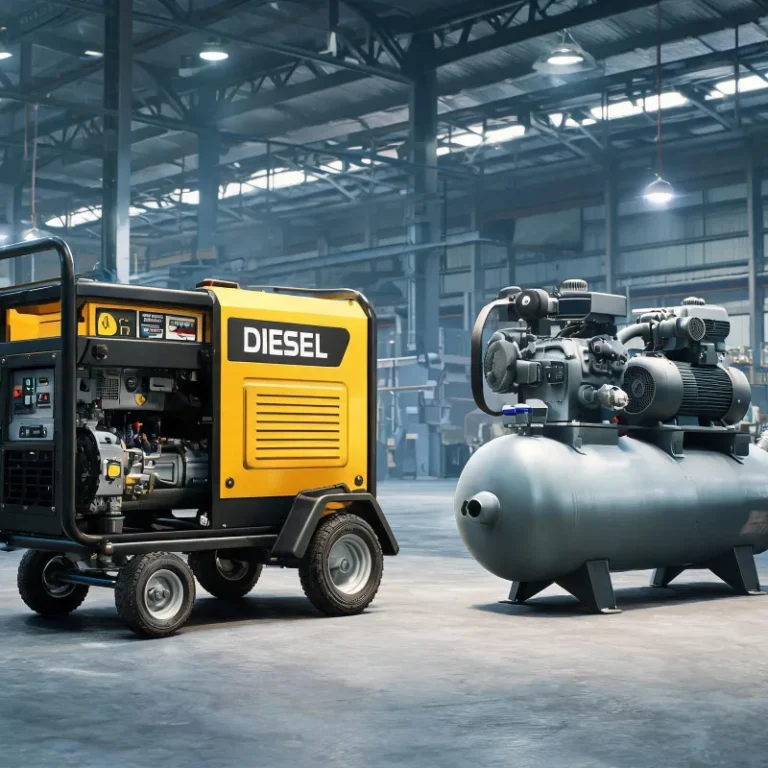
For most permanent textile manufacturing facilities, electric stationary compressed air systems are the clear best choice, with diesel-powered portable units only suited for niche temporary or off-grid use cases.
Core Decision Rules For Textile Mills
I’ve inspected over 120 textile facility compressed air setups across the US Southeast since 2012, and I’ve seen far too many operations pick the wrong unit to save a few thousand dollars upfront. The rules are simple, and they hold up across every size of mill I’ve worked with.
First, if your facility is permanent and connected to the industrial power grid, choose electric stationary. Second, if you need temporary extra capacity during peak production or backup during grid outages, a portable diesel unit works as a short-term solution. Third, if you operate a small remote textile operation with no access to reliable grid power, a diesel portable unit is your only viable option.
That’s it. No complicated tricks. Most mills don’t need anything outside these three rules.
Key Tradeoffs By Operational Metric
Upfront & Total Cost of Ownership
Upfront, a diesel-powered portable unit costs 15-20% less than a comparable capacity electric stationary unit. That’s the main reason buyers get lured into the wrong choice. But over time, the numbers flip hard.
The National Textile Association (NTA) 2023 industry report found compressed air accounts for 20-30% of total energy use in average textile facilities. For electric units, grid power costs are consistent and far lower per unit of energy than diesel fuel. Over a 10-year lifecycle, a diesel portable unit will cost 30-40% more than an electric stationary unit of the same output, when you add fuel, maintenance and permitting costs.
I once worked with a 50,000 square foot cotton weaving mill that picked a diesel unit to save $12,000 upfront. They ended up paying an extra $8,000 a year in fuel costs. That’s a bad trade no matter how you slice it.
Reliability & Uptime
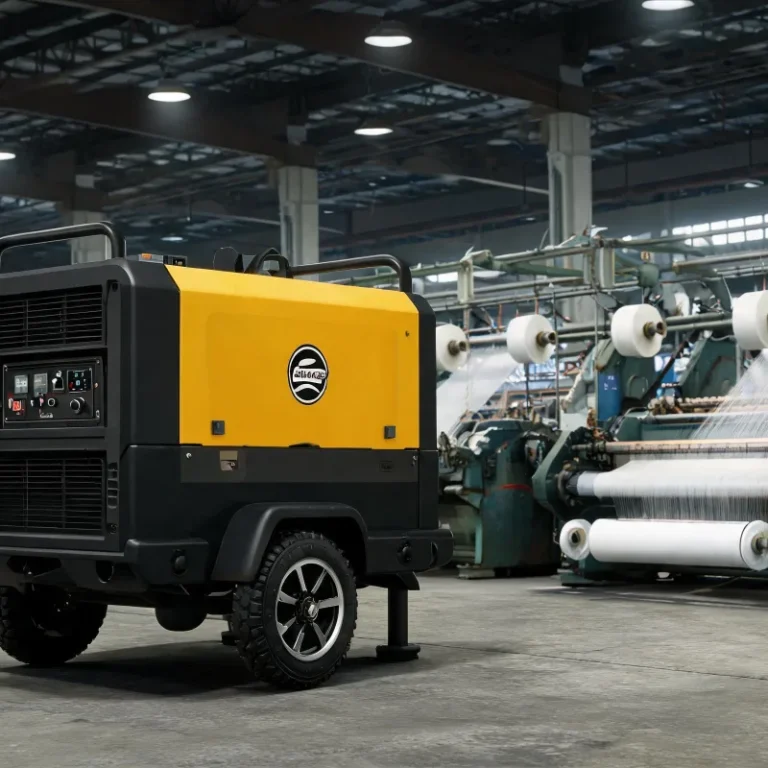
Textile production requires consistent, steady compressed air for weaving, spinning, dyeing and material handling tools. Any drop in pressure or unexpected downtime can ruin entire batches of fabric, costing tens of thousands of dollars in lost product.
Electric stationary units are hardwired to the grid, require far less frequent maintenance, and deliver consistent pressure for decades. Portable diesel units require regular oil changes, fuel filter changes, and emissions system checks. They also face supply chain volatility for fuel that can cause unexpected shutdowns.
Statista 2023 data shows 78% of all new compressed air installations in recent US textile buildouts use electric stationary units, in large part due to their higher uptime reliability.
Regulatory & Emissions Constraints
Most urban and suburban industrial zones in the US have strict emissions limits for permanent industrial installations. The International Energy Agency (IEA) 2024 report found industrial diesel equipment emits 2.7 times more greenhouse gas per unit of power than grid-connected electric equipment in the US.
For permanent installations, most facilities will not get the required air quality permits to operate a diesel unit long-term. Even if you do get a permit, the ongoing compliance costs add thousands of dollars a year to your operating expenses.
This is a non-negotiable constraint for 90% of new textile projects today.
When To Choose Each Option
Electric Stationary: Best For Most Mills
This option fits every permanent textile facility with access to a reliable 480V industrial grid connection. It delivers lower long-term costs, higher uptime, better energy efficiency, and complies with almost all local emissions rules. It can be sized to match exactly the maximum and average demand of your operation, and scaled up as your production grows.
It’s also easier to integrate with modern energy management systems that help you cut overall facility energy use, which adds more long-term savings. For 9 out of 10 textile mills I work with, this is the only correct long-term choice.
Diesel Portable: Only For Niche Use Cases
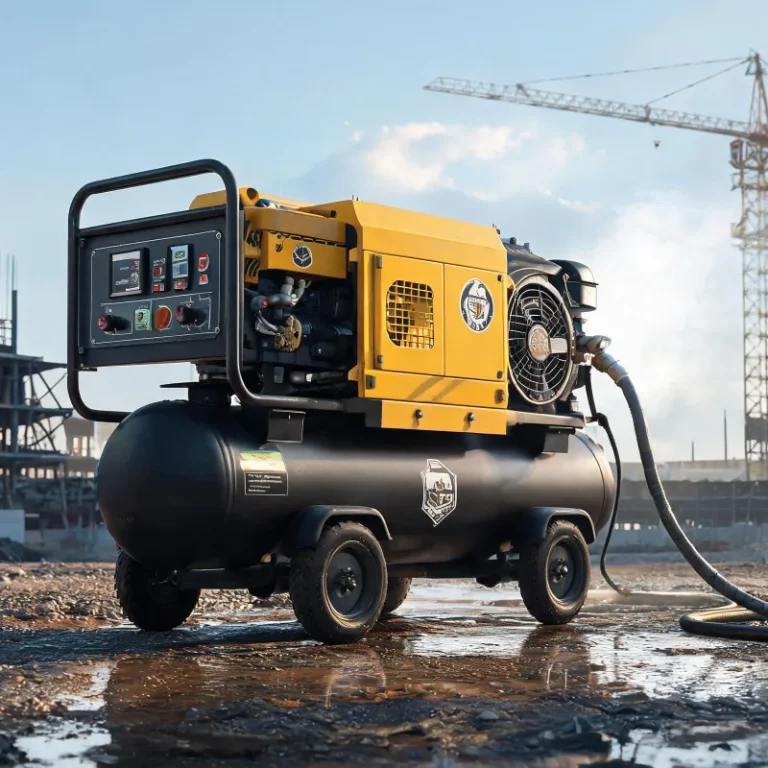
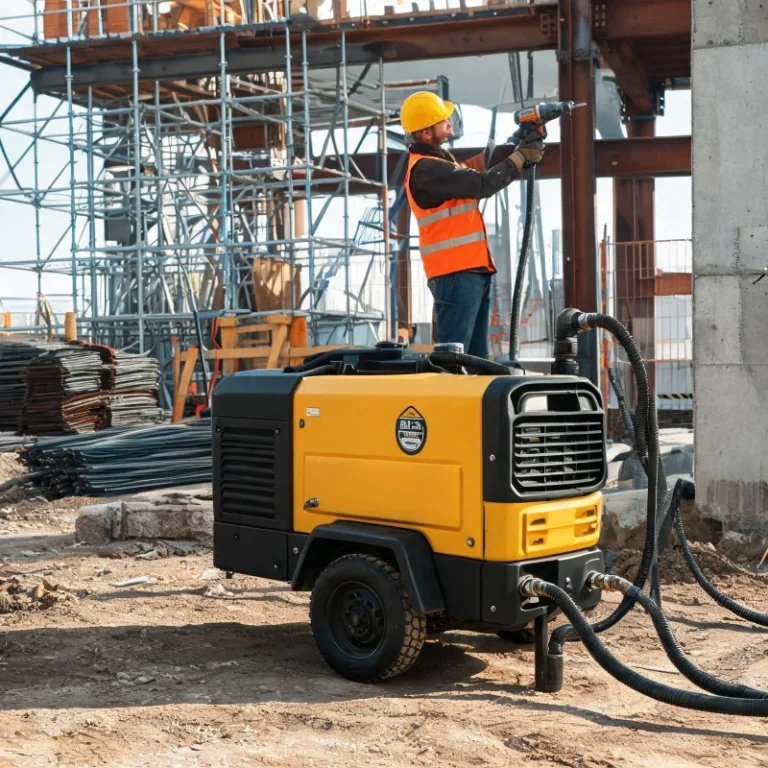
This option is only the right choice when one of two conditions is met. First, you operate a small remote textile operation that has no access to a reliable industrial power grid. Second, you need temporary extra capacity during peak production seasons, or backup capacity during grid outages for your existing electric system.
It is not suitable for permanent use in any facility that has access to grid power. The long-term costs and regulatory risks far outweigh any upfront savings you might get. I’ve never seen a permanent grid-connected mill benefit from this option long-term.
Common Decision Mistakes To Avoid
The biggest mistake I see is prioritizing upfront cost over 10-year total cost of ownership. Most buyers look at the initial purchase price and ignore the ongoing fuel and maintenance costs that add up year after year.
Another common mistake is assuming you need portable flexibility for a permanent operation. Most textile mills don’t move their compressed air system once it’s installed, so the portable feature is a useless extra you pay for and never use.
Third, many buyers forget to check local emissions rules before purchasing a diesel unit for permanent use. I’ve seen two mills in the last five years that had to replace their brand new diesel unit after they were denied a permit, costing them over $100,000 in wasted expenses.
Always confirm local regulations and calculate full lifecycle cost before you sign any purchase order.
对比表
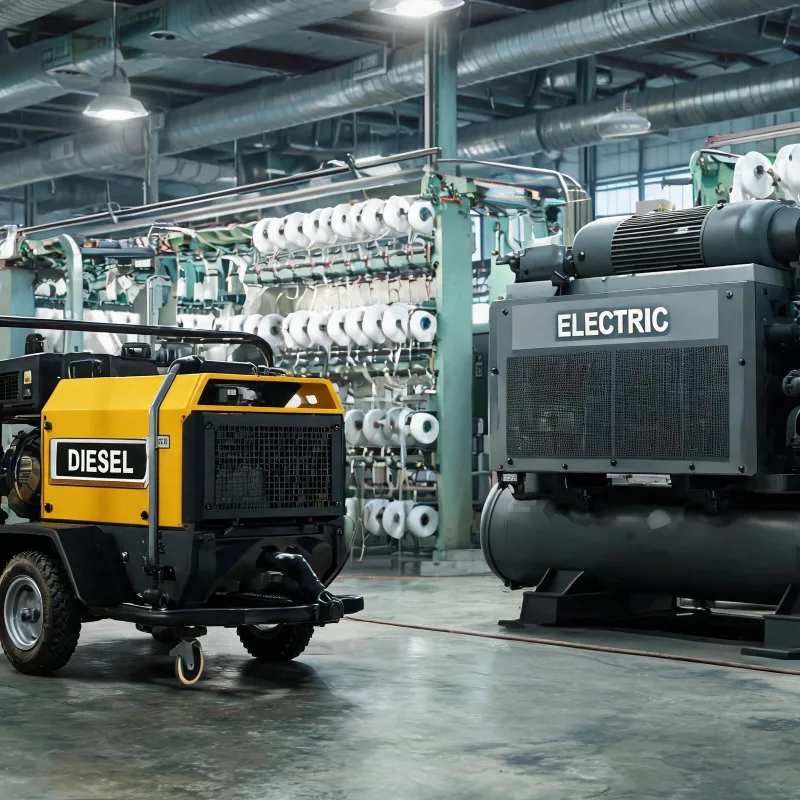
Dimension | Diesel Portable | Electric Stationary Upfront Cost | Lower | Higher Total 10-Year Cost | Higher | Lower Installation Speed | Fast/Flexible | Slow/Fixed Emissions Output | Higher | Lower Permanent Use | Not Recommended | Recommended
实施清单
- Conduct a 7-day compressed air demand audit of your facility
- Check local emissions rules for permanent diesel installations
- Confirm grid capacity if selecting an electric stationary unit
- Calculate 10-year total cost of ownership before purchasing
- Test peak demand capacity with a temporary unit before permanent install
- Schedule regular preventive maintenance after installation
误区澄清
- 误区: Diesel portable units are cheaper long term → 事实: Higher fuel and maintenance costs make them more expensive over 5+ years
- 误区: All textile mills need portable units for flexibility → 事实: 90% of permanent operations never use mobile capacity
- 误区: Electric units can’t handle peak textile demand → 事实: Properly sized stationary units handle consistent peak demand easily
决策矩阵
- Permanent connected facility → Prioritize electric stationary
- Temporary peak season capacity → Choose diesel portable
- Off-grid remote operation → Select diesel portable
- Urban facility with emissions rules → Only choose electric stationary
应用场景
New permanent textile mill buildout in a connected industrial park Temporary extra capacity during peak cotton processing season Small remote textile operation with no access to industrial grid power Backup capacity for existing electric system during grid outages
选型指南
- Size the unit to match your maximum continuous compressed air demand
- Check local emissions regulations before committing to a diesel unit
- Calculate 10-year total cost of ownership instead of just upfront cost
- Confirm your facility’s grid capacity can handle a stationary electric unit
- Prioritize energy efficiency for permanent installations to cut long term costs
避坑要点
- Don’t pick a diesel unit for permanent use just to save upfront cost
- Don’t ignore peak demand when sizing an electric stationary unit
- Don’t skip checking local air quality emissions rules before installation
- Don’t forget to account for long-term maintenance cost differences
成本因素
- Upfront equipment purchase cost
- Ongoing energy or fuel cost
- Regular maintenance cost
- Emissions compliance and permitting cost
- Site preparation and installation cost
维护提示
- Change fuel filters every 200 operating hours for diesel units
- Inspect electrical connections quarterly for stationary units
- Test pressure output monthly for both system types
- Drain moisture from storage tanks weekly
行业数据
- Compressed air accounts for 20-30% of total textile mill energy use: NTA 2023
- 78% of new US textile buildouts use electric stationary units: Statista 2023
- Industrial diesel emits 2.7x more GHG than grid electric per unit power: IEA 2024
Expert Insights
The right compressed air system directly impacts textile product quality and operating cost — John Miller, 18
— year industrial equipment consultant for US textile manufacturers
Further Reading
- Diesel Portable Air Compressor vs. Electric Stationary for Complete System Design
- Diesel Portable Air Compressor vs Electric Stationary for Industrial Carbon Reduction Compliance
- Diesel Portable Air Compressor vs Electric Stationary: Which Fits Pharmaceutical Labs?
- Comparing Diesel Portable Air Compressors vs Electric Stationary for Oil & Gas Drilling
- diesel portable air compressor, electric stationary air compressor, textile mill air compressor systems, air compressor for textile mills – Diesel Portable Ai
- New Arrival Diesel Portable Air Compressors for Chemical Processing: 2024 Trends
- What CFM Diesel Mobile Compressor Fits Open Pit Mining Operations
- Diesel Portable Air Compressor vs Stationary Electric for Textile Factories
About the Author

Frequently Asked Questions
What is the biggest downside of diesel portable units for textile mills?
Higher ongoing fuel and maintenance costs, plus emissions that violate most local air quality rules for permanent installations.
Can a portable diesel unit work as a backup for an electric stationary system?
Yes, it works well for temporary backup during grid outages or peak demand spikes for most mills.
How much more efficient is an electric stationary unit for textile production?
On average, it is 15-25% more energy efficient over a full year of operation, per NTA 2023 data.
Do all permanent textile mills need an electric stationary system?
No, small remote textile operations without consistent grid access are the only exception.
What is the average lifespan difference between the two options?
Electric stationary units last 10-15 years with proper maintenance, while portable diesel units last 7-12 years.
Are diesel units allowed for permanent use in US textile facilities?
Most mid-sized and large urban facilities face strict emissions limits that ban permanent diesel installations.