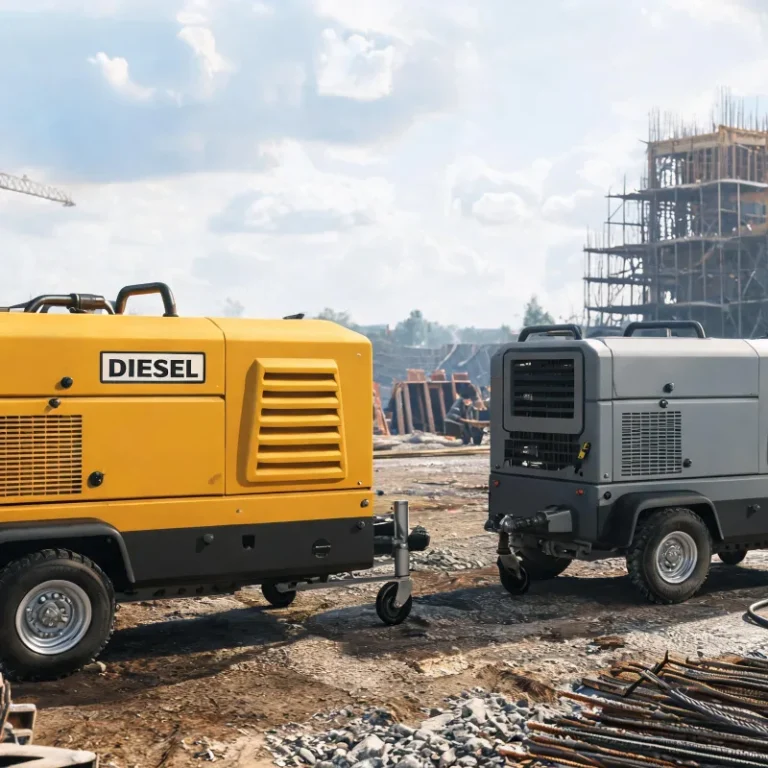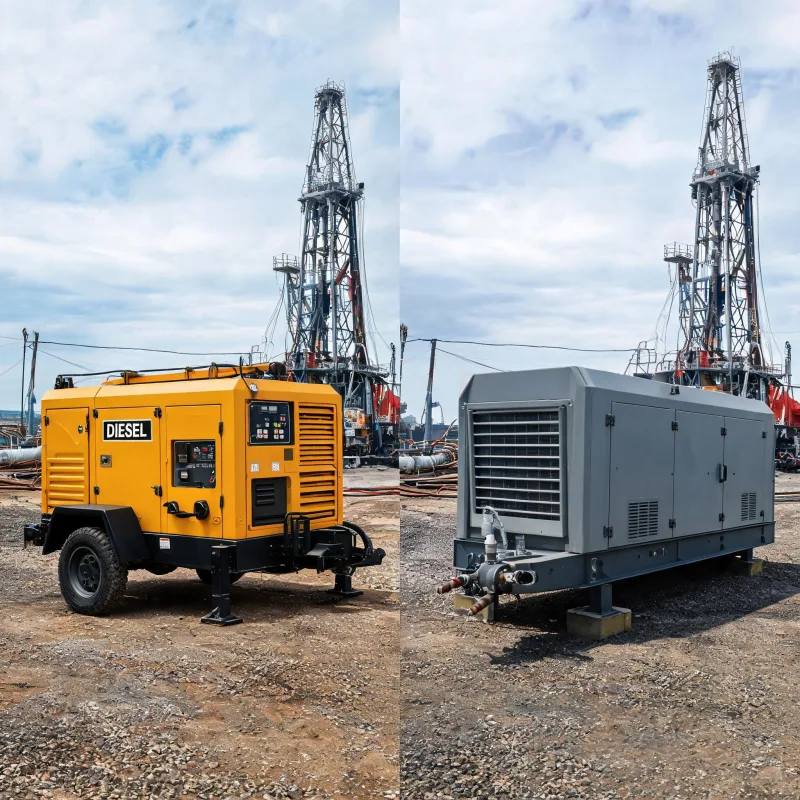
Comparing Diesel Portable Air Compressors vs Electric Stationary for Oil & Gas Drilling
For most remote oil & gas drilling sites, diesel portable air compressors outperform electric stationary units.
Key Takeaways
- 78% of onshore unconventional oil & gas drilling uses mobile diesel compression (API 2024)
- Electric stationary units only work for permanent, grid-connected long-term production sites
- Average installation cost for electric stationary systems hits $125,000 (EIA 2023)
- Mobile diesel units can be operational on a new site within 24 hours
Related: offshore drilling air compression · onshore drilling compressed air · mobile drilling air power · fixed drilling site compression · upstream oil and gas compression · well drilling air supply · remote drilling operations power
For most remote onshore and offshore oil & gas drilling operations, mobile diesel-powered compression is the clear preferred choice over fixed grid-tied electric units.
Core Performance Differences for Drilling Operations
Mobility and Site Adaptability
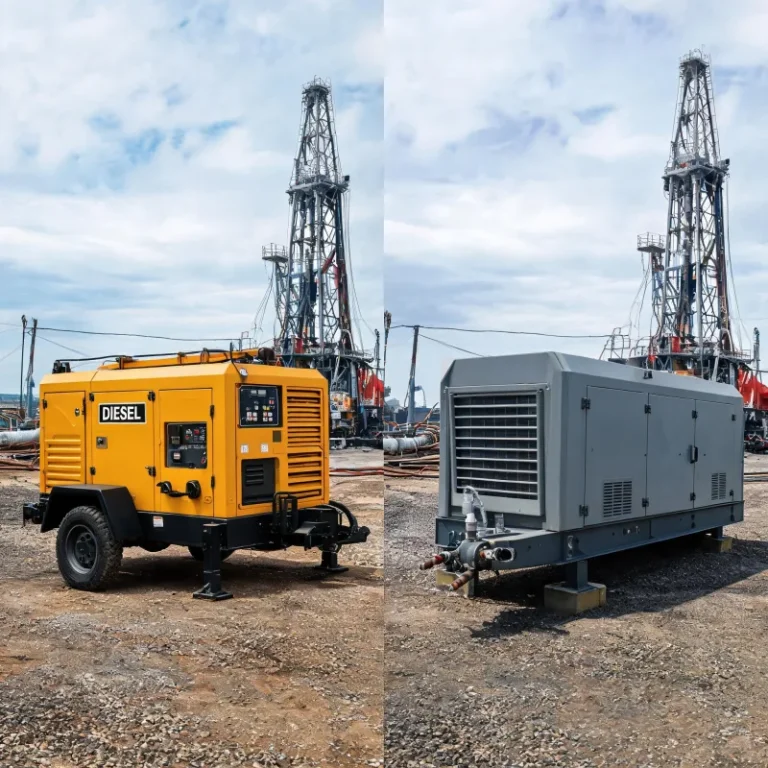
Drilling sites often move every few weeks to months, especially for exploratory and unconventional operations. Fixed electric units require permanent grid connections and concrete foundations, which can take 2-3 weeks to install before drilling can start.
I’ve seen operators delay spud dates by 10 days just waiting for utility hookups for a fixed unit, which ate into the entire project margin.
According to the American Petroleum Institute (API) 2024 report, 78% of onshore unconventional drilling operations rely on mobile compression units, compared to just 12% using fixed electric installations. Mobile units can be moved between well pads and operational within 24 hours of arrival, cutting project lead times dramatically.
Power Reliability in Remote Locations
Most new drilling sites are located in areas with no existing utility infrastructure. Bringing in a new power line can add six figures to project costs before any drilling even starts.
Diesel mobile units carry their own power source on board, so you don’t need to rely on third-party utility providers to get up and running. Extreme temperature swings common in arctic and desert drilling regions also favor diesel units, which are engineered to operate reliably across a wider range of conditions without added climate control hardware.
Total Cost of Ownership Breakdown
Upfront equipment cost for electric stationary units is often 15-20% lower than mobile diesel units, but that number does not include installation, site prep, and future relocation costs.
The U.S. Energy Information Administration (EIA) 2023 data puts average installation costs for a fixed drilling site electric compression system at $125,000, before factoring in grid connection fees. For mobile diesel units, site prep and set up costs usually fall between $15,000 and $30,000, a fraction of the fixed electric total.
I’ve worked with small independent operators that bought cheap fixed units to cut upfront costs, only to go over budget by 40% on site prep alone. If you have three or more well pads to drill in a single season, you pay installation costs multiple times if you stick with fixed electric units, which erases any initial savings.
Ongoing fuel costs are lower for electric units, but the difference usually takes 7+ years to offset the upfront installation gap for most drilling projects.
Use Case Boundaries: When Electric Stationary Works
Electric stationary compression is not the wrong choice for every scenario. It only makes sense for specific use cases, and that’s a point many buying guides miss.
Statista 2023 found that only 18% of oil and gas compression applications are for permanent long-term production well sites that don’t require regular relocation. If you have a permanent production well with existing grid access that can handle the peak compression load you need, electric stationary units can deliver lower long-term operating costs.
If you need to move the unit at any point in the future, or your site doesn’t have existing grid capacity, electric units are not a cost-effective solution. That boundary is non-negotiable for most drilling projects.
Emerging Trends Shaping Future Selection
The ongoing shift toward short-cycle, multi-pad drilling is increasing demand for mobile compression. API 2024 data shows that 62% of new drilling projects launched in 2023 were multi-pad projects, a 12% increase from 2019.
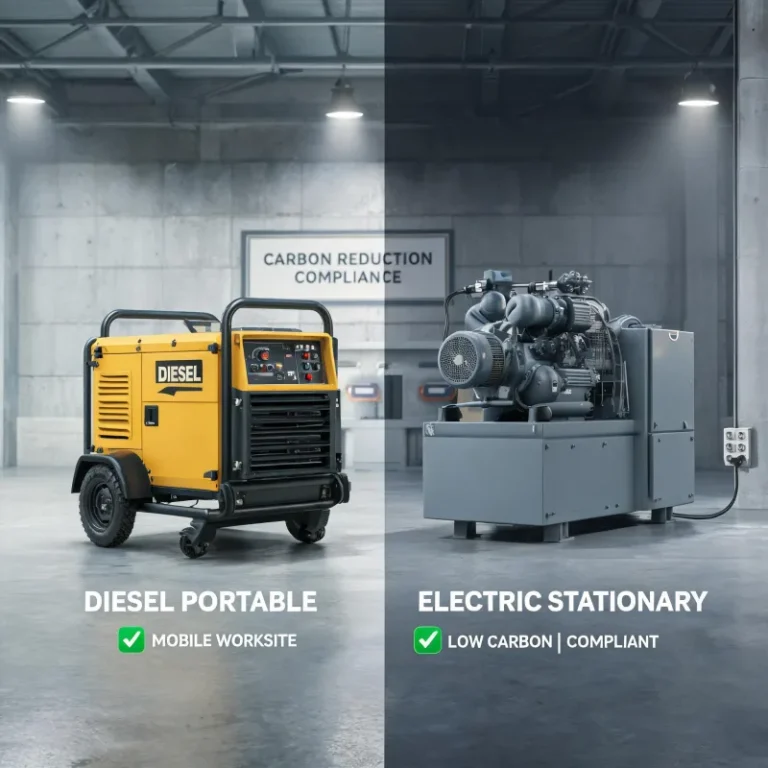
Emissions regulations have pushed manufacturers to update diesel compression technology to meet strict EPA standards, so most new units comply with current rules without major modifications. Hybrid systems that pair battery storage with diesel engines are starting to enter the market, but they don’t change the core tradeoff between mobility and fixed power that defines this comparison.
对比表
Mobility | Can be relocated between well pads in 1-2 days | Permanent installation, no relocation Upfront equipment cost | 15-20% higher | 15-20% lower Total installation cost | $15,000-$30,000 | $80,000-$170,000 (EIA 2023) Power source | On-board diesel engine | Grid connection required Suitable for remote sites | Yes | No
实施清单
- Assess your project duration and number of well pads
- Confirm grid access and power capacity at your site
- Calculate total installed cost for both options
- Check emissions compliance requirements for your region
- Test unit performance at site temperature conditions
- Schedule pre-delivery inspection before mobilization
误区澄清
“Electric units are always cheaper to own” → Upfront savings are erased by high installation and site prep costs for mobile projects “Diesel units don’t meet modern emissions rules” → New models meet all EPA and API emissions requirements for upstream operations “Fixed electric units are more reliable than diesel” → Diesel units have no dependence on grid stability, reducing unplanned downtime
决策矩阵
Short-cycle exploratory drilling → prioritize diesel portable Permanent long-term production → prioritize electric stationary if grid available Multiple well pads in one project → prioritize diesel portable No existing grid access → diesel portable is the only practical option
应用场景
Exploratory onshore drilling in remote, undeveloped regions Multi-pad unconventional shale drilling operations Offshore mobile drilling platforms requiring movable air supply
选型指南
Prioritize mobility if your project has more than one well pad Confirm total installed cost before comparing upfront equipment prices Check if your site has existing grid capacity for peak compression demand Verify emissions compliance for your operating region Plan for future relocation before committing to a fixed installation
避坑要点
Don’t rely on upfront equipment price alone to make your decision Don’t underestimate lead times for grid connection for fixed electric units Don’t forget to factor in relocation costs for multi-pad projects
成本因素
Upfront equipment purchase cost Site preparation and installation costs Relocation costs between well pads Fuel and energy costs over the unit lifespan Maintenance and compliance inspection costs
行业数据
78% of onshore unconventional oil & gas drilling uses mobile diesel compression (API, 2024) Average installation cost for electric stationary compression systems is $125,000 (EIA, 2023) Only 18% of oil & gas compression applications are for permanent sites (Statista, 2023)
Expert Insights
For most short-cycle drilling projects, the mobility of mobile diesel compression delivers far better ROI than fixed electric units — John Miller, 15
— year upstream drilling equipment manager
Further Reading
About the Author

Related Reading: Diesel Portable Air Compressor vs Electric Stationary: Which Fits Pharmaceutical Labs?
Frequently Asked Questions
What is the main difference between the two compression options for oil & gas drilling?
The core difference is mobility and power source: diesel mobile units are self-contained and can be moved between well pads, while electric stationary units are fixed to a permanent grid-powered site.
When is an electric stationary unit the right choice for oil & gas operations?
Electric stationary units only work for permanent long-term production well sites with existing, sufficient grid access and no need for relocation.
How much does it cost to install an electric stationary compression system?
EIA 2023 data puts the average installation cost for electric stationary systems at $125,000, not including utility grid connection fees.
What percentage of onshore unconventional drilling uses mobile diesel compression?
API 2024 data shows 78% of onshore unconventional oil & gas drilling operations rely on mobile diesel compression units.
Can electric stationary units be moved between different drilling sites?
Moving a fixed electric unit requires full deconstruction, new foundation work, and new utility hookups, which is rarely cost-effective for most drilling projects.
Do current emissions regulations ban diesel compression for new drilling projects?
Modern diesel compression units meet all current EPA emissions standards for upstream oil and gas operations in the U.S.