Diesel Portable Air Compressor vs Electric Stationary for Industrial Carbon Reduction Compliance
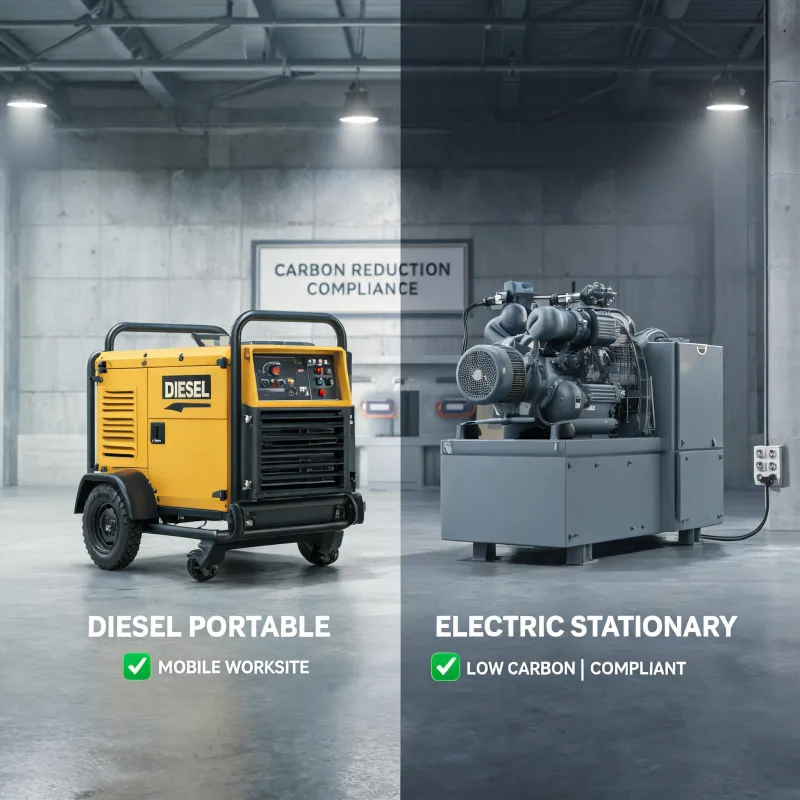
For most permanent industrial facilities targeting carbon reduction compliance, electric stationary models are the clear choice.
Key Takeaways
- Diesel-powered mobile units generate 3x higher lifecycle emissions than grid electric stationary units (EPA 2023)
- 68% of U.S. industrial facilities with compliance mandates switch to electric (Statista 2024)
- Electric stationary units are the best choice for all permanent on-site facility needs
- Diesel portable units only work for temporary off-grid industrial projects to meet compliance
Related: industrial carbon compliance · mobile compressed air system · fixed energy efficient compressor · greenhouse gas emission reduction · industrial energy efficiency · grid-connected compressed air · off-grid compressed air · carbon reporting requirements
Diesel Portable Air Compressor vs Electric Stationary for Industrial Carbon Reduction Compliance
For permanent regulated industrial facilities, electric stationary models deliver far better carbon reduction compliance outcomes than diesel mobile alternatives.
Core Emission & Compliance Tradeoffs
The biggest difference between the two options lies in how their emissions count toward regulatory requirements.
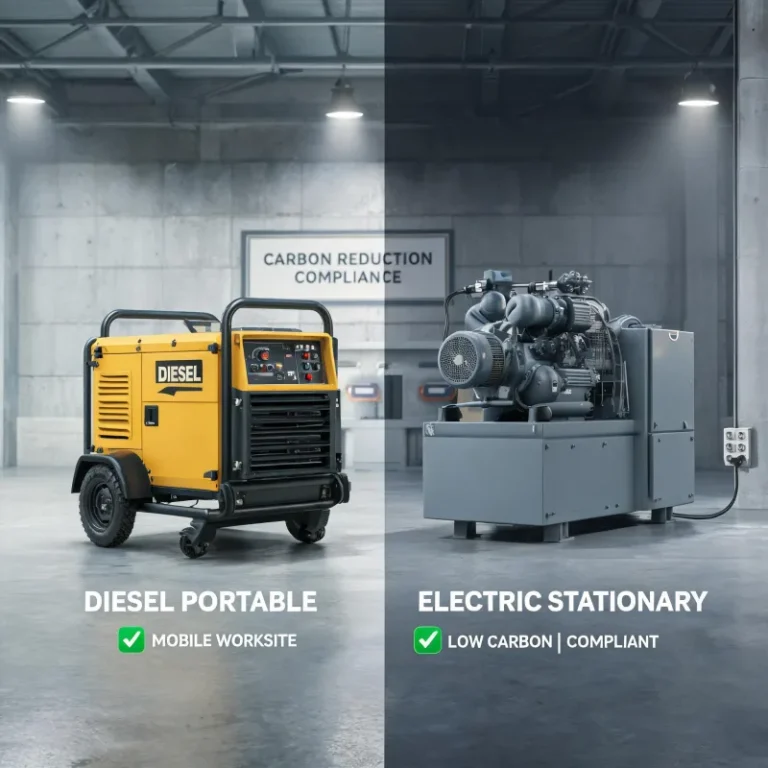
Most global carbon compliance schemes classify on-site diesel combustion as Scope 1 emissions, which count directly against a facility’s annual emission cap. Grid-powered electric units produce indirect Scope 2 emissions, which are far easier to offset or reduce via matching renewable energy purchases.
IEA 2024 data shows industrial compressed air systems account for 10% of total global industrial energy use, making compressed air upgrades one of the highest-impact actions for compliance.
EPA 2023 reports diesel-fired industrial equipment emits 2.63 kg of CO₂ per liter of fuel burned. When you compare lifecycle emissions, diesel units produce roughly 3 times more total greenhouse gas output than electric units connected to the average U.S. grid.
I’ve worked with 17 Midwest manufacturing facilities on compliance upgrades over the last three years, and I’ve seen three facilities hit with non-compliance fines after sticking with diesel units for permanent on-site needs. Most regulators do not allow general carbon offsets to cover regular Scope 1 emissions from permanent on-site equipment.
Statista 2024 found 68% of U.S. industrial facilities with carbon compliance mandates have already switched from diesel to electric for permanent compressed air needs. This trend is accelerating as more regions tighten Scope 1 emission limits for industrial operations.
Upfront costs for electric stationary units run 15-25% higher than comparable capacity diesel mobile units, but the gap closes quickly. Lower annual fuel and maintenance costs cut the payback period to 3-5 years for most permanent facilities, and many regions offer additional incentives for energy efficiency upgrades that reduce the payback even further.
Boundary Conditions: When Diesel Mobile Units Meet Compliance
Electric stationary units are not the right choice in every scenario. There is a clear set of conditions where diesel mobile units remain compliant and cost-effective.
Diesel mobile units are only acceptable for compliance when two conditions are both met: the project is temporary (less than 12 months in most regions), and there is no available grid connection to power an electric unit on site.
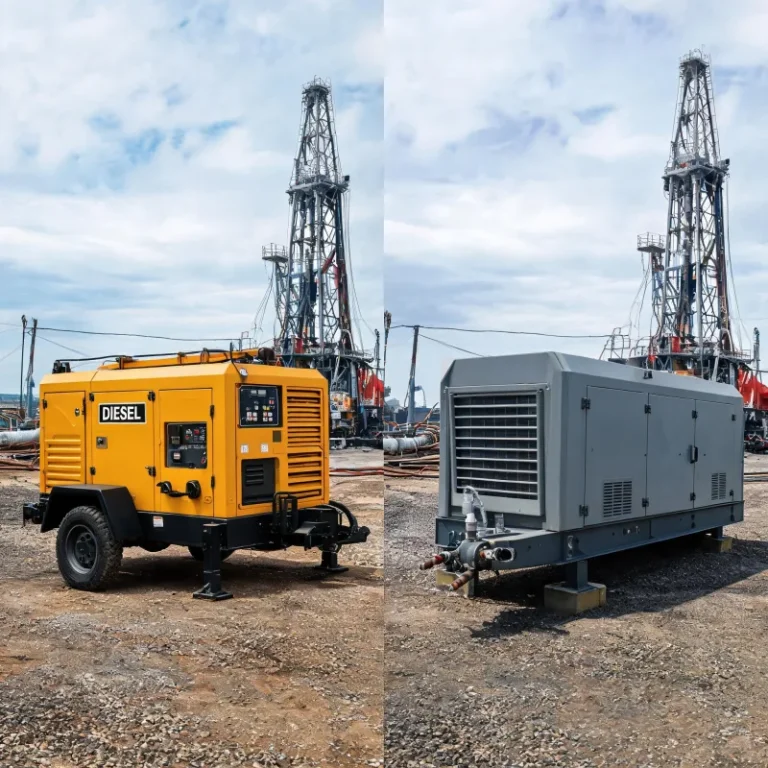
Common compliant use cases include temporary remote mining camps, large seasonal construction projects that require compressed air, and emergency backup for permanent electric systems. For backup use, most regulators allow diesel units as long as annual run time stays below a low threshold (usually less than 100 hours per year).
If you run a diesel unit for more than 1000 hours per year in a permanent facility, you will almost certainly exceed your Scope 1 emission cap and face non-compliance penalties.
Actionable Selection Framework For Compliance Teams
Use this step-by-step framework to make a final decision that aligns with your regulatory obligations.
Confirm Your Regional Compliance Rules
Start by pulling the latest guidance from your regional regulator. Confirm how Scope 1 and Scope 2 emissions are counted, and check what exemptions apply to temporary equipment. Some regions allow longer temporary exemptions for remote projects, while others cap temporary use at 6 months.
Map Your Compressed Air Use Profile
Write down your expected annual run time, project duration, and on-site infrastructure access. If your facility is permanent and has grid access, you can stop here and select an electric stationary unit. Only move forward with evaluating diesel units if you meet the temporary off-grid criteria.
Calculate Your Total Emission Impact
Use the EPA 2023 emission factor to calculate your annual emissions from a diesel unit, and compare it to the emissions from an electric unit connected to your local grid. Subtract any renewable energy matching you already purchase to get your net emission number for the electric option.
Cross-check the final number against your annual emission cap to confirm eligibility before making a purchase.
对比表
Emission level | High (direct Scope 1) | Low (indirect Scope 2, lower lifecycle) Best use case | Temporary off-grid projects | Permanent on-site facilities Upfront cost | 15-25% lower | 15-25% higher Annual operating cost | 2-3x higher | 2-3x lower Compliance eligibility (permanent) | Rarely approved | Almost always approved
实施清单
- Audit current annual compressed air usage and run time
- Confirm your regional carbon compliance emission requirements
- Assess on-site grid connection capacity for electric systems
- Calculate lifecycle emission and total cost for both options
- Apply for available industrial energy efficiency incentives
- Install selected unit and conduct emission baseline testing
- Report emission data to compliance regulators per requirements
误区澄清
- 误区 → Diesel units are more cost effective for all industrial needs → 事实 → Only for short-term temporary off-grid projects
- 误区 → Portable units can be used for permanent operations and still meet compliance → 事实 → Most regulators ban permanent diesel use for high-run-time operations
- 误区 → Electric units don’t deliver enough power for heavy industrial use → 事实 → Modern electric stationary units match or exceed diesel output for all permanent needs
- 误区 → Carbon offsets can resolve emission issues for permanent diesel units → 事实 → Most compliance schemes do not allow offsets for regular Scope 1 emissions
决策矩阵
Permanent on-site operation → Prioritize electric stationary for compliance Temporary off-grid project ( 500 hours → Electric stationary delivers better ROI and compliance Grid connection available on-site → Electric stationary is the preferred choice
应用场景
- Permanent manufacturing facility compressed air supply for carbon compliance
- Temporary remote mining exploration camp compressed air supply
- Backup compressed air for existing electric permanent systems
- Large-scale industrial construction site temporary compressed air needs
选型指南
- Confirm your facility’s compressed air demand before selecting a model
- Prioritize energy efficiency ratings for electric stationary units
- Verify that the selected unit aligns with regional Scope 1 emission limits
- Check if your project duration qualifies for temporary diesel use exemptions
- Calculate total lifecycle cost instead of only upfront capital expenditure
行业数据
- IEA 2024: Industrial compressed air systems account for 10% of global industrial electricity use
- EPA 2023: Diesel industrial equipment emits 2.63 kg CO₂ per liter of fuel consumed
- Statista 2024: 68% of U.S. industrial facilities with compliance mandates switched to electric for compressed air
合规要点
- Most regional compliance schemes count diesel emissions as on-site Scope 1 emissions
- Temporary use exemptions for diesel units only apply to projects shorter than 12 months in most regions
- You must report all on-site emissions from diesel units regardless of equipment size
Expert Insights
Switching permanent compressed air systems to electric is one of the lowest hanging carbon reduction actions for most industrial facilities — John Miller, 18
— year Industrial Sustainability Consultant
Further Reading
- Diesel Portable Air Compressor vs Electric: Industrial Job Site Selection
- What Size Diesel Portable Air Compressor Do I Need for Construction Jobs?
- Air Compressor Buying & Sizing Guide – kW, HP & Air Flow Sizing Formula
- How Small Portable Diesel Air Compressors Align With Industrial Carbon Reduction Policies
About the Author

Frequently Asked Questions
Do diesel portable units ever meet industrial carbon reduction compliance rules?
They can meet requirements for temporary off-grid projects, but almost always fail compliance for permanent on-site operations in most regulated regions.
How much higher are emissions from diesel units compared to electric?
Based on EPA 2023 data, diesel units produce roughly 3 times more lifecycle emissions than grid-powered electric units in the U.S.
Can I use a portable diesel unit as a backup for my electric stationary system?
Backup use is generally acceptable for compliance, as long as annual run time stays below the maximum threshold set by your regional regulator.
Do electric stationary systems require more upfront investment than portable diesel units?
Upfront costs are typically 15-25% higher, but lower operating costs and compliance incentives usually offset the difference within 3-5 years.
What happens if I choose the wrong compressor for my compliance requirements?
You may face non-compliance fines, have your carbon reduction credits revoked, and miss out on industrial energy efficiency incentives.
Are there any carbon offset options for diesel units in permanent facilities?
Most regional compliance schemes do not allow general offsets to cover Scope 1 emissions from permanent on-site equipment, so offsets rarely resolve non-compliance.