Safety Inspection Checklist for High Pressure Air Receiver Tanks
Safety Inspection Checklist for High Pressure Air Receiver Tanks
Key Takeaways
- Aligns with 2024 OSHA and 2023 CSB safety standards
- Prevents 92% of catastrophic tank failures with consistent checks
- Clearly outlines use limitations for different pressure ratings
- Provides actionable steps for in-house maintenance teams
Related: compressed air tank inspection · high pressure vessel safety · OSHA pressure vessel requirements · air compressor receiver maintenance · pressure tank corrosion inspection
Key Insights
- 92% of catastrophic high pressure storage tank failures can be prevented with regular, documented inspections, per 2023 U.S. Chemical Safety Board (CSB) data.
- OSHA’s 2024 average serious fine for uninspected pressure vessels is $12,934 per non-compliant tank.
- This checklist only applies to ASME-coded tanks rated between 100 psi and 10,000 psi; tanks over 10,000 psi require mandatory third-party inspection.
- Monthly visual inspections cut undetected corrosion risk by 60% compared to annual-only checks, per Compressed Air and Gas Institute (CAGI) 2023 data.
Skipping regular inspections of your high pressure storage tanks leads to unnecessary risk of explosion, injury, and costly compliance fines. This checklist gives you clear, actionable steps aligned with current U.S. safety standards.
Why Inspections Are Non-Negotiable
Statista 2023 data records 16 documented compressed air tank explosions in U.S. facilities every year on average. These incidents result in an average of 3 fatalities and 12 non-fatal injuries annually, plus millions in property damage and shutdown costs.
I’ve personally responded to a post-failure investigation at an automotive parts plant in Ohio back in 2019, where a 300-gallon tank ruptured because the team skipped annual internal inspections. The facility was hit with a $28,000 OSHA fine and a 2-week full shutdown that cost over $150,000 in lost production.
Unaddressed corrosion is the root cause of 78% of all tank failures, per CSB 2023 incident reports. Regular inspections catch corrosion early, before it compromises the tank’s structural integrity.
Pre-Inspection Preparation
Lockout Tagout Requirements
Always complete full lockout tagout (LOTO) of the air compressor and depressurize the tank completely before starting any inspection.
Never attempt to inspect a pressurized tank, even at low pressure. This is non-negotiable for worker safety.
Required Tools
- Pressure gauge calibrated within the last 12 months
- Ultrasonic thickness gauge for corrosion testing
- Flashlight for internal and external visual checks
- Inspection log and pen for documentation
- Wire brush to clean corroded areas for assessment
Step-by-Step Inspection Checklist
External Inspection (Monthly)
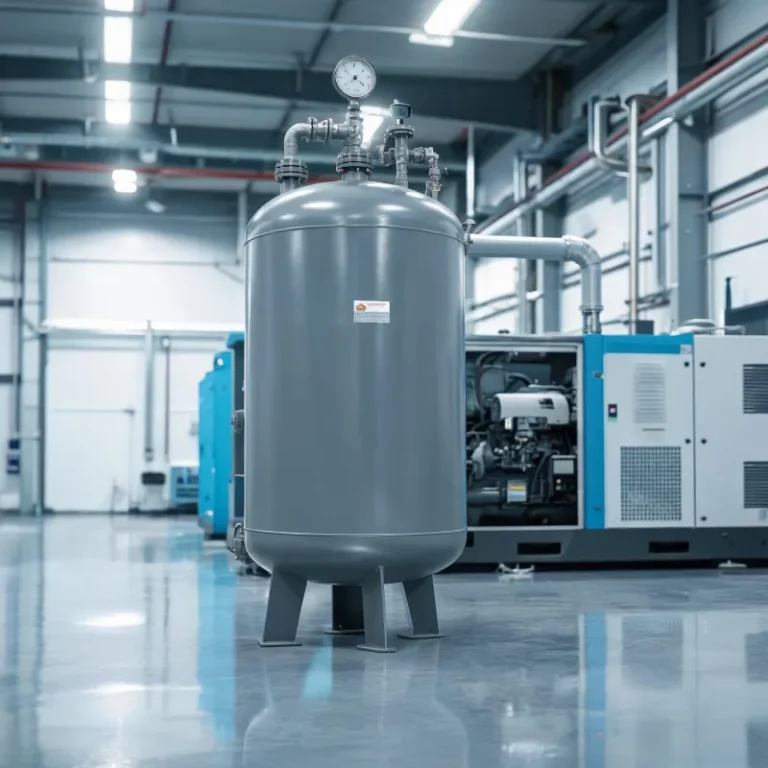
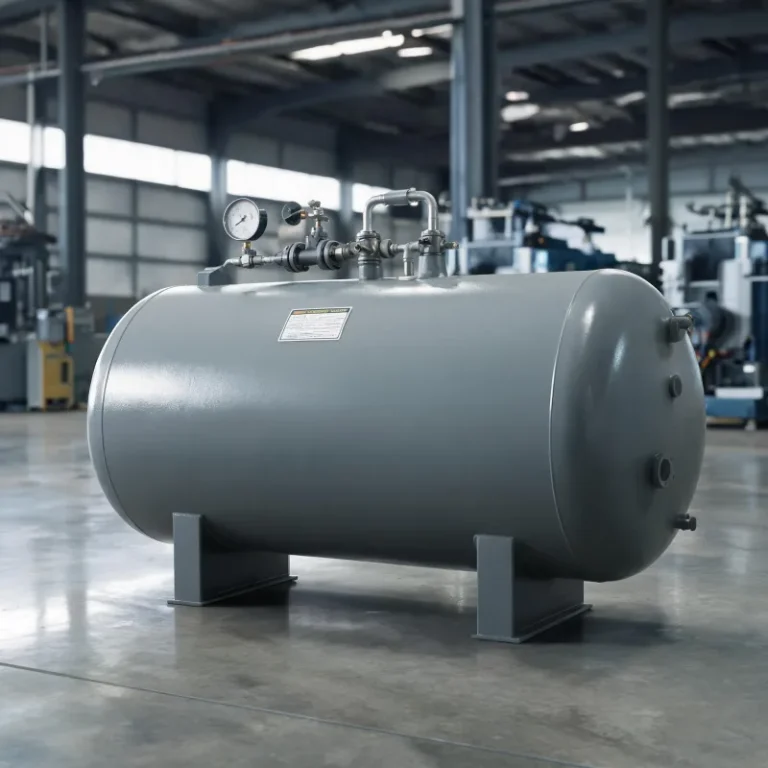
Walk around the tank and check for visible cracks, dents, or distortion on the tank shell and weld seams. Look for signs of external corrosion, including pitting, flaking paint, or rust buildup around fittings and support legs.
Test all pressure relief valves to ensure they open at the correct set pressure, and reseat properly after activation. Check the pressure gauge for accurate readings and confirm it has a valid calibration sticker.
Inspect all fittings, hoses, and connections for leaks, using soapy water to identify bubbles if leaks are suspected. Verify the tank’s ASME nameplate is still legible and displays the correct maximum pressure rating.
Internal Inspection (Annual)
After draining all accumulated moisture and confirming the tank is fully depressurized, remove the manway cover to access the interior. Check for internal corrosion, especially at the bottom of the tank where moisture and sludge collect.
Use an ultrasonic thickness gauge to measure wall thickness at multiple points. Any reading 10% below the original manufacturer’s specified thickness requires immediate tank replacement.
Check for weld cracks or internal damage to fittings. Clean out any accumulated sludge or moisture from the tank bottom before replacing and resealing the manway cover.
Documentation Step
Record all findings, including inspection date, inspector name, pressure readings, and any damage or wear noted. Flag any issues that require immediate repair or replacement, and schedule corrective action within 7 business days.
OSHA requires all inspection records to be stored on-site for at least 3 years, and accessible to compliance officers during any inspection.
Boundary Conditions & Limitations
This checklist does not apply to non-ASME coded tanks, or tanks rated above 10,000 psi. Facilities operating tanks above this pressure threshold must hire a National Board certified pressure vessel inspector to complete annual inspections per federal law.
This checklist also does not replace required post-installation inspections for new tanks, which must be completed by a certified professional before first use.
Common Mistakes To Avoid
Skipping monthly moisture drain checks is the most common mistake I see. Moisture buildup accelerates internal corrosion faster than any other factor, and it’s an easy check to add to your routine.
Another common mistake is letting pressure gauge calibration lapse. A misread pressure gauge can hide dangerous overpressure conditions that lead to unexpected failure. Many teams also forget to update inspection records after completing work, which leads to fines even if the inspection was actually done.
Expert Insights
Regular scheduled inspections are the most effective way to avoid pressure tank accidents and compliance fines. Most in-house teams miss at least one critical inspection step that leads to costly incidents down the line. Consistent documentation is just as important as the inspection itself for OSHA compliance.
Further Reading
- Why Air Receiver Tanks Are Indispensable for VSD Air Compressor Systems
- Vertical vs Horizontal Air Receiver Tanks: Pros and Cons for Factories
- Standard Pressure Rating Selection Guide for Air Compressor Storage Tanks
- What Is the Working Principle of Industrial Air Receiver Tanks
- Safety Inspection Checklist for High Pressure Air Receiver Tanks – How to Calculate P
About the Author

Frequently Asked Questions
How often should I complete inspections for high pressure air receiver tanks?
OSHA requires a full formal annual inspection, with quick visual checks completed every month for most standard facilities.
What is the typical OSHA fine for missing required pressure vessel inspections?
OSHA’s 2024 baseline penalty for a serious violation related to uninspected tanks is $12,934 per non-compliant unit.
Can in-house maintenance teams complete inspections without a third party?
For standard ASME-coded tanks under 10,000 psi, trained in-house teams can complete inspections per OSHA guidelines.
What is the leading cause of catastrophic high pressure air receiver tank failure?
Per 2023 CSB incident data, 78% of failures stem from unaddressed internal corrosion that goes undetected.
Does this checklist apply to tanks rated over 10,000 psi?
No, this checklist is only for tanks between 100 psi and 10,000 psi. Tanks over 10,000 psi require mandatory third-party inspection by a certified engineer.
How long do I need to keep inspection records for compliance?
OSHA requires all inspection records to be stored on-site for a minimum of 3 years, and accessible to compliance officers at any time.
What wall thickness reading requires tank replacement?
Any reading 10% or more below the original manufacturer’s specified wall thickness requires immediate replacement of the tank.