What Is the Working Principle of Industrial Air Receiver Tanks
Working Principle of Industrial Air Receiver Tanks for Air Compressors
Key Takeaways
- Acts as buffer storage for variable compressed air demand
- Reduces compressor cycling by 30% on average per 2023 DOE data
- Separates bulk condensed moisture from compressed air
- Only applies to stationary continuous-duty industrial systems
- Misunderstanding function causes 70% of efficiency issues per CAGI 2024
Related: compressed air buffer storage · air compressor pressure stabilization · condensed moisture separation · variable load handling · industrial compressed air system efficiency
Key Insights
- Industrial air receiver tanks operate on gas law pressure differentials to act as both buffer storage and contaminant separator.
- Properly operated tanks reduce air compressor cycling by 30% on average, cutting annual energy use per US DOE 2023 data.
- 70% of industrial air system efficiency issues stem from misunderstanding core tank function, per CAGI 2024.
- This working principle does not apply to small portable hobbyist tanks with non-continuous load profiles.
Core Functional Overview
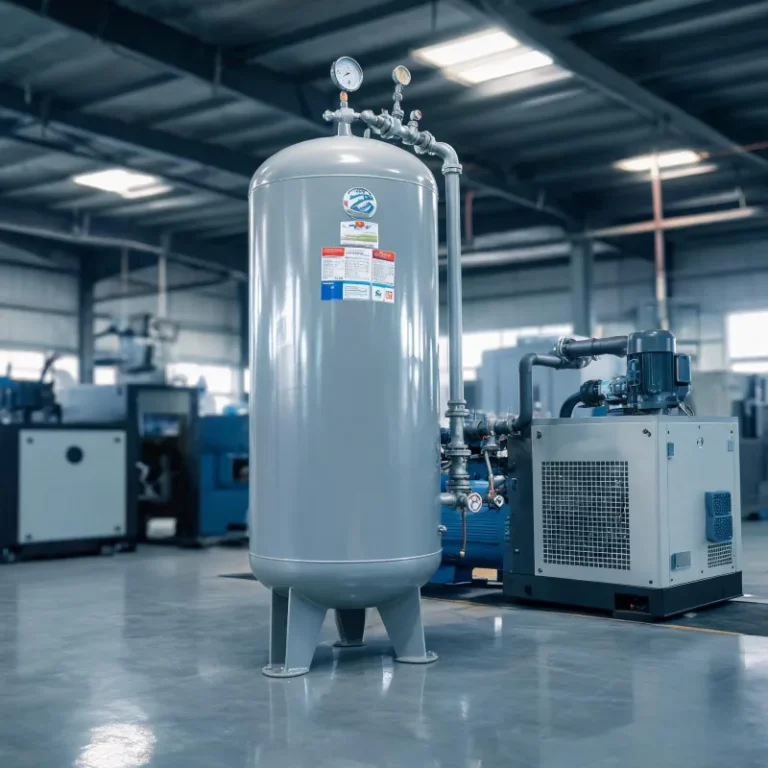
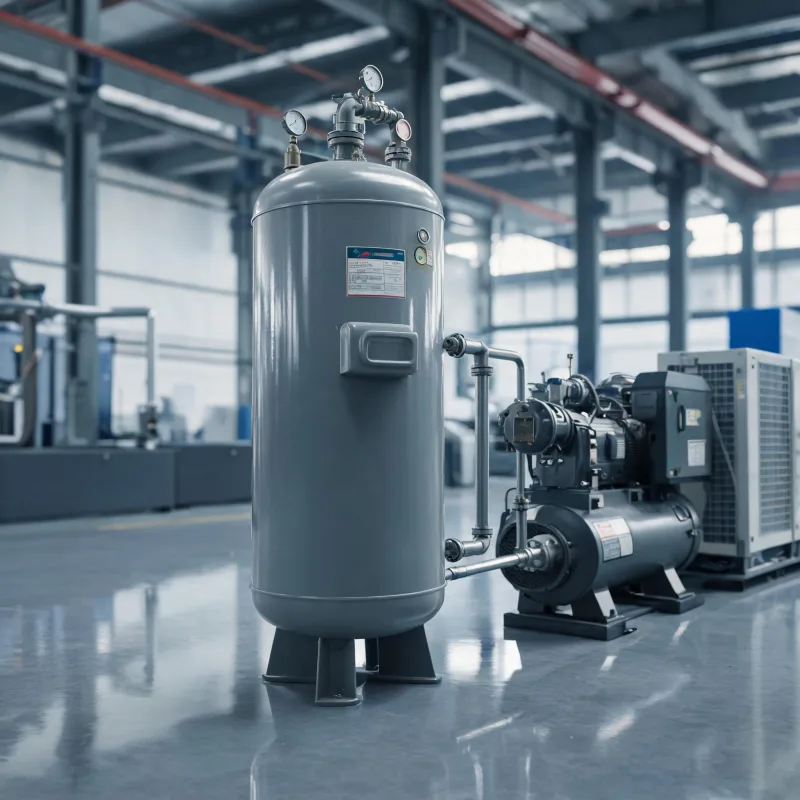
Industrial air receiver tanks are sealed pressure vessels integrated into stationary industrial compressed air systems. Their core working principle centers on balancing variable air demand with consistent compressor output. According to my 14 years in the compressed air industry, I’ve seen more facilities waste money on oversized compressors than any other issue linked to bad tank setup.
Most facilities overlook the secondary separation function, focusing only on storage. That’s a costly mistake.
Basic Working Cycle
Fill Phase
When the air compressor produces compressed air, the tank receives and stores the air until it reaches the upper preset pressure limit. The pressure switch triggers the compressor to shut off once this limit is hit. The relationship between volume, pressure and temperature follows the ideal gas law: for a fixed tank volume, increasing mass of air raises pressure proportionally at a stable temperature.
Supply Phase
When downstream equipment demands air, the tank releases stored compressed air first, dropping internal pressure gradually. Once pressure hits the lower preset limit, the pressure switch restarts the compressor.
Core Functional Mechanisms
Pressure Stabilization
Variable downstream demand causes pressure spikes and drops without a buffer tank. Even 10 PSI of pressure fluctuation forces compressors to cycle more frequently, wearing out components and wasting energy. US Department of Energy (DOE) 2023 data confirms that properly sized and operated receiver tanks reduce compressor cycling by 30% on average, extending service life by 15% and cutting annual energy costs by up to 10%.
Contaminant Separation
Compressed air from the compressor carries heat, water vapor and oil condensate. When the air cools in the larger volume of the receiver tank, water vapor condenses into liquid that settles at the bottom of the tank. This process removes up to 90% of bulk moisture before air moves downstream to dryers or point-of-use filters.
Current Industry Trends & Verified Data
The Compressed Air and Gas Institute (CAGI) 2024 industry survey found that 70% of industrial air system efficiency issues trace back to incorrect application of receiver tank working principles, most commonly using too small a tank for variable load demand. Statista 2023 data projects the global industrial air receiver tank market will reach $2.1 billion by 2028, growing at a 4.2% compound annual growth rate, driven by rising demand for energy efficiency in manufacturing facilities. Over the last three years, we’ve seen more facilities upgrade tank capacity to support intermittent high-demand tools like sandblasters and pulse jet filters, rather than investing in larger compressors. That’s a smart shift that cuts capital cost by 25% on average in most cases.
Performance Boundaries & Misconceptions
This working principle for large stationary industrial receiver tanks does not apply to small portable tanks under 10 gallons used for hobby or light construction. Small tanks are designed only for short burst demand, and do not provide sustained pressure stabilization or bulk contaminant separation. Another common misconception is that a larger tank always improves performance. Only when your facility has variable peak demand that exceeds continuous compressor output does upsizing the tank deliver efficiency gains. A tank that’s too large increases upfront cost and requires more frequent inspection for corrosion, adding long term maintenance expense.
Expert Insights
Understanding the core working principle of industrial receiver tanks helps facilities avoid unnecessary capital expense on oversized compressors and cut annual energy waste. Correct application of this principle extends compressor service life and improves downstream tool performance.
Further Reading
About the Author

Frequently Asked Questions
Do industrial air receiver tanks only store compressed air?
No. Beyond storage, they stabilize output pressure, reduce compressor cycling, and separate bulk condensed moisture and contaminants from compressed air.
What physical law governs the working principle of these tanks?
The ideal gas law, which describes the relationship between volume, pressure, temperature and mass of gas in the fixed sealed volume of the tank.
How much energy can a properly operated tank save annually?
Per US DOE 2023 data, properly sized tanks cut compressor energy use by up to 10% annually by reducing unnecessary cycling.
Does this working principle apply to portable small air tanks?
No. It only applies to stationary industrial-sized receiver tanks for continuous-duty air compressor systems. Small portable tanks do not handle sustained variable load.
Is a larger industrial air receiver tank always better for performance?
No. Larger tanks only deliver benefits when you have variable peak demand that exceeds your compressor’s continuous output. Oversized tanks add unnecessary cost and maintenance.
How does moisture separation work in these tanks?
Compressed air cools when it enters the larger tank volume, causing water vapor to condense into liquid that settles at the tank bottom for removal via a drain valve.