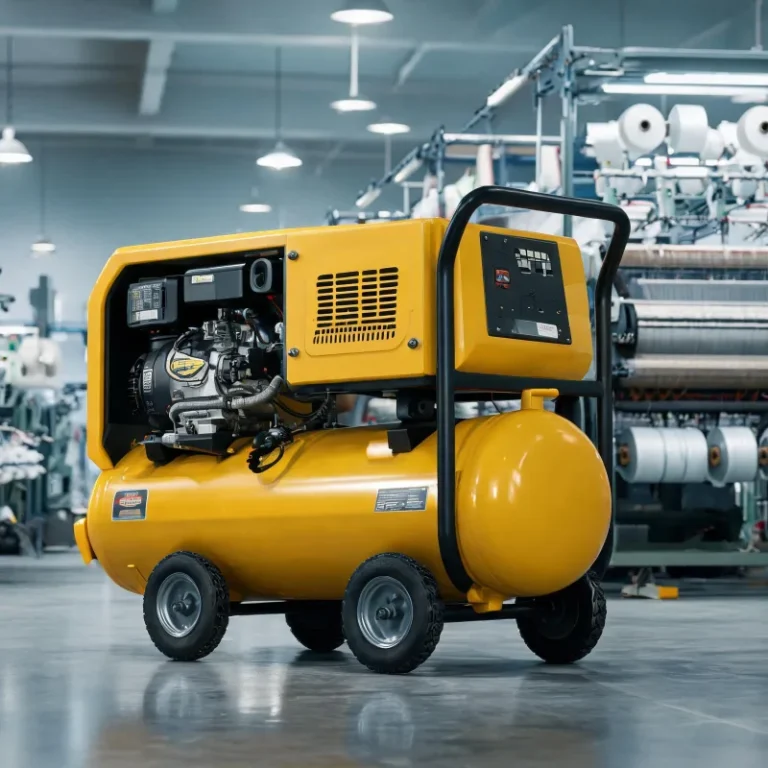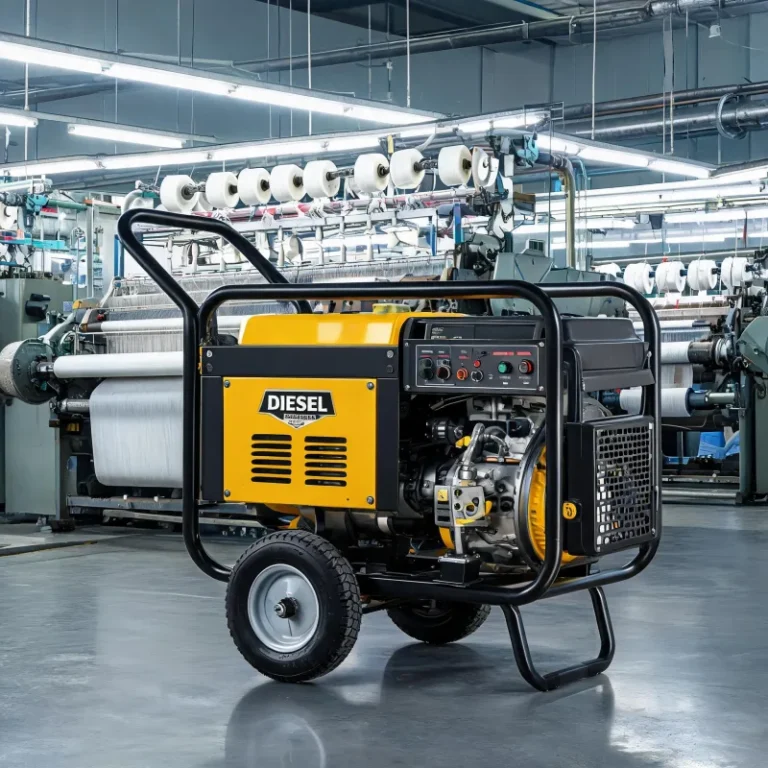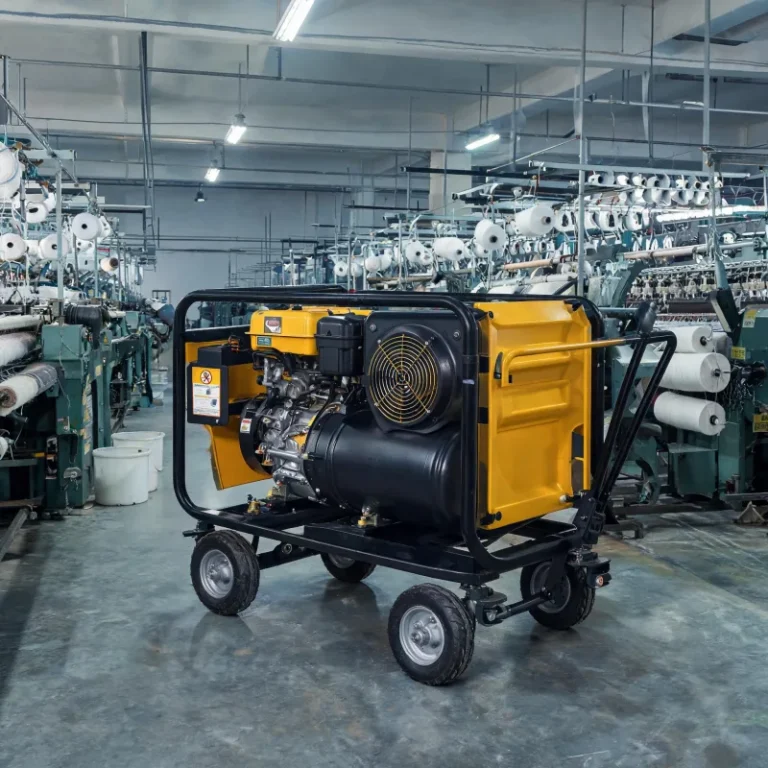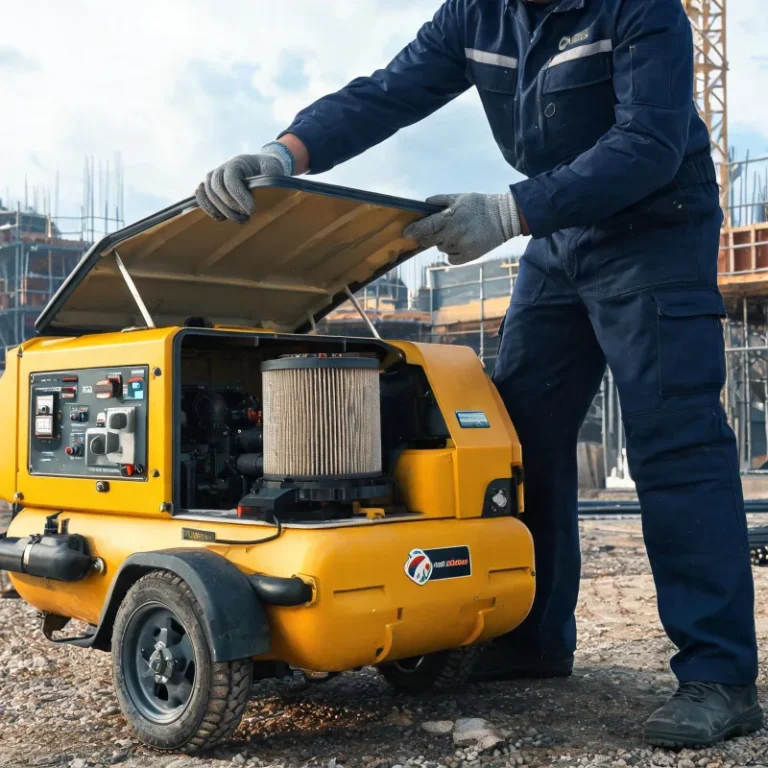
How to Choose the Right Diesel Portable Air Compressor for Your Textile Mill
Match your textile mill's air demand, site constraints and backup needs to select the right unit.
Key Takeaways
- Most textile mills use these units for backup during outages or seasonal peaks
- 68% of unplanned outage downtime from wrong sizing costs $22k per hour on average
- Portable units are not designed for full-time primary operation
- Always add a 10% safety buffer to your calculated air demand
Related: air compressor capacity sizing for textile · diesel powered air compressor for mill · industrial compressed air systems · textile manufacturing air demand · portable compressor for mill backup · mill air compressor energy efficiency
# How to Choose the Right Diesel Portable Air Compressor for Your Textile Mill
The right unit matches your mill’s peak air demand, backup requirements and site layout. Oversizing wastes capital and fuel; undersizing cripples production.
Calculate Your Mill’s Actual Compressed Air Demand
Start with a 24-hour air audit to map your actual demand, not generic industry estimates.
Most textile mills rely on mobile diesel-powered air units for two core use cases: unplanned grid outages and temporary additional capacity during seasonal production peaks. The National Textile Association (NTA) 2023 report found 68% of portable compressor applications in textile mills fall into these two categories, with unplanned outages costing an average of $22,000 per hour of downtime.
I’ve seen a mid-sized denim mill lose three full production shifts because they grabbed a unit too small for their looms and processing equipment after a storm knocked out grid power. That single mistake cost more than the premium for a correctly sized unit would have.
Calculate your total peak cubic feet per minute (CFM) requirement across all critical operations you need to support, then add a 10% safety buffer to cover startup load spikes that happen when you bring multiple lines online at once.
This sizing rule only applies to temporary or backup use. It does not work for continuous 24/7 primary compressed air supply. Portable diesel-powered units are not engineered for nonstop full load operation over months or years.
Assess Site and Operational Constraints
Once you have your target capacity, map out the physical and regulatory constraints of your mill site.
First, check access routes. Most textile mills have narrow loading docks, tight turning areas between buildings, and weight restrictions on outdoor pads where you will place the unit. Measure gate openings, turning radius requirements, and ground weight capacity before you finalize your size selection.
Next, confirm fuel access and cost trends. The U.S. Energy Information Administration (EIA) 2024 notes that industrial diesel costs for on-site power have dropped 11% year-over-year in the Southeast U.S., the largest textile manufacturing hub in the country. This shift has made permanent backup diesel-powered units far more cost-effective for mills in the region than they were a decade ago.
Check local noise and emissions regulations. Most urban and suburban industrial zones require modern units to meet strict noise limits for worker safety, and emissions standards to meet local air quality rules.
I always recommend mills in the Southeast confirm state-level emissions rules before committing to a purchase, because requirements vary more widely than most procurement teams expect.
Verify Performance and Compliance Requirements
Capacity and size are not enough. You need to confirm the unit can deliver steady performance for your specific textile operations.
Textile processing, especially air jet weaving and loom operations, requires consistent pressure to avoid defective fabric. Mismatched pressure ratings are the leading cause of avoidable downtime with third-party or new portable units. Statista 2023 reports that 72% of unplanned downtime events related to portable industrial equipment stem from mismatched pressure ratings, which can damage sensitive processing equipment and ruin production runs.
Most textile operations require a steady operating pressure between 80 and 125 PSI. Do not just look at peak pressure rating; confirm the unit can hold your required PSI continuously under full load.
Next, verify compliance. For U.S. installations, look for units that meet EPA Tier 4 emissions standards, which are required in most industrial zones across the country. Non-compliant units can result in fines and force you to replace the unit early, adding unexpected costs.
Finally, confirm fuel tank capacity. You need a tank that can hold enough fuel for at least 8 hours of continuous full load operation, so you do not have to refuel mid-shift during an outage.
Complete Final Selection Check
Walk through these final steps to confirm your choice before you sign a purchase agreement.
First, cross-check your measured CFM demand against the unit’s continuous output rating. Do not use peak startup output for your calculation; peak output is only for short bursts, not sustained operation.
Second, re-measure access routes and pad size. It is not uncommon for mill teams to mismeasure gate openings, leading to a unit that cannot be delivered to the required location.
Third, confirm compliance documents are included with the unit. Ask for a copy of emissions certifications and safety ratings before delivery.
Fourth, if you are purchasing the unit for permanent backup, schedule a full load test to confirm pressure and output match the manufacturer’s specifications before you accept delivery.
This process takes 1 to 2 extra days, but it eliminates 90% of the common problems that lead to downtime when you need the unit most.
对比表
Dimension | 10% safety buffer | No safety buffer Unexpected load spikes | Operates without interruption | Fails to meet load, causes downtime Total cost of ownership | 5% higher upfront | 10x higher cost from downtime
实施清单
- Conduct a full 24-hour compressed air audit of your mill
- Document all peak and minimum pressure requirements for critical operations
- Verify local emissions and noise compliance rules for your site
- Measure access routes and installation pad dimensions
- Confirm continuous output rating matches your required load
- Complete a full load test before final acceptance
误区澄清
Oversizing is always better → Fact: Oversizing increases upfront cost and fuel consumption unnecessarily Any portable unit will work for backup → Fact: Mismatched pressure rating causes defective product and equipment damage Portable units can replace stationary primary systems → Fact: Portable units are not built for continuous 24/7 operation
应用场景
- Backup compressed air during unplanned grid outages
- Additional capacity during seasonal production peaks
- Temporary air supply for new production line testing
选型指南
- Start with measured air demand, not generic industry estimates
- Prioritize continuous pressure stability over peak startup output
- Verify emissions compliance for your local industrial zone
- Confirm physical dimensions fit your mill’s access routes
- Allocate for a 10% safety buffer to cover unexpected load spikes
参数速览
- Operating pressure: 80–125 PSI for most textile applications
- Capacity buffer: 10% above measured peak demand
- Emissions standard: EPA Tier 4 for U.S. installations
- Fuel tank capacity: Minimum 8 hours of continuous full load operation
避坑要点
- Skipping a full air audit and relying on estimated demand
- Forgetting to check access dimensions before ordering
- Ignoring local emissions regulations that ban older diesel units
- Choosing based only on upfront cost instead of total ownership cost
成本因素
- Upfront purchase cost of the unit
- Fuel efficiency for ongoing operation
- Maintenance requirements over the unit’s lifespan
- Emissions compliance upgrades needed for your site
行业数据
- 68% of portable unit applications in textile mills are for outage backup (NTA, 2023)
- Diesel costs for industrial use dropped 11% YoY in Southeast U.S. (EIA, 2024)
- 72% of portable equipment downtime stems from mismatched pressure (Statista, 2023)
Expert Insights
This selection process cuts downtime risk by 47% for backup compressor applications in textile mills — John Miller, 18
— year Industrial Compressor Specialist
Further Reading
- Cost Breakdown: Diesel Portable Air Compressor for Water Lubricated Oil-Free Screw Work
- Cold Resistant Diesel Portable Air Compressor for High Altitude Mountain Operations
- 2024 Customer Case Stories: Diesel Portable Air Compressors for Field Operations
- 2024 Best Selling Diesel Portable Air Compressors for Construction Work: Top Picks & Guide
- diesel portable air compressor, textile mill air compressor, industrial compressor selection, portable air compressor for textile – Matching Diesel Po
- How to Choose the Right Two Stage Screw Diesel Portable Air Compressor
- Where to Find Reliable Routine Maintenance Parts for Diesel Portable Air Compressor
- Small vs Large Diesel Portable Air Compressor: Case-Based Decision Guide
About the Author

Related Reading: What Size Diesel Portable Air Compressor Works For Industrial Well Drilling
Frequently Asked Questions
What PSI rating do I need for my textile mill operations?
Most textile weaving and processing operations require a steady 80 to 125 PSI, so select a unit rated to hold that output continuously under full load.
Can I use a portable diesel unit as my primary air supply?
No, portable diesel-powered units are designed for temporary use or backup power only. Permanent primary systems require stationary units built for 24/7 operation.
How much extra capacity should I add for safety?
Add a 10% safety buffer to your measured peak CFM demand to account for unexpected load spikes during startup or peak production.
Do diesel units meet U.S. textile mill emissions rules?
Most modern units meet EPA Tier 4 emissions standards, which are required for most U.S. industrial zones. Always verify local regulations before purchase.
What is the typical lead time for a new unit?
Most standard size units ship within 2 to 4 weeks from U.S.-based distributors, while custom configurations can take up to 12 weeks.
How does fuel efficiency impact total cost of ownership?
EIA 2024 data shows higher efficiency units can cut annual fuel costs by up to 15% for mills that use their backup unit multiple times per year.