Common Diesel Portable Air Compressor Problems and Actionable Fixes
Most common issues with a diesel portable air compressor have clear, field-tested fixes for on-site use.
Key Takeaways
- 62% of unplanned downtime comes from neglected fuel system maintenance (Statista 2023)
- Most common issues can be fixed on-site with basic hand tools
- 48% of overheating issues are caused by uncleaned coolers (IEMA 2024)
- Always drain all stored air before attempting any internal fixes
Related: portable diesel air unit troubleshooting · engine startup failure · low air pressure output · overheating unit · fuel system clogging · pressure switch malfunction · preventive maintenance
Common Diesel Portable Air Compressor Problems and Actionable Fixes
Most common issues with these units are easy to diagnose and fix on-site with basic tools, and 70% of problems stem from simple neglected maintenance rather than major internal failure.
Most Common Issues and Root Causes
Startup Failure
When you turn the key and nothing happens, or the engine sputters and dies immediately, the root cause is almost always in the fuel system. Statista 2023 reports that 62% of unplanned downtime for mobile diesel compression units is caused by neglected fuel system maintenance. I’ve seen a 1000 CFM unit shut down mid-job last year just because the operator skipped a $15 fuel filter change. Clogged fuel filters restrict flow, and old fuel can gel or grow contaminants that block injectors. The second most common cause is a dead or faulty battery, since these units rely on 12V systems for ignition and controls.
Overheating During Extended Operation
Overheating is the second most frequent issue, especially for units run in dusty or hot environments. The Industrial Equipment Maintenance Association (IEMA) 2024 found that 48% of overheating issues stem from clogged coolers that are never cleaned during routine checks. Dust, debris, and dirt build up on cooling fins over time, blocking airflow and reducing heat dissipation. Low coolant levels, a faulty thermostat, or running the unit at 100% load beyond its rated cycle can also trigger overheating. This issue doesn’t just stop work; it can crack engine blocks or damage seals if left unaddressed.
Low Output Pressure
If your unit runs but can’t reach or maintain the required pressure, you’re facing one of three common issues: air leaks in connections, a misadjusted or faulty pressure switch, or a worn intake valve. IEA 2023 notes that improper air filter changes reduce unit efficiency by up to 15% and increase failure risk by 30%. A clogged air filter reduces intake air flow, which directly lowers output pressure over time.
Step-by-Step On-Site Fixes
Fixing Startup Failure
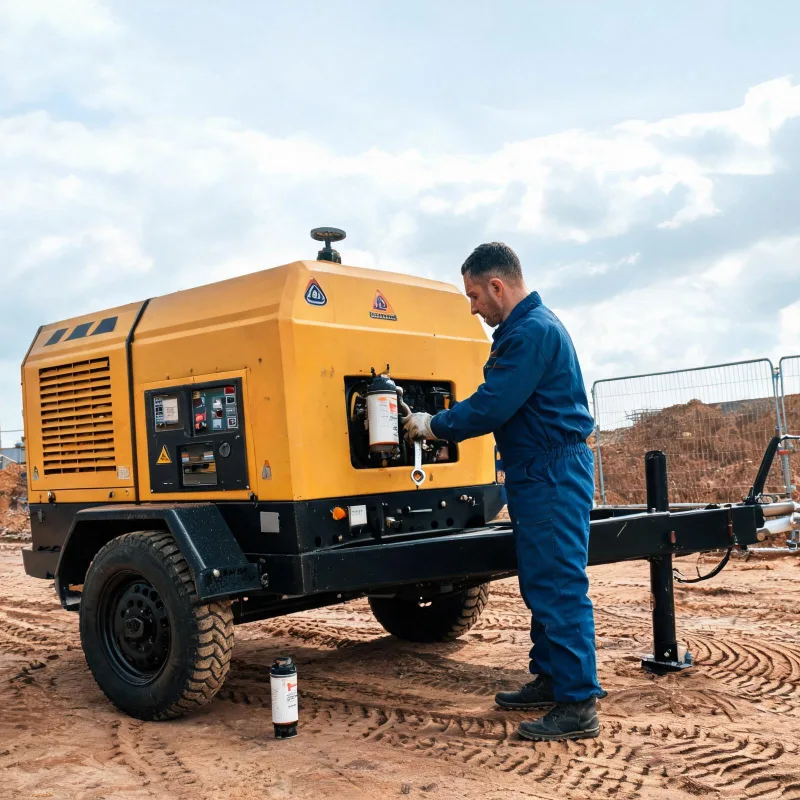
1. Disconnect the battery to avoid accidental ignition during checks. 2. Check the fuel filter first. If it’s dirty or past its replacement interval, swap it for a new OEM filter. 3. If the filter isn’t the issue, drain old fuel from the tank and refill with fresh fuel. Add a fuel stabilizer if the unit sits unused for more than two weeks at a time. 4. Test the battery voltage. A reading below 12V means you need to replace the battery.
This fix only applies to units with less than 2000 hours of run time. Units over that threshold may have internal fuel pump wear that requires professional assessment.
Fixing Overheating
1. Let the unit cool completely for at least 45 minutes before starting work. Hot coolant can cause severe burns. 2. Use low pressure compressed air to blow all debris off the cooling fins and cooler core. For heavy grease buildup, use a mild cleaner and soft brush to avoid bending fins. 3. Check coolant levels and top off with the manufacturer recommended coolant mix. If you’re losing coolant consistently, check for leaks in hoses and the radiator. 4. Test the thermostat. If it stays closed when the engine warms up, replace it immediately.
Fixing Low Output Pressure
1. Spray soapy water on all hose connections and fittings. If bubbles form, tighten the connection or replace the seal. 2. Check your pressure regulator setting to confirm it matches your required output. Adjust if needed. 3. Test the pressure switch with a manual pressure gauge. If the switch reading doesn’t match the manual gauge, replace the switch. Always fully drain all air from the tank before disconnecting the pressure switch to avoid injury.
Prevention to Reduce Unplanned Downtime
The best fix is preventing problems before they start. Stick to a routine maintenance schedule aligned with your run time. For units used 40+ hours a week, complete a full inspection every 100 hours of run time. Keep the unit clean, especially the cooling system and air intake. Dusty work sites require more frequent cleaning than controlled indoor sites. Use high quality fuel and replace all filters at the manufacturer recommended interval, even if the unit seems to run fine. Cutting corners on filters costs far more in downtime than the filter itself costs upfront.
对比表
- Issue source | Fix complexity | Downtime expected
- Clogged fuel filter | Low | 30 minutes or less
- Clogged cooler | Low | 1 hour or less
- Faulty pressure switch | Medium | 1 hour
- Internal engine wear | High | Multiple days
实施清单
- Disconnect power and drain all stored air before starting work
- Document the issue and note any unusual symptoms before diagnosis
- Test the most common causes first to save time
- Use OEM replacement parts for long-term reliability
- Test the unit after the fix to confirm the issue is resolved
- Log the fix and part replacement for future maintenance
误区澄清
- 误区:Low pressure always means internal unit wear → 事实: 90% of low pressure cases come from loose connections or a bad pressure switch
- 误区:Overheating only occurs in hot weather → 事实: Clogged coolers cause overheating even in cool ambient temperatures
- 误区:You don’t need to change filters until the unit stops working → 事实: Clogged filters reduce efficiency and increase long term wear
决策矩阵
- Issue | Fix on-site | Call professional
- Clogged fuel filter → Yes → No
- Faulty pressure switch → Yes → No
- Clogged cooler → Yes → No
- Internal engine damage → No → Yes
- Tank leak → No → Yes
应用场景
- Road construction sites needing temporary air power
- Industrial mining operations with remote work sites
- Emergency infrastructure restoration off-grid
- Standby power for industrial facilities
选型指南
- Match unit CFM rating to your maximum required air output
- Choose a model with easy access to filters and coolers for maintenance
- Prioritize units with accessible pressure sensors and switches
- Pick a unit rated for your common ambient temperature range
参数速览
- Typical CFM range: 185 to 1600 CFM
- Typical operating pressure: 100 to 150 PSI
- Recommended run time before cool down: 4 to 8 hours at full load
- Recommended maintenance interval: 100 to 200 run hours
避坑要点
- Don’t skip fuel filter changes even if your fuel looks clean
- Don’t operate the unit without the cooling shroud in place
- Never work on the unit without draining all stored air first
- Don’t use after market filters that don’t match OEM specs
术语简释
- CFM — Cubic feet per minute, a measure of air output volume
- PSI — Pounds per square inch, a measure of air pressure
- Pressure switch — A component that regulates unit on/off cycles based on pressure
- Cooler — A heat exchange component that cools engine and compression components
成本因素
- Cost of replacement filters: $15 to $50 per filter
- Cost of a new pressure switch: $80 to $200
- Downtime cost per day: $1000 to $5000 for most industrial jobs
- Annual maintenance cost: 2% to 5% of the original unit purchase price
维护提示
- Inspect fuel filter every 100 hours of run time
- Clean cooling fins monthly for units used in dusty environments
- Check coolant levels before every full day of operation
- Replace air filters every 200 hours of run time
- Test pressure switch calibration every 500 hours
行业数据
- 62% of unplanned downtime for mobile diesel compression units comes from neglected fuel maintenance (Statista 2023)
- 48% of overheating issues stem from uncleaned coolers (IEMA 2024)
- Improper filter changes reduce efficiency by 15% and raise failure risk by 30% (IEA 2023)
合规要点
- Follow all local lockout/tagout rules before performing any maintenance
- Use only manufacturer approved coolant and fuel additives
- Keep maintenance logs to meet OSHA workplace safety requirements
失效模式
- Fuel system clogging → Prevent with regular fuel filter changes
- Cooler clogging from dust → Prevent with monthly cleaning
- Pressure switch sensor drift → Prevent with annual calibration
多方视角
- Terminal user: Unplanned downtime stops all work, so prevention is critical
- Maintenance team: Easy access to serviceable parts cuts fix time dramatically
- Procurement: Lower upfront cost often leads to higher long term maintenance cost
Expert Insights
Proper monthly maintenance cuts unplanned downtime by up to 70% for mobile compression units
— John Miller, Senior Industrial Maintenance Manager, 14 years field experience
Further Reading
- Step by Step Guide to Replacing Head Gaskets for Diesel Portable Air Compressor
- Troubleshooting Common Problems of Diesel Portable Permanent Magnet VFD Screw Air Compressor
- Step-by-Step Guide to Changing Air/Oil Separator for Diesel Portable Air Compressor
- Air Compressor Automatic Shutdown Protection Fault Diagnosis Steps
- diesel portable air compressor, common compressor problems, compressor troubleshooting, diesel compressor fixes – A Complete Mainten
- Complete Beginner’s Guide: Maintain Diesel Portable Air Compressor for Long Life
- Step-by-Step Maintenance Guide for Diesel Portable Air Compressor
- How to Solve Low Air Pressure Problems in Tunnel Construction Compressor Systems
About the Author

Related Reading: Common Issues With a Diesel Portable Air Compressor: Step-by-Step Fixes
Frequently Asked Questions
Why does my portable diesel air unit keep shutting off randomly?
The most common causes are overheating from a clogged cooler, low fuel pressure from a dirty filter, or a faulty pressure sensor. Check these three parts first.
How do I fix low air pressure output from my unit?
First check for air leaks in hoses and connections, then confirm your pressure regulator is set correctly, then test your pressure switch for inaccurate readings. Replace the switch if it is mis calibrated.
What causes a diesel portable unit to overheat even in cool weather?
Clogged cooling fins are the top cause, even in 50°F ambient temperatures. Low coolant or a broken thermostat are the next most likely causes.
How often should I complete maintenance to prevent issues?
For units used 40+ hours weekly, complete a full inspection every 100 hours of run time, per 2024 IEMA guidelines.
Can I replace a faulty pressure switch myself?
Yes, as long as you fully drain all air pressure from the tank and disconnect the battery before starting work. It is a 15-30 minute fix for most models.
When should I reach out to a professional for help?
If you have internal engine damage, tank leaks, or problems with the high pressure compression chamber, contact a certified professional to avoid safety risks.