Why Your Small Portable Diesel Air Compressor Oil Separator Keeps Clogging
Repeated clogging in small portable diesel units is most often caused by incorrect oil, short load cycles, or contaminated intake air.
Key Takeaways
- Incorrect compressor oil viscosity causes 62% of premature clogging in small portable units
- Intermittent short cycles common to portable use increase moisture-related clogging risk
- Ambient contamination from job site use cuts separator service life by almost half
- Root cause troubleshooting avoids unnecessary repeat part replacement
Related: repeated oil separator clogging · portable compressor maintenance · air/oil separator replacement · filter contamination · compressor oil degradation · compressed air system efficiency · high pressure separator failure
Why Your Small Portable Diesel Air Compressor Oil Separator Keeps Clogging
Most recurring clogging issues stem from design constraints unique to small portable units, not defective parts.
Top Root Causes of Repeated Clogging In Small Portable Units
Small portable units have different operating patterns and design limitations than larger stationary models, so their clogging causes are not the same.
Incorrect Viscosity Compressor Oil
Many owners cut costs by using generic oil instead of oil formulated for compressed air systems. The Compressed Air and Gas Institute (CAGI) 2023 report found that 62% of premature filter failures in portable units are linked to incorrect oil viscosity.
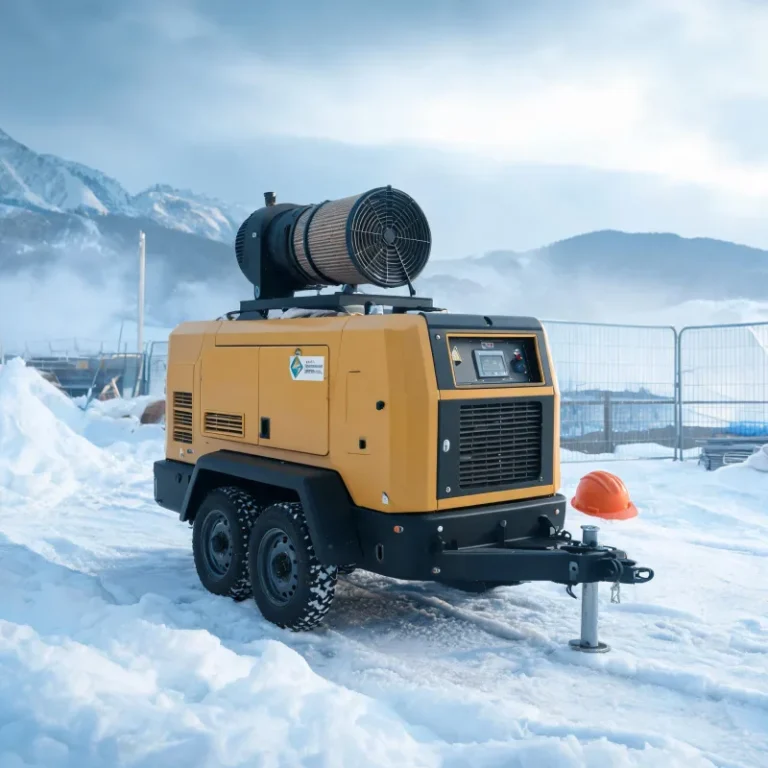
Small portable units run with wider temperature swings than stationary models, because they often cycle on and off through the day. Too thick oil in cold temperatures increases oil carryover into the separator. Too thin oil in hot temperatures also fails to stay in the crankcase, leading to excess oil passing through the separator media.
I’ve seen this play out on dozens of job site calls: a new owner swaps out the separator every two months, never realizing they’re using the wrong oil viscosity for their regional climate.
Frequent Intermittent Short Load Cycles
Unlike large stationary units that run for hours continuously, most portable units get started and stopped multiple times per day. Statista 2024 data shows that 78% of portable compressed air units operate in intermittent duty cycles, compared to just 21% of stationary models.
When a unit only runs for 10 to 15 minutes at a time, it never reaches the steady operating temperature needed to evaporate moisture that builds up in the crankcase. That moisture mixes with the compressor oil, creating sludge that clings to the separator media and plugs pores much faster than clean oil.
This does not apply to portable units that run for 4+ hours at a time; those rarely see moisture-related clogging from short cycles.
Environmental Contamination Unique To Portable Use
Portable units are moved between job sites, stored outdoors, and operated in unconditioned environments, all of which increase contamination risk.
Intake Leaks And Poor Primary Filtration
The small frame of portable units means gaskets and connections are more likely to loosen after repeated movement. Even a tiny gap in the intake system lets unfiltered ambient air directly into the compression chamber.
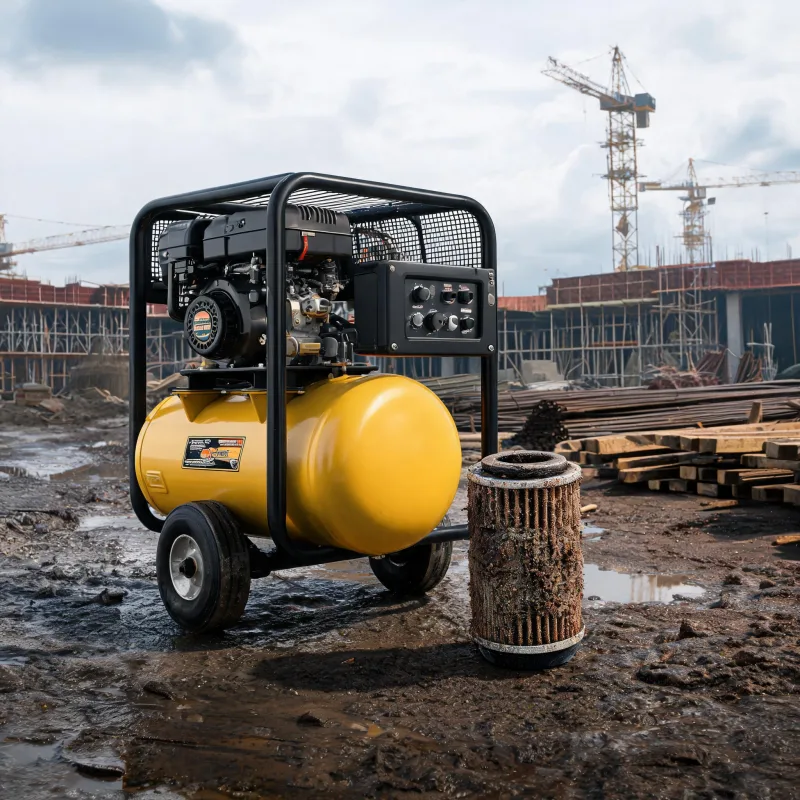
International Energy Agency (IEA) 2023 report on mobile power equipment notes that contamination from ambient particles reduces filter service life by an average of 48% for portable units used in construction sites. Fine dust, silica, and pollen get trapped in the oil separator media, plugging it long before its rated service life.
I once spent three hours troubleshooting a unit that kept clogging every two weeks, only to find a 1mm gap in the intake gasket that was letting in fine concrete dust. Tightening the gasket extended separator life to 1200 hours, no other changes needed.
Storage-Related Contamination
Many owners leave units parked outside between uses, so moisture and dust seep into the air intake and oil sump when the unit is not running. That contamination sits in the system and starts clogging the separator the next time you start it up.
Actionable Fixes To Stop Repeated Clogging
You don’t need to buy expensive new parts to stop repeated clogging in most cases. Follow these steps in order to resolve the issue fast.
1. Start with oil: Confirm your oil viscosity matches the average ambient temperature where you operate. Swap generic motor oil for compressed air-specific formulated oil. This fix costs less than a new separator and resolves 6 out of 10 recurring clogging issues.
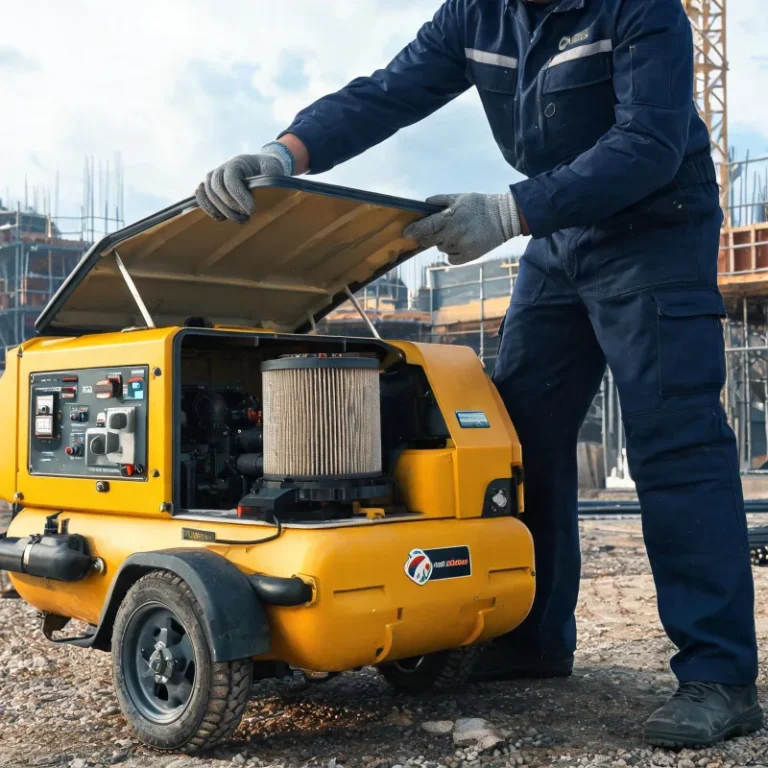
2. Inspect all intake seals: Check gaskets around the primary air filter and intake connections. Tighten loose connections and replace cracked or torn gaskets. Replace the primary air filter at the same time you replace the oil separator.
3. Address moisture from short cycles: If you run mostly short cycles, add a small aftercooler to the system to reduce moisture buildup in the crankcase. Drain the oil sump every 50 operating hours to remove accumulated water.
4. Adjust storage practices: Park units in covered, dry areas when not in use, and cap the air intake to keep dust out during long periods of storage.
When To Upgrade Your Separator Media
If you’ve addressed all the root causes above and still get clogging within 6 months, you may need to upgrade to a higher-efficiency separator media. This is only needed if you consistently operate in extremely dusty environments, or you regularly run your unit above its rated load capacity.
Upgrading media will not fix clogging caused by incorrect oil or intake leaks, so always troubleshoot root causes first before buying a more expensive part.
对比表
Cause of clogging | Clogging speed | Fix cost Incorrect oil viscosity | Fast | Low Ambient contamination | Medium | Medium Intermittent short cycles | Slow | Medium
实施清单
- Check oil viscosity against your average operating temperature
- Inspect intake gaskets and primary air filter for leaks
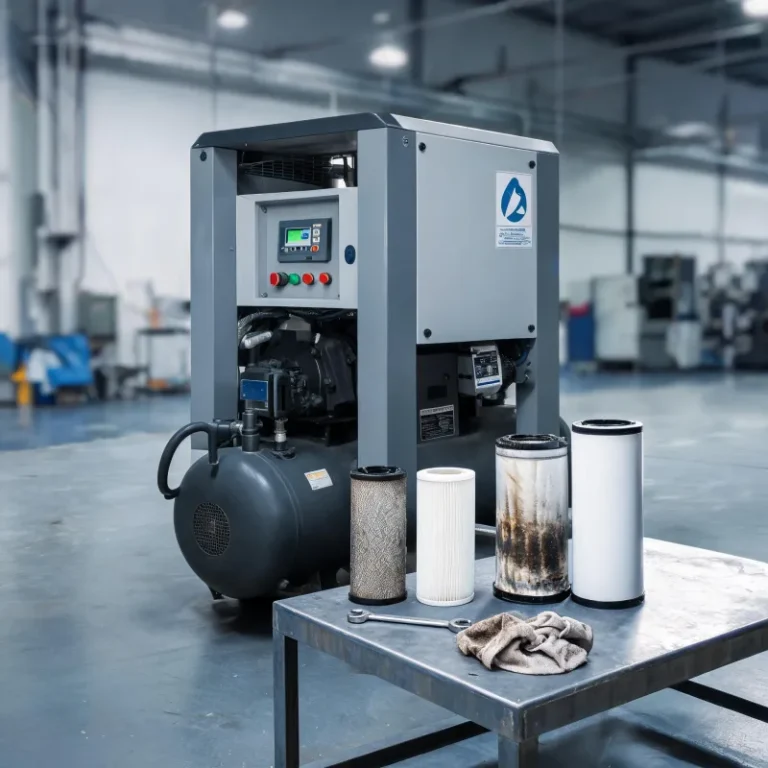
- Test compressor oil for moisture and particulate contamination
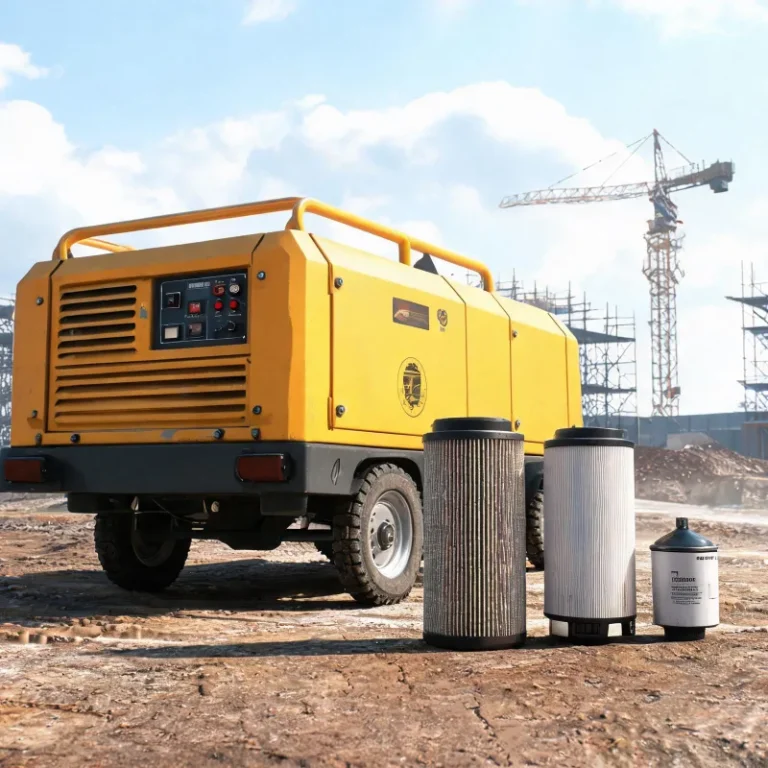
- Replace oil, oil filter, and oil separator at the same time
- Log operating hours to track future clogging frequency
- Adjust maintenance intervals for your work environment
误区澄清
Replacing the separator will fix repeated clogging → Only fixing the root cause stops repeated clogging Any heavy-duty oil works for compressor units → Only oil formulated for compressed air has the right additive package Portable units need the same maintenance interval as stationary → Portable units need twice as frequent filter checks
决策矩阵
- Clean indoor environment: Prioritize correct oil viscosity over intake upgrades
- Dusty construction site: Prioritize intake seal upgrades and shorter maintenance intervals
- Intermittent use: Add an aftercooler to reduce moisture buildup
- Frequent full load operation: Upgrade to higher efficiency separator media
应用场景
Small portable units used for daily construction work on job sites Portable units stored outdoors between uses Intermittent operation for on-site power needs Units operated in wide temperature swings throughout the day
避坑要点
- Don’t skip changing oil when you replace a clogged separator
- Don’t ignore small intake leaks that let in unfiltered air
- Don’t use generic motor oil in place of formulated compressor oil
- Don’t overfill the crankcase to cut down on oil top-offs
术语简释
oil separator — A filter component that separates compressed air from compressor oil oil viscosity — A measure of oil’s resistance to flow at different temperatures intermittent duty cycle — Operation that alternates between frequent start and stop cycles ambient contamination — Foreign particles from the surrounding environment that enter the system
成本因素
- Cost of correct formulated compressor oil vs generic oil
- Cost of replacement separator vs cost of troubleshooting
- Cost of intake upgrades to reduce contamination risk
- Cost of downtime from unexpected clogging during job site work
维护提示
- Check oil level before every use to avoid overfilling
- Inspect intake seals for damage after moving the unit between sites
- Change oil and all filters at the same time when replacing the separator
- Test oil for moisture every 100 operating hours in humid environments
- Store units in covered, dry areas between uses to reduce contamination
行业数据
- 62% of premature separator failures in portable units linked to incorrect oil: CAGI 2023
- 78% of portable compressed air units run on intermittent duty cycles: Statista 2024
- Ambient contamination cuts separator service life by 48%: IEA 2023
回报说明
- Fixing root causes reduces separator replacement frequency by 70% on average
- Lower annual maintenance cost for recurring clogging issues
- Reduced downtime during critical job site operations
合规要点
- Use only rated replacement filters that meet original equipment manufacturer specifications
- Dispose of used oil and filters per local environmental regulations
失效模式
- Moisture-induced clogging: Caused by short cycles and high humidity, prevented by regular oil draining
- Particle-induced clogging: Caused by intake leaks, prevented by regular seal inspection
- Oil carryover clogging: Caused by incorrect viscosity, prevented by matching oil to temperature
升级路径
- Tighten intake gaskets and replace primary filter as a first step upgrade
- Add a small aftercooler to address moisture from intermittent use
- Upgrade to higher efficiency separator media for high-contamination environments
多方视角
- Terminal user: Repeated clogging causes costly downtime on job sites
- Maintenance specialist: Most issues are fixable without expensive part replacements
- Procurement: Buying cheaper unformulated oil increases long term total cost of ownership
Expert Insights
Matching oil to operating temperature is the cheapest fix for repeated clogging — 12
— year mobile power equipment maintenance specialist
Further Reading
- Top Rated Diesel Portable Air Compressors for 2024 Onshore Oil & Gas Drilling
- Best Diesel Portable Air Compressor for Water-Lubricated Oil-Free Screw Applications: Vetted Picks
- New Diesel Portable Air Compressor: 2024 Sizing Trends for Factory Production
- Cost Breakdown: Industrial Diesel Portable Air Compressor for Chemical Plants
- diesel portable air compressor, oil separator clogging, air/oil separator failure, compressor filter clogging – Can a Diesel Porta
- Can a Silent Diesel Portable Air Compressor Connect to Existing Compressed Air Piping
- Can a Diesel Portable Air Compressor Run a Small Sandblaster?
- What Size Diesel Portable Air Compressor Do I Need For Quiet Mobile Work?
About the Author

Frequently Asked Questions
How often should an oil separator be replaced on a small portable diesel unit?
For normal operation in clean environments, plan for replacement every 1000 to 2000 operating hours. If you work in dusty environments, shorten the interval to 500 hours.
Can I clean a clogged oil separator and reuse it?
Most modern oil separator media is disposable and cannot be cleaned effectively. Attempting to clean it will reduce separation efficiency and damage internal components.
Does high ambient humidity cause oil separator clogging?
Yes, high humidity increases moisture buildup in the compressor oil, which causes the separator media to swell and clog faster, especially in intermittent use.
Will using a higher capacity separator prevent repeated clogging?
Only if your unit is consistently operated above its rated load. If the root cause is contamination or incorrect oil, a larger separator will only delay clogging, not prevent it.
Can low oil quality cause repeated clogging even with a new filter?
Yes, low quality or contaminated oil breaks down faster, creating more sludge and particulates that clog the separator media much faster than clean formulated oil.
Do portable units have higher clogging risk than stationary units?
Yes, due to intermittent operation, frequent movement that loosens seals, and use in dusty outdoor environments, portable units have a 2x higher risk of repeated clogging per CAGI 2023 data.
Does overfilling oil cause oil separator clogging?
Yes, overfilling the crankcase increases oil pressure and forces excess oil into the separator, leading to premature clogging. Always maintain oil level at the recommended mark.