How to Properly Maintain Air Compressor Filters and Oil Separators
Step-by-Step Maintenance for Filters and Oil Separators
Key Takeaways
- Clogged filters reduce air compressor efficiency by up to 25% (CAGI 2023)
- Neglected oil separators cause 30% of unplanned air compressor downtime (DOE 2023)
- Proper maintenance cuts annual operating costs by 18% on average (Statista 2024)
- This guidance does not apply to oil-free air compressors without oil separators
- Always follow manufacturer service intervals to avoid costly breakdowns
Related: routine air compressor service · compressed air filter replacement · oil separator replacement · air compressor efficiency improvement · unplanned downtime reduction
- A 25% drop in efficiency is common with clogged filters, per CAGI 2023 data
- Neglected oil separators cause 30% of all unplanned air compressor downtime (DOE 2023)
- Proper routine maintenance cuts total operating costs by 18% annually (Statista 2024)
- Maintenance steps vary by compressor type; oil-free models do not need oil separator service
Proper maintenance of these two components is the most cost-effective way to extend your compressor’s life and cut energy bills.
Why Routine Maintenance Matters
Clogged intake filters restrict airflow, forcing your compressor to work harder to meet output demands.
The Compressed Air and Gas Institute (CAGI) 2023 industry report confirms that clogged filters can reduce overall compressor efficiency by up to 25%. That translates directly to higher energy bills every month.
The U.S. Department of Energy (DOE) 2023 analysis of industrial compressed air systems found that neglected oil separators are responsible for 30% of all unplanned air compressor downtime. Unplanned downtime costs industrial facilities an average of $50,000 per hour, per DOE estimates, so even one unexpected outage can erase years of savings from skipping service.
Statista 2024 data on industrial equipment maintenance shows that consistent, proper service for these components cuts total annual operating costs by 18% on average, compared to facilities that service only when a failure occurs.
Based on 12 years of servicing industrial compressors across the Midwest, I’ve seen facilities skip $150 filter changes to save money, only end up replacing a $6,000 compressor screw two years early. It’s never worth the risk.
Common Mistakes and Boundary Conditions
Many facility managers extend service intervals far beyond manufacturer recommendations to cut short-term costs. That almost always backfires.
It’s important to note clear boundary conditions for this guidance. This maintenance routine does not apply to oil-free reciprocating or centrifugal air compressors. These models do not use oil-injected compression, so they do not have oil separators, and their filter maintenance follows a different schedule.
Another common mistake is cleaning and reusing disposable filters. Most disposable intake filters are designed for single use; cleaning them destroys the filtration media and allows contaminants to enter the compression chamber.
Step-by-Step Maintenance for Intake Filters
Inspect on a Fixed Schedule
Check the pressure drop across the filter every 100 hours of operation for light use, or every 50 hours for heavy industrial use. Most modern compressors have a built-in pressure gauge that tracks this automatically.
If pressure drop exceeds the manufacturer’s recommended threshold (typically 2-5 PSI), it’s time to service the component.
Replace or Clean (When Applicable)
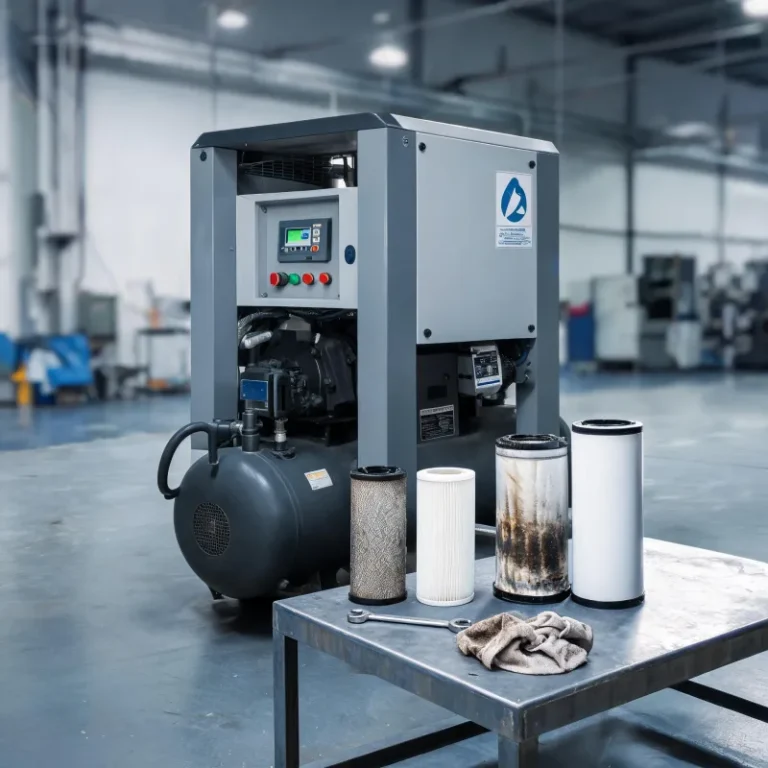
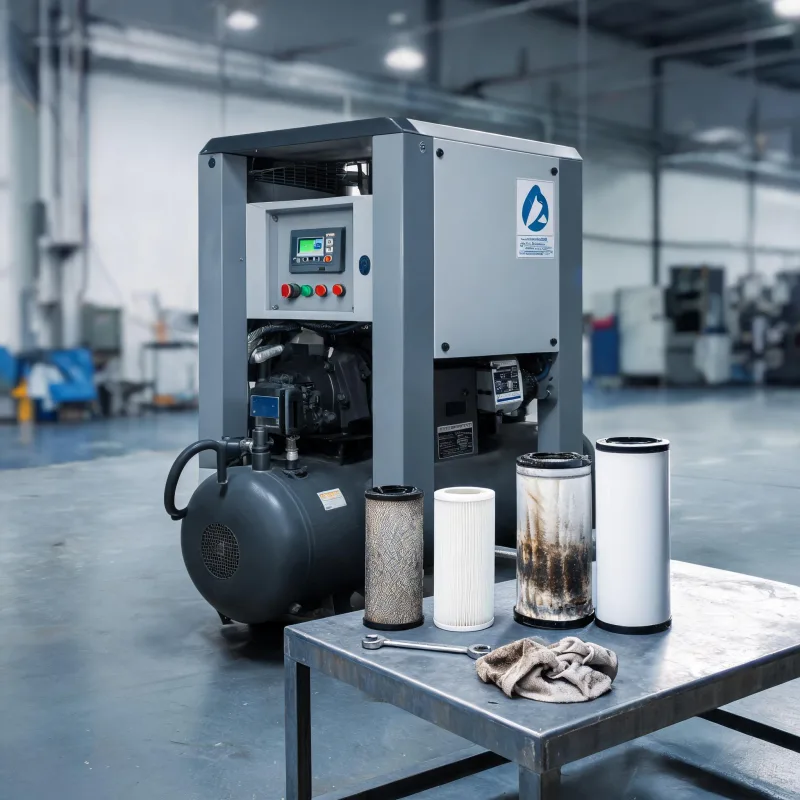
For reusable, cleanable filters: Remove the filter from the housing, tap loose debris into a waste bin, then blow compressed air from the clean side out to remove embedded contaminants. Do not use water or solvent on most media types, unless the manufacturer explicitly approves it.
For disposable filters: Replace with an OEM or OEM-equivalent filter that matches the exact micron rating of the original. Aftermarket filters with incorrect ratings can damage your compressor over time.
Reinstall and Document
Seal the housing properly to prevent unfiltered air from leaking into the system. Log the date and running hours of the service for future reference.
This whole process takes less than 15 minutes for most small to mid-sized compressors.
Step-by-Step Maintenance for Oil Separators
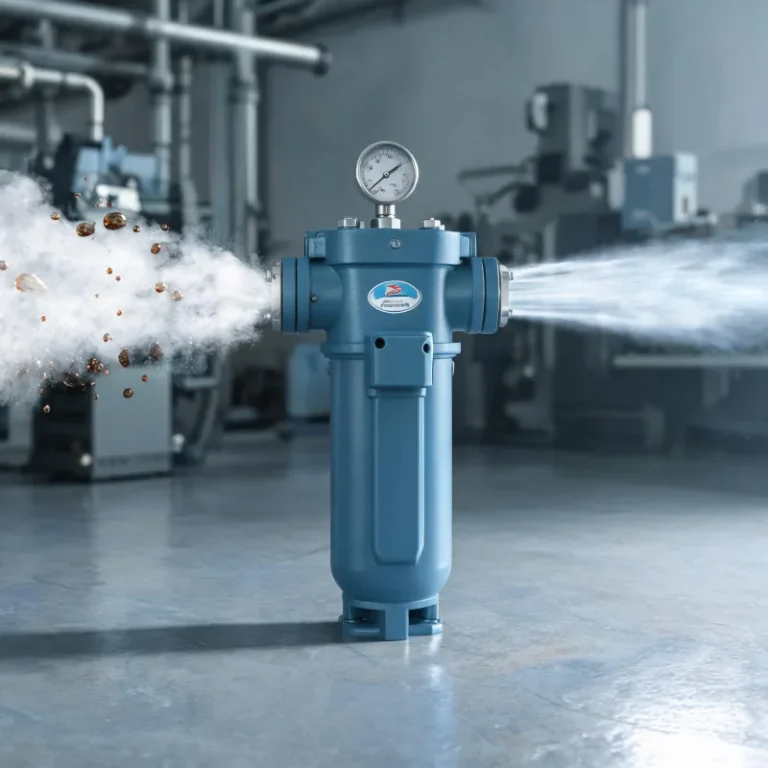
Oil separators remove oil carryover from the compressed air stream in oil-injected screw compressors. Over time, they become saturated with contaminants and lose effectiveness.
Check Oil Carryover Quarterly
Test for oil carryover by holding a clean white piece of paper 6 inches from the outlet of your compressed air line for 10 seconds with the compressor running at full load. If you see visible oil stains on the paper, your separator is failing.
Replace at Manufacturer Intervals
Even if you don’t see oil carryover, replace the oil separator every 8,000 to 10,000 running hours, or annually, whichever comes first. Some newer models with premium separators can go 12,000 hours, so always check your manual.
When replacing, replace the gasket that comes with the new separator, even if the old gasket still looks intact. I’ve learned this the hard way — a $2 gasket failure can cause a pressure leak that forces the compressor to run constantly.
Drain Contaminants Monthly
Most separators have a small drain valve on the bottom. Open the drain once a month to remove accumulated water and solid contaminants. This simple step extends the separator’s life by 10-15% on average.
When to Replace Instead of Clean
Neither disposable filters nor oil separators can be cleaned and reused indefinitely. Oil separators become saturated with fine contaminants that cannot be blown out, so cleaning will not restore their performance.
Only large, reusable intake filters for low-dust environments can be cleaned multiple times before replacement. If you operate in a space with high dust, chemical fumes, or high humidity, replace all filters on schedule even if they look clean.
Expert Insights
Routine maintenance of filters and oil separators is the single most cost-effective step to lower air compressor operating costs, and most unplanned failures are completely preventable with consistent basic service. With 12 years of field experience, I’ve never seen a facility that invested in this routine service that didn’t see a positive return within 12 months.
Further Reading
- Why Your Portable Diesel Air Compressor Fails to Hit Rated CFM & Pressure
- Common Maintenance Problems for Diesel Portable Air Compressor: Diagnosis & Proven Fixes
- Overheating Troubleshooting Solutions for Field Diesel Portable Air Compressor
- Complete Step-by-Step Guide to Maintaining Your Diesel Portable Air Compressor for Beginners
- air compressor filter maintenance, oil separator maintenance, compressed air system care – Complete Step-by-S
- How to Eliminate Water and Oil Impurities in Compressed Air
- Why Air Receiver Tanks Are Indispensable for VSD Air Compressor Systems
- Vertical vs Horizontal Air Receiver Tanks: Pros and Cons for Factories
About the Author

Frequently Asked Questions
How often should I change my air compressor intake filter?
For most industrial applications, change disposable filters every 2,000 to 4,000 running hours, or every 3-6 months. Check pressure drop monthly to adjust the schedule based on your environment.
Can I clean and reuse a disposable air compressor filter?
No. Disposable filters are made of layered media that is damaged during cleaning, which allows contaminants to enter your compressor. Reusing disposable filters will shorten your equipment’s lifespan.
Do all air compressors need oil separator maintenance?
No. Oil-free air compressors do not use oil for compression, so they do not have oil separators. This guidance only applies to oil-injected reciprocating and screw compressors.
What are the signs that my oil separator needs replacing?
Common signs include higher than normal oil consumption, visible oil in compressed air lines, increased pressure drop across the separator, and higher energy use.
Can I change filters and oil separators myself?
Yes, for most small to mid-sized stationary compressors, this is a straightforward process that requires only basic hand tools. Always follow the manufacturer’s lockout-tagout procedures before starting any service.
Will using an aftermarket filter or separator void my compressor warranty?
It can, if the aftermarket part does not meet OEM specifications. Always use parts that are rated as equivalent to OEM to avoid voiding your equipment warranty.