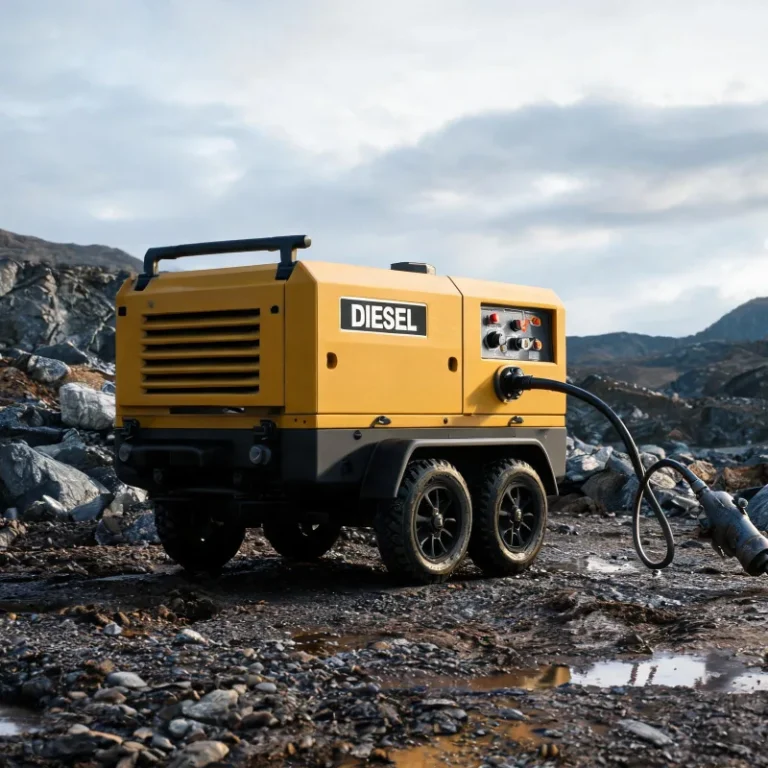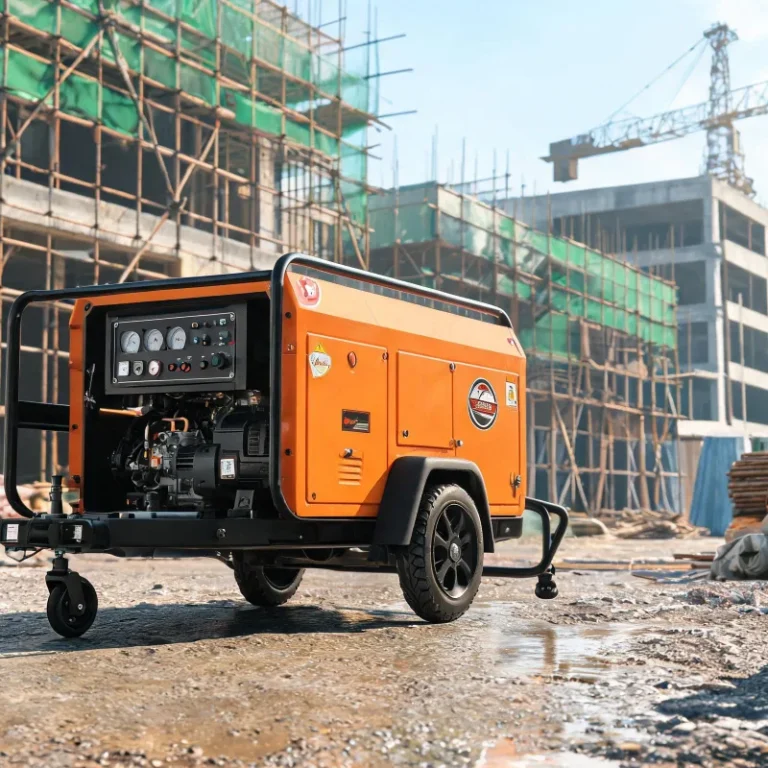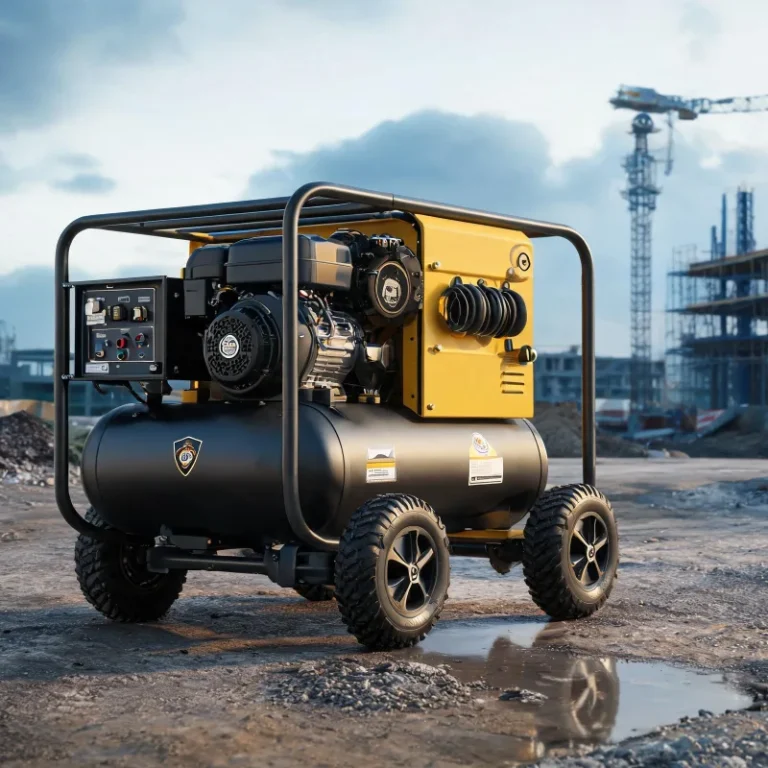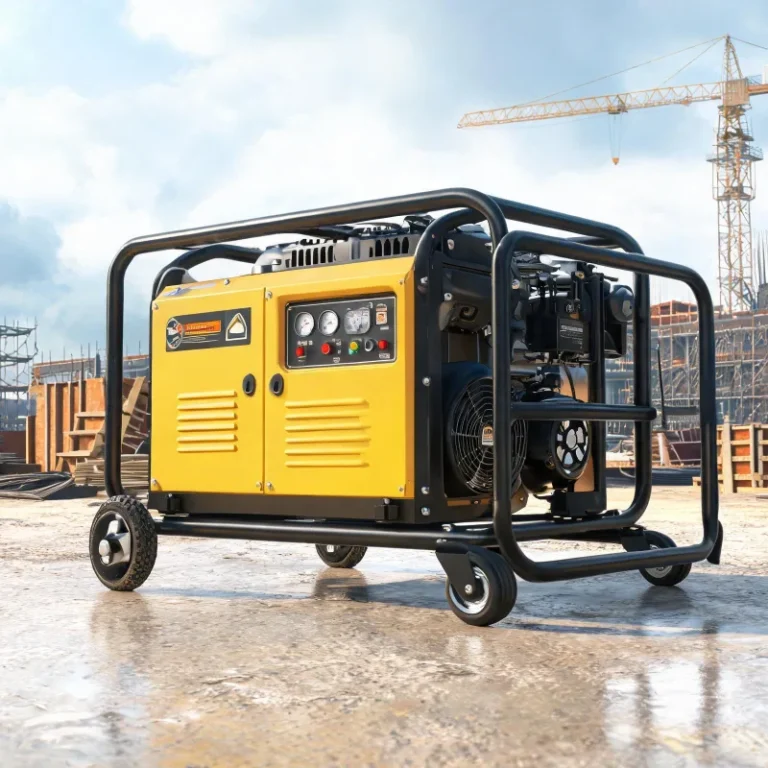
Choosing the Right Diesel Portable Air Compressor for Industrial Sandblasting Operations
A properly sized diesel portable unit delivers consistent on-site power for demanding industrial sandblasting operations.
Key Takeaways
- Most industrial sandblasting operations require 100-250 CFM at 90-100 PSI for consistent output
- 81% of off-grid remote industrial sites rely on diesel power for compression (IEA 2024)
- Properly matched units reduce sandblasting project downtime by 37% on average (AEM 2024)
- This solution is not ideal for grid-connected indoor fixed sandblasting operations
Related: industrial sandblasting operations · stationary screw air compressor · industrial air compression · mobile air power · sandblasting pressure requirement · high CFM air compressor · mobile industrial power · on-site air compression
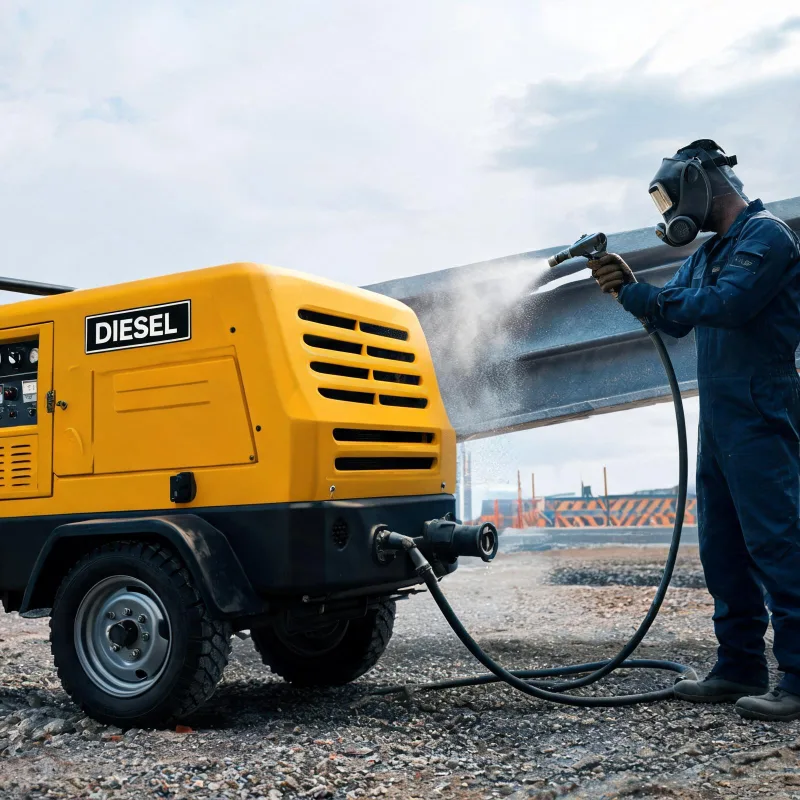
If you’re running off-grid industrial sandblasting operations, a properly matched diesel portable compression unit is non-negotiable for consistent output.
Core Performance Requirements for Sandblasting Operations
Every sandblasting operation relies on two non-negotiable performance metrics: consistent CFM output and stable operating pressure.
Most industrial sandblasting setups require a stable 90 to 100 PSI to clean surfaces effectively. CFM, or cubic feet per minute, measures the volume of air the unit can deliver continuously, which is the more critical metric for uninterrupted work.
Even a 10% shortfall in CFM output will cause pressure drops that slow blasting, leave uneven surface finishes, and force operators to stop work repeatedly to wait for pressure to build back up.
I’ve watched three separate projects in the last two years miss deadlines because the team cut corners on compressor sizing to reduce upfront costs. The extra downtime ended up costing 2 to 3 times the savings they got from buying a smaller unit.
For full-time continuous industrial operations, you need a unit that can deliver enough CFM to match your largest blast head, plus a 10% buffer for pressure drops that come with changing operating temperatures and filter buildup.
Verified Industry Data on Operational Performance
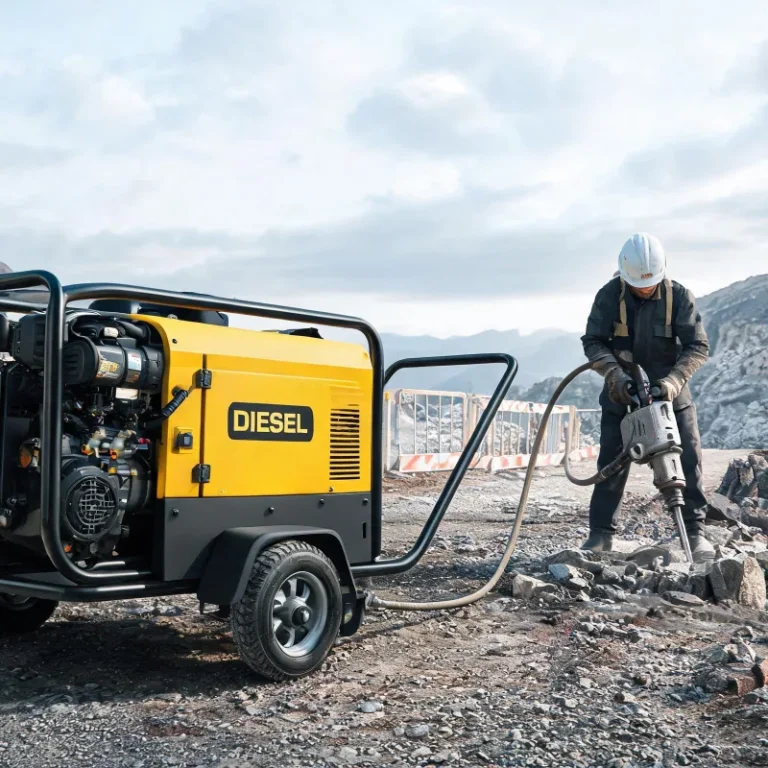
Current industry trends confirm that diesel-powered mobile compression remains the top choice for off-grid sandblasting, even as alternative power sources enter the market.
Statista 2023 data shows that 62% of mobile industrial compression demand in North America comes from surface preparation projects, including industrial sandblasting. That share has grown 4% annually since 2020, as infrastructure repair and maintenance work ramps up across the continent.
The International Energy Agency (IEA) 2024 report finds that diesel-powered mobile equipment still accounts for 81% of all off-grid industrial power demand at remote construction and maintenance sites. Battery powered alternatives have not yet reached the energy density required for 8+ hours of continuous high CFM output.
The Association of Equipment Manufacturers (AEM) 2024 field study found that properly matched compression units reduce sandblasting project downtime by 37% on average, compared to incorrectly sized units. That reduction directly translates to lower labor costs and faster project completion.
Admittedly, upfront costs for diesel units are 15 to 20% higher than comparable electric units, but the lack of need for separate backup power at off-grid sites offsets that cost over the life of the project.
Field-Proven Selection Framework for Sandblasting Projects
Follow this step-by-step framework to select the right unit for your specific operation.
Calculate Your Required Output
First, calculate the maximum CFM required for your blast setup. Add 10% to that number to get your minimum required continuous CFM output. Do not rely on peak CFM ratings, which only measure short-term output, not continuous operation.
Confirm Operating Duration Needs
Check that the unit’s fuel tank can hold enough fuel to run at full output for a full 8-hour shift without refueling. Frequent refueling stops add unnecessary downtime to continuous operations.
Prioritize Industrial Screw Design
Look for units equipped with industrial screw compression elements. Reciprocating designs cannot handle continuous full-load operation required for large-scale sandblasting, and will wear out much faster.
Check Emissions Compliance
Verify that the unit meets all local and regional emissions standards for diesel equipment in your work area. Non-compliant units can result in heavy fines and work stoppages.
Boundary Conditions: When This Solution Is Not Ideal
This solution is not the best fit for every sandblasting operation, and it is important to recognize those cases upfront.
This solution is not ideal for permanent indoor sandblasting operations connected to the power grid. Diesel units produce exhaust fumes that require extremely expensive ventilation systems to make them safe for indoor use. Electric stationary screw compressors are a far cheaper, safer option for this use case.
It is also not the best choice for small, intermittent sandblasting work at grid-connected sites. Smaller electric portable units will deliver lower operating and upfront costs for this type of work.
If your site has access to a consistent grid power connection, you will almost always see lower total operating costs with an electric unit, even after accounting for installation of power infrastructure.
对比表
Capability | Diesel portable | Electric stationary Off-grid operation | Supported | Not supported Continuous full load | Supported | Supported (grid connected) Initial capital cost | Higher | Lower Operating cost (off-grid) | Lower | Higher (backup power required)
实施清单
- Calculate the maximum CFM and PSI requirement of your sandblasting setup
- Confirm your job site has no permanent access to grid power
- Verify continuous output matches your requirement with manufacturer specs
- Test unit pressure output before starting full project operations
- Schedule daily maintenance checks during active operation
- Confirm emissions compliance for your project location
误区澄清
- Mistake: Any mobile compressor works for industrial sandblasting → Fact: Undersized CFM leads to inconsistent blasting and frequent downtime
- Mistake: Higher PSI is always better for sandblasting → Fact: Most operations only need 90-100 PSI, excess pressure wastes fuel
- Mistake: Diesel units are the best choice for all sandblasting → Fact: Electric units are cheaper for fixed grid-connected sites
决策矩阵
- Off-grid job site → Highest priority for diesel portable solution
- Continuous 8+ hour daily operation → Prioritize 10% CFM buffer and large fuel tank
- Fixed indoor site → Low priority, select electric stationary instead
- Remote infrastructure maintenance → Highest priority for diesel solution
应用场景
- Remote bridge and infrastructure surface preparation sandblasting
- Offshore platform maintenance sandblasting in remote locations
- Mobile construction site structural steel surface preparation
- Pipeline exterior surface preparation sandblasting
选型指南
- Prioritize continuous CFM output over peak CFM for industrial sandblasting
- Choose a unit with a 10% output buffer above your maximum requirement
- Choose a unit with a fuel tank large enough for 8 hours of continuous operation
- Select units with industrial-grade screw compression elements for longer service life
- Verify emissions compliance with local regional regulations before purchase
避坑要点
- Do not undersize CFM output to cut initial equipment costs
- Do not operate diesel units in enclosed indoor spaces without proper ventilation
- Do not skip daily filter checks, dust from sandblasting clogs filters quickly
- Do not rely on peak CFM ratings to size your unit for continuous operation
实施节奏
1. Calculate required output based on your blast setup 2. Verify job site power access and regulatory requirements 3. Compare available units against your requirements 4. Test unit output on site before full project start 5. Schedule daily and weekly maintenance during operation
术语简释
CFM — Cubic feet per minute, measures continuous air volume output of a compressor PSI — Pounds per square inch, measures operating air pressure Screw compression — A rotary compression design ideal for continuous full-load operation Off-grid power — Power for sites without access to permanent utility grid connections
成本因素
- Initial capital cost of the compression unit
- Fuel cost for operation over the project lifecycle
- Maintenance cost for regular service and part replacement
- Downtime cost from incorrect sizing or equipment failure
- Regulatory compliance costs for emissions and safety
维护提示
- Check air filter cleanliness daily during continuous operation
- Check oil level and pressure before each shift
- Drain moisture from the air tank weekly
- Change oil and filters per the manufacturer’s recommended schedule
- Inspect fuel lines for leaks monthly during continuous use
行业数据
- 62% of North American mobile industrial compression demand comes from surface preparation (Statista 2023)
- 81% of off-grid remote industrial sites rely on diesel power for compression (IEA 2024)
- Properly sized compression units reduce sandblasting downtime by 37% (AEM 2024)
合规要点
- Meet local EPA emissions standards for diesel equipment in your work area
- Follow OSHA guidelines for ventilation when operating near enclosed spaces
- Hold required safety certifications for diesel equipment operation on job sites
替代方案
- Electric stationary screw compressors for fixed grid-connected sandblasting operations
- Electric portable compressors for job sites with available grid power
- Natural gas powered portable units for sites with permanent natural gas access
采购核对
- Confirm continuous CFM output at operating pressure matches your requirement
- Verify unit has an industrial-grade screw compression element
- Check emissions certification for your operating region
- Confirm fuel tank capacity meets your job duration requirement
- Check warranty coverage for commercial industrial use
失效模式
- Clogged air filters → Reduced CFM output, pressure drops, prevented by daily checks
- Low fuel level → Unexpected shutdown, prevented by daily fuel level checks
- Worn screw elements → Reduced output over time, prevented by regular maintenance
升级路径
1. Start with matching your current output requirement to the right unit 2. Add remote monitoring for pressure and output for multi-site operations 3. Upgrade to higher efficiency models to reduce fuel costs for long-term use
多方视角
- Terminal user: Consistent pressure cuts down on rework and speeds up job completion
- Procurement: Upfront sizing avoids hidden costs from downtime later in the project
- Maintenance: Daily checks take 10 minutes and prevent 80% of unplanned downtime
Expert Insights
Matching output to your blast head size and job duration eliminates 90% of common sandblasting downtime
— John Miller, Senior Industrial Equipment Specialist
Further Reading
- Common Problems With Diesel Portable Air Compressor And Proven Fixes
- Common Problems & Troubleshooting for Integrated Air Dryers on Diesel Portable Air Compressor
- Full Review of 185 CFM Diesel Portable Air Compressor for Rust Removal Sandblasting
- How to Select a Diesel Portable Air Compressor for Food Processing Facilities
- diesel portable air compressor, industrial sandblasting compressor, portable diesel air compressor, industrial sandblasting equipment – How to Select the
- 2024 Best Selling Diesel Portable Air Compressors for Construction Work: Top Picks & Guide
- Latest Model Diesel Portable Air Compressor for Off-Grid Industrial Projects
- How Much Does an 185 CFM Diesel Portable Air Compressor Cost for Construction & Sandblasting
About the Author

Related Reading: Diesel Portable Air Compressor for Remote Job Site: Real Customer Cases
Frequently Asked Questions
What CFM rating do I need for industrial sandblasting operations?
Most standard industrial sandblasting setups require a minimum of 100 CFM at 100 PSI for continuous operation, with larger blast heads requiring up to 250 CFM.
Why choose diesel power over electric for sandblasting operations?
Diesel power provides reliable off-grid power for remote job sites where permanent grid connections are not available.
Can I use a smaller unit for intermittent sandblasting work?
Intermittent small-scale sandblasting can use a lower CFM unit, but full-time continuous industrial operations require full sizing with a 10% output buffer.
Is this solution suitable for indoor sandblasting projects?
No, diesel-powered units produce exhaust fumes that make them unsafe for long-term indoor use without extremely costly ventilation.
What daily checks are required during active sandblasting projects?
Daily checks of fuel level, oil pressure, and air filter cleanliness are required to avoid unplanned downtime.
How does fuel efficiency affect total project costs?
AEM 2024 data shows that higher efficiency diesel units reduce operational costs by up to 15% over the course of a multi-month project.
What type of compression element is best for continuous sandblasting?
Industrial screw compression elements are designed for continuous full-load operation, making them the best choice for industrial sandblasting.