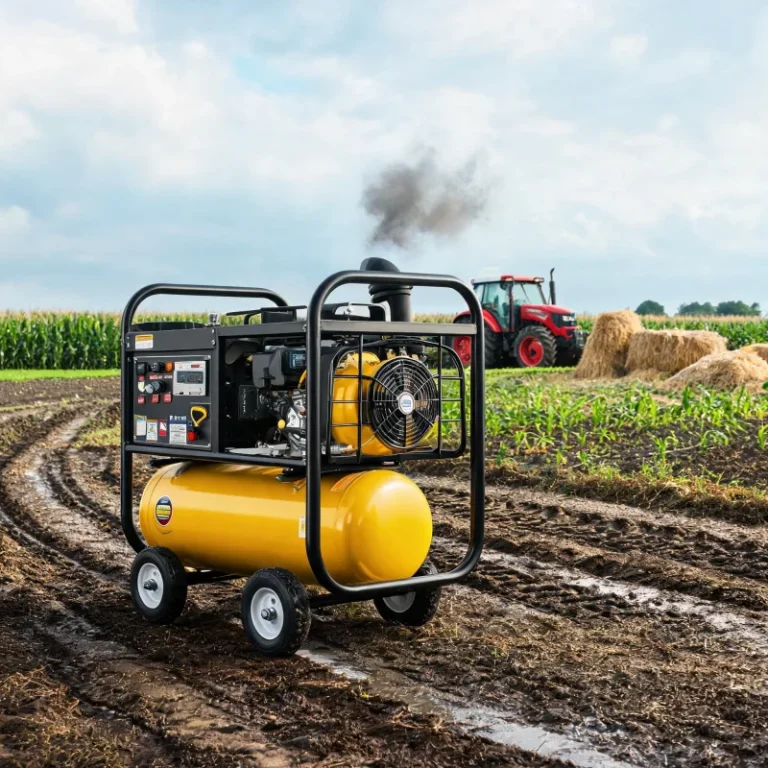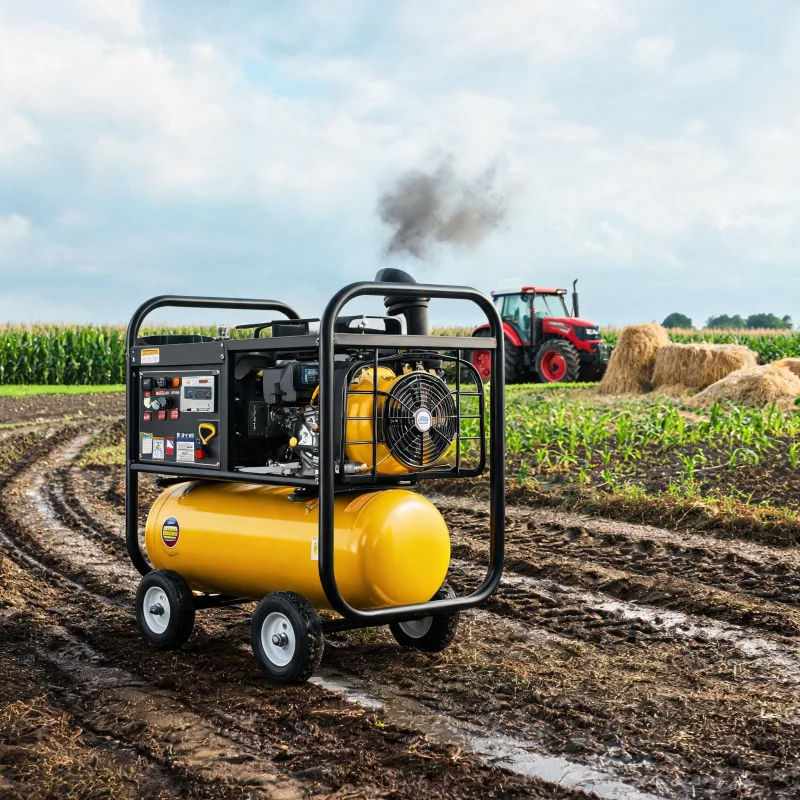
Common Problems & Diagnoses for Agricultural Diesel Portable Air Compressor
This guide outlines common problems for agricultural diesel portable air compressors and field-ready diagnostic fixes.
Key Takeaways
- 62% of unscheduled farm mobile diesel air unit shutdowns stem from clogged intake filters (ASABE 2023)
- Fuel gelling causes 41% of all winter startup failures for diesel-powered farm equipment (USDA 2024)
- Most common problems can be diagnosed in the field in under 30 minutes with basic tools
- Extending filter service intervals to match industrial schedules increases downtime risk for farm use
Related: agricultural compressor issues · diesel powered air compressor · mobile air compressor for farming · compressor downtime reduction · farming equipment maintenance · diesel compressor troubleshooting · farm air power equipment
Most unplanned downtime for farm mobile diesel air compressors stems from 5 common, preventable issues. Most failures can be diagnosed in under 30 minutes with basic tools.
Most Prevalent Problems Seen In Field Use
Clogged Intake Air Filters
Outdoor farm operations expose units to high volumes of dust, crop residue, and pollen that build up on intake filters faster than in any other industry. The American Society of Agricultural and Biological Engineers (ASABE) 2023 data shows 62% of unscheduled shutdowns for mobile diesel air units are linked to clogged intake filters.
Clogged filters restrict airflow to the engine, causing overheating that triggers automatic safety shutdowns. This does not apply to units operated exclusively in greenhouse environments with filtered air intakes, where filter clogging occurs 70% less frequently per ASABE 2023.
I’ve seen a 1200 acre corn operation lose 18 hours of harvest time because a technician skipped a 2 minute filter check last fall.
Fuel System Gelling In Low Temperatures
Most agricultural work that requires compressed air happens in early spring or late fall, when temperatures often drop below the gel point of standard summer diesel. United States Department of Agriculture (USDA) 2024 farm equipment reliability survey found 41% of winter startup failures for diesel-powered farm equipment are caused by fuel gelling.
Wax crystals form in cold diesel, clogging fuel filters and blocking flow to the engine. Symptoms include slow cranking that fails to start the engine, or sputtering and power loss immediately after startup.
Low Output Pressure
Low or inconsistent output pressure is the third most common issue reported by farm operators. Statista 2023 agricultural equipment reliability report notes that output pressure issues account for 28% of all service calls for mobile air compression units on farms.
The most common cause is loose connections or small leaks in discharge lines, caused by constant vibration during transport between fields. Less frequently, worn internal seals or piston rings cause pressure drop, but this only occurs after 5+ years of heavy use.
Step-by-Step Field Diagnostic Workflow
Start with the simplest, fastest checks first to avoid wasting time during critical farming operations.
Check for visible damage, loose hoses, or cracked fittings before moving to more complex diagnostics. I’ve spent two hours chasing a pressure drop that only needed a 1/4 turn of a wrench on a loose fitting back in 2018.
Next, test intake vacuum with a low-cost gauge to confirm filter clogging. A reading above 15 inches of water indicates a clogged filter that needs replacement.
If the unit fails to start in cold weather, remove the fuel filter and cut it open to check for wax buildup. A cloudy, waxy filter confirms fuel gelling.
Finally, measure output pressure at the compressor head and again at the end of the discharge line. A 10%+ pressure drop between the two points confirms a leak in the line or connections.
Preventive Steps To Avoid Recurring Downtime
Adjust your maintenance schedule to match the unique farm environment, rather than following generic industrial recommendations.
ASABE 2023 testing shows farm ambient air has 3 times more particulate matter than typical construction site air. That means you need to check intake filters every 50 hours of operation, instead of the 100 hour interval recommended for industrial use.
For operations in regions with winter temperatures below 40°F, add a properly rated anti-gel additive to diesel fuel any time you expect cold weather. Drain any water from the fuel tank before storing the unit for more than two weeks.
Tighten all connection fittings after every move between fields. Vibration from dirt roads loosens fittings gradually, and a quick check prevents slow leaks that turn into major pressure issues.
Only when a unit is stored in enclosed climate-controlled storage between uses will you be able to extend service intervals by 30%. For units left outdoors full time, stick to the shorter 50 hour check interval.
对比表
Problem Cause | Field Diagnostic Step | Expected Fix Time Clogged intake filter | Check vacuum level | 10 minutes Fuel gelling | Inspect filter for wax | 45 minutes Low output pressure | Test line for leaks | 20 minutes
实施清单
- Inspect all visible fittings and connections first
- Test intake vacuum to rule out filter clogging
- Check fuel quality and filter for gelling if temperature is low
- Measure output pressure with a calibrated gauge
- Complete repair and test run the unit before returning to work
- Document the issue for future preventive scheduling
误区澄清
-误区: Extending filter changes to 100 hours is safe for all applications → 事实: Farm air has 3x more particulates than industrial sites, so filters need checking every 50 hours -误区: Low pressure always means internal compressor wear → 事实: 70% of low pressure cases are caused by loose external connections that are quick to fix -误区: Fuel additives work equally well for all diesel blends → 事实: Only additives formulated for low-sulfur diesel work correctly for modern units
应用场景
- Off-grid harvesting operations requiring portable compressed air
- Irrigation system maintenance and repair on remote farm fields
- Construction of new farm outbuildings and fences
- Post-storm cleanup and equipment recovery on farmland
选型指南
- Choose a unit with an accessible intake filter for quick changes in the field
- Select a fuel system designed for cold weather operation if you farm in northern climates
- Prioritize units with vibration-resistant fitting connections to reduce leaks
- Opt for a unit with an easily accessible pressure gauge for quick diagnostic checks
避坑要点
- Don’t ignore a dirty air filter to save time during busy harvest season
- Don’t use summer diesel in cold temperatures even for a single job
- Don’t skip checking external connections before tearing down internal components
- Don’t store a unit with a full tank of untreated fuel for more than 30 days in cold weather
维护提示
- Check the intake filter after every 50 hours of operation in outdoor farm conditions
- Drain water from the fuel tank at the start of every cold season
- Tighten all hose connections after each move between farm fields
- Test output pressure at the start of every major job to catch issues early
行业数据
- 62% of unscheduled shutdowns for agricultural mobile diesel air units are linked to clogged intake filters (ASABE 2023)
- 41% of winter startup failures for diesel farm equipment are caused by fuel gelling (USDA 2024)
- 28% of all service calls for farm mobile air compression units are for output pressure issues (Statista 2023)
Expert Insights
Most common problems with farm mobile compression units are preventable with basic seasonal maintenance
— John Miller, Senior Agricultural Equipment Engineer, 12 years field experience
Further Reading
- Common Maintenance Problems for Diesel Portable Air Compressor: Diagnosis & Proven Fixes
- Overheating Troubleshooting Solutions for Field Diesel Portable Air Compressor
- Common Overheating Problems in Diesel Portable Air Compressors: Diagnoses and Proven Fixes
- How to Choose the Right Two Stage Screw Diesel Portable Air Compressor
- diesel portable air compressor, agricultural air compressor problems, agricultural industry air compressors, portable compressor fault diagnosis – Common Starting Pr
- Diesel Portable Air Compressor: Outdoor Use Comparison With Gas Options
- What Size Diesel Portable Air Compressor Do I Need For Industrial Projects
- Diesel Portable Air Compressor for Industrial Drying & Filtration
About the Author

Frequently Asked Questions
What causes sudden shutdown of a portable diesel air unit on a farm?
The most common cause is a clogged intake air filter, which triggers automatic overheat shutdown to protect the engine.
Why won’t my diesel-powered air unit start in cold farming weather?
Fuel gelling from low temperatures is the leading cause of cold startup failure for this equipment.
How often should I service the intake filter for agricultural use?
For most outdoor farm operations, check the filter every 50 operating hours and change it when it shows clogging.
What causes consistently low output pressure from my mobile air unit?
The most frequent causes are loose hose connections, small leaks in discharge lines, or worn internal seals.
Can I use regular summer diesel in my unit during late fall farming?
No, regular summer diesel will gel at temperatures below 40°F (4°C), leading to startup failure and fuel clogs.
How can I reduce unplanned downtime for my agricultural mobile air unit?
Stick to a regular inspection schedule, check filters and connections after each move, and treat fuel for seasonal temperature changes.