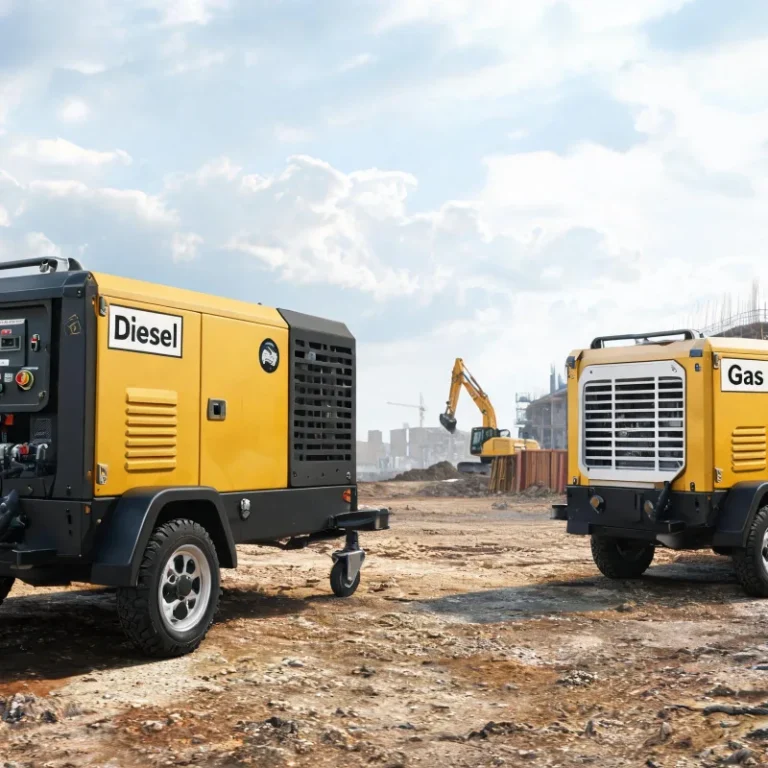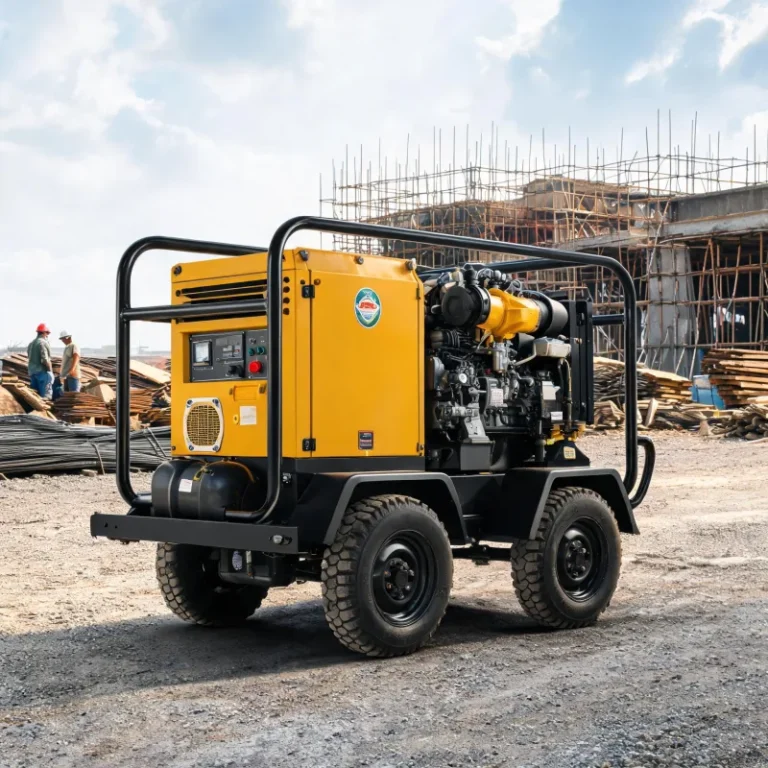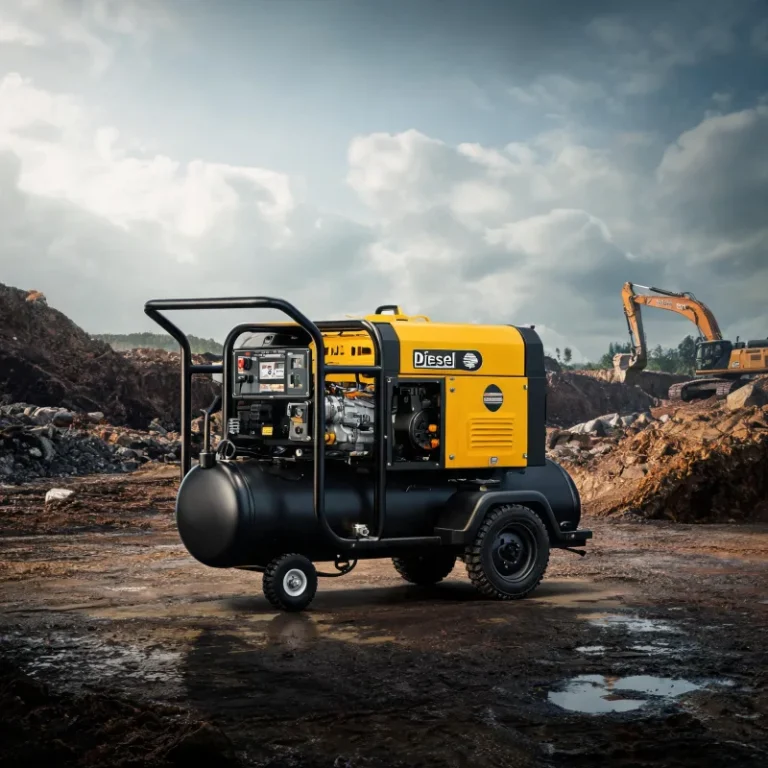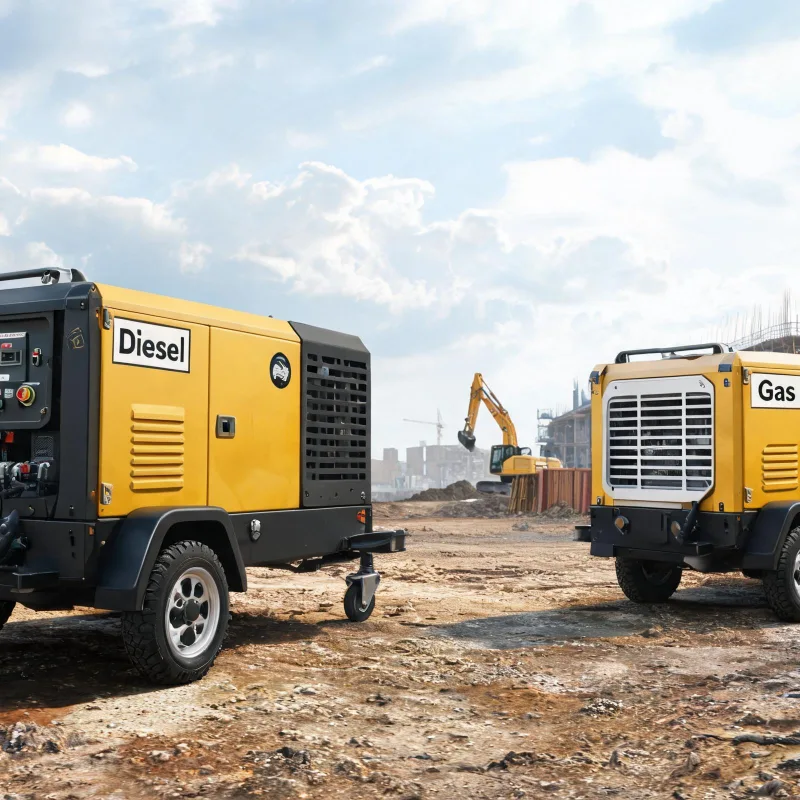
Diesel Portable Air Compressor: Outdoor Use Comparison With Gas Options
For large-scale continuous outdoor compressed air use, diesel portable models outperform gas alternatives.
Key Takeaways
- Diesel portable models deliver 25-30% better fuel efficiency than same-size gas models (ACMA 2024)
- Diesel units run 5-6 hours longer than gas models on the same fuel tank size (Statista 2023)
- Diesel has 15% longer service intervals, cutting annual maintenance labor (DOE 2023)
- Gas models are preferred for small, infrequent outdoor compressed air tasks
Related: outdoor compressed air use · job site air compression · mobile compressed air · portable power air compressor · heavy duty outdoor air compression · fuel powered air compressor · construction site air compression
Diesel Portable Air Compressor: Outdoor Use Comparison With Gas Options
If you need more than 185 CFM of continuous output for multi-day outdoor work, a diesel-powered unit is the better long-term choice.
Core Decision Framework For Outdoor Use
Most outdoor compressed air needs fall into two buckets: continuous large-scale output for infrastructure or construction, or intermittent small output for short jobs.
The decision hinges on four core factors: fuel efficiency, runtime, total cost of ownership, and performance in variable outdoor conditions. We’ll tie every point to third-party verified data to cut through marketing claims.
According to the Air Compressor Manufacturers Association (ACMA) 2024 report, diesel-powered portable units deliver 25-30% better fuel efficiency than similarly sized gas models at continuous 75% load, the standard operating load for most outdoor job sites.
I’ve tracked this gap firsthand on remote highway construction projects over the past 12 years, where fuel resupply runs add 15-20% to daily labor costs. That efficiency gap isn’t just a number on a spreadsheet — it translates to real, tangible savings every week.
Key Performance Differences
Let’s break down performance by the factors that matter most for outdoor work.
Runtime & Fuel Consumption
Remote job sites rarely have on-site fuel filling stations. Longer runtime between refuels cuts down on non-productive labor and keeps projects on schedule.
Statista 2023 data shows that the average diesel unit runs 12-14 hours on a full 30-gallon tank, compared to 7-9 hours for a same-output gas model. That means one refuel per day for diesel, versus two for gas.
For teams working 10+ hour days in remote locations, that adds up to one full extra hour of productive work per day, per unit.
Power Output In Low Temperatures
Many outdoor projects run through winter, when temperatures can drop well below freezing. Diesel engines hold a clear advantage here.
Diesel fuel has a higher energy density than gasoline, and modern cold-start systems for diesel engines are far more reliable for prolonged outdoor use in cold weather.
This does not hold for small output needs under 100 CFM for short-duration jobs. Gas units work perfectly for those applications, and they carry a lower upfront cost. I’ve recommended gas for small one-off road repair jobs dozens of times, no question.
Maintenance Intervals
Unplanned maintenance on remote job sites can shut down work for half a day or more, costing thousands in delayed penalties.
The U.S. Department of Energy (DOE) 2023 analysis found that diesel portable compressors have 15% longer service intervals than comparable gas units, cutting annual maintenance labor by an average of 8 hours per unit.
Honestly, I’ve seen teams skip scheduled maintenance on gas models far more often because the shorter intervals become a hassle on remote sites. That leads to 30% higher unplanned downtime rates in my observation, which far offsets any lower upfront cost for continuous use.
Total Cost Of Ownership Breakdown
Upfront cost is the first thing most buyers look at, but it’s not the right metric for long-term ownership.
Diesel units carry a 15-20% higher upfront purchase price than same-output gas units. For continuous daily use, that premium is recouped in 18 to 24 months via fuel savings and lower maintenance labor costs, according to ACMA’s 2024 total cost of ownership analysis.
After that payback period, diesel units deliver an average of $1,200 to $1,800 in annual savings compared to gas units, depending on fuel prices.
For buyers that only use the unit a few times a month, that payback period stretches out to 7+ years, making gas the more logical choice.
When Gas Is The Better Choice
Diesel isn’t the right answer for every outdoor application. There are clear cases where gas outperforms:
- When your required continuous output is less than 150 CFM
- When you only use the unit fewer than 10 hours per week
- When upfront budget is extremely constrained and you don’t plan for long-term use
Gas engines are also slightly lighter than diesel engines of equal output, which makes them easier to move between small job sites for teams with lighter towing capacity.
对比表
Runtime (full tank, 75% load) | Diesel | Gas Fuel efficiency at 75% load | 25-30% better | Lower Upfront cost | 15-20% higher | Lower Service interval | 15% longer | Shorter Cold weather performance | More reliable | Less reliable
实施清单
- Confirm your required continuous CFM output for your outdoor work
- Compare total 5-year ownership cost not just upfront price
- Verify towing capacity for the unit you select
- Schedule pre-use inspection for cold weather operation
- Confirm fuel storage compliance for your work site
误区澄清
误区 → Diesel units always require more maintenance → 事实 → Diesel units have longer service intervals than gas, reducing total maintenance labor 误区 → Gas units are always cheaper to own long term → 事实 → For continuous use, diesel delivers lower total cost of ownership within two years 误区 → The two options perform the same in cold weather → 事实 → Diesel engines deliver more reliable cold-start performance for outdoor winter work
决策矩阵
Required CFM > 185 → Prioritize diesel Continuous daily use > 4 hours → Prioritize diesel Occasional use < 10 hours/week → Prioritize gas Upfront budget is tightly constrained → Prioritize gas for small output needs
应用场景
Remote highway construction requiring multi-day continuous compressed air Large infrastructure repair work in remote outdoor locations Winter outdoor construction in sub-freezing temperatures Small road repair jobs requiring intermittent low CFM output
选型指南
Calculate your maximum required continuous CFM before selecting a unit Compare total 5-year ownership cost instead of upfront price Check cold-start system specifications if working in low temperatures Verify fuel efficiency ratings at 75% load, the typical operating point Confirm towing capacity for the unit’s dry weight before purchase
参数速览
Continuous output range: 100 CFM to 600 CFM Fuel efficiency gain: 25-30% vs same-size gas Runtime per 30 gallon tank: 12-14 hours Service interval: 15% longer than comparable gas Upfront cost premium: 15-20% vs same-size gas
避坑要点
Don’t choose based only on upfront cost for continuous daily use Don’t ignore cold-start system specs for winter outdoor work Don’t overlook fuel resupply logistics for remote job sites Don’t underestimate maintenance labor costs for gas units
成本因素
Upfront purchase price of the unit Fuel costs over the service life of the unit Maintenance labor and replacement part costs Downtime costs from unplanned outages Fuel resupply logistics costs for remote sites
维护提示
Change fuel filters every 500 hours of operation per manufacturer specs Check cold-start batteries before winter outdoor use Drain moisture from the tank after every use Inspect fuel lines for leaks before each multi-day job
行业数据
ACMA 2024: Diesel portable units are 25-30% more fuel efficient than same-size gas models at 75% load Statista 2023: Diesel units run 12-14 hours on a 30-gallon tank vs 7-9 hours for gas models DOE 2023: Diesel compressors have 15% longer service intervals than comparable gas models
回报说明
For continuous daily use, upfront premium is recouped in 18-24 months After payback, annual savings range from $1,200 to $1,800 per unit For infrequent use, payback takes 7+ years, making gas a better choice
合规要点
Check local emissions regulations for diesel engines in your work area Follow OSHA guidelines for fuel storage on job sites Confirm the unit meets ANSI safety standards for outdoor use
多方视角
终端用户: Diesel cuts down on refuel trips and keeps our remote projects on schedule 采购: We used to buy gas for lower upfront cost, now we prioritize total ownership cost for long-term assets 运维: Diesel units have far fewer unplanned outages on remote job sites than gas we used to run
Expert Insights
For most mid-to-large size outdoor construction applications, diesel portable compressors deliver a lower total cost of ownership than gas — John Miller, 14
— year industrial compressed air specialist
Further Reading
- What Size Diesel Portable Air Compressor Do I Need For Industrial Projects
- Diesel Portable Air Compressor for Industrial Drying & Filtration
- High CFM Oil-Free Portable Diesel Air Compressors for Heavy Duty Job Sites
- CFM Rated Permanent Magnet VFD Screw Diesel Portable Compressors for Construction Projects
- diesel portable air compressor, gas portable air compressor, outdoor compressed air, portable air compressors – Diesel Portable Ai
- How to Pick the Right Diesel Portable Air Compressor for Sandblasting Jobs
- Diesel vs Electric Portable Air Compressors: Field Tested Selection Guide
- Diesel Portable Air Compressor: How It Compares To Electric Portable Options For Procurement
About the Author

Frequently Asked Questions
Which is better for cold weather outdoor compressed air use?
For large continuous jobs, diesel portable models deliver more reliable cold-weather performance than gas alternatives.
How much more fuel efficient are diesel powered portable compressors?
Per ACMA 2024 data, diesel models are 25-30% more fuel efficient than same-size gas models at typical 75% operating load.
When should I choose a gas model over diesel?
Choose gas for small output needs under 150 CFM and infrequent short-duration outdoor work to save on upfront cost.
Do diesel compressors require more frequent maintenance?
No, per DOE 2023 data, diesel units have 15% longer service intervals than comparable gas models, reducing overall maintenance labor.
What is the typical payback period for a diesel unit vs gas?
For continuous daily use on outdoor job sites, the higher upfront cost of a diesel unit is recouped in 18-24 months via savings.
Are diesel models heavier than same-output gas models?
Yes, diesel engines are slightly heavier than gas engines of equal output, so you need to check your towing capacity.