Common Problems & Diagnostic Fixes for Diesel Portable Air Compressors on Construction Sites
Most common issues are engine-related, airflow loss, and pressure drops, with actionable on-site diagnostic steps to resolve each.
Key Takeaways
- 62% of unplanned downtime for portable diesel air units comes from fuel system issues (AEMP 2024)
- Unplanned construction equipment downtime costs an average of $1,800 per hour (Statista 2023)
- Most common problems can be diagnosed and fixed on site in under an hour
- On-site repair is never safe for high-pressure vessel or internal engine damage
Related: common problems with construction air compressors · diesel compressor troubleshooting · compressor failure on construction sites · sandblasting air compressor issues · portable compressor performance problems · diesel engine compressor fault diagnosis
Most Common Failure Modes on Active Construction Sites
Unplanned downtime stops work faster than any other issue on a construction job. Most problems fall into three clear categories, and they repeat across every brand and size of unit.
First, engine and fuel-related starting or stalling issues. The Association of Equipment Management Professionals (AEMP) 2024 industry report finds 62% of unplanned downtime for these mobile units stems from fuel system problems, not internal engine failure.
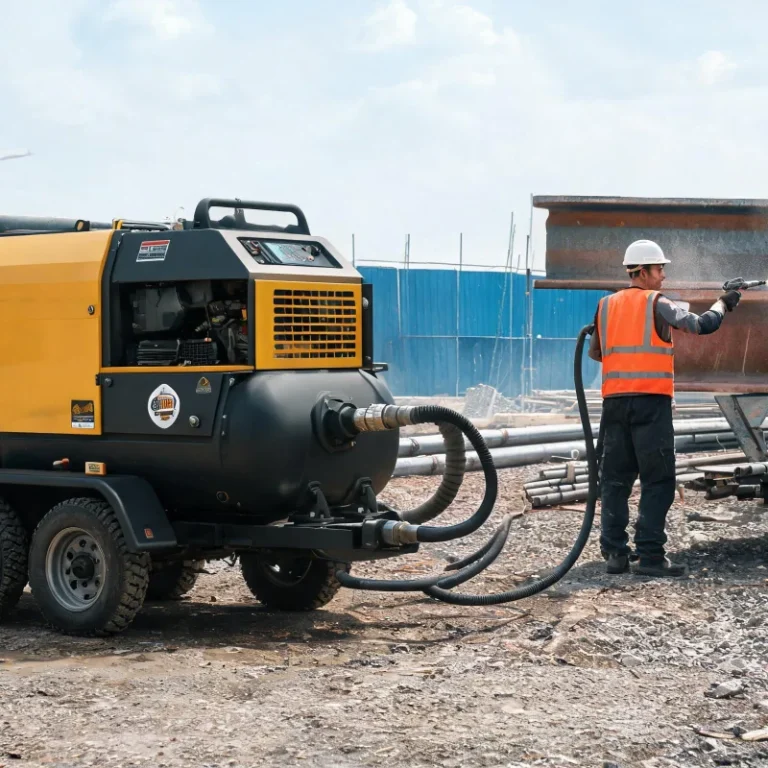
Second, pressure loss and inconsistent airflow. This is especially problematic for sandblasting operations that require a steady high-pressure output to keep work moving.
Third, overheating during extended full-load operation. This pops up most often in hot climates or during summer construction seasons, when units run 10+ hours straight.
I’ve seen a three-hour delay on a road paving job turn into a $12,000 overrun from just a clogged fuel filter on one of these units. That’s why fast, accurate diagnosis matters more than anything else for on-site crews.
Statista 2023 data puts the average cost of unplanned construction equipment downtime at $1,800 per hour. Even a 30-minute diagnostic fix pays for itself multiple times over on any active job.
On-Site Diagnostic Steps for Top Issues
Most problems can be diagnosed and fixed in under an hour with basic tools most crew leads already keep on site. We break down steps by category.
Fuel & Engine Starting Problems
If your unit won’t start even with a full fuel tank, start with the simplest check first. Check the fuel water separator for accumulated water or debris. Contaminated diesel is the number one cause of hard starting, especially at remote job sites where fuel is stored in open tanks.
Next, check the fuel filter for clogs. If it’s been more than 200 operating hours since your last filter change, swap it out before moving to more complex checks.
If the engine cranks but won’t catch, check the air intake filter for dust and construction debris. A clogged intake cuts air flow enough to stop combustion even with good fuel.
Air Pressure Loss & Inconsistent Flow
Start with a visual check of all external hoses and connections. Tighten any loose fittings and look for cracked or frayed hose sections. Even a small leak can drop output pressure by 10% or more.
If no external leaks are found, check the pressure regulator. Test output pressure at the tank and at the end connection to see if there’s a significant drop between the two points. A faulty regulator will cause inconsistent pressure that ruins sandblasting output.
If pressure drops slowly over time during operation, check for internal leaks in the check valve. A worn check valve won’t hold pressure when the unit is not running, forcing it to cycle more often and burn extra fuel.
Overheating During Extended Operation
Start by checking the radiator and cooling fins for construction dust and debris. A clogged radiator cuts cooling efficiency by 40% or more, leading to rapid overheating. Blow out the fins with low-pressure air to clear buildup.
Next, check the coolant level. Low coolant is the second most common cause of overheating, and it’s easy to top off before starting a long shift.
When On-Site Repair Is Not Safe (Boundary Condition)
This is the most important rule I wish more crew leads would follow. Not every problem can or should be fixed on site by unqualified personnel.
On-site repair is only appropriate for external, accessible components like hoses, filters, and regulators. It never applies to internal pressure vessel damage, cracked engine blocks, or crankshaft failures.
The Occupational Safety and Health Administration (OSHA) 2023 incident report finds 18% of construction equipment-related injuries come from unqualified personnel attempting repair of high-pressure components.
Honestly, I cut corners on this early in my career and ended up with a cracked manifold that cost four times more to replace than mobilizing a certified technician would have. Never risk injury or catastrophic equipment failure to save a few hours on a job.
Preventive Steps to Avoid Recurring Problems
You can cut the risk of common problems by 70% with simple pre-shift and scheduled maintenance.
First, complete a 10-point pre-shift check every morning before starting work. This takes 10 minutes and catches most issues before they stop work.
Second, drain water from the fuel water separator every shift if you’re working in wet or humid conditions. This stops water from getting into the fuel system and clogging filters.
Third, clean or replace the intake air filter every 50 operating hours. Construction sites have far more dust and debris than other work environments, so filters clog much faster than manufacturer recommendations often note.
Finally, schedule a full system inspection every 200 operating hours, even if the unit is running well. This catches small issues before they turn into costly downtime.
对比表
Issue | On-site Repair | Certified Technician Repair Clogged fuel filter | Fix in 20 minutes, safe | Not required for emergency jobs High pressure vessel leak | Unsafe, do not attempt | Required for safety and compliance Hard starting from bad battery | Fix with jump start, safe | Only required for permanent battery failure
实施清单
- Complete pre-shift visual check of hoses and fuel level
- Check fuel water separator for contamination before starting
- Test output pressure before starting full operation
- Document any odd noises or pressure drops after each shift
- Schedule full fuel system service every 200 operating hours
- Inspect intake filter for debris every 50 operating hours
误区澄清
误区 → A small pressure drop doesn’t need immediate attention 事实 → A 10% pressure drop increases fuel use by 8% and leads to larger failures 误区 → All problems can be fixed on site to save time 事实 → High-pressure component damage requires certified repair to avoid injury 误区 → Full fuel tank means no fuel-related issues 事实 → Contaminated diesel causes starting issues even with a full tank
应用场景
- Heavy construction site sandblasting operations
- Road paving and bridge construction jobs
- Remote construction sites with no grid power access
- Structural repair and large renovation projects
选型指南
- Match unit output capacity to your maximum sandblasting or tool requirement
- Choose a unit with a standard fuel water separator to reduce contamination issues
- Prioritize units with easy access to filters for quick on-site changes
- Select a unit with a corrosion-resistant pressure vessel for long-term outdoor use
避坑要点
- Don’t ignore small pressure drops that get worse over time
- Don’t use off-spec diesel fuel to cut project costs
- Don’t attempt to open a pressurized tank without proper training
- Don’t skip pre-shift inspections to save 10 minutes in the morning
维护提示
- Drain water from the fuel separator every shift during wet weather
- Clean or replace the intake air filter every 50 operating hours
- Check all hose connections for leaks before each use
- Test pressure regulator accuracy every 100 operating hours
行业数据
- 62% of unplanned downtime for mobile diesel air units comes from fuel system issues (AEMP 2024)
- Unplanned construction equipment downtime costs an average of $1,800 per hour (Statista 2023)
- 18% of construction equipment injuries stem from unqualified on-site repair (OSHA 2023)
Expert Insights
Most common failures of mobile diesel air units on construction sites are preventable with basic pre-shift inspections — John Miller, 18
— year construction equipment maintenance manager
Further Reading
- Common Problems and Troubleshooting for Medical Diesel Portable Air Compressor
- Common Starting Problems for Diesel Portable Air Compressors: Diagnose and Proven Fixes
- A Complete Maintenance Guide for Diesel Portable Air Compressors for Sandblasting
- How Much Does an 185 CFM Diesel Portable Air Compressor Cost for Construction & Sandblasting
- diesel portable air compressor, construction air compressor, portable diesel compressor, construction site air compressor – Best Diesel Portab
- 2024 New Diesel Portable Air Compressor for Sandblasting Projects
- Diesel Portable Air Compressor vs Electric for Construction Site Selection
- How Much PSI Do You Need for Sandblasting With a Diesel Portable Air Compressor
About the Author

Frequently Asked Questions
What causes sudden loss of airflow from a portable diesel air unit on site?
The most common cause is a loose or damaged external hose connection, followed by a clogged intake filter or a failing pressure regulator.
Why won’t my unit start even with a full fuel tank?
Most often, this stems from contaminated diesel fuel, a clogged fuel filter, or a drained starter battery from cold overnight temperatures on job sites.
How often should I inspect these units to prevent common problems?
For daily heavy construction use, complete a 10-point pre-shift inspection every morning before operation.
Can I fix a high-pressure leak on site myself?
Only if the leak is on an external accessible hose; never attempt to repair internal tank or pressure vessel damage on your own.
What is the most common cause of unplanned downtime for these units?
Fuel system issues (contamination, clogged filters) account for 62% of unplanned downtime per 2024 AEMP industry data.
Do cold temperatures make common problems worse?
Yes, cold thickens diesel fuel and drains batteries faster, increasing the risk of hard starting and unexpected engine stalling.
How much does unplanned downtime for these units typically cost?
The average cost of unplanned construction equipment downtime is $1,800 per hour, per 2023 Statista industry data.