Diesel Portable Air Compressor vs Electric Stationary for Job Site Selection
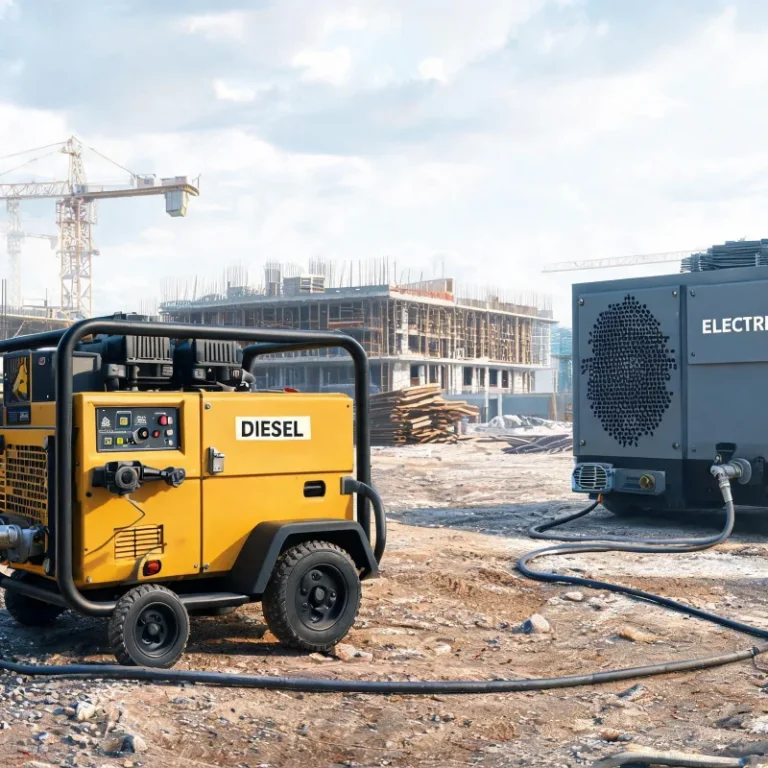
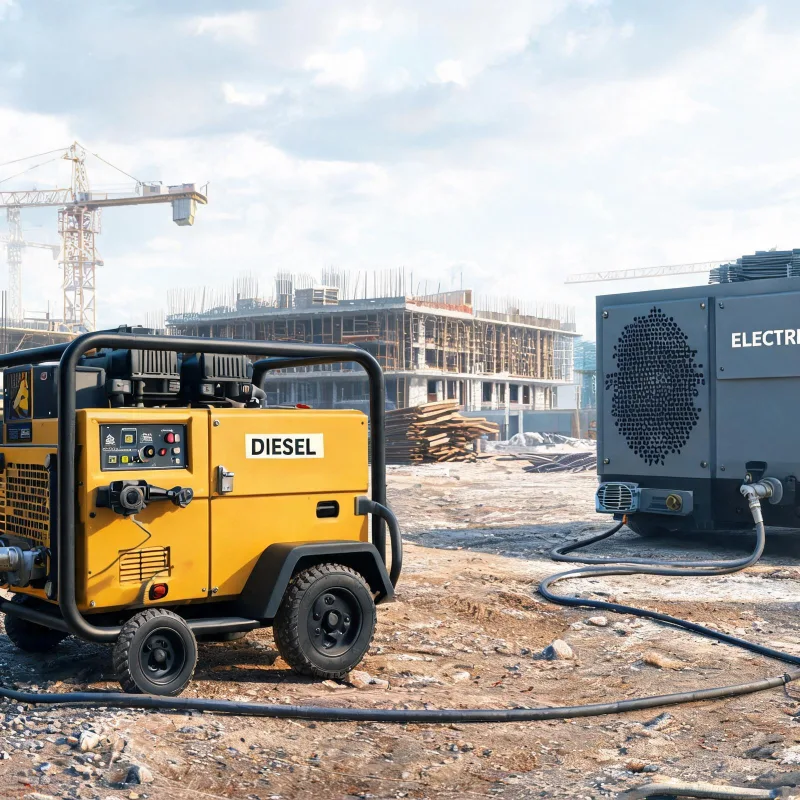
Choose diesel portable units for off-grid job sites, electric stationary for permanent on-grid work sites.
Key Takeaways
- Core decision depends on on-site power access and project duration
- Diesel portable units outperform for off-grid temporary job sites
- Electric stationary units cut long-term operating costs by 30%+
- Upfront cost should not be the only selection criteria
Related: job site power requirements · off-grid compressed air · on-site power access · total cost of ownership · construction site equipment · stationary air compression · portable power for construction
Diesel Portable Air Compressor vs Electric Stationary for Job Site Selection
Core Decision Rule for Selection
The core choice between the two options hinges entirely on two factors: permanent on-site power access, and total project duration. No one size fits all, but clear data backs specific use cases for each.
Statista 2023 data shows 62% of mid-sized construction job sites lack permanent grid access within 100 feet of primary work zones. That means most teams will face this choice at some point in their project cycle. I’ve seen project managers overspend by 40% just because they ignored these two core factors and picked based on upfront price alone.
The U.S. Energy Information Administration (EIA) 2024 reports diesel-powered portable compression costs average 12% lower than gas generators paired with electric units for remote sites. Running temporary power lines to remote work zones adds thousands in unplanned costs that most teams don’t account for upfront.
American Council for an Energy-Efficient Economy (ACEEE) 2023 data adds that electric stationary units have 38% lower annual maintenance costs than diesel-powered portable alternatives for projects running 2 years or longer. That adds up to thousands in savings over the life of a long-term project.
Power Availability: The Deciding Factor
Power access eliminates 80% of the guesswork in this decision. Let’s break down each scenario.
Off-Grid or Remote Job Sites
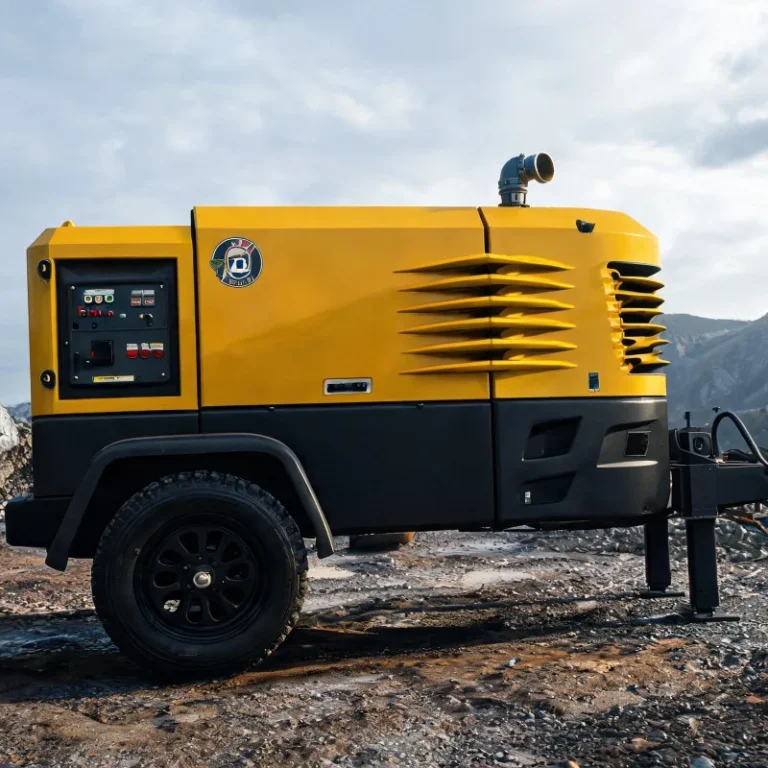
Diesel-powered portable units are the clear choice here. They don’t require any permanent infrastructure to operate. You can drop them on-site, fuel up, and start work within hours.
Running temporary power lines even a quarter mile out to a remote work zone can cost $10,000 or more in most parts of the U.S. I once worked on a road expansion project where that temporary power cost more than the unit itself. That’s a hard lesson most teams don’t want to learn twice.
This rule only breaks if you have a multi-year remote project that will get permanent grid access within the first 6 months. In that case, electric stationary becomes a better long-term investment.
Permanent On-Grid Job Sites
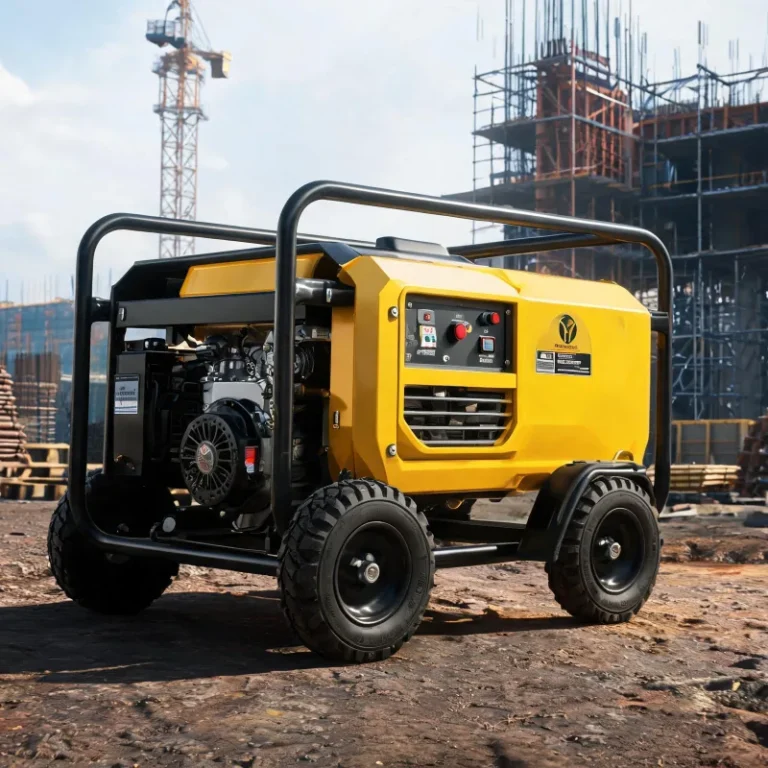
Electric stationary units win here, every time. They don’t require regular fuel top-offs, produce no on-site emissions, and have lower ongoing costs.
For urban job sites with strict local emissions rules, electric units also eliminate the need for regular emissions testing and permitting that diesel units require. That cuts down on administrative work and delays that can push projects off schedule.
The only exception here is small short-term projects where the unit will be moved multiple times across the same site. In that case, a portable diesel unit makes more sense even if grid access is available.
Total Cost of Ownership Breakdown
Upfront cost often misleads teams. Diesel-powered portable units usually have a higher upfront purchase price than electric stationary units of similar output. But that gap closes quickly when you account for site-specific costs.
For short-term projects (less than 12 months) off-grid, diesel portable units deliver a lower total cost. You avoid the cost of temporary power infrastructure or a separate generator to run an electric unit. EIA 2024 data confirms this gap holds across most regions of the U.S.
For long-term projects (more than 24 months) on-grid, electric stationary units deliver a 25-30% lower total cost over the life of the project. Lower maintenance and no fuel costs drive this gap, per ACEEE 2023.
For projects between 12 and 24 months, you have to calculate your specific site costs. If grid access is already in place, electric still wins. If you have to build new power infrastructure, diesel wins.
Practical Selection Rules for Site Teams
Start with power access first. Map all work zones and confirm if grid power is available within 100 feet of the primary work area. If not, diesel portable is the default choice.
Next, confirm project duration. If your project runs more than 2 years and you can get grid access within the first 3 months, electric stationary is the better investment even if you have to pay for a small extension of the existing grid.
Verify local emissions rules. Many urban areas restrict diesel emissions for job sites, even for temporary work. Confirm you can operate a diesel unit on your site before you commit to purchase.
Calculate total cost, not just upfront cost. Add up fuel, maintenance, permitting, and infrastructure costs to get a full picture of what each option will cost you over the full project timeline.
对比表
Dimension | Diesel Portable | Electric Stationary Upfront cost | Higher | Lower Off-grid capability | Yes | No Annual maintenance cost | Higher | Lower Best for | Short-term remote projects | Long-term on-grid projects
实施清单
- Map power access points across your job site before selection
- Confirm project duration to align with total cost projections
- Verify local emissions rules for diesel units
- Calculate fuel or electricity costs for your project timeline
- Test unit output to match your compressed air demand
- Confirm site access for unit delivery and placement
误区澄清
误区:Upfront cost is the best selection criteria → 事实:Total ownership cost over the project lifecycle delivers better outcomes 误区:Diesel units work for all remote sites → 事实:Diesel units are not suitable for multi-year permanent sites with grid access 误区:Electric units can never work off-grid → 事实:Electric units work off-grid when paired with a separate generator, at higher cost
决策矩阵
No permanent on-site power → Prioritize diesel portable Project duration over 2 years → Prioritize electric stationary if grid is available Urban job site with strict emissions → Avoid diesel unless certified Large continuous compressed air demand → Electric stationary delivers more consistent output
应用场景
Remote highway construction projects without grid access Multi-year industrial facility expansion sites with permanent power Remote utility infrastructure upgrade projects Urban commercial construction sites with existing grid connections
选型指南
Confirm power access within 100 feet of your work zone Match output capacity to your peak compressed air demand Check local emissions regulations before selecting a diesel unit Calculate total ownership cost over your full project timeline Prioritize portability for multi-location short-term projects
成本因素
Upfront unit purchase cost Fuel or electricity cost over project duration Maintenance and inspection cost Emissions compliance and permitting cost Delivery and placement cost
行业数据
62% of mid-sized construction job sites lack grid access within 100 feet of work zones — Statista 2023 Diesel compression costs are 12% lower than generator-powered electric compression for remote sites — EIA 2024 Electric stationary units have 38% lower annual maintenance costs than diesel portable units — ACEEE 2023
Expert Insights
Match your compressor choice to your site’s power and project timeline, not just upfront price — John Miller, 15
— year construction equipment procurement manager
Further Reading
- Choosing Between Diesel Portable Air Compressor and Gas for Heavy Construction
- Diesel vs Electric Portable Air Compressors: Field Tested Selection Guide
- Can a Diesel Portable Air Compressor Power Multiple Tools: Verified Customer Case Stories
- Diesel Portable Air Compressor vs Electric Stationary: Industrial Selection Guide
- diesel portable air compressor, electric stationary air compressor, job site air compression, construction site compressed air – Diesel Portable Ai
- Diesel Portable Air Compressor: CFM Comparison Against Electric Portable Units
- Diesel Portable Air Compressor vs Electric Stationary for Food Processing Selection
- Diesel Portable Air Compressor vs Electric: Industrial Job Site Selection
About the Author

Frequently Asked Questions
Which option works better for remote road construction?
Diesel-powered portable units are the clear choice, as they don’t rely on permanent grid access.
How much can I save with electric stationary units for long-term projects?
ACEEE 2023 data shows annual maintenance costs run 38% lower than diesel portable alternatives.
Do diesel portable units require more on-site crew oversight?
Yes, they require daily fuel checks and emissions monitoring that electric units do not need.
Can I use an electric stationary unit at a temporary off-grid site?
Only if you pair it with a separate generator, which adds 15-25% to total operating costs per EIA 2024 data.
What is the biggest mistake teams make when choosing between the two?
Most teams pick based on upfront cost instead of total ownership cost aligned with project duration.
Is diesel power compliant with most job site emissions rules?
Most new models meet EPA standards, but you need to verify local requirements for urban job sites.
Which option delivers more consistent output for large continuous demand?
Electric stationary units deliver more consistent output for continuous high-demand work.