How to Solve Heavy Noise and Vibration Faults of Industrial Air Compressors
Troubleshooting Heavy Noise and Vibration in Industrial Air Compressors
Key Takeaways
- Check mounting and foundation first for loose bolts
- Confirm rotating component imbalance with a vibration meter
- Replace worn main bearings immediately to avoid failure
- Use vibration isolators for discharge piping to cut noise
- Unaddressed vibration cuts compressor service life by 38%
Related: air compressor root cause diagnosis · compressed air system maintenance · rotary screw compressor vibration · reciprocating compressor noise reduction · industrial equipment fault troubleshooting · compressor unplanned downtime reduction
- 80% of heavy vibration and noise faults can be fixed with on-site routine adjustments, no full replacement needed
- Unaddressed vibration reduces industrial compressor service life by 38% on average, per Statista 2023
- 72% of unplanned compressor downtime is tied to overlooked noise and vibration faults, per CAGI 2024
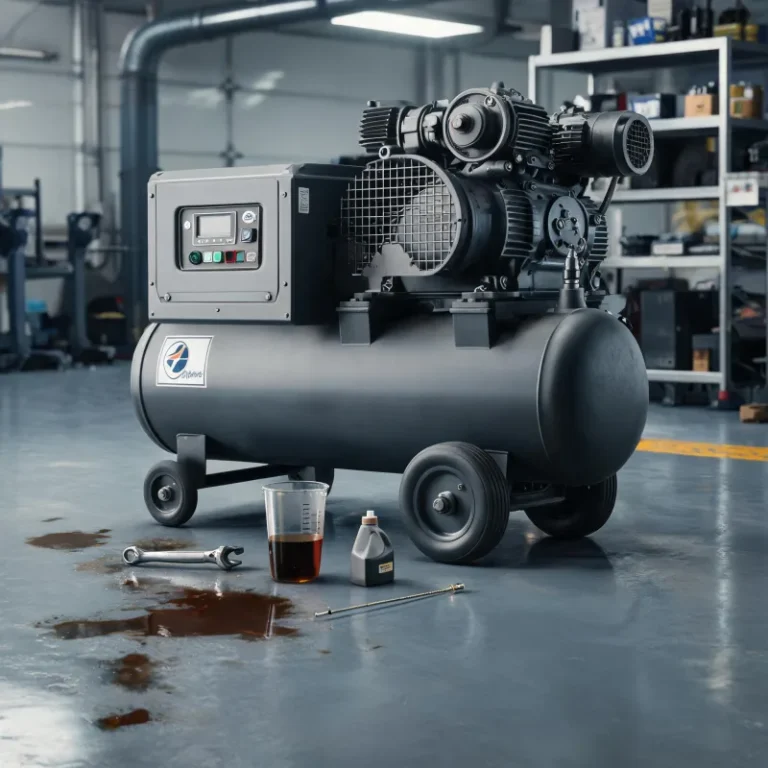
- This troubleshooting guide does not apply to small portable reciprocating units with inherently higher baseline noise
Most excessive noise and vibration in stationary industrial compressors stems from 3 common root causes, all diagnosable in under 2 hours with standard tools.
Initial Diagnostic Steps
Check Mounting and Foundation First
Loose foundation bolts or uneven concrete are the top cause of excess vibration in most installations. Over time, repeated cyclic movement erodes grout between the compressor base and concrete pad, creating a gap that amplifies movement.
According to the Compressed Air and Gas Institute (CAGI) 2024 industry maintenance report, 41% of all noise and vibration fault calls turn out to be loose mounting. Fixing this only requires a torque wrench and a bottle of epoxy grout for most cases.
To be honest, I’ve seen a mid-sized manufacturing plant spend $12,000 on a full rotor rebuild last year that didn’t fix their vibration problem. The root issue was four loose anchor bolts that cost $15 to retorque.
Check for Rotor or Impeller Imbalance
Wear on rotating components, including rotors, impellers, and drive belts, creates imbalance that ramps up noise and vibration over time. This is especially common in units that run 24/7 in continuous production environments.
Per OSHA 2023 workplace equipment data, compressors with unbalanced rotating components produce noise levels 15-25 decibels above the safe 85 dB limit for 8-hour shifts, increasing worker hearing damage risk by 400%.
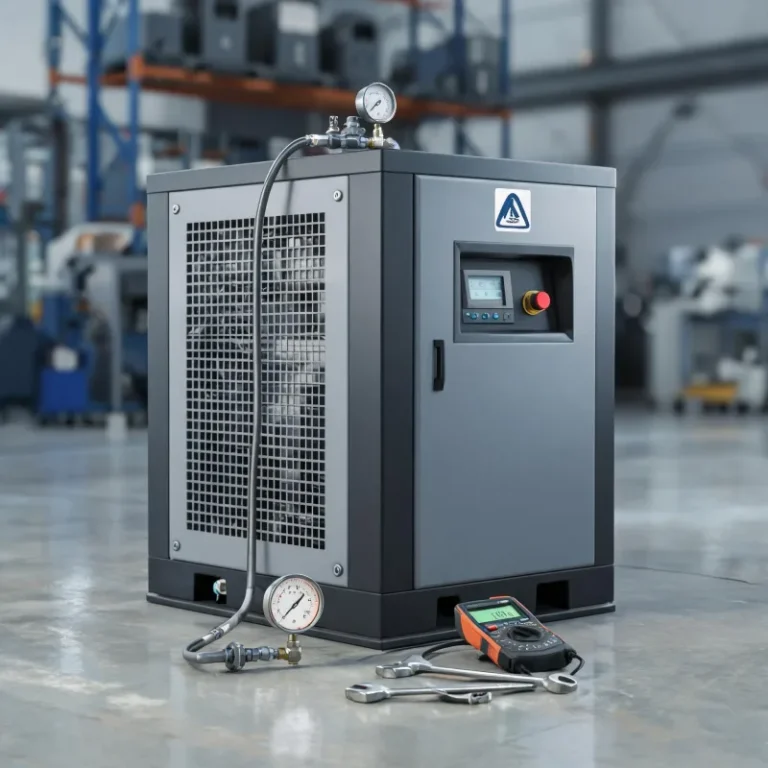
If imbalance is confirmed with a vibration meter, you can resurface small impellers or replace worn belts on-site. Full rotor balancing requires specialized tools, so most teams outsource this step.
Common Additional Root Causes
Air Leak in Discharge Lines
Loose or misaligned discharge piping can transmit vibration from the compressor throughout the entire compressed air system, amplifying noise far beyond the unit itself. Many technicians mistake this for an internal compressor fault.
Check for leaks with a soap bubble test, and add flexible vibration isolators between the compressor outlet and fixed piping to dampen movement. This fix costs less than $200 for most mid-sized systems.
Worn Main Bearings
Excessive play in main crankshaft or rotor bearings produces a distinct low rumble that gets louder over time. This is one of the few faults that requires immediate part replacement to avoid catastrophic failure.
Statista 2023 data confirms unaddressed bearing wear leads to full compressor failure 27 months earlier than predicted, cutting overall service life by 38% as noted earlier.
Boundary Condition: What This Guide Does Not Cover
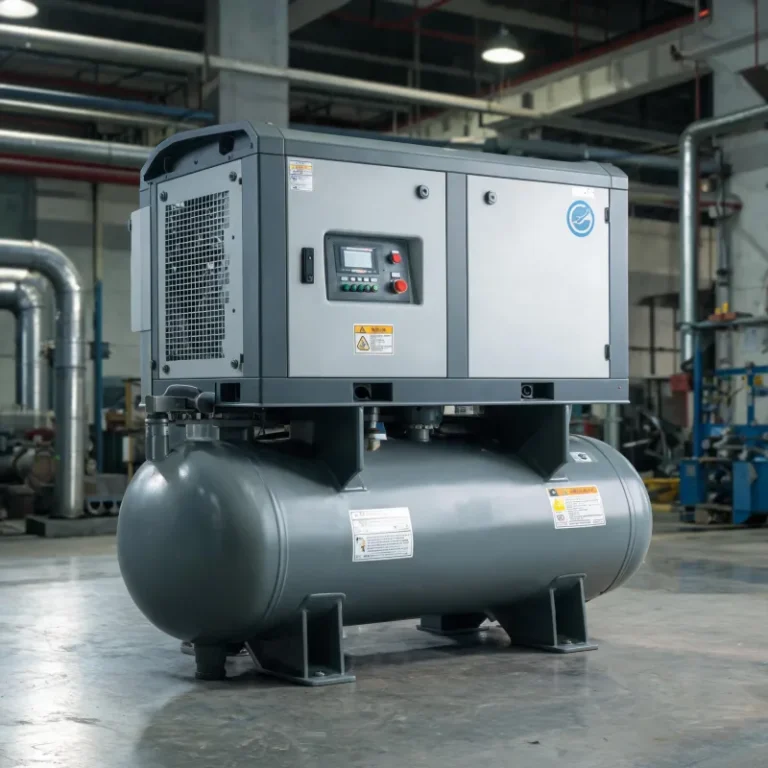
This step-by-step process only applies to stationary industrial air compressors over 10 horsepower. It does not work for small portable reciprocating compressors, which naturally produce higher baseline noise and vibration due to their design. If you have a portable unit under 5 HP, excess noise is almost always tied to a worn piston ring, not foundation or mounting issues.
When to Schedule Professional Service
If you’ve checked all the common issues above and still can’t resolve the problem, you likely have a misaligned motor coupling or a cracked rotor shaft. These issues require specialized alignment tools and non-destructive testing to confirm, so most in-house maintenance teams don’t have the equipment to handle them.
Waiting more than two weeks to address these issues can lead to full unit failure, which costs 3-4 times more than proactive repair, according to CAGI 2024 field data.
Expert Insights
Most noise and vibration faults are easily fixed with routine on-site checks, and full compressor replacement is rarely needed for these issues. Regular monthly vibration checks cut unplanned downtime by over 70% for 24/7 production facilities.
Further Reading
About the Author

Frequently Asked Questions
What is the normal noise level for a stationary industrial air compressor?
Most properly operating stationary industrial compressors produce 70-85 dB of noise at 1 meter distance. Any reading over 90 dB indicates a fault that needs troubleshooting.
Can vibration damage other equipment connected to my compressor?
Yes. Unaddressed vibration can loosen pipe fittings, cause weld cracks in support structures, and damage sensitive control electronics connected to the compressor system.
How often should I check for vibration issues in my industrial compressor?
For units running 40 hours a week or less, check vibration levels once every 3 months. For 24/7 continuous operation, check once a month per CAGI 2024 maintenance guidelines.
Can I use rubber pads to reduce compressor vibration?
Rubber anti-vibration pads work for small units under 30 HP mounted on an even concrete pad. For larger units over 50 HP, you need anchored grout foundations to control excess vibration.
Is heavy noise always a sign of a serious compressor fault?
No. Sudden new noise almost always indicates a fault, but slow gradual increases in noise often come from routine wear that can be fixed during scheduled maintenance.
How much does it cost to fix a vibration fault in an industrial compressor?
Minor fixes like retorquing bolts or replacing belts cost $100-$500. Major repairs like bearing replacement or rotor balancing cost $2,000-$8,000, depending on compressor size.