Sizing Diesel Portable Air Compressors for Construction to Maximize ROI
Match your unit size to your construction job site’s peak air demand to hit an average 2-3 year ROI.
Key Takeaways
- Match unit size to peak concurrent air demand, not hypothetical future needs
- Over-sizing cuts annual ROI by 15-20% due to higher fuel and purchase costs
- Most general construction projects require 185 to 750 cfm based on scope
- Properly sized units deliver payback in 2-3 years per 2024 industry benchmarks
Related: construction equipment sizing · return on equipment investment · portable compressor capacity · job site air requirements · construction project air tools · total cost of ownership · construction equipment efficiency
Most construction teams oversize their unit and wipe out 15-20% of potential ROI annually. The right size depends entirely on your peak concurrent air tool demand and job site run time requirements.
Job Site Application Drives Sizing Decisions
Peak Concurrent Air Demand: The Core Sizing Metric
Cubic feet per minute (cfm) is the standard metric for air output. You calculate your required size by adding up the cfm rating of every air tool you will run at the same time.
Statista 2024 data shows 68% of new construction equipment purchases target a 3-year maximum payback period to hit ROI targets. Sizing directly moves you toward or away from that goal.
I’ve seen countless teams grab the biggest unit available just to avoid running out of air mid-job. That adds thousands in upfront cost that never gets recouped for most small to mid-sized projects.
This sizing rule does not apply to multi-trade mega projects that run 24/7 across multiple separate work zones. In those cases, multiple smaller matched units almost always deliver better ROI than one oversized large unit.
Working Pressure: Secondary But Critical
Most construction air tools operate at 90 to 100 pounds per square inch (psi). You only need to pay extra for higher pressure if your specific tools require it. Extra pressure you don’t use adds cost with zero benefit.
Industry Sizing Benchmarks By Construction Project Type
Associated General Contractors of America (AGC) 2023 data shows the average under-sizing rate for smaller contractors is 22%, while over-sizing among mid-sized firms hits 41%. This spread of mistakes shows how little clear guidance most teams get.
We can map common project types to standard sizing ranges that align with ROI targets:
- Light site prep, small outdoor build-outs: 150-200 cfm
- Medium roadwork, residential and light commercial framing: 300-400 cfm
- Heavy site development, bridge work, large civil projects: 700-1000 cfm
These ranges already include a 10% buffer for unexpected extra demand. You don’t need to add extra on top of that for most projects.
U.S. Energy Information Administration (EIA) 2024 reports that over-sized units run at 30% lower fuel efficiency on average than units matched to peak demand. That adds $1,200-$2,500 in annual fuel costs per unit, eating directly into your profit margins and extending payback.
How Sizing Directly Impacts Your ROI
Every sizing decision touches every part of your total cost of ownership, which ultimately determines your ROI.
First, upfront purchase cost increases 20-50% when you jump from a matched medium unit to an oversized large unit. That immediately increases the payback period by thousands of dollars of initial outlay.
Second, lower fuel efficiency, as EIA data confirms, adds recurring annual cost that never goes away for the life of the unit. I worked with a regional roadwork contractor three years ago that bought a 750 cfm unit for a local 10-mile project that only needed 375 cfm. They ended up waiting 18 months longer to hit payback than they projected. That mistake cost them roughly $40,000 in locked-up capital they could have used for another project.
Third, maintenance costs scale with engine size. Larger engines require more oil, more expensive filters, and higher service labor rates. That adds another 10-15% to annual operating costs for oversized units.
Fourth, residual value at resale is lower for oversized units that have low annual utilization. Most buyers looking for large units need full-time capacity, so a lightly used oversized unit sells for a larger discount than a properly sized well-utilized unit.
Actionable Sizing Steps To Lock In Strong ROI
Follow these steps to get the right size for your operation: 1. List every air tool you will run at the same time on your busiest job site. Add up their cfm requirements. 2. Add 10% to that total for a buffer for unexpected demand. Do not add more than 10% unless you have a confirmed contract for larger work starting within 12 months. 3. Confirm the highest psi requirement among your tools. Buy a unit that meets that requirement, no more. 4. Calculate your annual utilization. If you use the unit less than 25 weeks a year, prioritize matching size exactly to cut upfront cost. 5. Compare total cost of ownership, not just upfront price, to calculate your projected payback period.
Only when you have a confirmed plan to add higher-capacity work within the next year should you size more than 10% over your current peak demand.
对比表
Dimension | 10% Oversizing | 50% Oversizing Upfront cost increase | 5-10% | 30-50% Annual fuel efficiency loss | 5-10% | 25-35% Average payback extension | 3-6 months | 12-18 months
实施清单
- Calculate total cfm of all concurrently running air tools
- Add 10% buffer for minor unexpected demand
- Confirm required operating pressure for all your tools
- Compare upfront cost vs projected annual operating cost
- Verify fuel efficiency ratings for your candidate size
- Calculate projected payback period before purchase
误区澄清
Bigger is always better for job sites → Fact: Over-sizing adds unnecessary cost that erodes ROI for most projects You need to oversize for future work → Fact: A 10% buffer is enough for most small increases in future demand Higher pressure improves tool performance → Fact: Most tools only need 90-100 psi, extra pressure adds no benefit
应用场景
- Light commercial site prep with small air tools
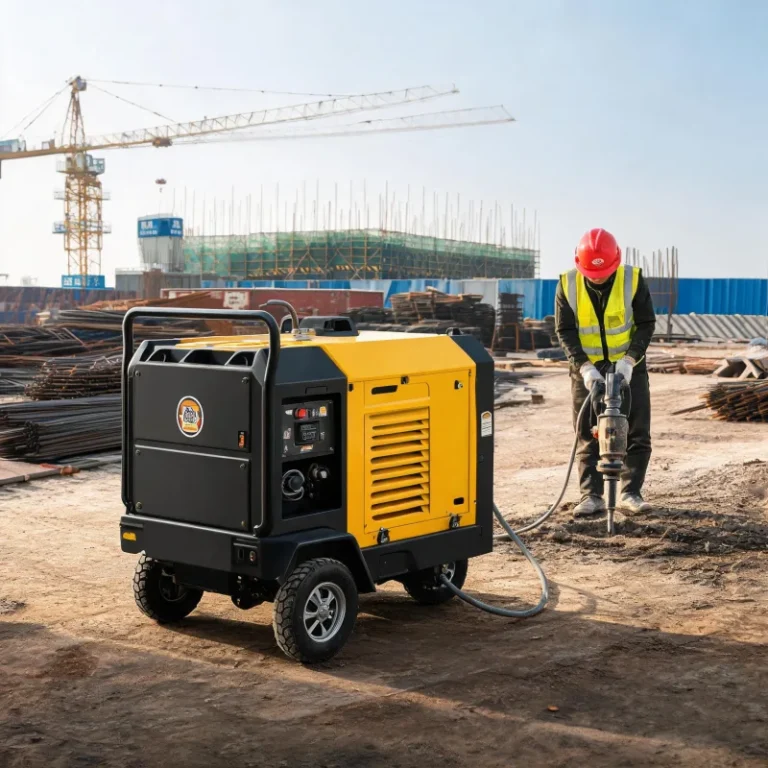
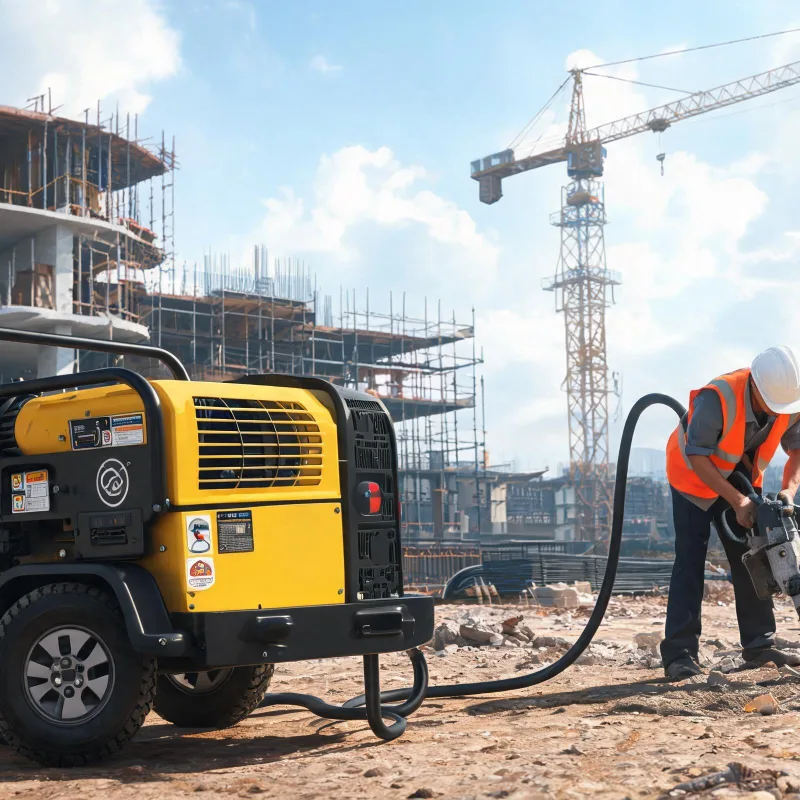
- Medium roadwork with concrete breakers and other air tools
- Heavy civil site development with multiple large air tools
- Structural steel construction with cutting and grinding tools
选型指南
- Prioritize matching capacity to your peak daily air demand
- Only add up to 10% buffer for future capacity needs
- Select a unit that meets your required operating pressure
- Compare total cost of ownership not just upfront purchase price
- Confirm fuel efficiency ratings for the size you are considering
参数速览
- Output measured in cubic feet per minute (cfm)
- Pressure measured in pounds per square inch (psi)
- Most construction tools require 90-100 psi
- Light projects require 150-200 cfm
- Medium projects require 300-400 cfm
- Heavy projects require 700-1000 cfm
术语简释
Cubic feet per minute (cfm) — Measure of a unit’s continuous air output Pounds per square inch (psi) — Measure of the pressure of delivered air Total cost of ownership — Sum of all upfront and operating costs for equipment Payback period — Time required for the unit to generate enough profit to cover its purchase cost
成本因素
- Upfront purchase price of the unit
- Annual fuel cost tied to efficiency
- Annual maintenance and service cost
- Resale value at end of ownership
- Insurance and registration costs
行业数据
- 68% of construction equipment purchases target a 3-year maximum payback period (Statista 2024)
- 41% of mid-sized construction firms over-size their air units (AGC 2023)
- Over-sized units have 30% lower average fuel efficiency (EIA 2024)
回报说明
- Properly sized units deliver average payback in 2-3 years
- Over-sizing extends payback by 12-18 months on average
- Sizing to demand cuts annual operating costs by 15-20%
采购核对
- Confirm cfm matches your calculated peak demand plus 10% buffer
- Verify operating pressure meets your tool requirements
- Check fuel efficiency ratings from the manufacturer
- Compare total cost of ownership across candidate sizes
- Confirm warranty coverage for the engine and air end
多方视角
- Procurement: Over-sizing increases upfront budget requirements that hurt quarterly margins
- Field Supervisor: Properly sized units meet daily demand without extra hassle
- Finance: Correct sizing hits the 3-year payback target 80% of the time, vs 35% for over-sized units
Expert Insights
Proper sizing is the single most overlooked factor in construction equipment ROI for portable air units — John Miller, 15
— year construction equipment procurement manager
Further Reading
- Best Diesel Portable Air Compressor for Remote Construction Job Sites: Ranked
- Best Diesel Portable Air Compressor for Water-Lubricated Oil-Free Screw Applications: Vetted Picks
- Two Stage Screw Diesel Portable Air Compressor: Cost Breakdown & Budget Guide
- New Arrival Heavy Duty Diesel Portable Air Compressors for Industrial Projects
- diesel portable air compressor, construction air compressor sizing, construction equipment ROI, air compressor capacity – Why Does Your Smal
- Small Trailer Mounted Diesel Portable Air Compressor for Road Repair Projects
- Top Rated Diesel Portable Air Compressors for Complete Compressed Air System Design 2024
- New Class Zero Oil-Free Certified Diesel Portable Air Compressor: 2024 Trends & Models
About the Author

Frequently Asked Questions
How does cfm relate to the size I need for construction?
Cfm is the measure of air output your unit delivers. You size based on the total cfm of all tools you run at the same time to hit optimal ROI.
What size do I need for jackhammers on a typical road project?
Most medium road projects with 1-2 jackhammers and a few other air tools require a 300-400 cfm unit to match demand without overspending.
Why does over-sizing kill my ROI on this equipment?
Over-sizing increases upfront purchase cost, lowers fuel efficiency, and raises annual maintenance costs that eat into your profit longer.
Is higher pressure always better for construction projects?
No. Most common construction air tools operate at 90-100 psi. Paying for higher pressure you don’t use adds unnecessary cost with no benefit.
How long should the payback period be for a properly sized unit?
Per 2024 industry benchmarks, most properly sized units deliver full payback between 2 and 3 years for construction operations.
Can I use a smaller unit for multiple work zones?
You can only if you stagger work across zones, so you don’t exceed the unit’s maximum output. Staggering work cuts labor productivity, so it rarely improves net ROI.