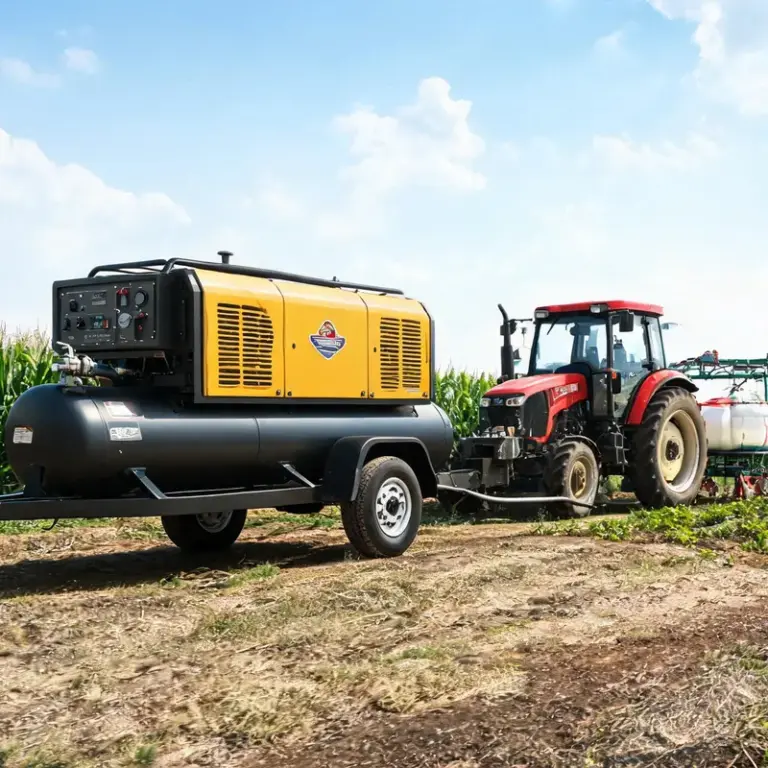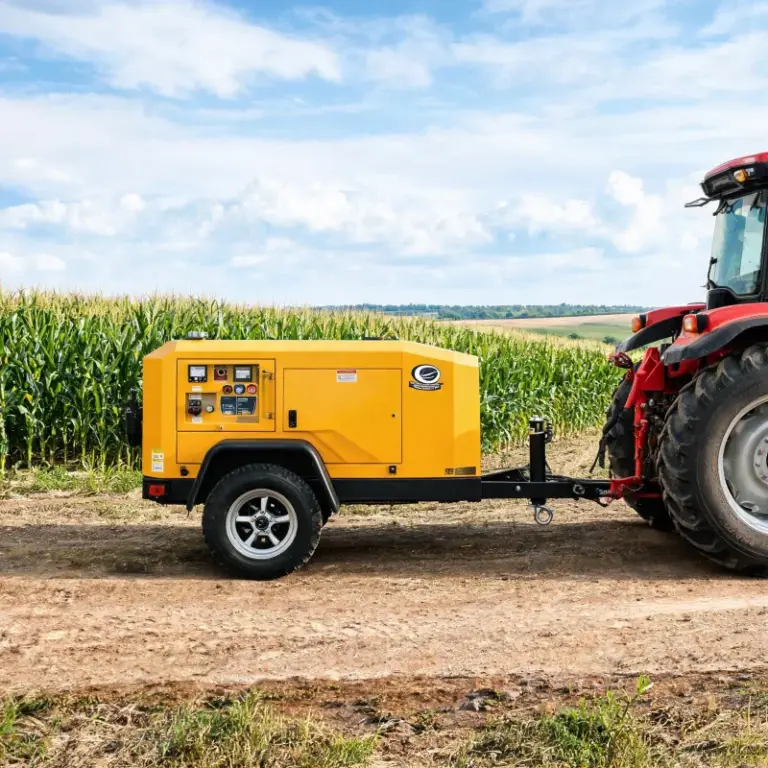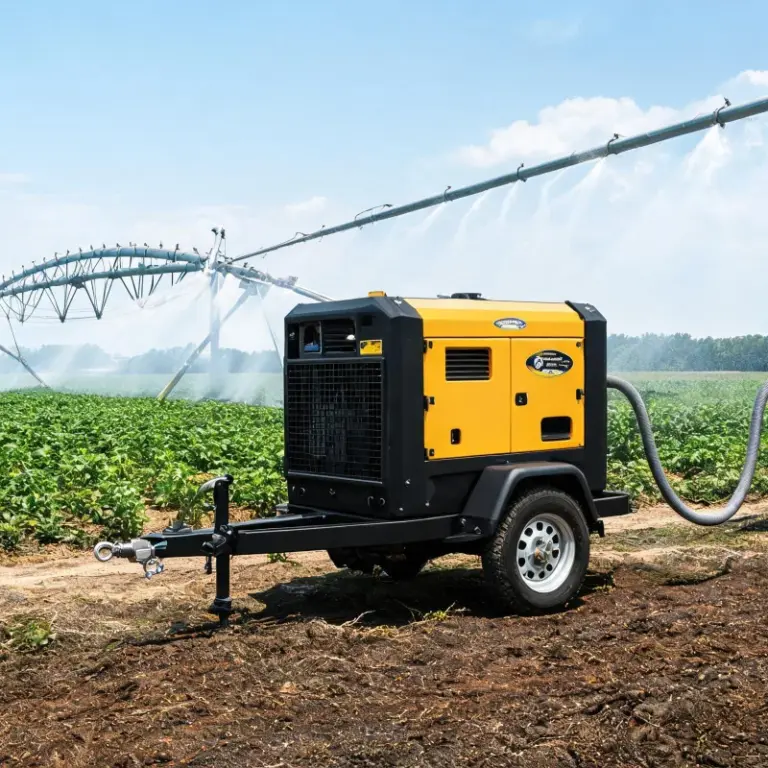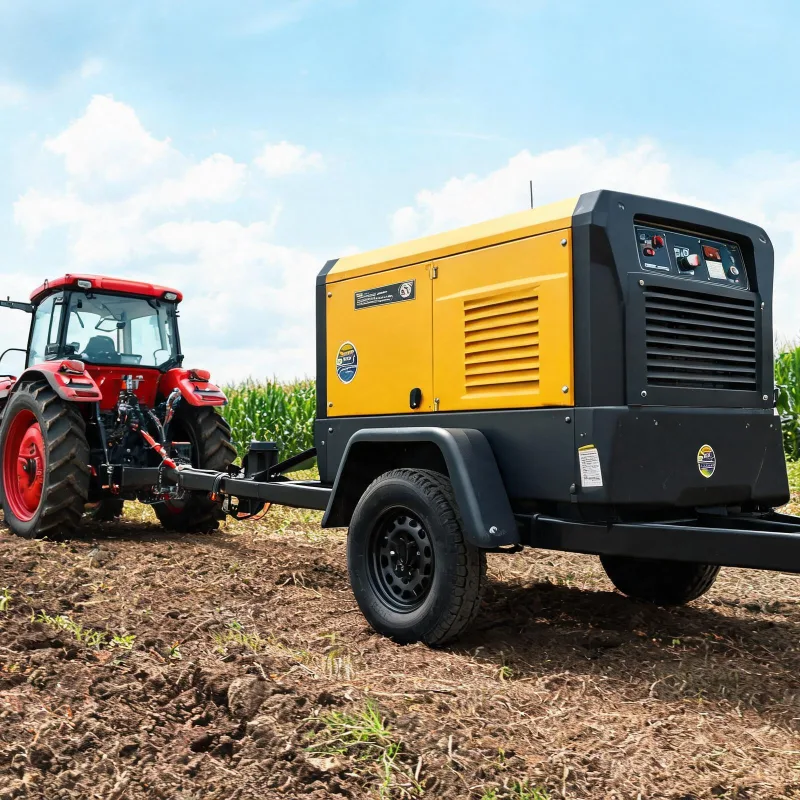
Full Ownership Cost Breakdown: Tow Behind Air Compressors for Small Commercial Agriculture Producers
This guide breaks down all ownership costs to help small commercial agriculture producers budget correctly.
Key Takeaways
- Upfront purchase price typically accounts for less than 40% of total 10-year ownership cost.
- Most hidden costs come from unbudgeted regulatory fees and unplanned downtime.
- Matching unit output to actual annual demand cuts recurring costs by 20% on average.
- Trailed mobile air units are not cost-effective for operations with low annual use.
Related: agriculture air power · small farm equipment · trailed compressor cost · farm operations power · life cycle equipment cost · mobile air power for farms
What costs make up total ownership of a towed air compressor?
Upfront purchase price is the first number most producers look at, but it only accounts for a fraction of total cost over 10 years of ownership. 2023 data from the American Farm Bureau puts upfront cost at roughly 35% of total 10-year ownership for most mobile agricultural equipment. Upfront costs include the unit itself, the custom tow frame, state registration for agricultural mobile equipment, and any initial delivery or setup fees. Recurring costs cover energy use, scheduled maintenance, liability insurance for mobile equipment, and any required regulatory checks. This is the most commonly overlooked category I’ve seen working with small farm budgets.
What hidden costs are most often missed?
Most hidden costs stem from regulatory requirements and unplanned downtime. Who budgets for annual inspection fees when buying equipment? 2022 USDA guidelines for mobile agricultural equipment note that 38 U.S. states require annual safety inspections for trailed equipment operating on public roads. These fees add a few hundred dollars every year that rarely gets added to initial budget calculations. Unplanned downtime is an even bigger cost. If you rely on your unit for seasonal pest control spraying or pruning, a day of downtime can cost thousands in lost crop quality or delayed harvest. This cost rarely gets calculated into buying decisions.
What variables swing total cost the most?
Annual usage hours are the single biggest driver of long-term cost. A unit used 400 hours a year will have two to three times the energy and maintenance cost of a unit used 100 hours a year. Terrain and travel distance also change costs. If you regularly tow your unit across uneven, sloped farm ground, the tow mechanism and engine components will wear faster, increasing annual maintenance spend. Traveling longer distances between fields increases energy use per hour of operation. Energy price volatility also adds uncertainty to long-term cost projections.
What practical levers can cut long-term cost?
Start by sizing the unit correctly for your actual peak demand. Many producers buy a larger unit than they need, which increases upfront, energy, and maintenance costs unnecessarily. 2023 ISO 14983 agricultural equipment durability standards show that right-sized units have 20% longer service life than over-sized units running at partial load. Schedule preventive maintenance every operating season to catch minor wear before it becomes a catastrophic failure. For small producers with neighboring operations, shared ownership splits fixed costs while still meeting seasonal peak demand.
When is this equipment not a good financial fit?
If you use air power less than 50 hours a year, even the lowest-priced unit will not deliver positive returns over time. The fixed costs of ownership will far outweigh the benefit of having dedicated on-site equipment. If all your air powered work happens at a single fixed location on your farm, a stationary unit will have a lower total ownership cost over 10 years. Mobile units are built for frequent repositioning, which adds unnecessary cost for fixed-site work. Continuous 24-hour operation during peak season also pushes most mobile units beyond their design limits, leading to higher failure rates and unexpected replacement costs far earlier than expected.
Further Reading
- Top Rated Diesel Portable Air Compressor for Agriculture: 2024 Reviews & Guide
- The Complete Air Compressor Buying & Sizing Guide for All Applications
- Diesel Portable Air Compressor for UK Agricultural Field Operations
- Best Diesel Portable Air Compressor for Agriculture: Top Picks per Consumer Reports
- Why Does My Small Diesel Portable Air Compressor Lose Pressure Running Farm Tools
- How to Maintain a Diesel Portable Air Compressor for Regular Farm Use
- What Can a Small Diesel Portable Air Compressor Power On Remote Sites?
- Diesel Portable Air Compressor for Farm Orchard Pesticide Spraying Applications
About the Editorial Team
Related Reading: Debunking Common Selection Myths for Air Compressors in Row Crop Agriculture
Frequently Asked Questions
How much should I budget for annual recurring costs?
Plan for 10-15% of your initial purchase price per year, adjusted for your annual usage hours.
Does output rating impact long-term cost?
Higher output units carry higher energy and maintenance costs, so only size for your peak actual demand.
Do regulations add unexpected cost for this equipment?
Most U.S. states require annual safety inspections, so add this line item to your pre-purchase budget.
Can shared ownership cut total cost for small producers?
Yes, if peak demand doesn’t overlap with neighbors, it cuts fixed annual costs by 50% or more.