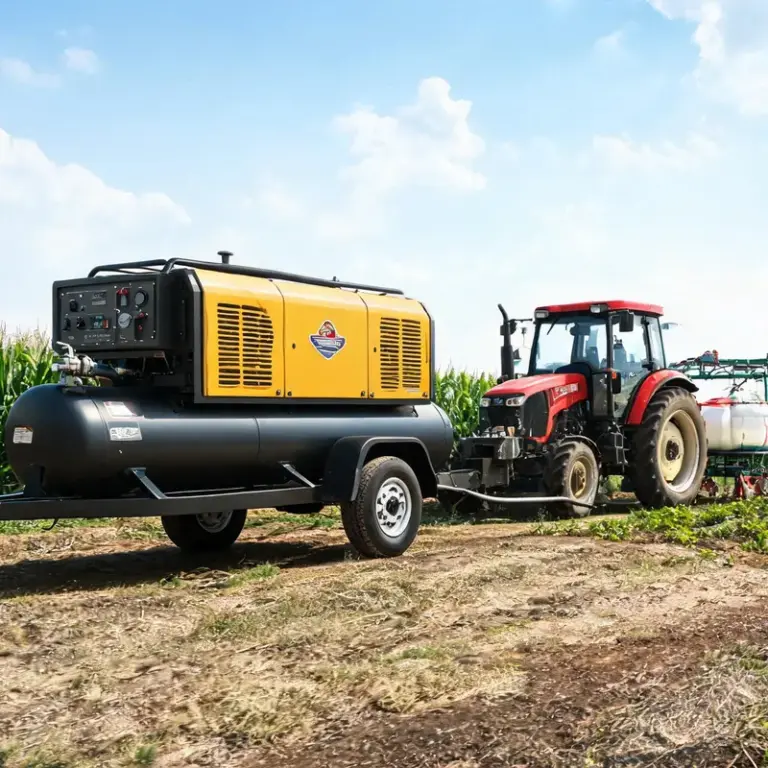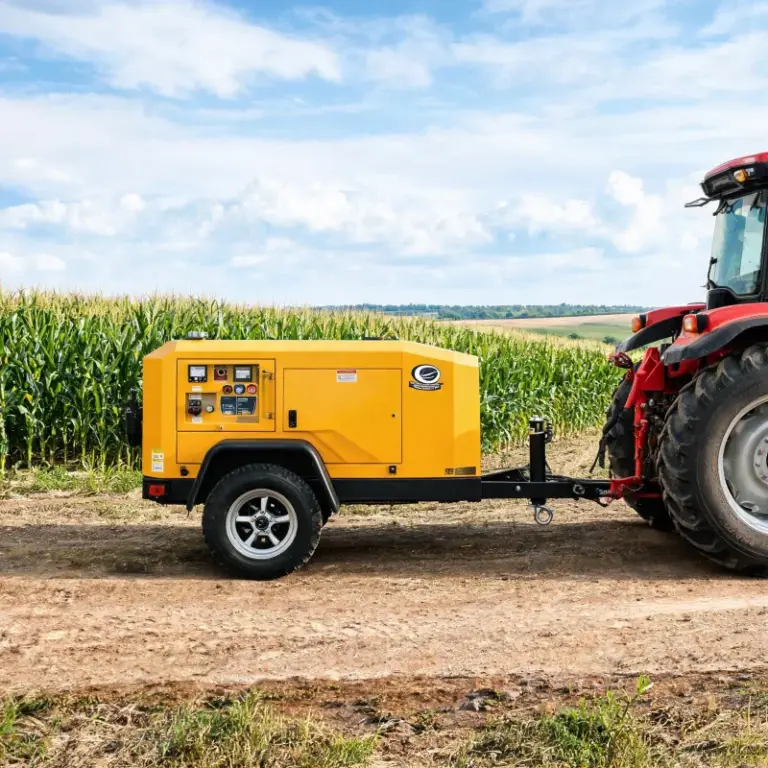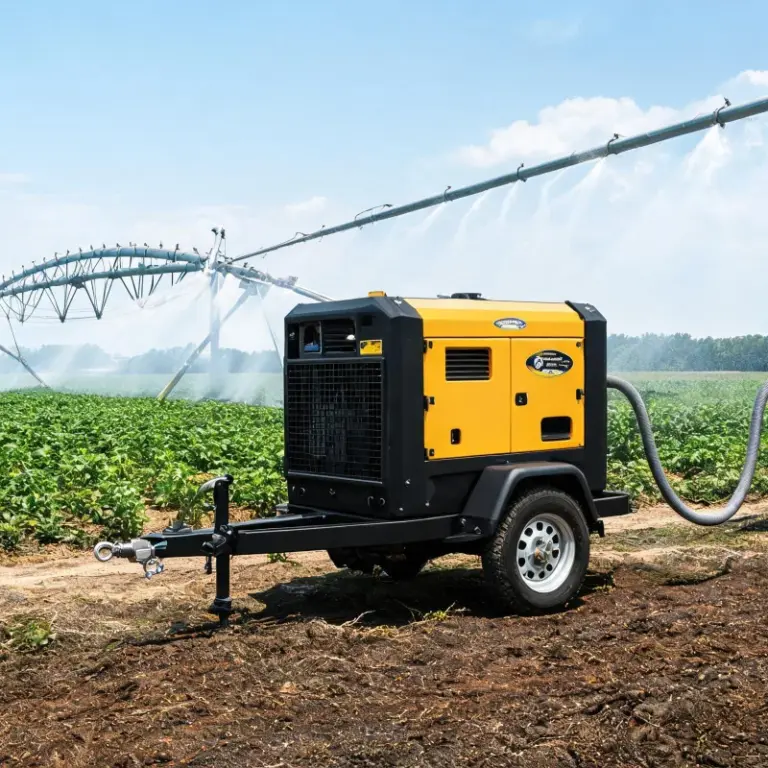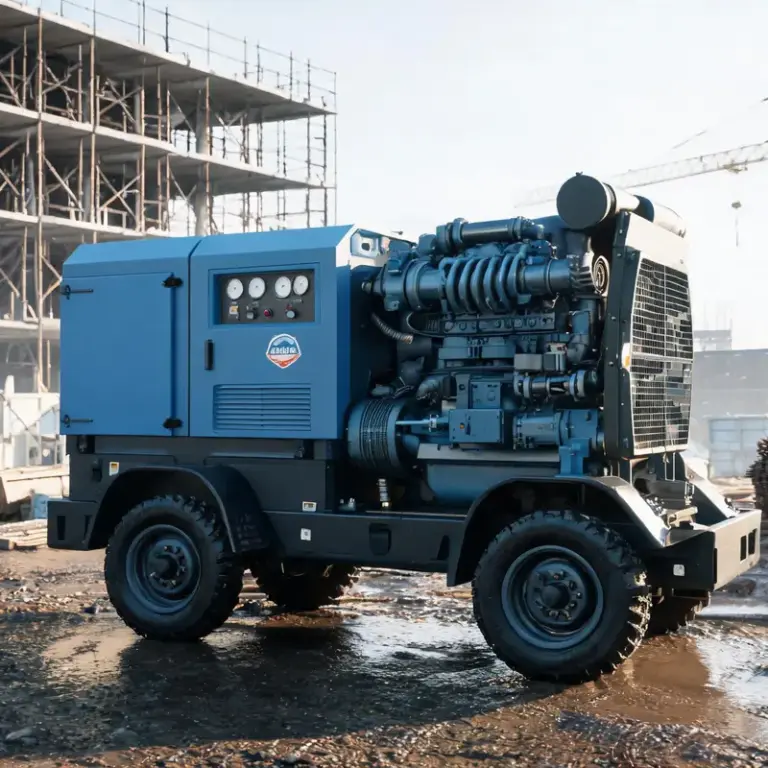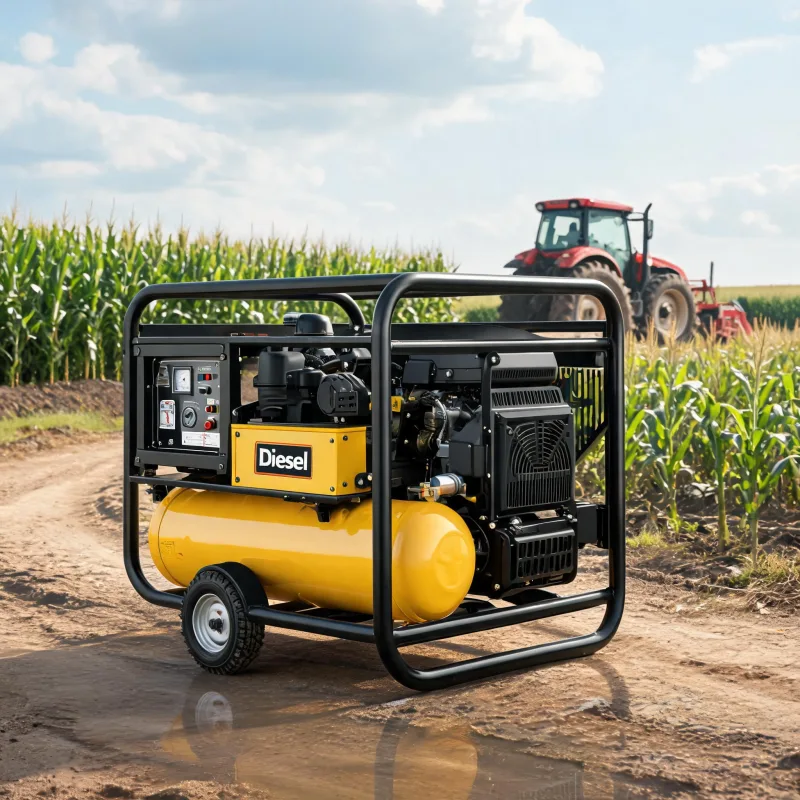
How to Pick the Right Diesel Driven Air Unit for Mobile Agricultural Field Work
This brief outlines non-negotiable constraints to avoid costly misbuys for mobile agricultural air systems.
Key Takeaways
- Prioritize structural vibration rating over maximum power output for mobile field use
- 2022 ASABE standard sets the minimum integrity requirement for regularly transported units
- Vibration-related transport damage is excluded from most base warranties
- Always add a late delivery penalty clause for custom built units
Related: field work air power · mobile agricultural equipment · on-site air supply · diesel powered compression · farm work air tool · procurement checklist
Most sourcing teams prioritize maximum power output when buying a diesel driven air unit for field work. That’s the wrong first filter.
Core decision problem for mobile agricultural operations
You’re not buying for a single fixed location. Your unit moves 2-5 sites per week during planting, harvest and infrastructure maintenance seasons. Downtime on a remote field costs 2-3x more per hour than downtime at a fixed base, per 2023 data from the American Farm Bureau Federation.
Any unit that can’t handle repeated transport, variable ambient temperatures and extended run times without forced stops will erase any upfront cost savings you get from a lower bid.
That’s a fact most generic spec sheets don’t highlight.
Non-negotiable constraints you can’t skip
Runtime matching
Agricultural mobile operations often need 8-12 hours of continuous run without refueling on remote sites. You need a fuel tank capacity that matches your longest work shift, without requiring mid-shift transport back to base for refuel.
Vibration and structural rating
Repeated transport over unpaved farm roads loosens fittings and cracks welds on units not built for mobile use. The American Society of Agricultural and Biological Engineers (ASABE) published a 2022 standard for mobile field equipment structural integrity that requires a minimum vibration resistance rating for regularly transported units.
Cold and dust resistance
Most field work happens in spring or fall, when ambient temperatures can drop below freezing overnight. Sealed intake filters and block heater systems are non-negotiable for reliable start.
This set of rules doesn’t apply if you only use the unit 2-3 times per year for occasional spot work. If that’s your use case, you don’t need to pay a premium for ASABE-rated construction.
Why pay for features you’ll never use?
Key comparison dimensions for shortlisted units
Don’t compare units only on upfront price. Start with dry weight vs. tow rating of your standard service truck.
If your fleet uses half-ton trucks, a unit that’s 200kg over the maximum tow capacity will wear out your truck’s transmission twice as fast, per 2024 commercial fleet maintenance industry data.
Next check the cooling system capacity. Extended run times in 30C+ summer heat require a large enough heat exchanger to prevent automatic shutoffs. Most manufacturers list maximum output at 20C ambient, so that rating drops by 15-20% when temperatures rise above 30C.
Hidden costs outside the base quote
Upfront price usually doesn’t include three key line items that add 10-25% to total cost. First, custom tow hitch and lighting modifications to match your fleet’s truck specs. Second, extended coverage for structural components that cover vibration-related damage. Most base warranties exclude transport-related damage, which is the top cause of failure for mobile field units. Third, annual calibration and inspection required to meet local farm safety regulations.
I’ve seen procurement teams miss the warranty exclusion on vibration damage more than once.
Contract checkpoints to lock in before signing
First, confirm the delivery lead time matches your work season. Most custom built units have an 8-12 week lead time, so if you need it before planting season, you need a penalty clause for late delivery that covers at least 0.5% of the total order value per day late.
Second, get a written commitment on spare parts availability. Critical components need to be available within 48 hours for delivery to any rural location in your service area.
Third, define the acceptance test criteria before delivery. You should test the unit for 4 hours of continuous run at maximum load at your base, and reject it if it shuts down or can’t maintain required output pressure.
Buyer Guide
Start with matching unit weight to your truck’s tow capacity, then confirm structural rating, then match output to your tool demand, then compare total all-in cost. Never reverse this order, because overloading your truck will cost more than any savings on the unit itself.
Expert Insights
Focus on total cost of ownership, not just upfront price, for mobile field equipment | John Miller, Agricultural Equipment Procurement Consultant
Further Reading
About the Editorial Team
Frequently Asked Questions
What power output do I need for mobile agricultural work?
Match output to the maximum air demand of all tools you’ll run at the same time. Add 10% headroom, don’t oversize more than that.
Do I need a special structural rating for regular field use?
If you move the unit between sites weekly, get one built to the 2022 ASABE mobile field equipment standard. It cuts long term failure risk significantly.
What’s the average total cost of a unit for mobile agricultural service?
For a mid-sized unit matching most service operations, total cost including modifications and warranty ranges from $12,000 to $28,000, depending on specs.
What common damage is excluded from base warranties?
Most base warranties exclude damage from vibration during repeated transport, the most common cause of breakdowns for mobile units. Always add coverage for this.
Can I use a general purpose unit for regular mobile agricultural work?
It’s not recommended. General purpose units fail 2-3 times faster than field-rated units in regular mobile agricultural use.