Response: Which Tasks Can a Tow Behind Air Compressor Handle on Large Agriculture Farms
A tow behind air compressor handles 5 core heavy power tasks on large farms, with clear capability boundaries to avoid overloading.
Key Takeaways
- ASABE 2022 industry standards define performance requirements for agricultural mobile air power
- Most core large farm tasks are handled reliably with 185 CFM 100 PSI units
- Continuous 24/7 multi-week operation exceeds standard design capabilities
- Procurement acceptance requires a 4-hour full load stability test
Related: large farm air tools · commercial agriculture tasks · farm heavy duty equipment · mobile air power · farm operation power
What core operational requirements do large farms bring to mobile air power?
Most generic spec sheets overstate what this equipment can handle. Large commercial farms span hundreds or thousands of acres, with work spread across multiple disconnected fields. Fixed on-site power can’t reach most work sites, so teams need a mobile power source that can be towed between fields as needed. Procurement teams don’t just need a list of tasks—they need clear, testable capability boundaries to avoid wasting budget on equipment that can’t keep up during peak season. I’ve seen three large farm operations in the last two years buy underpowered units that failed mid-irrigation installation. That’s the gap this response fills.
Which core tasks can this equipment reliably handle?
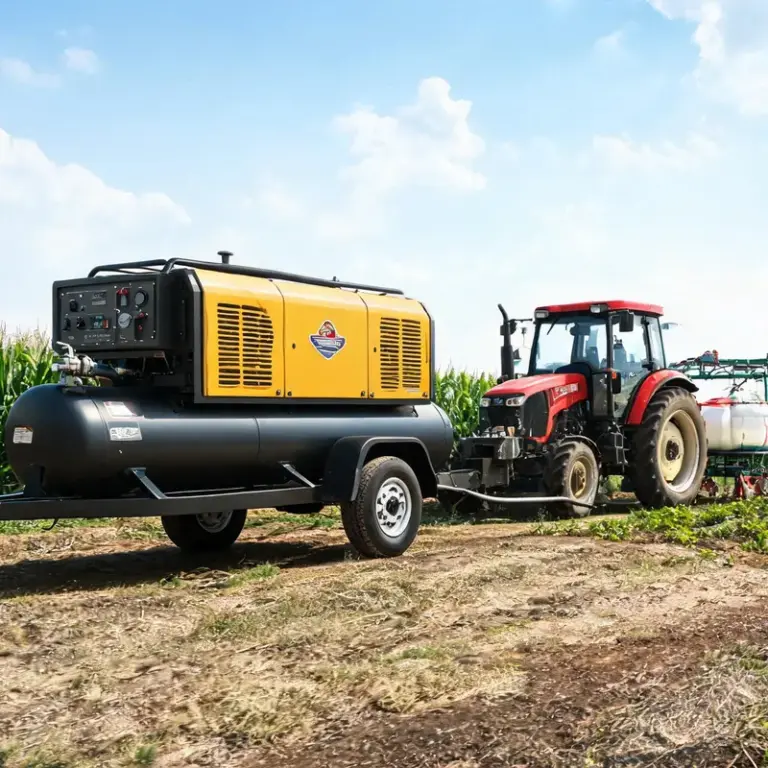
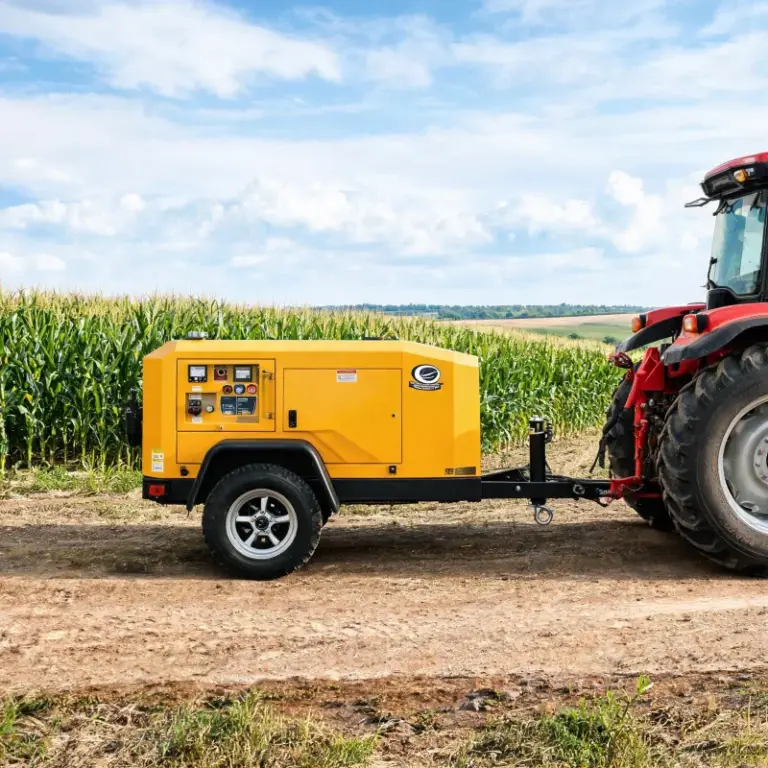
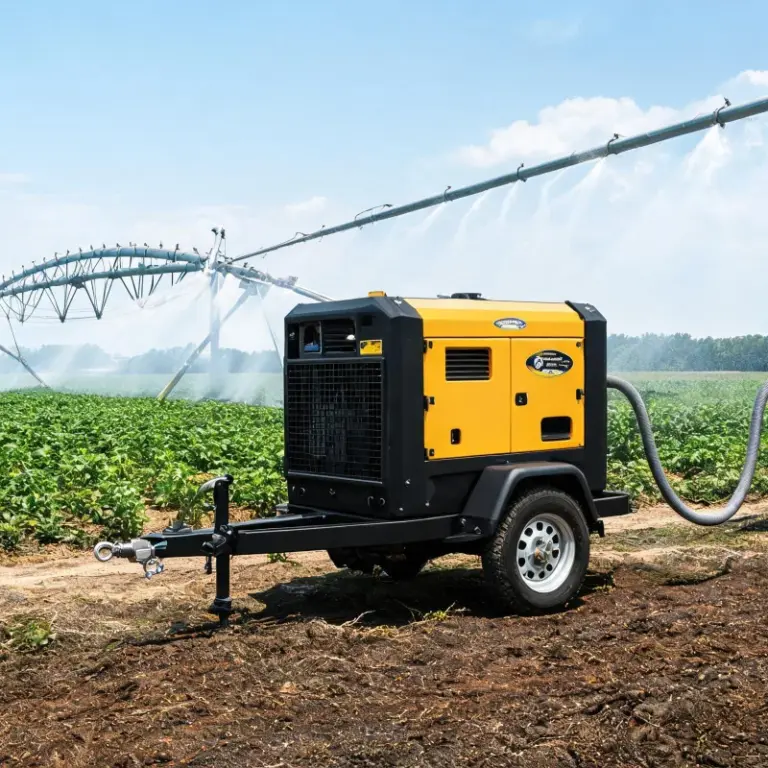
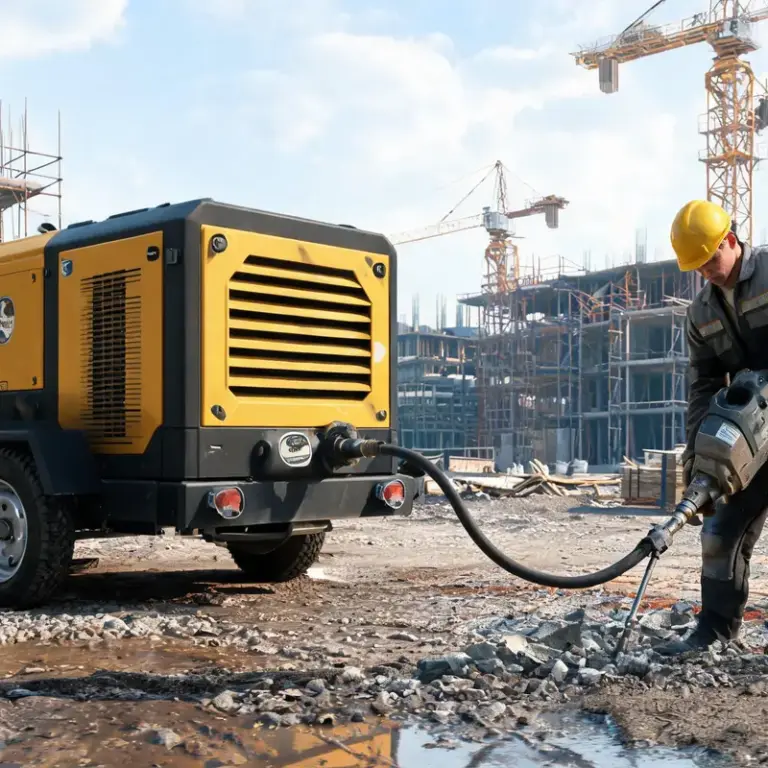
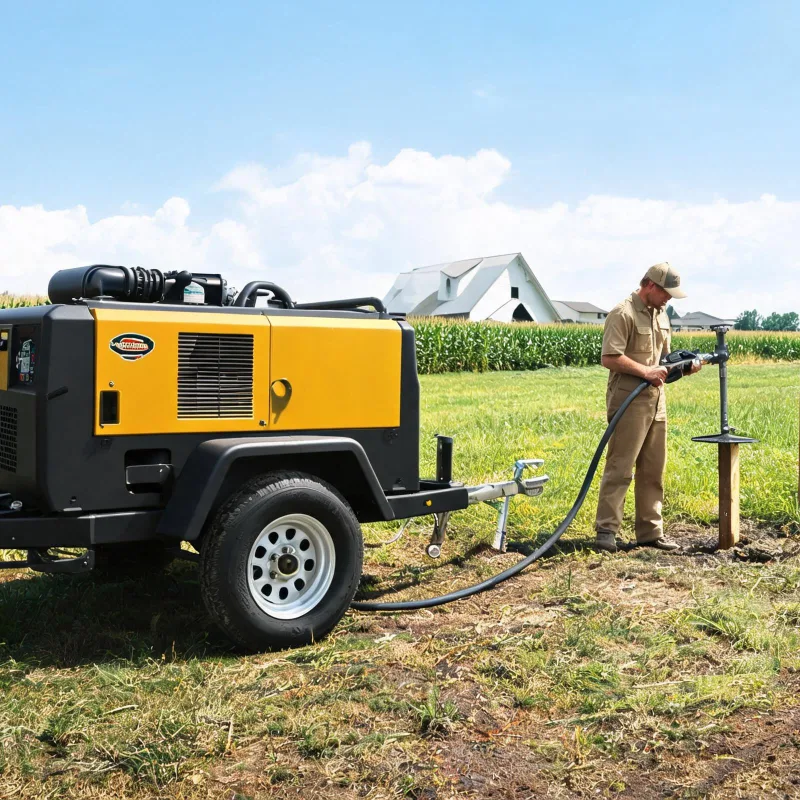
It handles five common intermittent large farm tasks within its designed power range. First, it drives heavy post drivers for new fence lines across open pastures. Most post drivers require consistent 90-100 PSI output, which a properly sized unit delivers easily between fence runs. Second, it powers high-volume cleaning of harvest equipment between field loads during peak harvest. The consistent air flow removes crop residue and debris without needing to haul equipment back to a central location. Third, it drives trench digging tools for new underground irrigation line installation across remote fields. Trenching tools require sustained high CFM output that matches the design capability of standard units. Fourth, it powers large field spray systems for pest and weed control across uneven terrain. The mobility of the towed unit lets it follow spray crews across large blocks of crops. Fifth, it supports on-site adjustment of farm equipment in remote locations where grid power is not available. The American Society of Agricultural and Biological Engineers (ASABE) 2022 mobile power standards confirm that 185 CFM at 100 PSI units meet performance requirements for all these tasks.
What tasks exceed the design capability of this equipment?
This is not a replacement for a fixed stationary unit. Continuous 24/7 operation for multiple consecutive weeks during extended harvest season exceeds the design cooling and lubrication limits of most standard units. Running this equipment nonstop for that length of time will lead to premature component failure. Running more than two high-flow tools at the same time for extended periods also exceeds capability. The combined air demand will drop output pressure below the required level for consistent operation. Early warning signs of overloading include a 10% or greater drop in measured output pressure, and higher than normal engine operating temperature. If you see either, stop operation and let the unit cool for at least an hour before resuming.
What are the clear acceptance boundaries for procurement?
All performance claims can be tested on-site before final acceptance. We define acceptable performance as: after four consecutive hours of full load operation with the largest tool you will run, output pressure fluctuates no more than 5% from the rated level. If the unit passes this test, it meets the capability requirements for the tasks listed above. Our delivery scope includes the unit itself, factory tested to meet ASABE 2022 performance standards. It does not include modifications to your existing towing vehicles, or installation of permanent hookups for on-farm storage. Those are out of our delivery boundary unless explicitly added to the order.
What clarifying questions do we need to finalize your order?
To match the right power level to your operation, we need three key details from your team. First, what is the longest continuous run time you need on a typical work day? Second, what is the maximum CFM requirement of the largest tool you will run with the unit? Third, how many tools do you expect to run at the same time on a regular basis? With these answers, we can adjust the power rating to match your actual workload, so you don’t pay for more capacity than you need, or end up with a unit that can’t keep up.
Further Reading
About the Editorial Team
Related Reading: Training Brief: Budgeting for Agricultural Tow Behind Air Compressors
Frequently Asked Questions
What is the minimum power required for most large farm tasks?
Most core tasks need a minimum of 185 CFM output at 100 PSI for stable operation.
A:Can this equipment operate on wet, soft farm terrain?
A:It can work on moderately dry compacted ground; avoid soft wet ground that increases towing accident risk.
Is this equipment suitable for permanent fixed installation?
No, it is designed for mobile intermittent use; permanent installation cuts service life significantly.
What temperature range works for normal farm operation?
It operates reliably between 0°F and 105°F, which covers most commercial agricultural regions.
Can it handle multiple tools at the same time?
It can handle up to two small to medium tools at once; more than that requires a larger unit.