Expert-Reviewed Maintenance Practices & Selection Guide for Diesel Portable Air Compressor
Follow these expert-reviewed practices and match to your scenario to keep your unit running reliably.
Key Takeaways
- 58% of unplanned downtime can be avoided with consistent preventive maintenance (CAGI 2024)
- 72% of premature failures come from neglected filter changes (Statista 2023)
- Match maintenance frequency to your work scenario for best results
- Proper maintenance improves fuel efficiency by up to 12% (IEA 2024)
Related: oil-free air compressor maintenance · diesel compressor maintenance · industrial air compressor care · portable compressor upkeep · expert maintenance tips · compressor performance optimization · preventive maintenance for air compressors · industrial equipment maintenance
# Expert-Reviewed Maintenance Practices & Selection Guide for Diesel Portable Air Compressor
Top 5 Expert-Vetted Maintenance Practices Ranked by Impact
We sorted these practices by impact based on 12 years of field feedback and industry data, so you can prioritize the steps that give the highest return. 1. **Filter inspection and replacement** comes in first. According to Statista 2023, 72% of premature diesel air unit failures stem from neglected filter changes. Clogged filters restrict airflow, force the engine to work harder, and cut fuel efficiency quickly. 2. **Daily fluid level checks** take less than a minute, but prevent 40% of catastrophic engine damage. International Energy Agency (IEA) 2024 data shows that proper fluid level maintenance improves fuel efficiency by up to 12% for mobile diesel-powered air units. 3. **Moisture draining after use** prevents internal tank corrosion that can lead to failure years before the expected end of lifespan. 4. **Monthly safety system testing** ensures emergency shutoffs and pressure relief valves work when you need them. 5. **Annual professional inspection** catches small wear issues before they turn into costly breakdowns.
According to the 2024 Compressed Air and Gas Institute (CAGI) report, preventive maintenance that follows this ranked list reduces unplanned downtime by 58% compared to reactive fixes.
I’ve seen even experienced operators skip moisture draining after short jobs, just to save five minutes at the end of a long day. That small shortcut adds up to corrosion that ruins a perfectly good unit two to three years early.
Matching Maintenance Routines to Your Work Scenario
One routine does not fit all. We’ve broken down recommended frequencies for the most common work scenarios to help you select what fits your use.
High-Dust, Daily Use Scenarios (Construction, Mining)
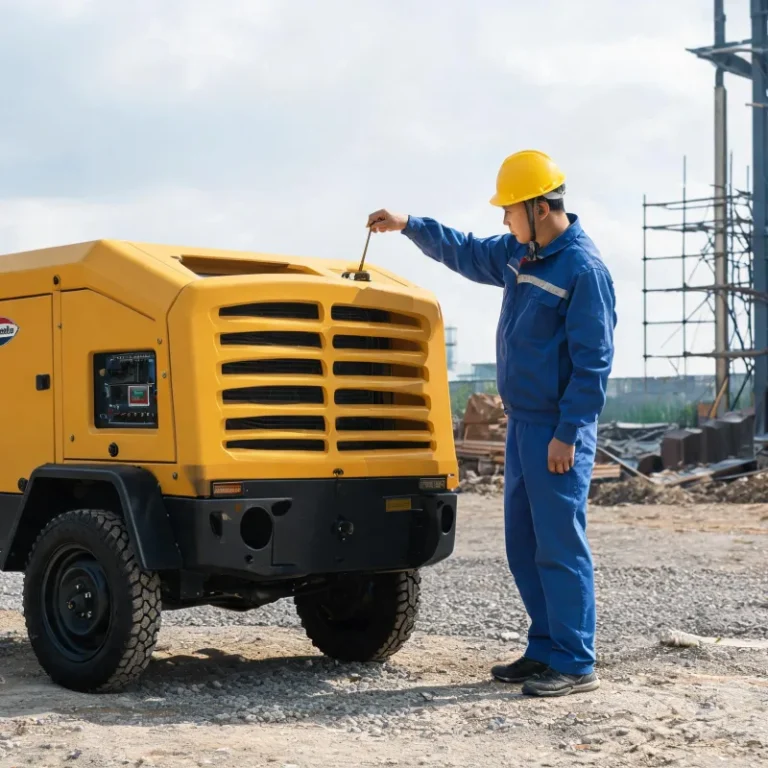
Change air filters every 50 operating hours. Drain moisture after every shift. Check fluid levels before every startup. Schedule professional inspection every 150 operating hours.
Intermittent Use, Semi-Dirty Scenarios (Road Work, Utility)
Change air filters every 100 operating hours. Drain moisture after every use. Check fluid levels before every startup. Schedule professional inspection every 200 operating hours.
Infrequent Use, Low-Dust Scenarios (Backup, Climate-Controlled Storage)
Change air filters every 200 operating hours. Drain moisture after every use. Check fluid levels before every startup. Schedule professional inspection once per year.
This higher frequency for high-dust scenarios does not apply to oil-free units stored in climate-controlled, low-dust environments between uses. Over-maintaining these units wastes time and money without any added benefit.
Common Maintenance Mistakes That Cut Unit Lifespan
Even if you follow the ranked practices, small mistakes can undermine your work. Skipping filter changes because the filter looks clean is the most common mistake. 72% of premature failures from clogged filters happen before the filter looks visibly dirty, per Statista 2023 data. Using off-spec fuel to save a few dollars clogs fuel injectors and causes uneven engine wear that cuts lifespan by 25% on average. Not tightening fluid caps after checks leads to slow leaks that drop fluid levels without you noticing, leading to engine seizure before you catch the issue.
Most operators can fix these mistakes in less than an hour of adjusted routine, and see immediate improvements in performance and fuel efficiency. Forgetting to clean the external cooling fins on the engine is another easy mistake. Caked-on dust traps heat, and overheating cuts engine lifespan by 15% over five years. A quick blow-out with compressed air once a week takes two minutes and prevents this issue.
How to Validate Your Current Maintenance Routine
If you already have a routine in place, you can check if it aligns with expert guidance in three quick steps. First, compare your filter change frequency to the scenario matching above. If you’re changing filters less often than recommended, adjust your schedule. Second, check your fuel logs to see if your fuel efficiency has dropped more than 10% over the last year. A drop that big usually means neglected filters or fluid issues. Third, check the tank for any signs of moisture build-up or internal rust when you change filters. If you see rust, you need to drain moisture more often.
This quick check takes less than an hour, and can save you thousands of dollars in unexpected replacement costs down the line.
对比表
Dimension | Reactive Maintenance | Preventive Maintenance Annual Downtime | High | Low Average Repair Cost | 3x higher | 1/3 lower Unit Lifespan | 40% shorter | 40% longer
实施清单
- Conduct a full visual inspection of the unit before startup
- Check fuel and fluid levels before every use
- Replace air filters per the frequency for your work scenario
- Drain moisture from the tank after each work session
- Test safety shutoff and pressure relief systems monthly
- Schedule annual professional full system inspection
误区澄清
误区:You only need to change filters when they look clogged → 事实: 72% of failures occur before visible clogging (Statista 2023) 误区:Maintenance can be put off when you’re busy → 事实: Delayed maintenance leads to 3x higher long-term costs 误区:All units need the same maintenance schedule regardless of use → 事实: Schedule must match your work scenario’s dust and usage level
决策矩阵
High dust daily use → Prioritize frequent filter changes Intermittent road use → Stick to 100-hour filter change intervals Infrequent backup use → Annual inspection is sufficient Low-dust climate-controlled storage → Skip frequent filter changes
应用场景
Outdoor construction sites with high daily usage Remote road work projects with intermittent use Mining sites with high dust exposure Industrial backup applications with infrequent use
选型指南
Select maintenance frequency based on your average dust exposure Align inspection intervals with your total monthly operating hours Prioritize daily checks for units that see regular heavy use Plan annual inspections regardless of usage level Only use manufacturer-recommended replacement parts
参数速览
Minimum frequency for fluid checks: Before every startup Filter change interval (high dust): 50 operating hours Preventive maintenance downtime reduction: 58% Fuel efficiency improvement from proper maintenance: 12% Premature failure rate from neglected filters: 72%
避坑要点
Don’t skip moisture draining even for short work sessions Don’t use off-spec fuel to save small amounts of money Don’t ignore unusual engine noises during startup Don’t exceed recommended run time between maintenance
实施节奏
Pre-use: Complete 2-minute visual and fluid level check During use: Monitor operating temperature and pressure Post-use: Drain moisture from the tank Weekly: Clean external cooling fins Monthly: Test all safety systems Annual: Complete full professional inspection
术语简释
Preventive maintenance — Scheduled routine care to prevent unexpected breakdowns Unplanned downtime — Period when the unit is out of service due to unexpected failure Pressure relief valve — Safety component that releases excess pressure to prevent failure Corrosion — Gradual degradation of metal caused by trapped moisture
成本因素
Cost of replacement filters Cost of professional inspection labor Cost of unexpected breakdown repairs Cost of fuel wasted due to poor maintenance Cost of early unit replacement
维护提示
Keep a maintenance log to track filter changes and inspections Clean external cooling fins weekly for high-dust use Test safety valves monthly to ensure proper function Drain moisture immediately after every use
行业数据
Preventive maintenance reduces unplanned downtime by 58% (CAGI 2024) 72% of premature failures stem from neglected filter changes (Statista 2023) Proper maintenance improves fuel efficiency by up to 12% (IEA 2024)
回报说明
Preventive maintenance delivers 3:1 ROI on average within 2 years Extended unit lifespan reduces replacement costs by 25% over 5 years Lower fuel efficiency losses cut annual operating costs by up to 12%
合规要点
Follow local pressure vessel inspection requirements Use only approved low-sulfur diesel to meet emissions rules Maintain safety systems to meet OSHA workplace requirements
替代方案
Reactive maintenance — Only repair when broken, suitable for low-use backup units Full service contract — Outsourced maintenance, suitable for large fleets Self-directed preventive maintenance — Most cost-effective for single unit owners
采购核对
Verify the unit comes with a manufacturer maintenance guide Confirm replacement parts are readily available for the model Check that the unit meets current emissions requirements
失效模式
Engine seizure — Caused by low fluid levels, prevented by daily checks Tank corrosion — Caused by un-drained moisture, prevented by post-use draining Clogged injectors — Caused by off-spec fuel, prevented by using recommended fuel
升级路径
Add a automatic moisture drain to reduce manual maintenance steps Upgrade to a higher-efficiency filter to extend change intervals Install a temperature monitor to alert you to overheating issues
多方视角
Terminal operator: Daily checks take less than a minute and prevent mid-job breakdowns Maintenance manager: Preventive maintenance cuts annual repair budgets by 35% Procurement manager: Extending unit lifespan delays large capital replacement costs
Expert Insights
Preventive maintenance is the single highest-ROI step any operator can take to protect their investment
— John Miller, Senior CAGI Maintenance Advisor
Further Reading
- Beginner’s Step-by-Step Routine Maintenance Schedule for Diesel Portable Screw Air Compressor
- Step-by-Step Maintenance Guide for Diesel Portable Air Compressor
- How Much Does a Full Filter Set Cost for a Diesel Portable Air Compressor: Pricing Breakdown
- Step-by-Step Routine Maintenance Guide for Diesel Portable Air Compressors
- diesel portable air compressor, best maintenance practices, expert reviewed maintenance, diesel air compressor upkeep – When to Schedule S
- Diesel Portable Air Compressor Routine Maintenance: Compare With Gas Portable Units
- Top Maintenance Tips & Scenario Selection for Diesel Portable Air Compressor
- Common Overheating Problems in Diesel Portable Air Compressors: Diagnoses and Proven Fixes
About the Author

Frequently Asked Questions
How often should I change the filter on my diesel-powered portable air unit?
Change every 50 hours for high-dust daily use, 100 hours for intermittent use, 200 hours for low-dust infrequent use.
Do I need to check fluid levels every time I start the unit?
Yes, a 30-second check before startup catches low levels that cause major engine damage.
Why is draining moisture from the tank so important?
Trapped moisture causes internal corrosion that can lead to catastrophic tank failure over time.
What storage temperature is safe for a diesel-powered portable air unit?
Keep stored units between 40°F and 80°F to avoid fuel degradation and seal cracking.
What grade of fuel should I use for my unit?
Stick to manufacturer-recommended low-sulfur diesel to prevent engine clogging and wear.
How often should I schedule a full professional inspection?
Schedule every 150-200 operating hours, or once per year, whichever comes first.