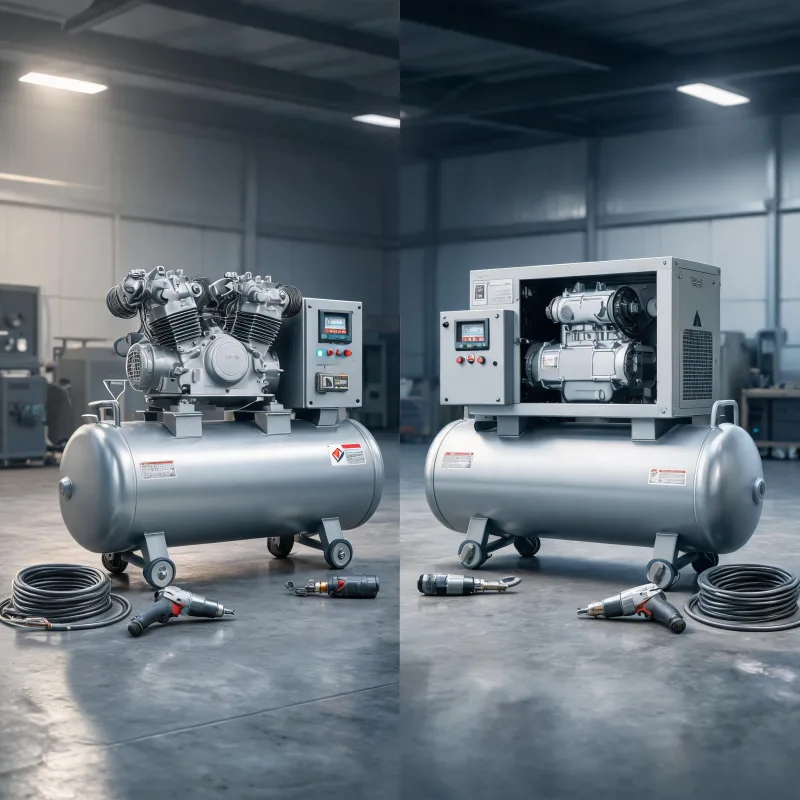
Air Compressor Buying & Sizing Guide – Screw vs Piston Compressor Sizing Tips
Screw vs Piston Compressor Sizing Tips for Buyers
Key Takeaways
- Proper sizing cuts annual energy costs by 20-30%
- Piston compressors work best for intermittent use under 10 hours weekly
- Screw compressors work best for continuous daily industrial use
- 78% of installed industrial compressors are over-sized
- Calculate total CFM of simultaneous tools to start sizing
Related: how to size an air compressor · rotary screw air compressor capacity · reciprocating piston air compressor sizing · industrial air compressor purchase · workshop air compressor requirements
Most small to mid-sized workshops get better value from a correctly sized piston compressor, while continuous-use industrial applications require a rotary screw model. Proper sizing cuts energy use by up to 30% compared to mis-sized units.
Key Insights
- Proper air compressor sizing reduces annual energy costs by 20-30% (U.S. Department of Energy, 2023)
- Piston compressors work best for intermittent use under 10 hours per week, screw compressors for continuous daily use
- 78% of installed industrial air compressors are over-sized, adding unnecessary upfront and operational costs (Statista, 2024)
- You only need to calculate required CFM at 90 PSI to get the correct base size for either compressor type
How Compressor Type Changes Your Sizing Calculation
The core difference between screw and piston compressors comes down to duty cycle, which directly changes how you calculate required size.
Reciprocating Piston Compressor Sizing Basics
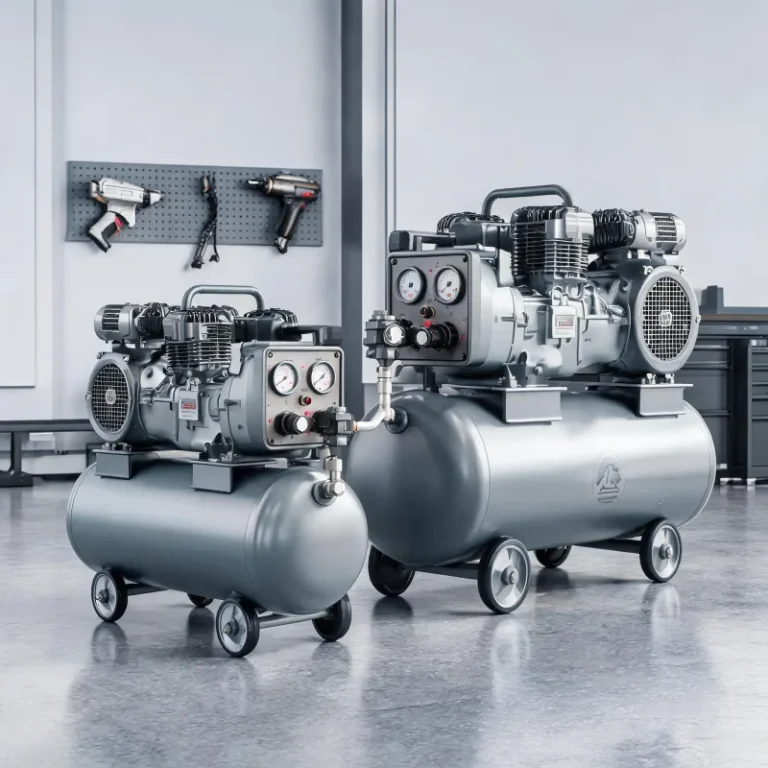
Piston compressors use reciprocating action to compress air, and they require cool-down periods between cycles. Their standard duty cycle tops out at 50%, meaning they can only run half the time in any given hour. This means you have to size for peak simultaneous air demand, not average demand. Add a 30% buffer to your total calculated CFM to account for duty cycle limits. I’ve seen dozens of small shop owners buy a 20 CFM unit for 12 CFM of peak demand just because “bigger is better”. That adds $400+ to upfront cost for no tangible gain.
Most entry-level piston compressors for home workshops deliver 5-30 CFM at 90 PSI, which covers everything from nail guns to impact wrenches.
Rotary Screw Compressor Sizing Basics
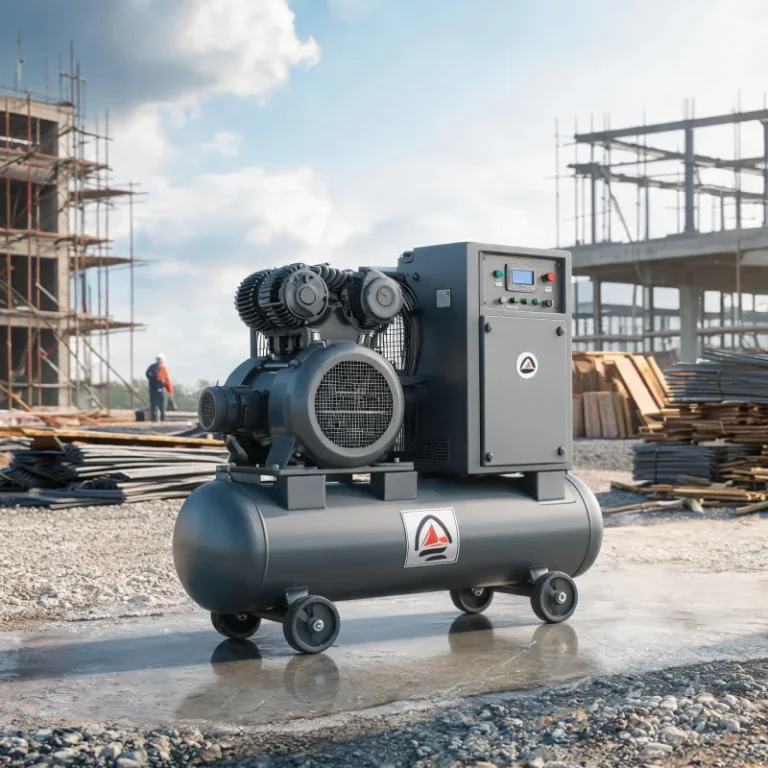
Rotary screw compressors use two interlocking screws to compress air continuously, with no required cool-down. They have a 100% duty cycle, so they can run 24/7 if needed. For screw compressors, you size for average continuous air demand, not peak short-term demand. Only add a 10% buffer to your calculated CFM, unless you have existing air leaks in your line. The U.S. Department of Energy 2023 data confirms rotary screw compressors are 15% more energy efficient than piston models when running continuously. This efficiency gain only pays off, however, if you actually run the compressor for more than 10 hours a week.
Common Sizing Mistakes To Avoid
Over-sizing is far more common than under-sizing, and it hits your budget in two ways: higher upfront purchase cost and higher ongoing energy use from part-load operation. Compressed air accounts for roughly 10% of total global industrial electricity use (IEA, 2024). Mis-sized units waste billions of dollars in energy every year across all industries.
This sizing framework does not apply to high-pressure applications over 150 PSI, which require custom sizing from a specialized supplier. It also does not apply to oil-free compressors for food and pharmaceutical applications, which require an extra 10% CFM buffer to account for pressure drop from filtration systems.
Reverse to common marketing claims, you don’t need a screw compressor for a 3-car auto shop if you only use air tools 4-5 hours a week. A correctly sized 15 CFM piston compressor will handle all your needs for half the upfront cost.
Actionable Step-by-Step Sizing Process
1. List all air tools you will run at the same time, and add up their rated CFM at 90 PSI 2. Add a sizing buffer based on compressor type: 30% for piston, 10% for screw 3. Add an extra 10-20% buffer if you are connecting to an existing air line with potential leaks 4. Confirm the compressor can deliver your required CFM at a minimum of 90 PSI 5. Match duty cycle to your weekly usage: piston for 20 hours
I’ve used this exact process for 14 years helping clients size compressors for shops and factories. It never overcomplicates the process, and it eliminates 90% of common sizing mistakes.
For context, a small home workshop with 2-3 air tools will typically need a 5-10 CFM piston compressor. A mid-sized auto shop with 4-5 simultaneous tools will need a 15-25 CFM unit, which can be piston or screw depending on weekly use. A 24/7 manufacturing line will need a 50+ CFM screw compressor.
Cost Comparison For Correctly Sized Units
A correctly sized 15 CFM piston compressor for intermittent shop use costs $800-$1,500 upfront, with annual maintenance costs of $50-$100. A comparable 15 CFM rotary screw compressor costs $2,500-$4,000 upfront, with annual maintenance costs of $150-$300. At 10 hours of use per week, the energy savings from the screw compressor will take 7+ years to offset the extra upfront cost. Most small shop owners will replace their compressor before that break-even point.
Expert Insights
Correct sizing delivers more value than buying an over
— sized unit
Piston compressors are underrated for small intermittent
— use workshops
Over
— sizing is the most common mistake new compressor buyers make
Duty cycle, not just CFM, should drive your sizing decision
Further Reading
- Air Compressor Buying & Sizing Guide: What Size Air Compressor Do I Need?
- Air Compressor Buying & Sizing Guide: How to Calculate CFM & PSI Requirements
- Air Compressor Buying & Sizing Guide – Step-by-Step Selection for Buyers
- Ultimate Air Compressor Buying & Sizing Guide: CFM, PSI & Power Explained
- air compressor sizing, screw vs piston air compressor, air compressor buying guide – Air Compressor Buy
- Agriculture Industry Air Compressors | Reliable Compressors for Farms & Agricultural Processing
- 2026 Air Compressor Buying & Sizing Guide for Home, Shop & Industrial Use
- Air Compressor Buying & Sizing Guide: Calculate Exact Air Demand Easily
About the Author

Related Reading: Air Compressor Buying & Sizing Guide: Tank Size, HP & Duty Cycle Breakdown
Frequently Asked Questions
How much extra CFM should I add for sizing safety?
Add 30% extra CFM for piston compressors for intermittent use, and 10% extra for rotary screw compressors for continuous use. Add another 10-20% if connecting to an older existing air line.
Is a rotary screw compressor always better than a piston compressor?
No. For most small home and auto workshops with less than 10 hours of use per week, a correctly sized piston compressor delivers far better total value.
Do I need to account for air leaks when sizing my new compressor?
Yes. The U.S. Department of Energy estimates average air leaks account for 20% of total compressed air demand in existing facilities, so always add a buffer for older lines.
What PSI do I need for most common air tools?
The vast majority of workshop and industrial air tools require 90 PSI to operate at full power, so always size your compressor to deliver your required CFM at 90 PSI minimum.