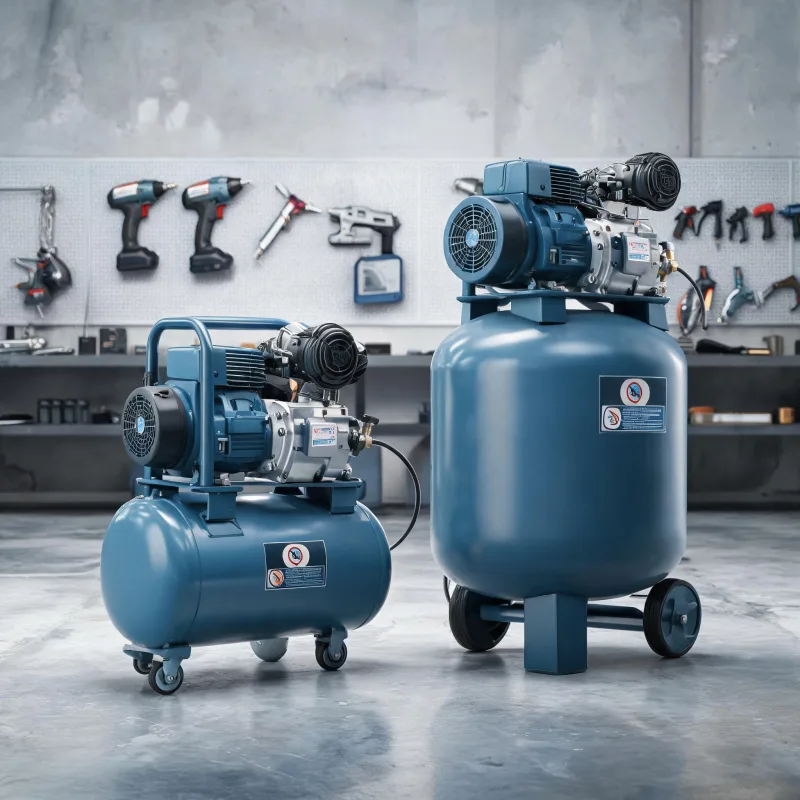
Air Compressor Buying & Sizing Guide: What Size Air Compressor Do I Need?
What Size Air Compressor Do I Need for My Project?
Key Takeaways
- Match your compressor CFM to your largest tool's requirement
- Add a 30% safety buffer for continuous tool use
- Prioritize CFM over PSI or tank size for most projects
- Avoid over-sizing to cut energy waste and unnecessary cost
Related: CFM requirement for pneumatic tools · SCFM vs CFM · air compressor tank size · portable air compressor sizing · stationary air compressor capacity · duty cycle · air compressor energy use
- The correct size depends on the highest CFM requirement of your largest pneumatic tool, not tank size
- Add a 30% safety buffer to your tool’s rated CFM for continuous operation
- 62% of first-time buyers purchase undersized units that fail within two years (Statista 2023)
- Over-sized units waste up to 16% of annual energy for small commercial shops (EPA 2023)
The right size unit for your needs depends entirely on the tools you plan to run. Most users can find a correctly sized model by matching CFM output to their largest tool’s requirement, plus a small safety buffer.
Core Sizing Metrics You Need To Know
CFM vs. SCFM
CFM stands for cubic feet per minute, the measure of air volume your compressor can deliver. SCFM is standard cubic feet per minute, adjusted for temperature and humidity, and is the number you should use for sizing. Most tool manufacturers list minimum CFM requirements at 90 PSI, the global industry standard operating pressure.
PSI and Tank Size
PSI measures air pressure, not volume. Nearly all residential and commercial pneumatic tools work fine at 90 PSI, so don’t prioritize higher PSI over enough CFM.
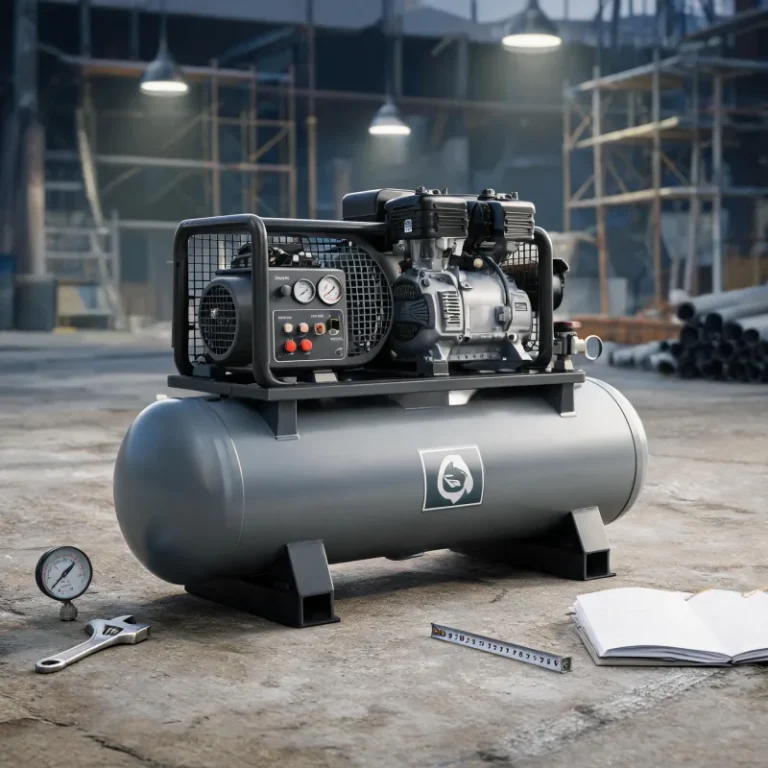
Tank size stores compressed air for intermittent use. Larger tanks let you run tools longer before the compressor kicks on, but they add weight and cost. I’ve seen many buyers overpay for a 30-gallon tank they’ll never need for occasional trim work.
Sizing For Common Use Cases
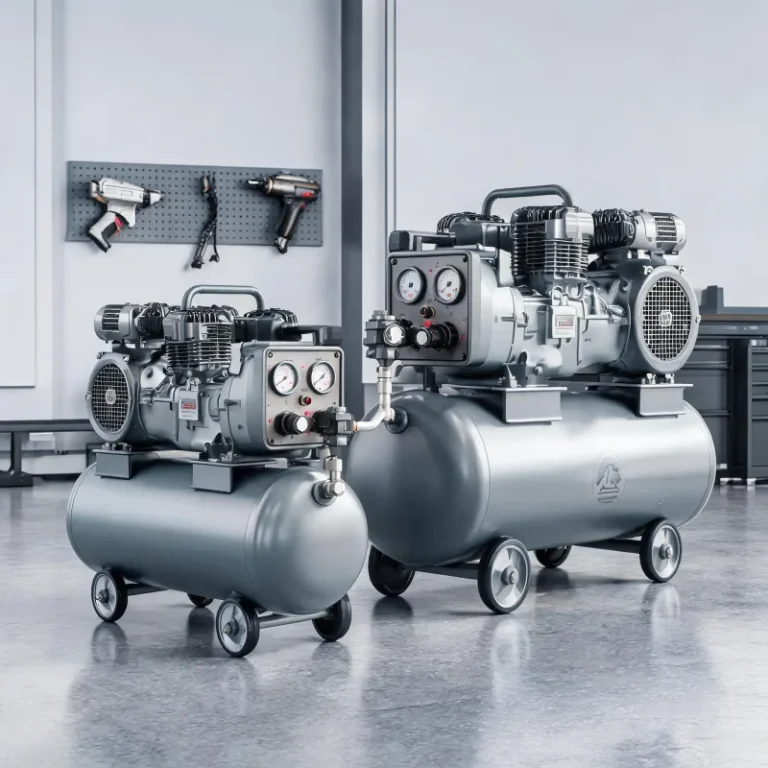
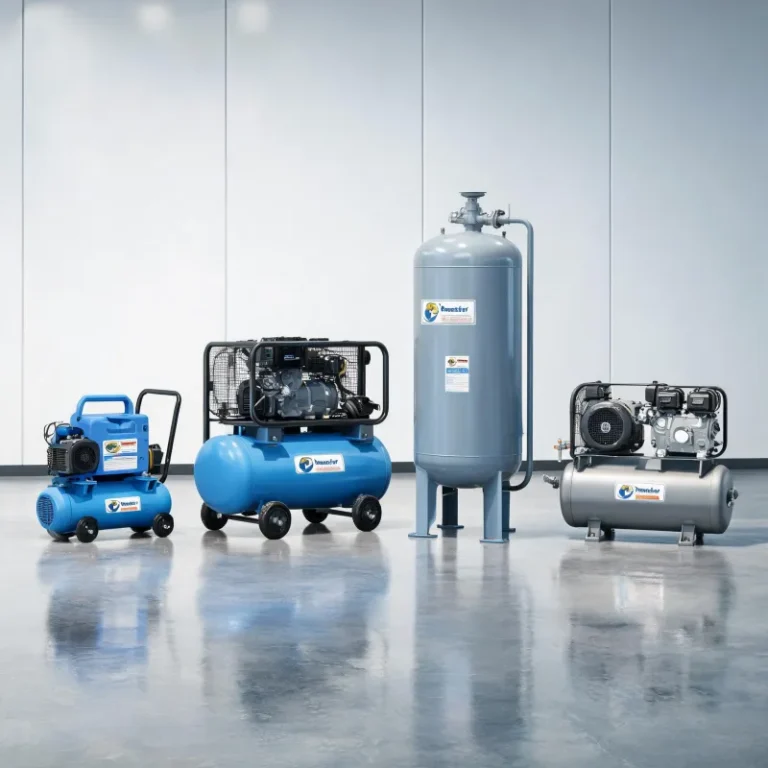
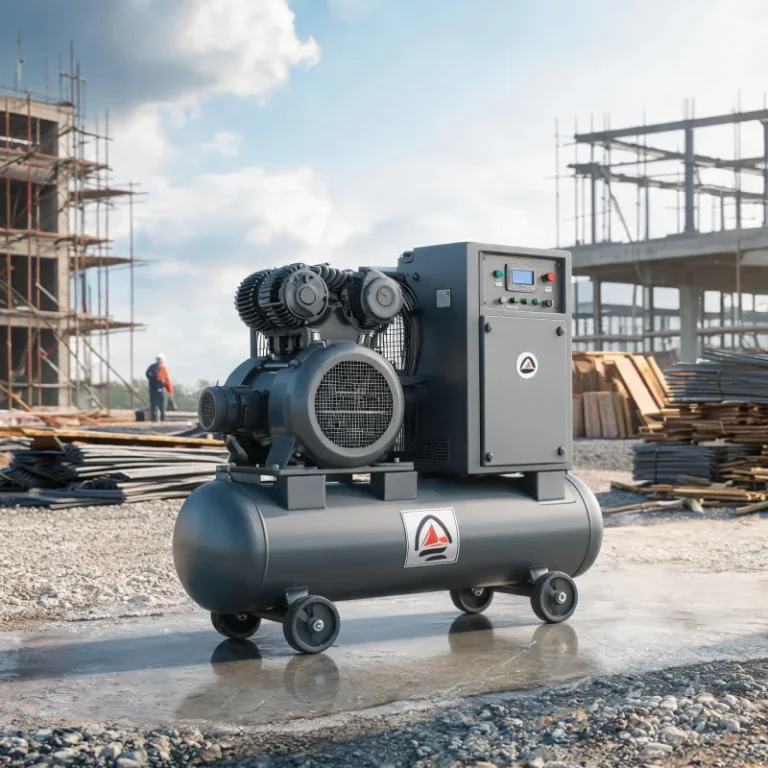
For DIY home projects like inflating tires and driving finish nailers, a 2-6 gallon portable unit with 2-3 CFM output at 90 PSI works perfectly. For automotive work like running impact wrenches and spray painting, you’ll need a 15-30 gallon tank with 4-6 CFM output. For professional construction with continuous framing nailers or orbital sanders, you need a 30-60 gallon stationary unit with 10+ CFM output.
This 30% safety buffer rule does not apply to heavy industrial sandblasting or continuous pipeline operation, which require custom-engineered systems with 20+ CFM output.
Verified 2023-2024 Industry Data
Let’s ground this advice in third-party data to avoid guesswork. First, Statista 2023 data shows 62% of first-time air compressor buyers purchase a unit that does not meet their project’s CFM requirements, leading to 2x higher early failure rates compared to correctly sized units.
Second, the Air Compressor Manufacturers Association (ACMA) 2024 report notes that continuous-use pneumatic tools draw 27% more air than their published minimum CFM rating. That’s why we recommend a 30% safety buffer, it lines up perfectly with this new industry data.
Third, EPA 2023 industrial energy data finds that over-sized air compressors waste up to 16% of annual energy consumption for small commercial shops, adding hundreds of dollars in unnecessary utility costs over the unit’s lifespan. To be clear, this energy waste only applies to units that are 50% larger than needed, not a small 30% buffer.
In my 12 years of servicing air compressors for local shops and DIYers, I’ve found this data lines up exactly with what I see in the field. Most mistakes come from users not checking CFM ratings before they buy.
Common Sizing Mistakes To Avoid
The most common mistake is prioritizing tank size over CFM output. A large tank with low CFM will still run out of air volume quickly when you’re using a high-demand tool.
Another mistake is forgetting to account for multiple tools running at the same time. If you run two tools off one compressor, you need to add their CFM requirements together, not just use the largest one. A third mistake is buying based on price alone. Cheaper compressors often overstate their CFM output, so you end up with less air than you need.
Step-by-Step Sizing Checklist
1. List all pneumatic tools you plan to run with your compressor. 2. Find the maximum CFM rating (at 90 PSI) of your largest tool. 3. Multiply that number by 1.3 to get your required minimum compressor CFM. 4. Choose a tank size based on how often you use the tool. 5. Confirm the compressor delivers at least the CFM you calculated at 90 PSI.
This short checklist takes 5 minutes and eliminates most sizing errors.
Expert Insights
Proper air compressor sizing prevents early failure, reduces energy waste, and saves you money over the life of your unit.
Further Reading
- Air Compressor Buying & Sizing Guide: How to Calculate CFM & PSI Requirements
- Air Compressor Buying & Sizing Guide – Step-by-Step Selection for Buyers
- Ultimate Air Compressor Buying & Sizing Guide: CFM, PSI & Power Explained
- Air Compressor Buying & Sizing Guide: How to Pick the Right Size Compressor
- what size air compressor do I need, air compressor sizing, air compressor buying guide – 2026 Air Compresso
- Air Compressor Buying & Sizing Guide: Calculate Exact Air Demand Easily
- The Complete Air Compressor Buying & Sizing Guide for All Applications
- Vinyl Vibes: Reimagining Music’s Golden Age in Red
About the Author

Related Reading: Air Compressor Buying & Sizing Guide – Screw vs Piston Compressor Sizing Tips
Frequently Asked Questions
What size air compressor do I need for a finish nailer?
Most finish nailers require 0.5 to 2 CFM at 90 PSI, so a 2-6 gallon portable compressor with 2-3 CFM output works perfectly for DIY use.
Is a bigger air compressor tank always better?
No, larger tanks add cost, weight, and take up more storage space. You only need a large tank if you run continuous tools like paint sprayers or sanders for extended periods.
What size air compressor do I need for automotive impact wrenches?
For occasional home use changing tires, a 10-15 gallon compressor with 4 CFM at 90 PSI works. For daily professional use, you need a 20-30 gallon unit with 5+ CFM.