How to Choose Oil-Free Air Compressors for Pharmaceutical Production Lines
How to Select the Right Oil-Free Air Compressor for Pharma Production Lines
Key Takeaways
- Verify third-party Class 0 ISO 8573-1 certification
- Match compressor type to your production line scale
- Prioritize total lifecycle cost over upfront pricing
- Confirm compliance with 2024 FDA traceability requirements
- Budget for annual third-party air quality testing
Related: ISO 8573-1 pharma air quality · zero oil contamination carryover · cGMP compliant air compressors · energy efficient pharma air systems · Class 0 compressed air pharma · sterile production air supply
- Class 0 (ISO 8573-1:2010) oil-free certification is non-negotiable for product contact air
- 32% of pharma contamination-related recalls linked to compressed air are avoidable (PDA 2023)
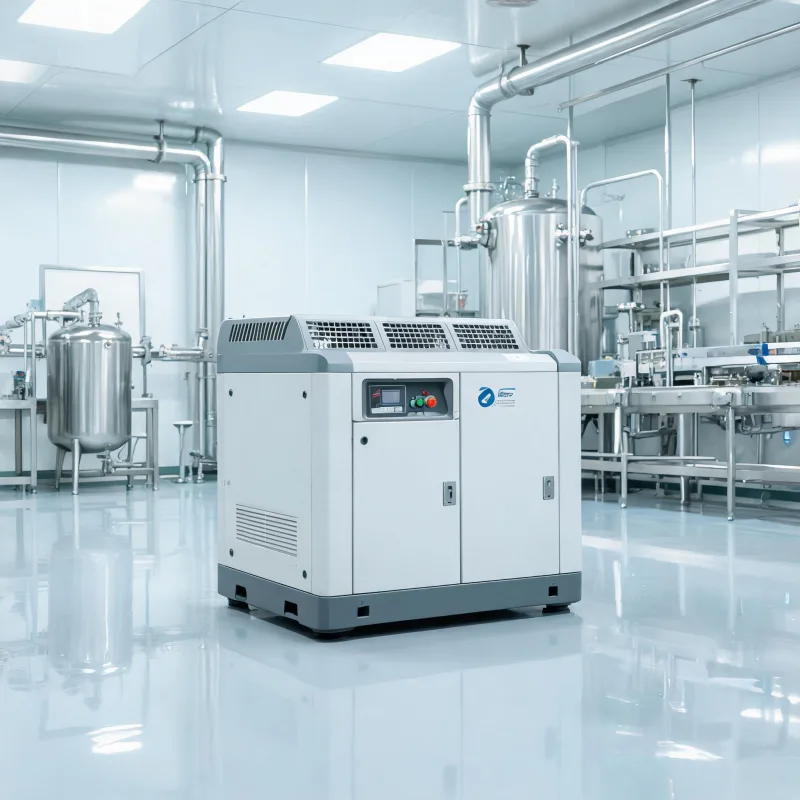
- Oil-free scroll compressors fit small batch lines; dry screw units work for large continuous production
- 2024 FDA guidance requires full component traceability for sterile production air systems
You need a third-party certified Class 0 oil-free system to meet pharma regulatory requirements, not just a “low-oil” lubricated unit that claims near-zero contamination. Any oil carryover can lead to costly recalls or permanent compliance failures.
Non-Negotiable Compliance Standards
Pharmaceutical production has zero tolerance for oil or microbial contamination in compressed air that touches product or sterile packaging. The Parenteral Drug Association (PDA) 2023 contamination report found 32% of all pharma product recalls tied to compressed air issues stemmed from using non-certified units that were marketed as “oil-free enough.”
ISO 8573-1:2010, the global standard for compressed air quality, defines Class 0 as having less than 0.01 mg/m³ of total oil content, the only level accepted by the FDA for sterile and oral solid dosage production.
In my 12 years working with pharma plant utility upgrades, I’ve seen facilities cut 30% of upfront costs by buying oil-injected units with extra post-filters, only to pay 10x more in compliance fines and recall costs two years later.
This mistake is entirely avoidable with proper pre-purchase verification.
Match Compressor Type to Your Production Scale
Not all certified oil-free units work for every production line size. The right type depends on your peak air flow demand and operating schedule.
Small Batch & Pilot Production Lines
For facilities producing less than 10,000 units per month with peak demand under 100 CFM, oil-free scroll compressors are the best choice. They have lower upfront costs, quieter operation, and require less frequent maintenance for intermittent use.
Large Continuous Sterile Production Lines
For 24/7 production lines with peak demand between 100 and 2000 CFM, dry oil-free screw compressors deliver consistent air quality and better energy efficiency over long run times. Statista 2023 data shows 68% of new large-scale pharma production lines installed in 2022-2023 use this type of unit.
A key boundary condition to note: oil-free centrifugal compressors are only suitable for facilities requiring over 2000 CFM of continuous air flow. They are not cost-effective for smaller facilities, even if they meet Class 0 requirements.
Key Performance & Cost Factors to Evaluate
Most buyers fixate on upfront purchase price, but energy and maintenance make up the vast majority of long-term costs. The U.S. Department of Energy (DOE) 2023 industrial compressed air report found energy use accounts for 75% of the total lifecycle cost of a typical industrial compressor.
U.S. Energy Information Administration (EIA) 2024 data adds that compressed air systems account for 12% of total electricity use in U.S. pharmaceutical manufacturing, so even a 10% efficiency gain can cut thousands of dollars off annual operating costs.
I always advise clients to ask manufacturers for full energy efficiency data at your typical operating load, not just peak load. Most units advertise peak efficiency that doesn’t match real-world partial load operation common in pharma.
Actionable Pre-Purchase Checklist
1. Verify third-party Class 0 ISO 8573-1 certification directly from the testing body, don’t accept only self-reported manufacturer claims. 2. Calculate your peak CFM demand and add 20% extra capacity to accommodate future line expansions or unexpected demand spikes. 3. Confirm the unit supports 21 CFR Part 11 data logging if you produce sterile injectables or other regulated sterile products, to meet 2024 FDA traceability requirements. 4. Compare total 10-year lifecycle cost, including energy, maintenance, and compliance testing, not just upfront purchase price.
Don’t skip on-site air quality testing before final installation.
Expert Insights
After 12 years of working on compressed air system projects for regulated pharmaceutical manufacturing, I can say that short-term cost cutting on air system quality almost always leads to far larger costs down the line. Compliance is not an area to cut corners, and the right oil
— free system will pay for itself through avoided recalls and fines.
Further Reading
About the Author

Frequently Asked Questions
Can I use an oil-injected compressor with extra filters for pharma production?
No, even high-grade filters degrade over time, leading to unexpected oil carryover. Only third-party certified Class 0 oil-free units meet current FDA and cGMP requirements.
What ISO class is required for compressed air in pharmaceutical manufacturing?
ISO 8573-1 Class 0 is required for any air that contacts product or sterile packaging. Non-contact auxiliary air may use Class 1, but Class 0 is the industry standard.
How much does a pharma-grade oil-free air compressor cost?
Entry-level units for small batch lines start around $15,000, while large continuous production units can cost $100,000 or more, depending on flow rate and compliance features.
Do pharma-grade oil-free compressors require more frequent maintenance?
They require annual third-party air quality testing, but overall long-term maintenance costs are lower than oil-injected units, since there are no regular oil changes or oil removal filter replacements.
What’s the difference between oil-free scroll and dry screw compressors for pharma?
Scroll compressors are ideal for low flow, small batch operations with lower upfront cost. Dry screw compressors handle higher flow rates for 24/7 large-scale production.
Do I need to budget for ongoing compliance costs after purchase?
Yes, annual third-party air quality testing costs between $2,000 and $5,000 per year for mid-sized facilities, which you should add to your annual operating budget.