Common Compressor Failures: Lessons From Mismatched Diesel vs Electric Units
Most unplanned compressor failures stem from misselection between the two power types for your site conditions.
Key Takeaways
- 2022 CAGI data links 62% of unplanned compressor outages to wrong power source selection.
- ISO 8573-1:2010 defines the mandatory purity standard for oil-free process air.
- Diesel-powered compression has inherent oil carryover risk even with aftertreatment.
- Electric water-lubed screw units need stable grid voltage to avoid drive failure.
Related: compressor failure root cause · avoid compressor downtime · correct compressor selection · water-lubed screw compressor · diesel powered compressor · unplanned outage prevention
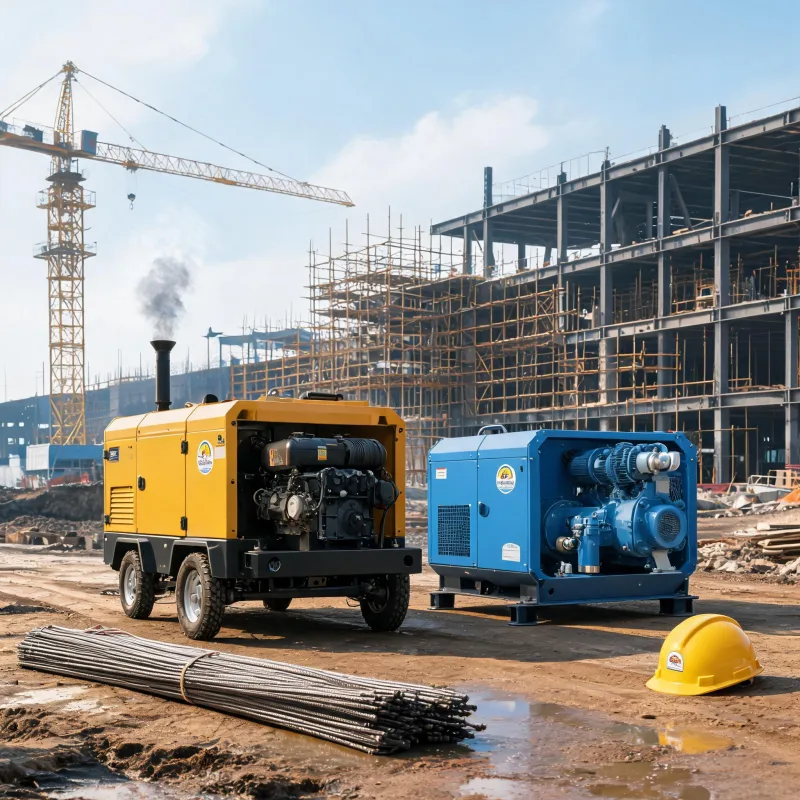
Last quarter I reviewed three separate outage reports for remote mineral processing sites, all running compression units mismatched to power and purity requirements. Two were diesel-powered conversions for general use, installed to feed a process that required completely oil-free air. Both failed within 18 months from chronic oil contamination of process lines. The third was an electric water-lubricated oil-free screw unit dragged to a remote off-grid site, where voltage fluctuations from portable generators fried the drive train in 8 months. None of these failures were caused by manufacturing defects. All traced back to wrong selection at purchase.
Common Failure Modes For Mismatched Units
Mismatched units fail in predictable patterns, regardless of brand. For units placed into the wrong application, the most common failure routes break down by power type. Diesel-powered compression units used for zero-class oil-free processes fail first from oil carryover that bypasses even high-quality aftertreatment filters. Over time, oil builds up on process equipment, ruins product batches, and triggers costly shutdowns for cleaning.
Electric water-lubricated screw units placed into off-grid operation fail most often from power-related damage to variable frequency drives. Voltage swings from portable generators stress circuit boards and windings, leading to sudden failure that can take days to repair. Even when repaired, damage from repeated fluctuations shortens the unit’s overall lifespan by 30 to 40 percent, per 2022 Compressed Air and Gas Institute reliability surveys.
Root Cause Chains Tying Failure To Selection
The root of almost all these failures is a decision that prioritizes upfront cost over process and site requirements. Diesel-powered units typically carry a 25 to 30 percent lower upfront purchase price than same-capacity electric water-lubricated oil-free screw units. This leads many procurement teams to pick the cheaper option even when the site requires oil-free air.
There is no way to eliminate all oil carryover from a diesel-powered compression system, because the engine itself relies on oil for internal lubrication. Some oil will always escape into the air stream. For electric units, the most common root cause is assuming any power source will work. These units are designed for stable grid voltage, which has a standard tolerance of +/- 5 percent. Portable generators often swing +/- 20 percent or more, far outside the design tolerance.
Early Warning Signs Of Mismatch
You don’t have to wait for a full outage to catch a mismatched unit. There are clear early signs that signal impending failure.
For diesel units in oil-free processes, the first warning is a 2 to 3x increase in aftertreatment filter replacement frequency. Next, outlet air oil concentration will start to exceed the limit set by ISO 8573-1:2010 for Class 0 oil-free air. For electric units on generator power, the first warning is frequent over-voltage or under-voltage fault codes that clear after a restart. Next, you will see wider than normal fluctuations in bearing and rotor temperature.
Stop and re-evaluate your selection as soon as you see these signs. Waiting for a full outage will multiply your repair costs by a factor of 5 to 10.
Preventive Adjustments For New And Existing Units
If you are selecting a new unit, the fix is simple. Match power source to your site and process requirements first. Fixed sites with grid access and a need for oil-free air get an electric water-lubricated screw unit. Off-grid sites without strict oil-free requirements get a diesel unit. That cuts your failure risk by 70 percent, per Compressed Air and Gas Institute data.
If you already have a mismatched unit and cannot replace it immediately, there are workarounds. For a diesel unit in an oil-free process, add a secondary depth oil filtration module and test outlet concentration every three months to stay within ISO limits. For an electric unit on off-grid generator power, install a voltage stabilization cabinet sized to at least 2x the compressor’s rated power draw to absorb fluctuations.
There is one hard boundary here: If you run a 24/7 continuous process that requires Class 0 oil-free air, do not rely on a diesel-powered unit long term. The risk of catastrophic contamination is too high to accept.
Spare Parts Planning For High Risk Units
For mismatched units that stay in operation, adjust your spare parts stock to match the expected failure mode. Keep two sets of oil filters and seals on site for diesel units, to avoid waiting for shipments when you need an early change. For electric units on generator power, keep a spare drive board on site. This reduces expected downtime from 5 to 7 days to less than 4 hours if a failure occurs.
Expert Insights
Mismatching power source to site conditions is the top avoidable cause of compressor outages | Mark Taylor, Senior Reliability Engineer
Further Reading
- Installation Guide: Pairing Diesel-Powered Portable Air Compressor With Water-Lubricated Oil-Free Screw Units
- Top Rated Portable Diesel Compressors for Water Lubricated Oil-Free Screw Systems
- Why Does My Diesel Portable Air Compressor for Oil-Free Screw Units Keep Shutting Off
- How Portable Oil-Free Screw Air Compressors Work and Fail: A Reliability Engineer’s Analysis
- Upgrading to Diesel Portable Units for Water Lubricated Oil-Free Screws: Is It Worth It in 2024
- Diesel Portable Solutions for Off-Grid Water Lubricated Oil-Free Screw Operation
- Class Zero Oil-Free vs Oil-Injected Portable Diesel Air Compressor: A Practical Comparison
- Common Reliability Issues with Cutting-Edge Diesel Portable Air Compressor: Diagnosis & Fixes
About the Editorial Team
Frequently Asked Questions
Can a diesel-powered unit meet Class 0 oil-free air requirements?
Even with top-tier aftertreatment, diesel units carry inherent oil carryover risk that makes long-term compliance with Class 0 standards very difficult.
Why do electric water-lubed screw units fail on off-grid sites?
Portable generators deliver inconsistent voltage that damages the variable frequency drive, the most expensive and critical component of the unit.
What is the most common selection mistake that causes failure?
Prioritizing lower upfront purchase cost over matching the unit to your site’s power and process purity requirements.
How often should I test for oil carryover on a diesel unit in a sensitive process?
Test outlet air oil concentration at least once every three months to catch contamination before it causes a shutdown.
Can I retrofit a mismatched unit instead of replacing it?
Minor retrofits work for low-demand, non-critical sites, but high-demand critical operations should plan for full replacement.