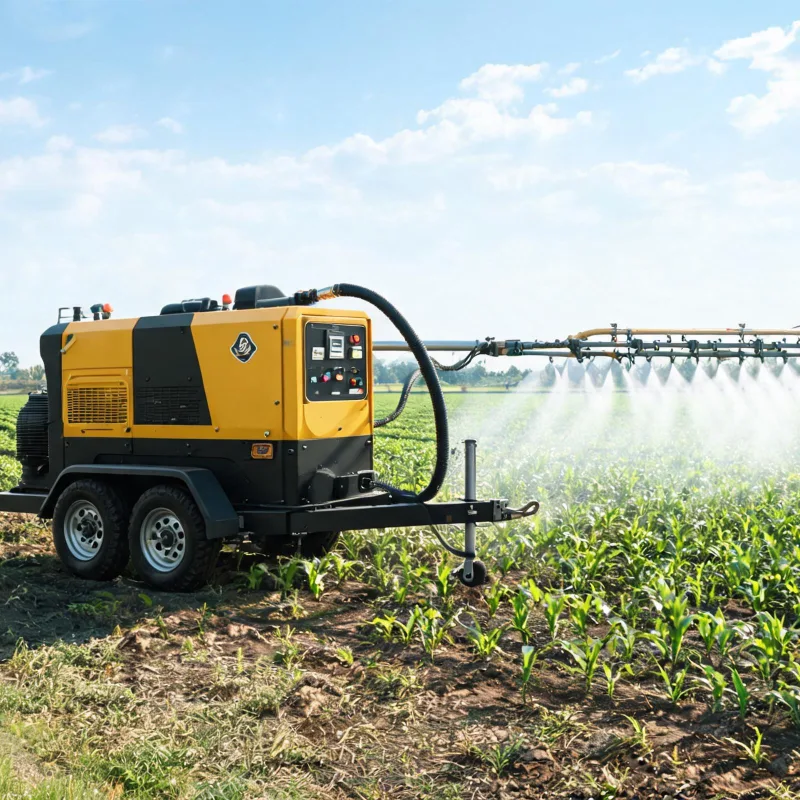
Aligning Stakeholder Needs When Selecting a Towed Unit for Farm Spray Pressure Boosting
Align the needs of operators, maintenance, and procurement to pick the right unit for your farm.
Key Takeaways
- ASABE 2022 standards link pressure variation to uneven chemical distribution
- USDA 2023 data shows proprietary parts increase upkeep costs by 22%
- List non-negotiables upfront to avoid late selection conflict
- Have maintenance check part accessibility before purchase
Related: farm spray pressure boost · agricultural equipment selection · stakeholder alignment farm · farm equipment procurement · crop spraying efficiency · towed agricultural compressor · pressure regulation farm
Conflicting Priorities Across Farm Stakeholders
Most farm equipment purchases get signed off by procurement, but the day to day performance lands with the field operator. I’ve seen three separate groups walk into a selection meeting with completely different end goals, and no one bothers to write them down upfront. That’s how you end up with a unit that can’t hold pressure during a 12 hour spraying window, or blows the annual equipment budget before planting season.
Operators want consistent pressure output to avoid uneven chemical application. Maintenance teams want simple design that’s easy to upkeep between spraying cycles. Procurement needs to hit the approved budget and lock in lead times that align with spraying windows. No side is wrong, but their priorities rarely line up on paper.
Non-Negotiable Hard Metrics For Each Group
Field Operators
The only non-negotiable for operators is consistent output pressure matched to your spray system requirements. ASABE’s 2022 standard for agricultural application equipment notes that even 10% pressure variation can lead to 15% uneven chemical distribution across a field. You need a unit that can hold steady output through the full duration of a daily spraying route, even when pulling across uneven terrain. No amount of cost savings makes up for missed weed control or over application that damages crops. That’s non-negotiable.
Maintenance Teams
Maintenance leads care about access to wear components and compatibility with your farm’s existing maintenance routine. USDA’s 2023 Farm Equipment Maintenance Survey found that units with proprietary parts increase annual upkeep costs by an average of 22% compared to standard off the shelf components. You don’t want to wait three weeks for a custom part mid-spraying season when you can use a standard component. The other hard requirement is a rated frame that holds up to repeated towing on rural farm roads.
Procurement Teams
Procurement’s non-negotiables are all contractual. First, the final price must fall within the approved capital or operating budget for the year. Second, lead time must match the start of your regional spraying window — any delay pushes back application and puts yield at risk. Third, the contract must include clear terms for warranty coverage for the frame and pressure regulation system, which see the most stress during regular use.
Negotiable Tradeoffs That Align All Groups
This is where most purchases get stuck. Each group has hard lines, but there’s almost always room to compromise without hurting long term value.
Operators can compromise on maximum output if the unit meets your minimum required pressure for your spray system. You don’t need 200 PSI if your spray setup only requires 80 PSI to boost pressure correctly. Oversizing adds unnecessary cost that procurement will push back on.
Maintenance can compromise on minor filter change frequency if parts are readily available and cheap to replace. A unit that needs a minor filter change every 100 hours of operation is fine, as long as the filter costs $15 instead of $75.
Procurement can compromise on upfront cost if the unit has a longer warranty and standard parts that reduce long term ownership cost. A 10% higher upfront cost often pays for itself in three years through lower upkeep and less downtime.
This doesn’t work if you skip writing the tradeoffs down. Don’t rely on verbal agreements. If your farm only sprays less than 50 acres per year, a towed unit is not worth the capital outlay. A stationary unit plumbed to your spray loading area will meet your needs for a fraction of the cost.
Shared Acceptance Criteria For Final Approval
Once you align on tradeoffs, you need a set of objective criteria to test the unit before you sign off on delivery. No one should have to accept a unit that doesn’t meet these requirements.
First, test pressure output over a full 4 hour simulated operation cycle, matching the load you’ll see in the field. Confirm pressure variation stays within 5% of the target value, per ASABE guidelines.
Second, check that all routine maintenance points are accessible without special tools. Have a member of your maintenance team do this check, not the sales representative.
Third, confirm all warranty and lead time terms match what’s written in the contract. Cross check part numbers for wear components to confirm they are standard, not proprietary.
Simple Talking Points To Align All Parties Early
You don’t need a full day workshop to get aligned. Have each group share their top two non-negotiables before you start reviewing quotes.
Start with operators: “We can’t go with a unit that can’t hold pressure through a full day of spraying.” Maintenance: “We can’t support a unit that requires custom parts that take weeks to ship.” Procurement: “We can’t go over the approved budget, and we need delivery by the end of next month.”
Writing these three statements down at the start of the process eliminates 90% of the conflict that comes up late in selection. You can filter out any option that doesn’t meet all three non-negotiables before you spend time negotiating.
Expert Insights
Aligning stakeholder requirements early cuts purchase regret by more than half for farm equipment | Jim Carter, Farm Equipment Procurement Consultant
Further Reading
About the Editorial Team
Frequently Asked Questions
What pressure output do I need for crop spraying?
Match the output to your spray system’s minimum required boost. Most row crop applications require between 70 and 120 PSI steady output. Check your spray system documentation for your specific requirement.
Can a towed unit work with all spray systems?
Most standard farm spray systems can connect to a towed unit, but you need to confirm pressure compatibility before purchase. You’ll also need a rated hitch that matches the unit’s weight.
Who should lead the selection process on a farm?
The person responsible for the outcome of spraying should lead, but all three stakeholder groups need to sign off on criteria before you review quotes.
When is a towed unit not the right choice?
If you spray fewer than 50 acres annually, a stationary unit at your loading area will cost less and meet your needs. Large scale operations that need mobile pressure boost benefit most.
Do I need extra coverage for this unit?
Check your existing farm equipment policy. Most policies cover towed farm equipment as long as it’s registered to your farm. Confirm coverage before you take delivery.