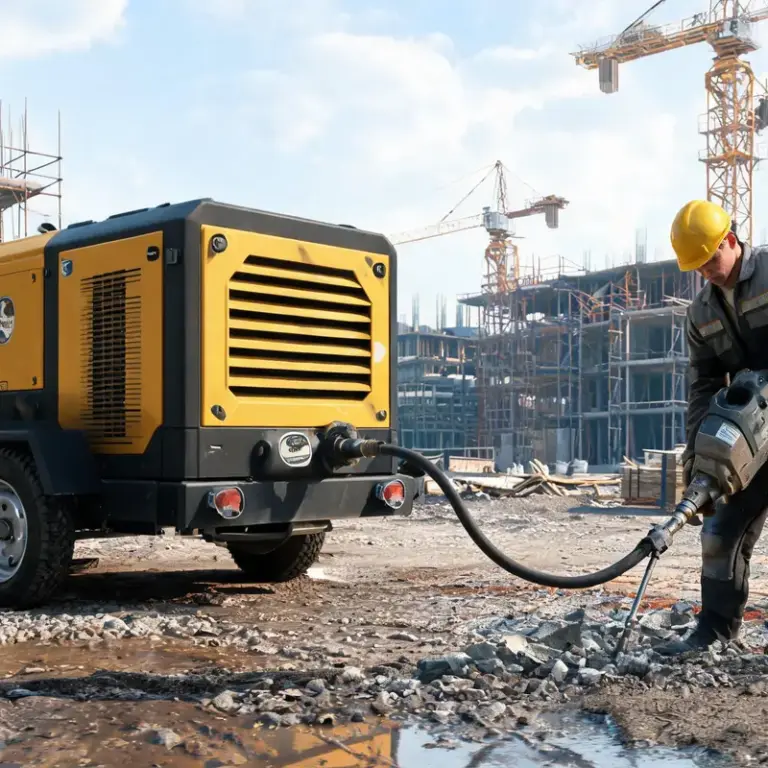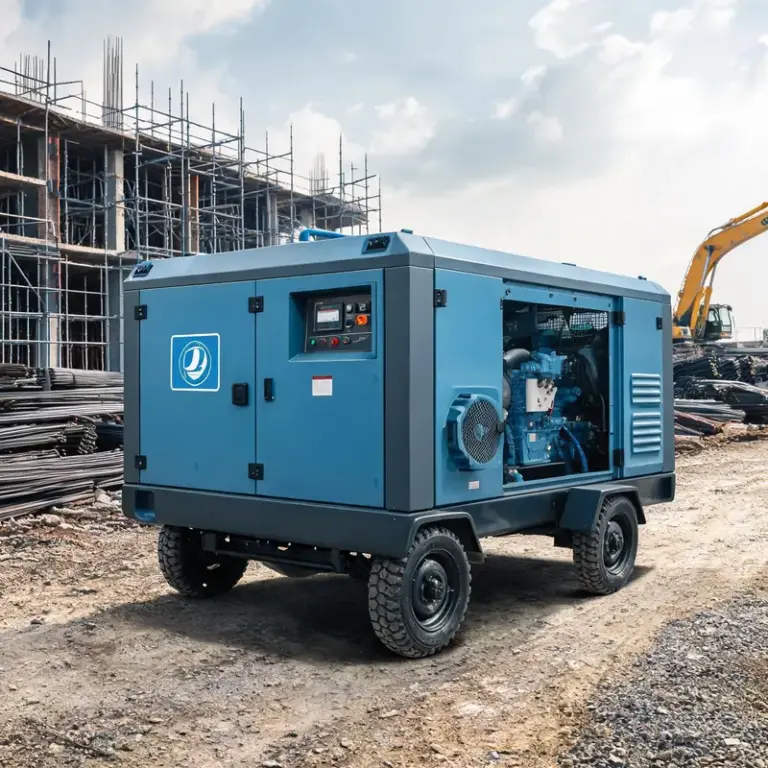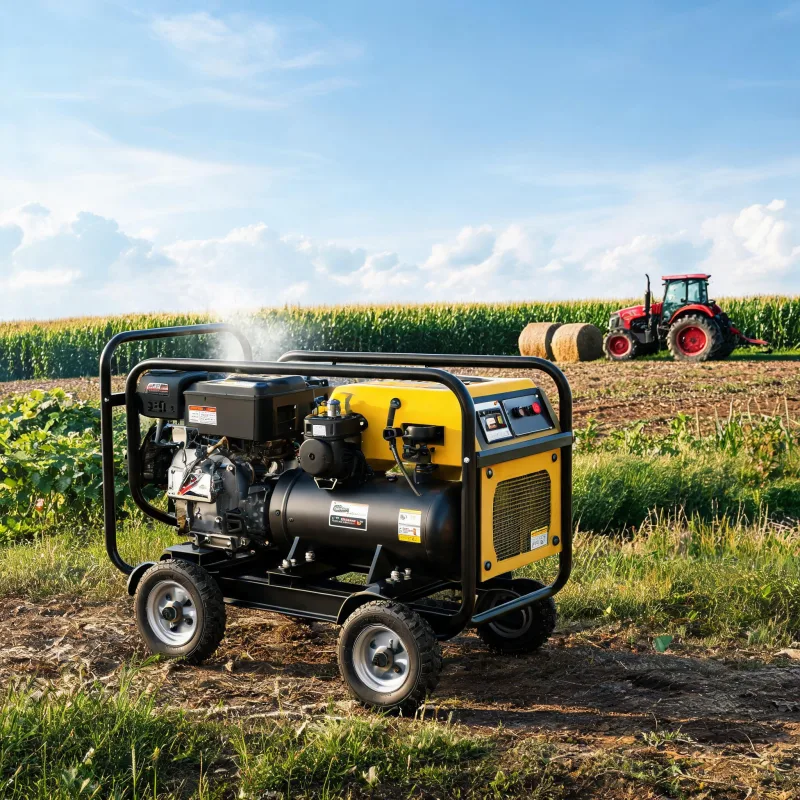
How to Pick a Fuel-Efficient Portable Diesel Unit for Long Farm Shifts
This guide answers practical questions for selecting the right unit for all-day farm use.
Key Takeaways
- Confirm efficiency testing is done at 100% continuous load
- Size output 15% above peak demand to cut excess fuel use
- Verify cooling capacity matches your region’s summer high temperature
- Skip high-efficiency models for low weekly use to save upfront cost
Related: long hour farm operation · fuel saving compression · farm equipment · portable air system · extended work shift · agricultural gear · mobile compressed air
Most portable diesel compression units sold to farms are rated for intermittent use, not 8+ hour continuous runs. The advertised fuel efficiency only applies to half-load intermittent operation, not full-load all-day shifts. That’s a mistake that costs most operators 15-25% more in fuel every year, according to 2023 data from the American Society of Agricultural and Biological Engineers (ASABE).
How much fuel efficiency do I actually need for 8+ hour farm shifts?
You need a unit tuned for continuous full load, not just a low sticker number on idle fuel use.
ASABE 2023’s agricultural equipment standard requires that continuous load fuel efficiency be tested at 100% output for 12 hours, so always ask for that test data. Most off-the-shelf units only publish idle or 50% load efficiency, which looks better on paper but doesn’t reflect real farm use.
I’ve seen a 100-acre vegetable operation lose $1200 in harvest downtime to a failed unit in one day. That’s not counting the extra fuel cost from mismatched tuning.
What sizing works for extended continuous run times?
Size output 15% above your peak demand, and pair it with a fuel tank that holds enough for a full 12-hour shift without refueling.
If your tools require 100 CFM of output, buy a unit rated for 115 CFM continuous load. Running any unit at 100% of its maximum output for hours on end pushes fuel consumption up by more than 10% and increases engine wear. A larger buffer keeps fuel use consistent and reduces strain.
For remote fields with no easy refueling access, a 12-hour capacity tank eliminates unplanned stops that cut into harvest or planting windows.
What engine features prevent overheating during all-day operation?
You need an oversized cooling system and engine tuning calibrated for continuous heat.
Most diesel engines for mobile units are built for 2-4 hour runs, so their cooling systems are undersized for all-day operation. For long shifts, look for a cooling system rated for ambient temperatures at least 5°F higher than your region’s average summer high.
EPA Tier 4 Final rated engines (2023 update) have advanced fuel injection that reduces waste heat output by 8% compared to older models, cutting overheating risk. The first sign of insufficient cooling is rising operating temperature after 4-6 hours of continuous run. If you see that, stop the unit and let it cool for 30 minutes before resuming work. Continuing to run will cause piston ring damage that requires full engine replacement.
When should I skip a high-efficiency model for my farm?
If you only use the unit less than 10 hours a week, the extra upfront cost won’t pay off.
High-efficiency models with continuous load tuning cost 15-20% more upfront than standard models. If you only pull it out for occasional projects, you’ll never recoup that cost in fuel savings.
Even if you do run long shifts, if your farm sits at over 5000 feet elevation, you’ll need to adjust your expectations: fuel efficiency drops 3-5% per 1000 feet of elevation, so you’ll need a larger engine to maintain output, which offsets some efficiency gains.
Buyer Guide
- Ask for full-load continuous run fuel efficiency test data
- Check cooling system rating against your region’s summer high temperature
Pitfalls to Avoid
- Don’t rely on idle fuel efficiency ratings for full-shift use
- Don’t ignore cooling capacity when shopping for hot climate operation
Glossary
- Continuous load rating: Maximum output an engine can hold for 8+ hours
- Specific fuel consumption: Fuel used per unit of compressed air output
Further Reading
- # How to Maintain Diesel Portable Air Compressor for Long-Term Use in Chemical Plants
- Diesel Portable Air Compressor: A Guide for Small Construction Business Owners
- Upgraded Diesel Portable Air Compressor for Large-Scale Construction Projects
- Corrosion Resistant Components for Diesel Portable Air Compressor in Marine Applications
- Diesel Portable Air Compressor Powering Jackhammers for Road Construction
- Diesel Portable Air Compressor Vs Gasoline For Industrial Use: A Practical Comparison
- Small vs Large Diesel Portable Air Compressor for Residential Projects
- Updated 2024 Best Selling Diesel Portable Air Compressor for Industrial Use
About the Editorial Team
Frequently Asked Questions
How often should I change engine oil for continuous daily use?
Cut the manufacturer’s standard interval in half; change oil every 100 operating hours instead of 200.
Does a larger fuel tank hurt overall efficiency?
No extra weight penalty for a 12-hour capacity tank, and it eliminates mid-shift refueling stops.
What emissions standards do I need for new farm equipment?
Most regions require units to meet EPA Tier 4 Final or equivalent EU Stage V standards.
Can I add an aftermarket cooling system to a standard unit?
It’s rarely cost effective. The engine and tuning are still built for short runs, so failure risk remains.