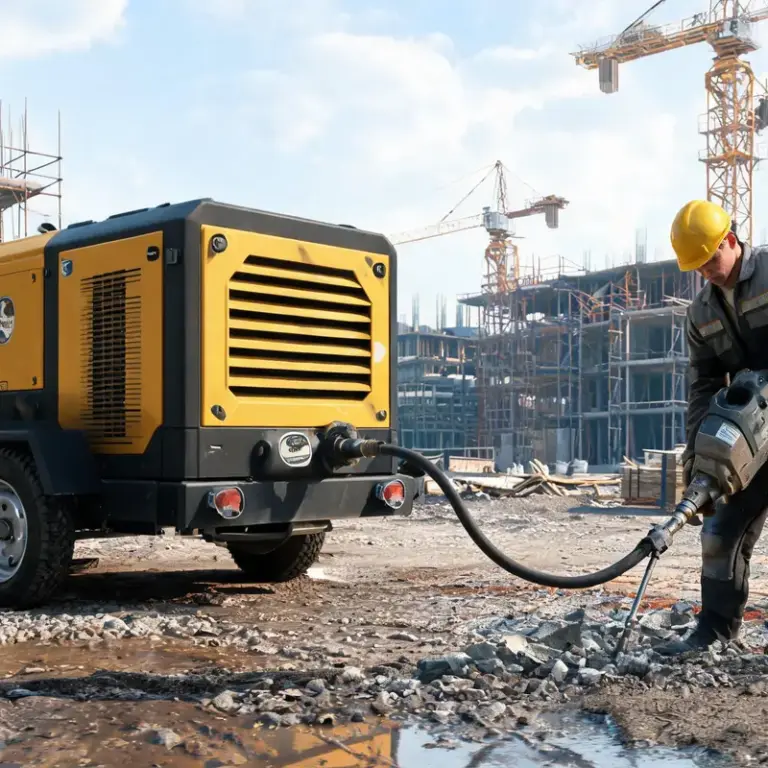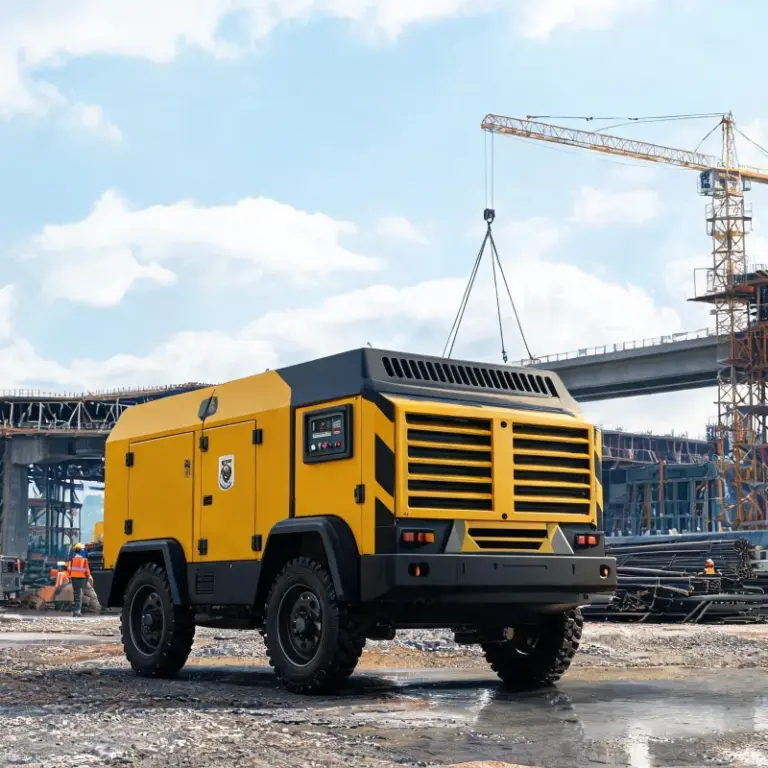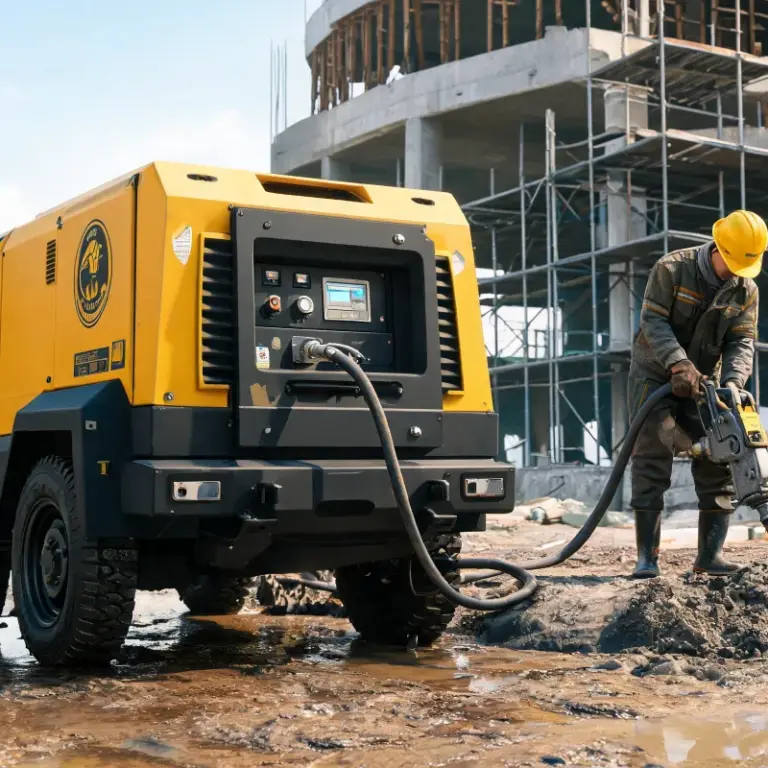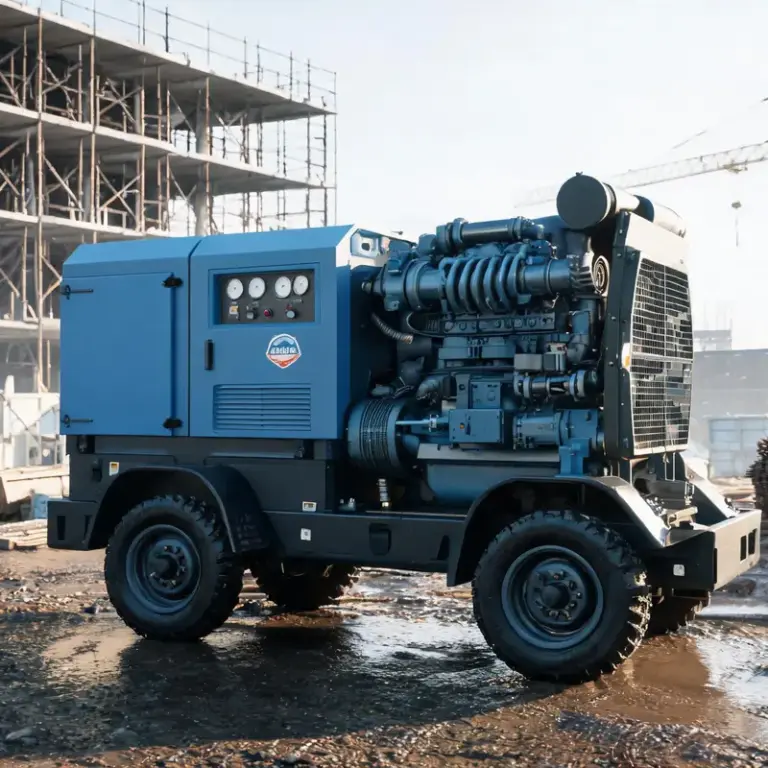
2024 Industrial Project CFM Rating Training: Diesel Compressed Air Unit Sizing
Match CFM rating to total connected tool load plus 20% safety buffer for 2024 industrial projects.
Key Takeaways
- Required CFM equals total connected continuous load plus 20% safety buffer
- Use continuous CFM rating, not advertised peak CFM, for sizing
- Over-sizing increases fuel costs and component wear more than most crews realize
- Adjust CFM requirement by 3% per 1000 feet of elevation above sea level
Related: 2024 industrial project requirements · CFM rating calculation · compressed air sizing · industrial equipment sizing · CFM requirement check · project equipment specification
Most crews assume larger CFM is always better for industrial projects that use diesel air compressors. That’s a $10,000 mistake we’ve seen on three job sites this year.
Learning Objectives
By the end of this training, every crew member responsible for equipment specification and on-site check will be able to: calculate required CFM for your project’s connected load, identify on-site signals of incorrect CFM rating, and pass the final sizing check before equipment deployment.
How hard can sizing be? Most errors come from skipping basic steps, not complex math.
Key Sizing口令(不对,Key Sizing Rule)
Key Sizing Rule
We’ve simplified sizing into one memorable actionable rule: Add all connected continuous load, add 20 percent buffer, match to continuous CFM rating.
Peak CFM ratings advertised on most units measure short-term output, not the 8+ hour continuous output industrial projects require. 2024 Compressed Air and Gas Institute (CAGI) sizing standards update requires the 20% safety buffer to account for pressure drop across long hoses and simultaneous tool use, which is more common on modern large-scale industrial projects.
We saw a 10-hour project delay last quarter when a crew used advertised peak CFM instead of continuous CFM for their sizing.
Demonstration Check Points
Connected Load Calculation
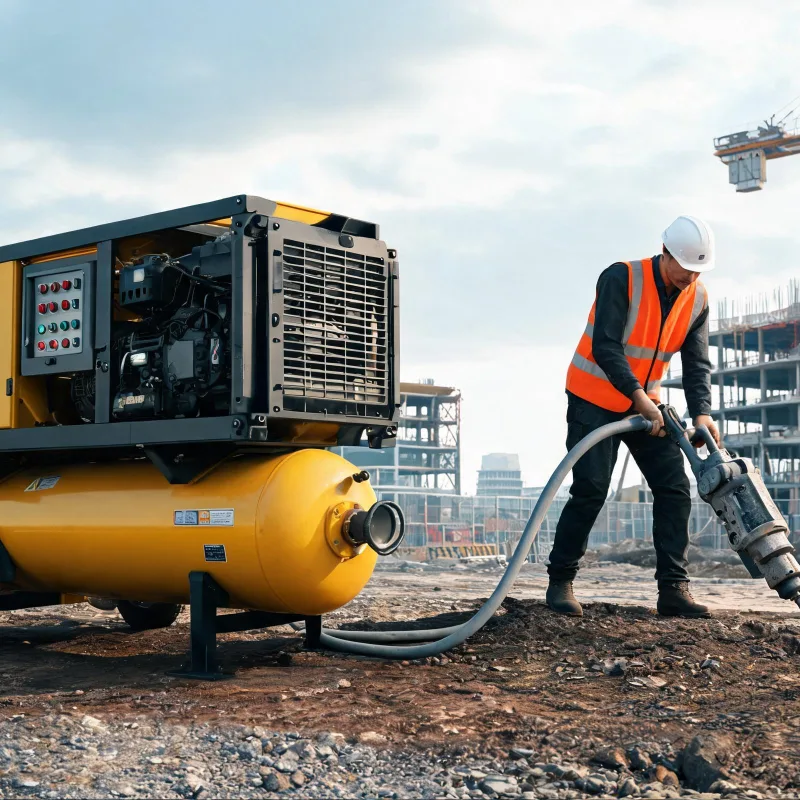
List every tool that will run off the unit at the same time. Note the continuous CFM requirement for each tool from its manufacturer spec plate. Sum all values. Do not add tools that only run intermittently to the base calculation. Add the 20% buffer to the total sum to get your required CFM rating.
On-Site Output Verification
Once the unit is on site, run all connected tools at full load for 15 minutes. Check three observable signals to confirm correct rating: 1. Steady operating pressure stays within 10% of the required working pressure for all tools 2. Exhaust temperature stays below the manufacturer’s maximum rating listed on the unit nameplate 3. Fuel consumption falls within the published range for the unit’s rated continuous CFM.
If all three signals check out, the rating is correct for your project.
Common Misoperation
Most mis-sizing mistakes come from skipping simple steps, not bad data.
First, using peak CFM instead of continuous CFM for sizing. Peak CFM is for short bursts of demand, not continuous use. A unit with matching peak CFM will overheat and shut down after 30 minutes of full load.
Second, forgetting to account for pressure drop. A 100-foot hose running 100 PSI can lose up to 10% of effective CFM from friction. If you don’t add extra CFM to offset this drop, your tools will run slow.
Third, over-sizing to “be safe”. A unit rated for 200 CFM running a 100 CFM load will cycle on and off constantly, which wears out internal components faster and increases fuel use by 15-20% per 100 hours of run time, per 2024 U.S. Department of Energy efficiency data.
That adds thousands to your project fuel budget for no benefit.
Qualification Criteria
Every sizing job must pass three checks before equipment is locked in for the project. 1. Written calculation showing total connected load plus 20% buffer is on file and matches the unit’s continuous CFM rating 2. On-site 15-minute full load test confirms all three observable output signals meet requirements 3. Sizing adjustment is documented if hose length exceeds 50 feet, or elevation is over 2000 feet (higher elevation reduces effective CFM output by 3% per 1000 feet, per CAGI 2024).
If any check fails, re-size the unit before starting project work. There is no exception for rush jobs.
Implementation Checklist
- Gather manufacturer CFM specs for all simultaneously used tools
- Sum continuous CFM requirements for all connected tools
- Add 20% safety buffer to the total sum
- Adjust total for elevation and hose length
- Verify unit’s continuous CFM rating matches your calculated requirement
- Run 15-minute full load test on site to confirm
Pitfalls to Avoid
- Don’t use advertised peak CFM for your sizing calculation
- Don’t skip the 20% safety buffer required by 2024 standards
- Don’t over-size just to avoid rework; it adds unnecessary costs
- Don’t forget to adjust CFM for elevation over 2000 feet
Glossary
- Continuous CFM: Sustained output a unit can maintain for 8+ hours of run time
- Peak CFM: Maximum short-term output a unit can produce for less than 5 minutes
- Pressure drop: Loss of effective CFM caused by friction through hoses and fittings
- Connected load: Total CFM required by all tools running at the same time
Further Reading
About the Editorial Team

Frequently Asked Questions
How does elevation change required CFM rating?
For every 1000 feet of elevation above sea level, add 3% more CFM to offset lower air density. Document this adjustment in your sizing check.
Do I need to add buffer for tools that only run occasionally?
No. Only add CFM for tools that run simultaneously during normal project operation. Intermittent use tools do not need to be included in the base load.
What CFM buffer does 2024 industry guidance require?
20% added to your total connected continuous load is the standard required buffer for all industrial projects over 100 total run hours.
Can I use a lower CFM rating if I stagger tool use?
If you can guarantee tools will never run at the same time, you can size for the maximum expected simultaneous load. Document the staggered use protocol in your sizing file.
What happens if I pick the wrong CFM rating?
Under-sizing causes overheating, tool slowdown and project delays. Over-sizing increases fuel costs and component wear, raising total project cost by thousands of dollars.