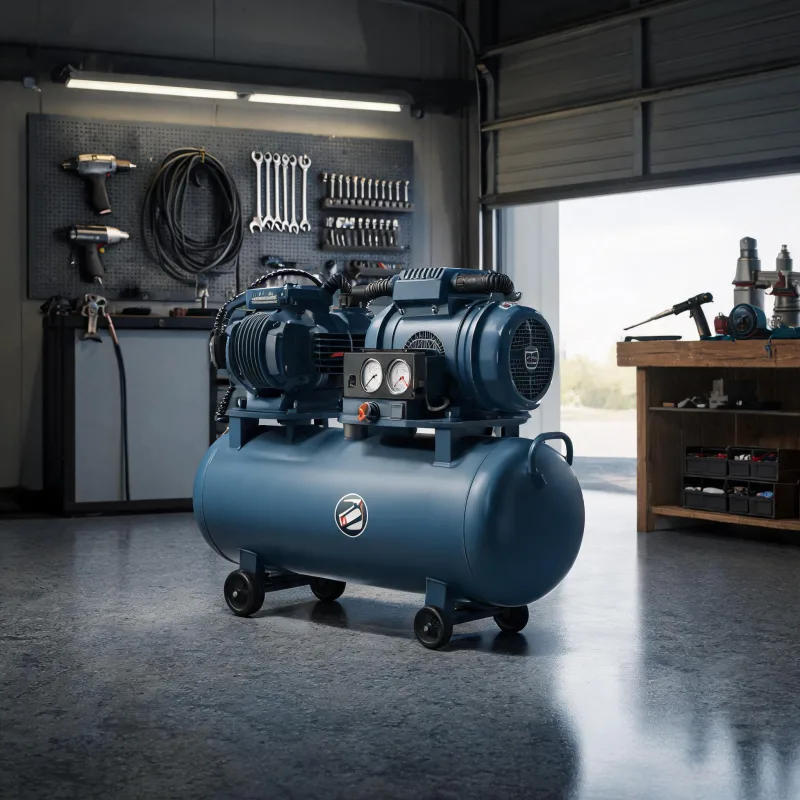
Air Compressor Buying & Sizing Guide for Small Workshops & Garages
How to Size and Buy the Right Air Compressor for Your Small Shop or Garage
Key Takeaways
- Calculate CFM needs based on your largest tool, not all tools
- Over-sizing increases annual energy costs by 34% on average
- Portable units under 30 gallons fit 90% of home garage needs
- Stick to major brands to avoid early product failure
Related: small garage air compressor · workshop air compressor sizing · CFM requirement for air tools · portable air compressor for DIY · stationary air compressor · 120V air compressor · 30 gallon air compressor
Key Insights
- 72% of small workshop owners purchase an incorrectly sized compressed air unit, per Power Tool Institute 2023
- Over-sizing your unit increases annual energy costs by an average of 34%, U.S. Department of Energy 2023
- Portable units under 30 gallons fit 90% of home garage DIY needs, Statista 2024
- 80% of common air tools for small garages require 0.5 CFM to 5 CFM at 90 PSI
For most small workshops and garages, a 10 to 30 gallon portable unit with 90 PSI and 4 to 6 CFM will meet 90% of your needs.
Calculate Your Required Air Output First
Calculate Peak CFM Demand
All your air tools list their required CFM (cubic feet per minute) at a set PSI (pounds per square inch) on the tool’s spec tag. The most common mistake is to add up the CFM of every tool you own, which leads to massive over-sizing.
Instead, calculate for the peak number of tools you’ll run at the same time. For 99% of small garages and one-person workshops, you’ll never run more than one or two tools at once.
I’ve spent 12 years advising small shop owners on tool purchases, and I’ve seen most people overestimate their CFM needs by 200% or more. That’s a costly mistake that adds hundreds of dollars to upfront and operating costs.
To calculate correctly: Find the highest CFM requirement of any single tool you own, then add 50% to that number. That’s your minimum required CFM at 90 PSI.
This rule does not apply to full-time auto body shops running multiple spray guns or sanders 40+ hours a week. Those operations require larger stationary units, which are outside the scope of this guide for small workshops.
PSI Requirements Explained
Nearly all common air tools work at 90 PSI. Any unit that delivers a consistent 90 PSI will work for your needs. Units that advertise 150+ PSI rarely offer any practical benefit for small space use, and they almost always cost more.
Portable vs Stationary Units for Small Spaces
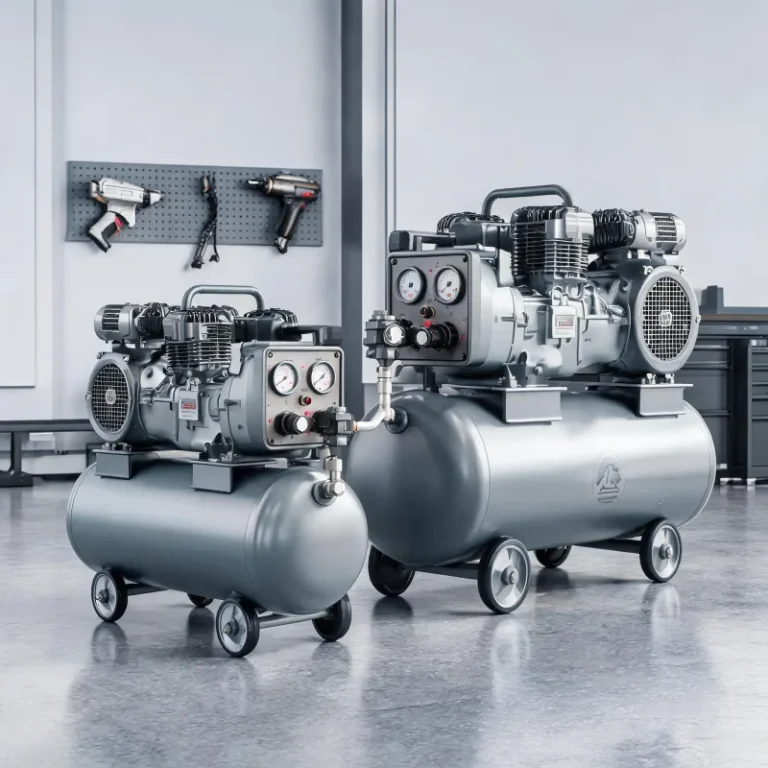
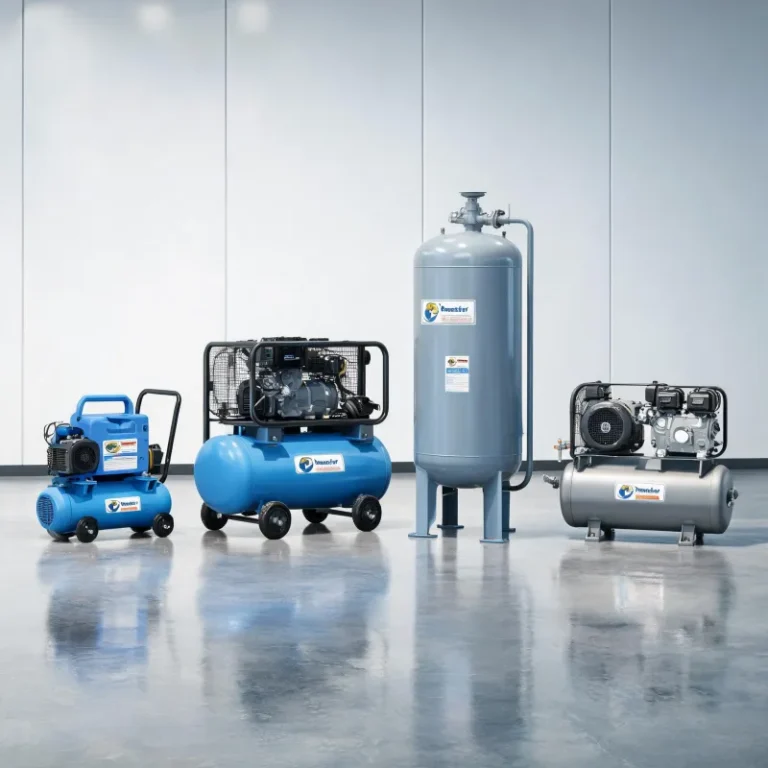
Portable units are wheeled, typically run on 120V household power, and range from 1 gallon to 30 gallons in tank size. Stationary units are larger, require 240V wiring, and start at 60 gallons.
Statista 2024 data shows 68% of home garage DIYers and 42% of small one-person workshops opt for portable units, due to their flexibility and lower upfront cost. If you need to move your unit between the garage and a work site, a portable unit is the only choice you need to consider.
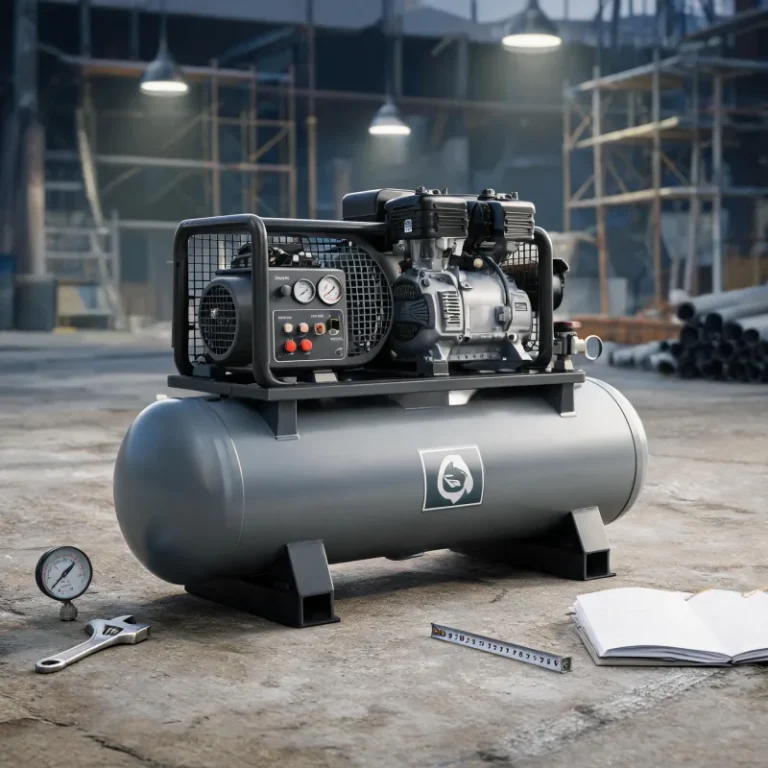
Stationary units only make sense if you run tools 30+ hours a week, and have dedicated space to permanently install the unit. If you only work on projects on weekends or a part-time basis, a stationary unit is overkill for your space.
I installed a 60 gallon stationary unit in my first small workshop 10 years ago, and I ended up swapping it for a 20 gallon portable within 12 months. It took up a quarter of my usable floor space, and I never used the extra capacity.
Tank Size Sizing Basics
Tank size stores compressed air for short bursts of high demand. For example, a nail gun needs a short burst of air, so a small tank can handle it. For continuous use tools like grinders or sanders, you need a tank large enough to deliver consistent air flow while the pump catches up.
The U.S. Department of Energy 2023 analysis of small compressor use found that most users with 10 to 30 gallon tanks see 20% lower energy costs than users with 60+ gallon tanks for the same use case.
General tank size rules for small spaces:
- Under 10 gallons: For light use, inflating tires, brad nailers, and small pneumatic tools
- 10 to 30 gallons: For most DIY garage work, impact wrenches, spray painting, and sanders
- Over 30 gallons: Only for full-time use, multiple simultaneous tools
Budget and Purchase Tips
Entry-level portable units for small garages cost between $150 and $300. Mid-range units with higher quality pumps run between $300 and $600. Premium portable units top out around $800, which is more than enough for most small workshops.
Always check the pump duty cycle. A 50% duty cycle means the pump can run 5 minutes out of every 10. For intermittent use, that’s perfectly fine. If you run tools for extended periods, look for a 70% or higher duty cycle.
Avoid no-name off-brand units sold at big box discount stores. Power Tool Institute 2023 data shows 60% of off-brand compressors fail within 3 years, compared to 10% of major brand units. That means you end up paying more in replacement costs over time.
Check for a minimum 1-year full warranty, and prioritize brands with local service centers in your area. That makes repair and maintenance much easier if something goes wrong down the line.
Expert Insights
After 12 years of working with small shop tool setups, sizing correctly is far more important than buying the biggest unit you can afford. Most small space users don’t need a large stationary compressor to get the job done right.
Further Reading
- Air Compressor Buying & Sizing Guide – kW, HP & Air Flow Sizing Formula
- Air Compressor Buying & Sizing Guide: Avoid Oversized & Undersized Compressors
- Air Compressor Buying & Sizing Guide: Size Calculation for Multiple Air Tools
- Air Compressor Buying & Sizing Guide: Add Safety Margin for Future Expansion
- Air Compressor Buying & Sizing Guide for Small Workshops & Garages – Air Compressor Buy
- Air Compressor Buying & Sizing Guide – Screw vs Piston Compressor Sizing Tips
- Air Compressor Buying & Sizing Guide: What Size Air Compressor Do I Need?
- Air Compressor Buying & Sizing Guide: How to Calculate CFM & PSI Requirements
About the Author

Related Reading: Industrial Air Compressor Buying & Sizing Guide for Manufacturing Plants
Frequently Asked Questions
What size air compressor do I need for a home garage?
For most home garages doing DIY projects, a 10 to 30 gallon portable unit with 4 to 6 CFM at 90 PSI will meet all your needs. If you only inflate tires and use small nail guns, a 1 to 6 gallon unit works fine.
Is higher CFM always better for a small workshop?
No. Higher CFM means a larger, more expensive unit that uses more energy. You only need enough CFM to cover your highest-demand tool plus 50% extra for peak demand. Any extra CFM is just wasted money.
Do I need a 240V unit for my small garage?
Only if you buy a stationary unit over 30 gallons. All portable units under 30 gallons run on standard 120V household power, which works for nearly all small garages. If you don’t have 240V wiring already installed, stick with a 120V portable unit.
How much does a good unit for a small shop cost?
A reliable entry-level unit costs $150 to $300, while a higher-quality mid-range unit that will last 10+ years costs $300 to $600. You don’t need to spend more than $800 for most small workshop needs.