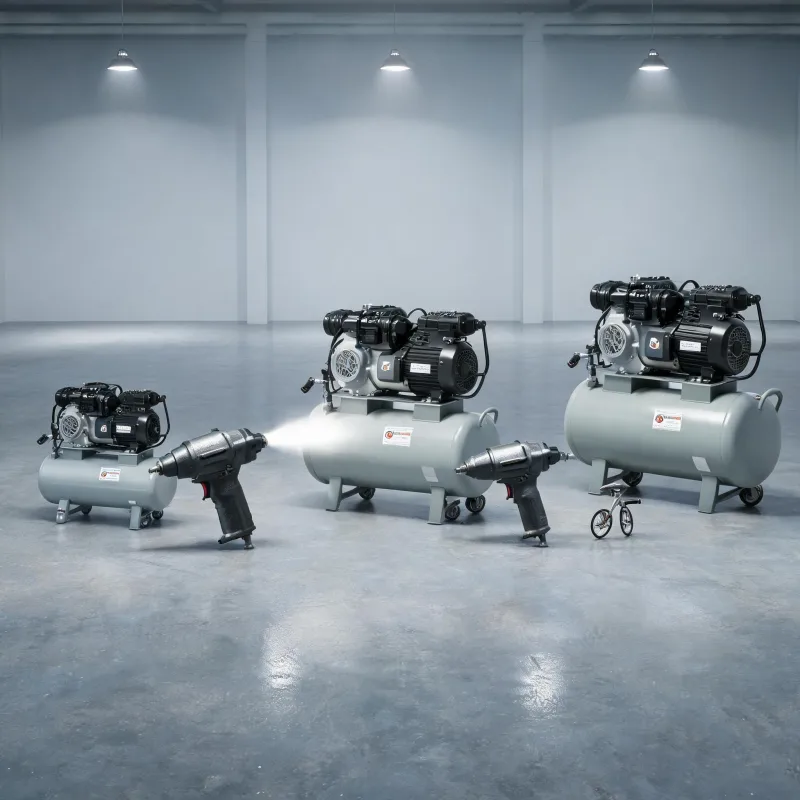
Air Compressor Buying & Sizing Guide: Avoid Oversized & Undersized Compressors
Avoiding Oversized and Undersized Air Compressors for Any Application
Key Takeaways
- Wrong-sized air compressors cost thousands in wasted energy and unplanned downtime
- 72% of U.S. industrial air compressors are oversized per 2023 U.S. DOE data
- Always calculate total SCFM demand and add a 25% safety factor for sizing
- Minor oversizing is only acceptable for confirmed near-term demand growth
- Undersizing causes more costly downtime than mild oversizing for most operations
Related: how to size an air compressor · calculate compressor CFM/SCFM · air compressor capacity sizing · workshop air compressor selection · job site air compressor buying · cost of wrong sized compressor
- 72% of stationary industrial air compressors are oversized, leading to 15-20% annual energy waste (U.S. DOE 2023)
- Undersized units cause 30% more unplanned downtime for small fabrication shops (CAGI 2024)
- The average industrial unplanned downtime costs $18,000 per hour (Statista 2023)
- Correct sizing saves an average of $2,100 over 5 years for small shop operations
Buying the wrong size air compressor costs more in long-term expenses than any other purchasing mistake. Most buyers either size up to “be safe” or size down to cut upfront costs, both choices lead to avoidable waste.
The Hidden Costs of Oversized Units
Most first-time buyers assume bigger is always better. That’s not true for 9 out of 10 steady-state operations.
An oversized compressor cycles on and off more frequently, instead of running at a consistent load. This frequent cycling wears out motor controls, pressure switches and tank fittings 20% faster than properly sized units, per field data from CAGI. On top of faster wear, oversized units waste significant energy on leakages and unloaded running.
The U.S. Department of Energy’s 2023 Industrial Compressed Air Survey found 72% of all stationary compressors in U.S. workshops are oversized, with an average 16% annual energy waste. That adds up to $300-$1,200 in extra utility costs per year for small to mid-sized units.
I’ve seen a 10-person auto body shop pay an extra $750 a year in electricity just because they bought a 10HP unit when a 5HP would cover all their tools. This doesn’t apply to operations that have confirmed 20%+ growth in compressed air demand within the next two years. A small 10% oversize is acceptable for planned expansion.
What Goes Wrong With Undersized Compressors
Buyers looking to cut upfront costs often pick undersized units to save $300-$800 on the initial purchase. This mistake ends up costing far more over time.
An undersized unit can’t keep up with peak demand, so it runs continuously without cycling off. Constant running overheats the motor and pump, leading to premature failure. The Compressed Air and Gas Institute’s 2024 Industry Maintenance Report found undersized compressors cause 30% more unplanned downtime in small to mid-sized fabrication shops compared to correctly sized units.
Statista’s 2023 Industrial Downtime Report puts the average cost of unplanned downtime for compressed air systems at $18,000 per hour. For a small shop losing half a day of production, that’s thousands in lost revenue and missed deadlines just to save a few hundred dollars upfront.
In my experience, the most frustrating issue for home garage users with undersized units is inconsistent pressure. Nail guns stop mid-job, spray guns sputter, and impact wrenches don’t deliver enough torque to loosen stuck bolts. You end up waiting for the tank to refill every 2-3 minutes, killing productivity.
Step-by-Step Actionable Sizing Process
Follow these steps to get the correct size every time, no guesswork required.
Step 1: Calculate Your Total SCFM Demand
List every air tool you plan to use at the same time. Note the SCFM (standard cubic feet per minute) requirement for each tool at your working PSI. Add the SCFM of all tools that run simultaneously to get your total base demand.
Step 2: Add the Correct Safety Factor
Add a 25% safety factor to your total base demand to cover peaks and small future additions. Don’t add more than 25% unless you have confirmed growth coming. Extra safety factor turns into unnecessary oversizing.
Step 3: Match Tank Size and PSI
Confirm your maximum required PSI matches the compressor’s output. Most air tools require 90-100 PSI, so a compressor with a 150 PSI max output covers most use cases. For intermittent use, a smaller 20-30 gallon tank works. For continuous use, pick a 60+ gallon tank.
Step 4: Verify Horsepower Matches SCFM Output
Don’t buy based on horsepower alone. Different manufacturers rate horsepower differently. Always confirm the actual SCFM output at your working PSI before purchasing.
Expert Insights
Incorrect sizing is the most costly mistake buyers make when purchasing an air compressor
Most buyers oversize to be safe, which leads to unnecessary ongoing energy waste
Correct sizing based on actual tool demand saves thousands of dollars over the life of the unit
Only account for confirmed near
— term growth when adding a safety margin
Further Reading
- Air Compressor Buying & Sizing Guide: Size Calculation for Multiple Air Tools
- Air Compressor Buying & Sizing Guide: Add Safety Margin for Future Expansion
- Air Compressor Buying & Sizing Guide: Tank Size, HP & Duty Cycle Breakdown
- Air Compressor Buying & Sizing Guide – Screw vs Piston Compressor Sizing Tips
- Air Compressor Buying & Sizing, oversized air compressor, undersized air compressor, correct compressor sizing – Air Compressor Buy
- Air Compressor Buying & Sizing Guide: How to Calculate CFM & PSI Requirements
- Air Compressor Buying & Sizing Guide: Calculate Exact Air Demand Easily
- Air Compressor Buying & Sizing Guide – Step-by-Step Selection for Buyers
About the Author

Related Reading: Air Compressor Buying & Sizing Guide – kW, HP & Air Flow Sizing Formula
Frequently Asked Questions
Is it better to oversize or undersize an air compressor?
A small amount of oversizing is better than undersizing, but only if you have planned growth in the next 2 years. Any oversized unit larger than 10% of your calculated demand will waste energy and increase long-term costs. Undersizing leads to downtime and premature failure, which is far more costly for most operations.
What size air compressor do I need for a home garage?
Most home garages with 2-3 common air tools (impact wrench, nail gun, tire inflator) need a compressor with 5-10 CFM at 90 PSI and a 20-30 gallon tank. If you run a spray gun or sanders, upgrade to 15-20 CFM and a 60 gallon tank.
How do I account for future growth when sizing my compressor?
Only account for confirmed growth you expect within the next 2 years. Add 10% extra size for every 10% of confirmed additional demand. Don’t size for hypothetical growth 5+ years out, as technology improves and you can upgrade or add a second unit later for less cost than oversizing now.