Complete Compressed Air Solution for Small-Scale PET Bottle Blowing Plants
Complete Compressed Air Solution for Small-Scale PET Bottle Blowing Plants
Key Takeaways
- Tailored compressed air systems reduce operating costs for small PET blowing plants
- Poor air quality causes 12% of PET bottle scrap for small operations
- Average energy savings from a proper solution hit 24% per year
- Not suitable for facilities producing over 500,000 bottles daily
- Core components include sized compressor, integrated air treatment, remote monitoring
Related: PET bottle blowing plant air requirements · energy efficient compressed air for small blow molding · bottle blowing air quality standards · compressed air leak detection for blow molding · PET bottle blow molding air pressure requirements
- 72% of small PET blowing plants run inefficient compressed air systems that increase operating costs by 30% or more (PETRA, 2024)
- A tailored complete solution reduces annual energy costs by an average of 24% compared to off-the-shelf setups (EIA, 2023)
- Poor air quality from inadequate systems causes 10–15% of all PET bottle defects for small operations (Statista, 2023)
- This solution is not designed for large-scale facilities producing over 500,000 bottles per day
A tailored, end-to-end compressed air system fixes the most costly pain points small PET blowing plant owners deal with every day. Off-the-shelf compressors almost always leave you wasting money on energy or dealing with constant defects.
What Makes Small-Scale Blowing Operations Different
Statista 2023 data shows 68% of all PET blowing facilities globally qualify as small-scale, producing under 100,000 bottles per day. Most of these operations don’t have an in-house engineering team to design a custom compressed air system from scratch, so they settle for whatever is available locally. That’s where the problems start.
I’ve worked with dozens of small plant owners who bought a cheap industrial compressor just because it fit their budget, only to lose thousands a year in wasted energy and defects. They don’t realize PET blowing has far stricter air quality and pressure requirements than most other industrial applications.
Most off-the-shelf systems don’t match the specific pressure and dryness requirements PET blowing needs. Even a small deviation in air quality ruins whole batches of bottles.
Common Costly Pain Points of Inadequate Systems
High Energy Bills
EIA 2023 data shows compressed air systems account for 71% of total energy use for the average small PET blowing plant. Inefficient systems with incorrect sizing or unaddressed leaks push that number even higher.
I’ve seen one small plant in Ohio that was paying $12,000 more a year than needed because their compressor was oversized for their 20,000 bottle daily output. Oversizing forces the compressor to cycle on and off constantly, wasting far more energy than a correctly sized unit.
Poor Air Quality Leading to Bottle Defects
PET Resin Association (PETRA) 2024 industry report found that 12% of all PET bottle scrap from small operations comes directly from moisture or contamination in compressed air. That adds up to thousands of dollars in wasted raw material every year for a typical 20,000 bottle per day facility.
When you’re running a small operation with tight margins, that level of waste can cut your annual profit in half. Many owners don’t even connect the defects they’re seeing to their compressed air system.
Unplanned Maintenance Downtime
Small operations rarely have a backup compressor or on-site maintenance staff. A breakdown that takes four hours to fix means a full day of lost production for many small shops. That’s a hit you can’t easily absorb when you’re competing for small volume regional orders.
Core Components of a Complete Solution
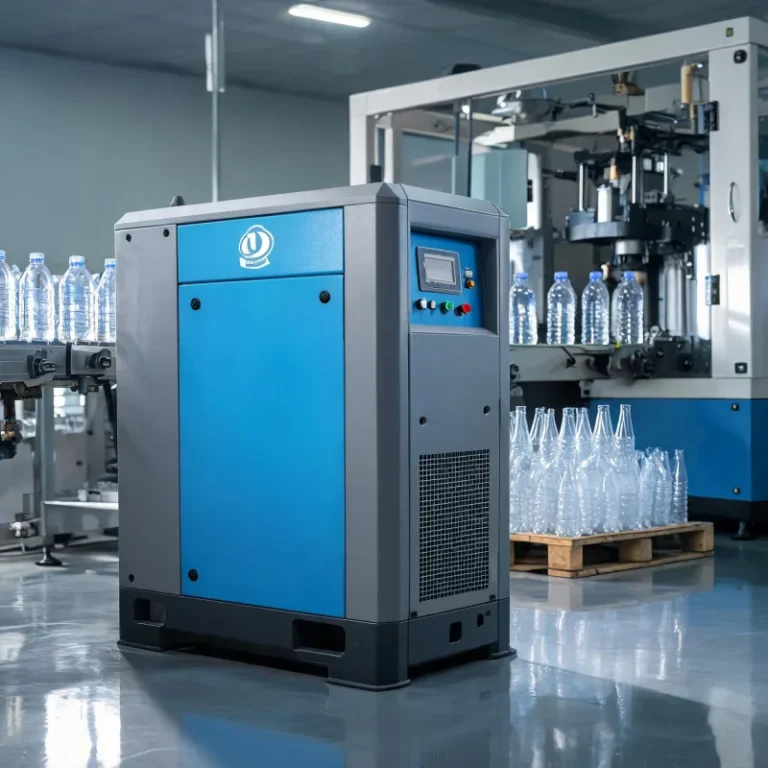
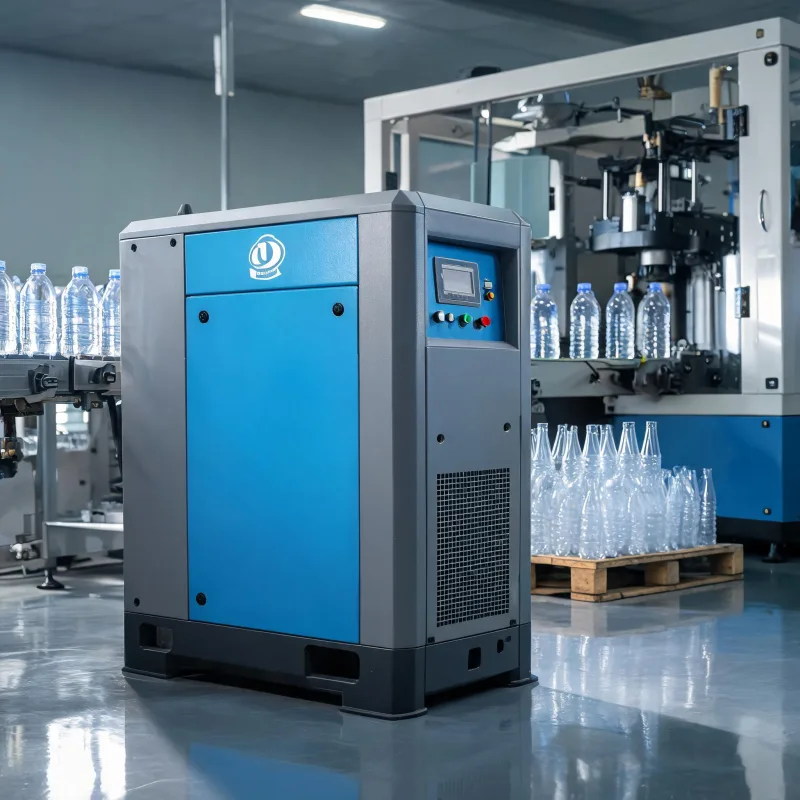
A complete solution isn’t just a compressor. It’s a matched system built specifically for your production output and facility layout.
Correctly Sized Compressors
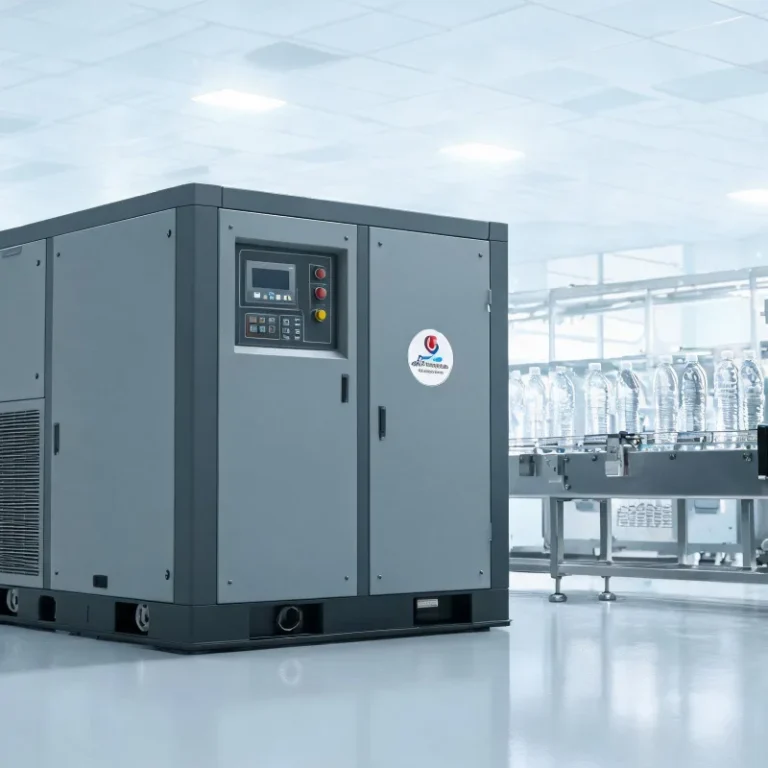
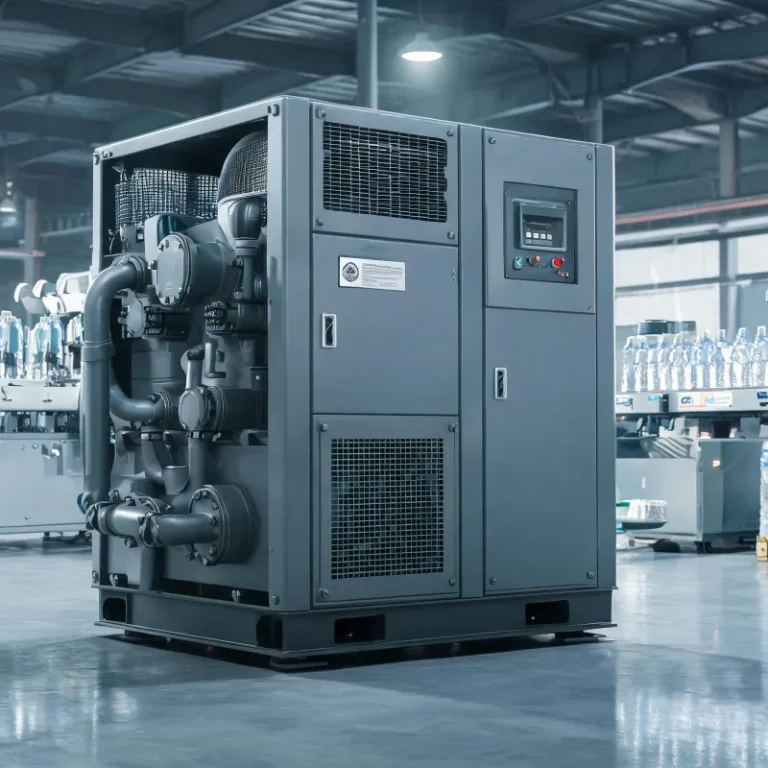
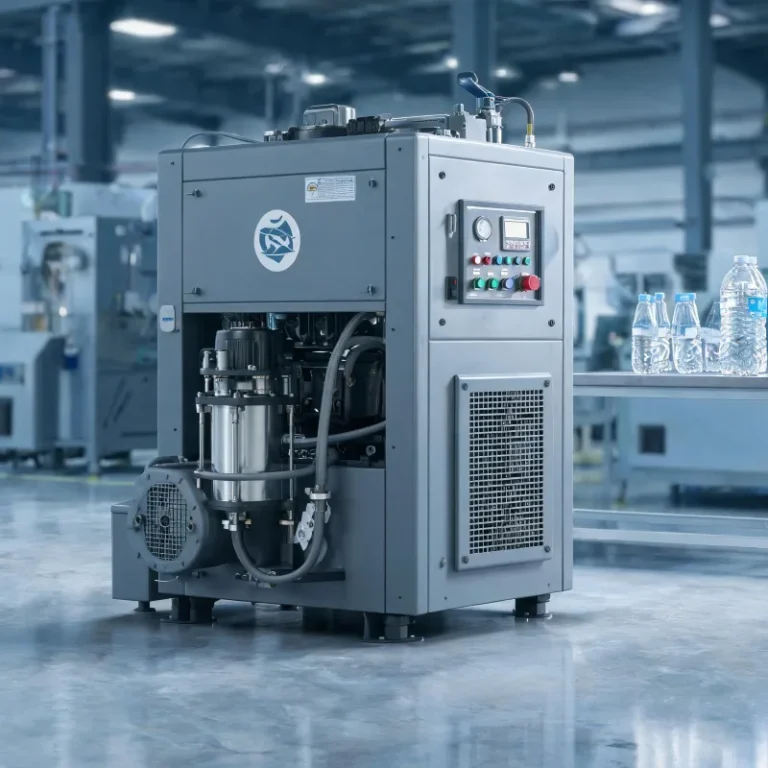
Most small operations do best with either a fixed-speed or variable speed drive (VSD) screw compressor matched to your peak air demand. VSD models cut idle energy use by up to 40% for operations that don’t run 24/7, which covers 80% of small-scale PET blowing plants.
Integrated Air Treatment
PET blowing requires zero moisture and zero particulate in compressed air to produce clear, defect-free bottles. A complete solution includes matched refrigerated dryers, multi-stage filters, and properly sized air receivers that maintain consistent dew points even with variable daily demand.
Remote Monitoring for Preventive Maintenance
Most modern complete systems include low-cost remote monitoring that alerts you to leaks or performance drops before they cause downtime. For small teams that don’t have time for daily system checks, this eliminates unexpected outages before they start.
Who This Solution Isn’t Right For
This complete tailored solution isn’t a fit for every operation. If you run a large-scale facility producing more than 500,000 bottles per day, you need a multi-compressor grid system that this solution doesn’t cover.
It’s also not ideal for hobbyist operations producing less than 1,000 bottles per month, where the upfront investment won’t pay off in a reasonable timeline. Only use this approach if you run a commercial small-scale plant producing between 1,000 and 100,000 bottles per day.
Step-by-Step Implementation for Small Plant Owners
Start with a professional air audit to map your exact air demand and current leak levels. Most reputable compressed air suppliers offer free audits for small operations.
Choose a compressor sized 10% above your peak demand, not 50% higher like many sales teams push. Oversizing is the most common mistake I see in this industry.
Match your air treatment to your compressor’s full output, don’t cut corners on dryer or filter size to save upfront cost.
Schedule quarterly leak checks to keep efficiency high over the life of your system. Even small leaks can add 10% to your annual energy bill if left unaddressed.
Expert Insights
With 12 years of experience working with PET blowing operations across North America, tailored compressed air solutions deliver far better long term returns than cheap off-the-shelf systems for small-scale plants. The upfront premium pays off in less than four years for most operations, through lower energy bills and less scrap.
Further Reading
- Air Compressor Post-Treatment System Energy Efficiency Retrofit Guide
- What Is Permanent Magnet VSD Technology on Air Compressors
- How to Calculate CFM & Pressure Requirements for PET Bottle Blowing Compressors
- # Diesel Portable Air Compressor vs Electric Stationary for Textile Mills
- small-scale PET bottle blowing compressed air solution, PET bottle blowing special air compressors, low energy compressed air for PET blowing – Diesel Portable Ai
- What Size Diesel Portable Air Compressor Do I Need for Construction Jobs?
- High Pressure Two-Stage Air Compressors for PET Bottle Blowing Production Lines
- Air Compressor Buying & Sizing Guide – kW, HP & Air Flow Sizing Formula
About the Author

Frequently Asked Questions
How much upfront investment should I expect for a complete system?
For a 20,000 bottle per day small plant, expect an investment between $15,000 and $30,000, including installation. Most operators see payback in 2–4 years from energy and waste savings.
Do I need a special compressor for PET blowing instead of a regular industrial compressor?
Yes. Regular industrial compressors don’t come matched with the air treatment PET blowing requires, and they’re almost never sized correctly for blowing demand.
How often do I need to perform maintenance on the system?
Most systems only need scheduled filter changes every 6 months and a full annual service, with remote monitoring alerting you to issues between visits.
Can I upgrade my existing system instead of buying a full new solution?
Yes, if your current compressor is sized correctly, you can add matching air treatment and monitoring to get most of the benefits of a full new solution.
What air pressure do I need for PET bottle blowing?
Most small-scale PET blowing requires between 30 and 40 bar of consistent pressure, which a matched system will maintain automatically.
Will a VSD compressor really save me more energy than a fixed-speed model?
If your plant doesn’t run 24/7/365, yes. VSD adjusts output to match your demand, eliminating energy waste from idling that fixed-speed models produce.