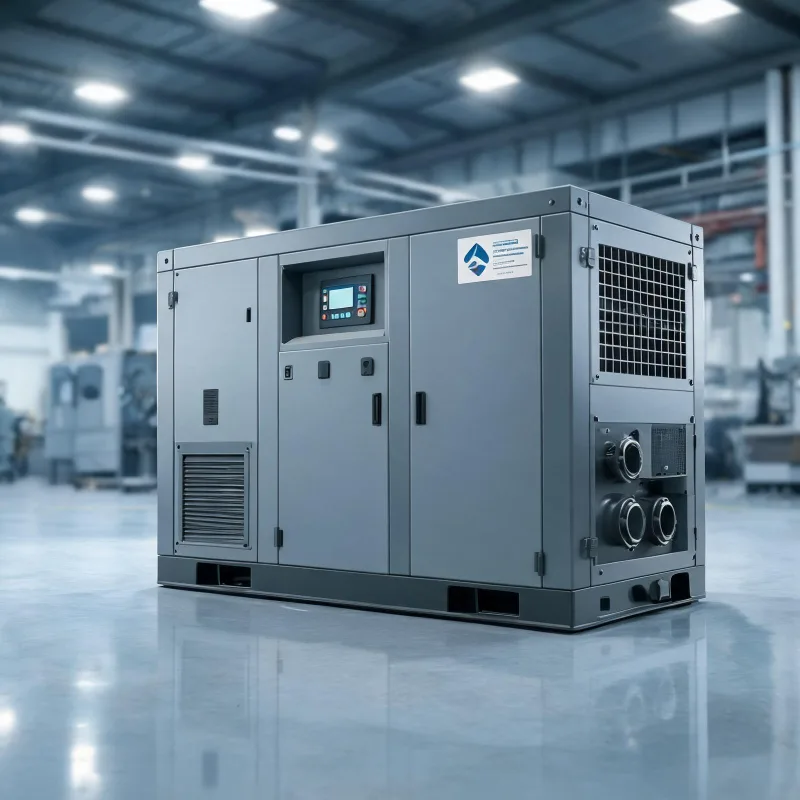
Rotary Screw Air Compressor Buying & Sizing Guide for 24/7 Operation
Buying & Sizing for 24/7 Continuous Operation Rotary Screw Air Compressors
Key Takeaways
- Match size to actual peak demand, add only 10% safety factor
- Only buy units rated for 100% continuous 24/7 duty
- Over-sizing wastes 20-30% of annual energy costs
- VSD units are best for variable 24/7 air demand
- Not recommended for operations under 20 hours per week
Related: continuous duty air compressor · industrial compressed air system sizing · 24/7 manufacturing air supply · rotary screw compressor capacity calculation · energy efficient air compressor for continuous use
- Over-sizing a continuous duty compressor wastes 20-30% of annual energy costs, per U.S. Department of Energy (DOE) 2023 data
- 92% of unplanned 24/7 compressor shutdowns stem from mismatched sizing or incorrect duty cycle rating, per Compressed Air and Gas Institute (CAGI) 2023
- Fixed-speed units deliver lower upfront cost for stable 24/7 demand, while variable speed drives (VSD) cut costs for variable demand profiles
- Continuous-duty rotary units are not recommended for operations running less than 20 hours per week
Core Sizing Principles for Continuous Operation
For 24/7 operation, the first rule is to match your compressor size to your actual peak air demand, not speculative future expansion. This cuts energy waste and extends unit lifespan.
Statista 2024 reports that the global industrial compressed air market will grow 3.8% annually through 2028, driven by rising demand for 24/7 continuous production in food and beverage and automotive manufacturing. This growth has led more buyers to prioritize long-term reliability over short-term cost cuts, but many still get sizing wrong.
According to my 14 years working with industrial compressed air systems, most buyers over-size by 30-50% to cover “possible future growth” that never materializes. This mistake adds thousands to upfront costs and hundreds annually to energy bills.
Your compressor’s psi (pounds per square inch) requirement only needs to match the highest psi rating of your on-site processes. Most 24/7 operations run fine at 90-100 psi.
Calculate Your Actual Air Demand
Start by adding up the cubic feet per minute (cfm) requirement of every air tool and process that will run at the same time. Add a 10% safety factor for existing air leaks, which is standard for most industrial facilities.
U.S. DOE 2023 data notes that the average facility loses 20-30% of compressed air to unaddressed leaks, so your 10% safety factor accounts for small leaks you haven’t fixed yet. Don’t add more than 10% — extra padding just creates waste.
Buying Criteria for 24/7 Duty
Duty Cycle Rating Verification
Never buy a standard duty rotary unit for 24/7 operation. Always confirm the unit is rated for 100% continuous duty before you buy.
CAGI 2023 data shows that 92% of premature failures in 24/7 operation happen when buyers use a 60% or 80% duty cycle unit for non-stop use. The lower upfront cost of an unrated unit never makes up for early replacement and downtime.
I once worked with a small injection molding plant that bought a cheaper non-continuous rated unit to save $2,000 upfront. It failed in 18 months, costing them $12,000 in lost production and a full replacement. That’s a hard lesson I remind clients of constantly.
Fixed Speed vs Variable Speed Drive (VSD)
Fixed speed units work best for facilities with stable, consistent 24/7 air demand. They have lower upfront cost and fewer moving parts that can fail during continuous operation.
VSD units adjust motor speed to match changing air demand, which cuts energy use when demand drops throughout the day. According to DOE 2023, VSD units can cut annual energy costs by 15-20% compared to fixed speed units for facilities with variable 24/7 demand.
VSD units are not worth the extra 15-30% upfront cost if your air demand stays within 10% of peak 24 hours a day. In that case, a fixed speed unit will deliver better ROI over the unit’s lifespan.
Cooling System Selection
For 24/7 operation, air cooling works for most units under 200 hp installed in climate-controlled facilities. It requires less maintenance than water cooling and has lower installation costs.
I recommend water cooling for any unit over 200 hp in non-climate-controlled facilities in warm climates. It delivers more consistent temperature control to prevent overheating during non-stop operation.
Common Costly Mistakes to Avoid
Beyond over-sizing and buying the wrong duty rating, the most common mistake is ignoring maintenance accessibility. 24/7 operation means you’ll need more frequent preventive maintenance, so pick a unit that allows easy access to filters, oil separators, and coolers.
Hard-to-access service points add hours to every maintenance visit, increasing long-term operating costs and increasing the risk of unplanned shutdowns from missed service.
Buying a used unit without a certified rebuild and full service history is never a good idea for 24/7 operation. A used unit that’s already seen 5 years of heavy use will fail much faster than a new continuous-duty unit.
Expert Insights
Proper sizing and correct duty cycle rating are far more important than upfront cost when buying a compressor for 24/7 operation. Cutting corners on these two factors will cost you multiples of your initial savings in downtime and replacement costs.
Further Reading
- Portable Air Compressor Buying & Sizing Guide for Light-Duty Tasks
- Air Compressor Buying & Sizing Guide for Auto Repair Shops & Mechanics
- Air Compressor Buying & Sizing Guide for Construction & Mobile Job Sites
- Industrial Air Compressor Buying & Sizing Guide for Manufacturing Plants
- rotary screw air compressor for 24/7 operation, air compressor sizing for continuous operation, industrial rotary screw compressor buying guide – Air Compressor Buy
- Air Compressor Buying & Sizing Guide – kW, HP & Air Flow Sizing Formula
- Air Compressor Buying & Sizing Guide: Avoid Oversized & Undersized Compressors
- Air Compressor Buying & Sizing Guide: Size Calculation for Multiple Air Tools
About the Author

Related Reading: Air Compressor Buying & Sizing Guide for Woodworking & Pneumatic Tools
Frequently Asked Questions
What is the average lifespan of a 24/7 rated rotary screw air compressor?
A properly sized and maintained continuous duty rotary unit lasts 10 to 15 years, per CAGI 2023 industry guidelines. Lower-quality unrated units may only last 3 to 5 years in non-stop operation.
Do I need a VSD unit for 24/7 operation?
Only if your daily air demand varies by more than 10% from peak. If your demand is stable, a fixed-speed unit will deliver a better return on investment.
How much safety factor should I add when sizing my compressor?
We recommend a 10% safety factor to account for normal air leaks. Adding more than that leads to unnecessary energy waste and higher upfront costs.